When Viral Crime Stories Are Lies: Lessons from the Influencer Kidnapping Hoax
How a fabricated kidnapping story by a social media influencer led to criminal charges, real-world harm, and key lessons about law and online responsibility.
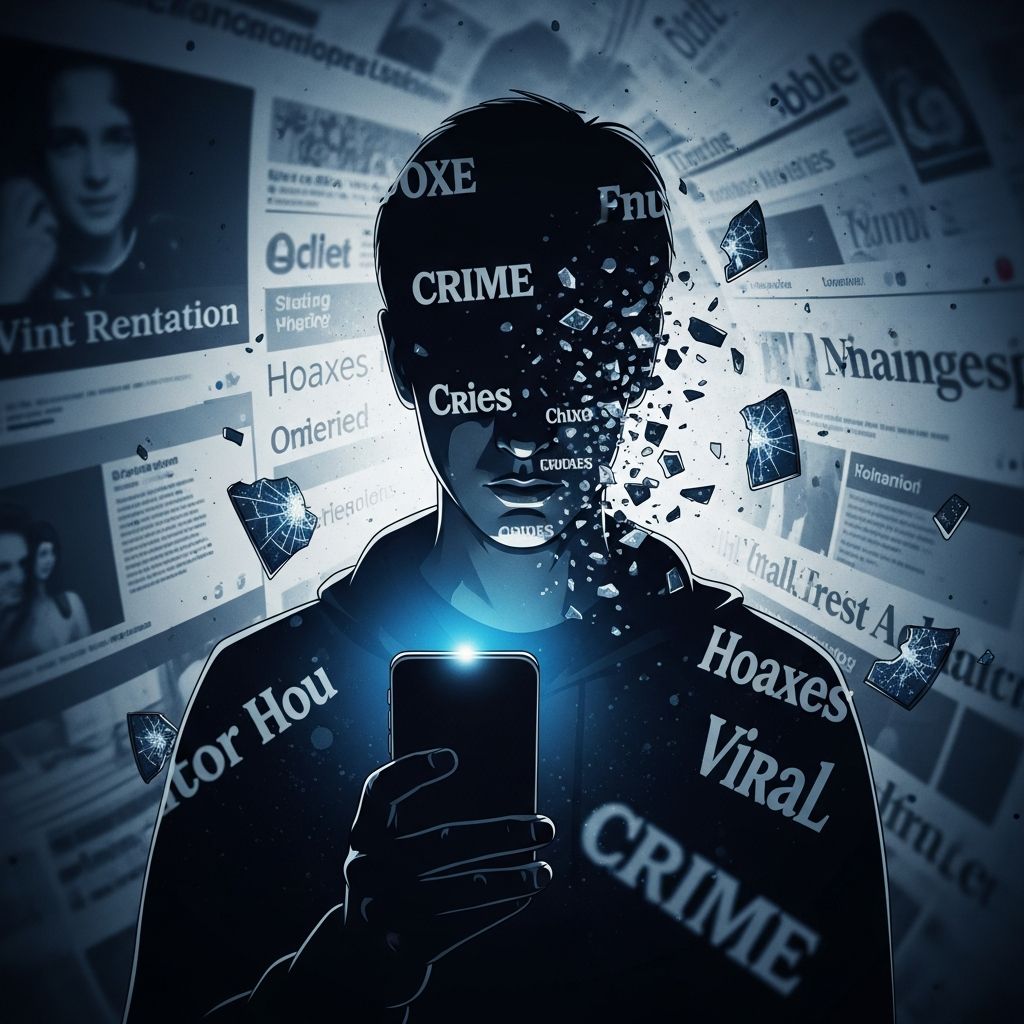
Viral Fear, Real Harm: The Story Behind a Fabricated Kidnapping
In recent years, social media has turned ordinary people into powerful broadcasters, able to reach millions with a single video. That power became painfully clear when a California “mom influencer” falsely claimed that a Latino couple tried to kidnap her children outside a craft store, a story that went viral before it was eventually exposed as untrue. The case led to a criminal conviction for making a false report of a crime and a jail sentence, while the innocent couple faced public suspicion and racial profiling.
This incident, used here as inspiration, illustrates how lies about crime can damage reputations, fuel discrimination, and trigger serious legal consequences. It also raises critical questions about the responsibilities of influencers, the role of law enforcement, and how the justice system responds when false accusations target people of color.
From Shopping Trip to Sensation: How the Hoax Unfolded
Although the precise details vary across reports, the basic timeline of the influencer kidnapping hoax can be summarized as follows, drawing from public records and major news coverage.
- A routine store visit: In December 2020, the influencer visited a Michaels craft store in Petaluma, California with her two young children.
- Initial call to police: Shortly after leaving, she called local police and reported that a couple had tried to kidnap her children in the parking lot.
- Viral Instagram video: About a week later, she recorded and posted an emotional Instagram video describing what she claimed was a “near abduction” of her kids, adding more dramatic details than she had given police.
- Media amplification: The video quickly went viral, accumulating millions of views and earning the influencer new followers, along with an appearance on local television to repeat her story.
- Identification of the couple: The influencer later identified a local Latino couple, who had been shopping for holiday items, as the supposed perpetrators. Police released surveillance images as part of the investigation.
- Couple comes forward: The couple recognized themselves, contacted authorities, and strongly denied any wrongdoing, saying they had simply been shopping. Surveillance footage and witness accounts did not support the influencer’s claims.
- Criminal charges and trial: Prosecutors charged the influencer with multiple counts of making a false report of a crime. A jury later convicted her of at least one count related to the fabricated kidnapping allegation.
- Sentencing: She received a short jail sentence (with a work-release component), probation, restrictions on social media, and mandatory training, among other penalties.
By the time the truth emerged, the couple had already been subject to intense scrutiny and online commentary, demonstrating how reputational damage often occurs long before formal exoneration.
What the Law Says About False Reports
False reports of crime are not just unethical; in most U.S. jurisdictions they are a specific criminal offense. In California, filing a knowingly false police report is a misdemeanor that can carry fines and possible jail time. Similar provisions exist in other states.
Although statutes differ, false reporting laws typically target behavior such as:
- Knowingly providing untrue information to police about a crime that allegedly occurred.
- Falsely identifying an innocent person as a suspect.
- Fabricating an entire incident and presenting it as fact to authorities.
The rationale is straightforward: law enforcement resources are finite, and when they are diverted to chase fabricated crimes, real victims can be left waiting. False reports can also subject innocent people to arrest, investigation, or public suspicion. In the influencer case, prosecutors emphasized that the story was “resoundingly contradicted” by surveillance video and the couple’s account, supporting the conclusion that it was knowingly false.
Social Media Amplification: From Personal Story to Public Panic
What made this case stand out was not only the false report to police but the decision to turn it into content. The influencer’s Instagram video, in which she described herself as the target of an attempted kidnapping, reflected a broader trend: the blending of personal safety narratives with influencer branding and audience growth.
Key dynamics in this amplification include:
- Emotional storytelling: The video used fear, urgency, and protective motherhood themes, which are highly engaging and shareable.
- One-sided narrative: The accused couple had no platform within the original content, and their version of events only emerged later through traditional media coverage and press conferences.
- Algorithmic reward: Social media algorithms often prioritize content that generates strong reactions, which can push sensational or fear-based stories to wider audiences.
- Blurred line between safety advice and defamation: What began as a supposed “warning” to other parents effectively became an accusation against specific people who had done nothing wrong.
Prosecutors and commentators highlighted that the case underscored the importance of using social media responsibly and not substituting online storytelling for formal, truthful reporting to law enforcement.
Racial Profiling and the Burden on Communities of Color
A central dimension of the hoax was race. The wrongly accused couple publicly stated that they believed they were targeted and portrayed as suspicious because they are Latino. They described the experience as being treated as dangerous simply for shopping while brown.
This aligns with longstanding concerns raised by civil rights advocates: false or exaggerated suspicion directed at people of color can lead to disproportionate police responses and social labeling. Research has documented that racial stereotyping influences perceptions of criminality and threat, particularly in quick, emotionally charged situations.
The influencer’s story fit into a broader pattern of high-profile cases in which white callers reported Black or Brown people to police for everyday activities, sometimes called “living while” incidents (e.g., “shopping while Black”). In such cases, the harm includes:
- Immediate danger: Police responses based on inaccurate reports can quickly escalate, especially when officers are primed to expect violence.
- Long-term reputational damage: Even after formal clearing, individuals may be remembered locally as “that person in the news.”
- Community mistrust of authorities: When false or biased reports lead to heavy-handed police action, trust in law enforcement can erode.
By prosecuting the influencer, local authorities signaled that racially infused false accusations would not be treated as harmless or excusable, especially when they threaten to criminalize innocent people.
Legal Consequences: Sentencing and Conditions
The influencer’s conviction resulted in a combination of incarceration, probation, and behavioral conditions that illustrate how courts can respond to false-report cases.
| Consequence | Purpose |
|---|---|
| Jail time (with work-release option) | Impose a concrete penalty and express the seriousness of lying to police. |
| Informal probation | Allow supervision and monitoring of future behavior without a formal prison term. |
| Limits on social media use | Reduce the risk of repeated harmful online narratives and encourage reflection on digital responsibility. |
| Implicit bias training | Address potential racial stereotyping and its role in the false accusation. |
| Fines and fees | Recoup some public costs associated with investigating a fabricated incident. |
Prosecutors publicly stated that the goal was not only to punish but also to provide a measure of closure to the wrongly accused couple and to reinforce that such conduct carries real consequences.
Why People Believe (and Share) False Crime Stories
Criminologists and media scholars have long noted that people tend to overestimate the likelihood of stranger crime, especially kidnappings, partly because of intense media coverage of rare events. National data show that abductions by strangers are a tiny fraction of crimes against children, far less common than harm inflicted by family members or known individuals.
Yet stories like the influencer hoax tap into powerful fears:
- Parental anxiety: Parents are highly motivated to protect their children, and they may share alarming stories as a form of solidarity or precaution.
- Simplified villains: Narratives that cast an ordinary store visit as a brush with evil can be more gripping than the mundane reality that most outings are safe.
- Confirmation bias: Audiences may be more likely to believe stories that match preexisting stereotypes about who “looks like” a kidnapper or criminal.
Combining those psychological dynamics with influencer culture—where attention can translate into income—creates strong incentives to dramatize or exaggerate encounters, even if only subconsciously. The law, however, focuses on the objective facts and the falsity of the claims, not on the storyteller’s follower count.
Responsible Reporting: What to Do If You Suspect a Crime
The influencer case also invites a practical question: what should a person do if they genuinely fear a crime is underway, such as a potential kidnapping attempt?
- Contact law enforcement first: Call emergency services or local police immediately, providing specific, factual information about what you saw, where, and when.
- Stick to observable facts: Describe actions (e.g., “stood next to my car for several minutes”) rather than assumptions (e.g., “clearly plotting an abduction”).
- Avoid online accusations: Do not post identifying details, images, or accusations about individuals on social media until law enforcement has investigated and confirmed what occurred.
- Be aware of bias: Reflect on whether your suspicions are grounded in behavior or in stereotypes about race, clothing, accent, or appearance.
- Cooperate fully with investigators: If police follow up, provide honest, consistent information. If you realize you misinterpreted events, clarify that promptly.
In many jurisdictions, reporting suspicious activity in good faith—even if it turns out to be benign—is not illegal. The problem arises when a person knowingly exaggerates, invents, or persists in a story that contradicts objective evidence.
Practical Takeaways for Influencers and Everyday Users
This high-profile hoax offers several concrete lessons for anyone with a social media presence, especially those who regularly share personal stories or “awareness” content.
- Truth is not optional: If an incident involves potential criminal conduct, treat accuracy as non-negotiable. Embellishing details for impact can cross the line into criminal false reporting when law enforcement is involved.
- Beware of naming or identifying private individuals: Posting faces, license plates, or names while accusing someone of a serious crime can expose you to defamation claims, even separate from any criminal case.
- Consider the power imbalance: An influencer with thousands of followers can unleash a wave of hostility on people who may have little ability to defend themselves publicly.
- Reflect on racial dynamics: Ask whether you would interpret identical behavior as threatening if it came from someone of a different race or background. Bias-awareness training, like the kind imposed in the influencer’s sentence, is one tool for addressing this.
- Remember that virality is not evidence: A story can be widely believed and widely shared while still being false. Police and courts rely on physical evidence, corroborating accounts, and surveillance, not view counts.
Frequently Asked Questions (FAQs)
Q: Is making a false police report always a crime?
In most U.S. states, knowingly making a false report of a crime to law enforcement is a criminal offense, typically a misdemeanor, and may carry fines, probation, or jail time. Honest mistakes or misunderstandings are usually not prosecuted, but intentional fabrication or significant exaggeration can be.
Q: Can you be prosecuted just for lying on social media about a crime?
Simply posting an untrue story on social media, without involving police, may not violate false-reporting laws, but it can still create legal exposure through defamation, harassment, or related civil claims. When a person lies both to police and online, as in the influencer kidnapping hoax, they risk criminal charges as well as potential civil liability.
Q: How did investigators prove the influencer’s story was false?
According to prosecutors, the influencer’s account was contradicted by store surveillance video and by the testimony of the accused couple, who explained they were simply shopping. The discrepancies between her original police report and later more dramatic public claims also undercut her credibility.
Q: Why was racial profiling such an important issue in this case?
The couple falsely accused in the hoax are Latino and publicly argued that they were targeted because of their ethnicity. Civil rights advocates link such incidents to a broader pattern in which people of color are treated as suspicious while engaged in ordinary activities, with potentially dangerous consequences when police are called.
Q: What should I do if I realize I misinterpreted a situation I reported?
If you come to believe you misunderstood an event you reported to police, contact the investigating officer or agency as soon as possible to clarify or correct your statement. Prompt correction can help prevent harm to others and may reduce the risk that your actions are viewed as intentional deception.
References
- Influencer Gets 90 Days In Jail For Falsely Accusing Couple Of Attempting To Kidnap Her Children — NDTV World News. 2023-06-30. https://www.ndtv.com/world-news/influencer-gets-90-days-in-jail-for-falsely-accusing-couple-of-attempting-to-kidnap-her-children-4170987
- ‘Mom influencer’ who said Latino couple tried to kidnap her kids convicted of false report — Los Angeles Times. 2023-05-01. https://www.latimes.com/california/story/2023-05-01/influencer-katie-sorensen-convicted-fake-kidnapping-latino-couple-bay-area
- Influencer Sentenced to Jail for Knowingly Making a False Report of Attempted Kidnap — Sonoma County District Attorney. 2023-06-29. https://da.sonomacounty.ca.gov/influencer-sentenced-to-jail-for-knowingly-making-a-false-report-of-attempted-kidnap
- Mom influencer sentenced for kidnapping hoax — ABC News / Good Morning America (video). 2023-06-30. https://abcnews.go.com/GMA/News/video/mom-influencer-sentenced-kidnapping-hoax-100570013
- The Karen Who Cried Kidnapping — ELLE Magazine. 2022-03-16. https://www.elle.com/culture/career-politics/a39589245/the-karen-who-cried-kidnapping/
Similar Articles








Read full bio of Sneha Tete