
Indigent Defense and the Fight for Equal Justice
How underfunded public defense systems undermine constitutional rights and what real reform must look like.
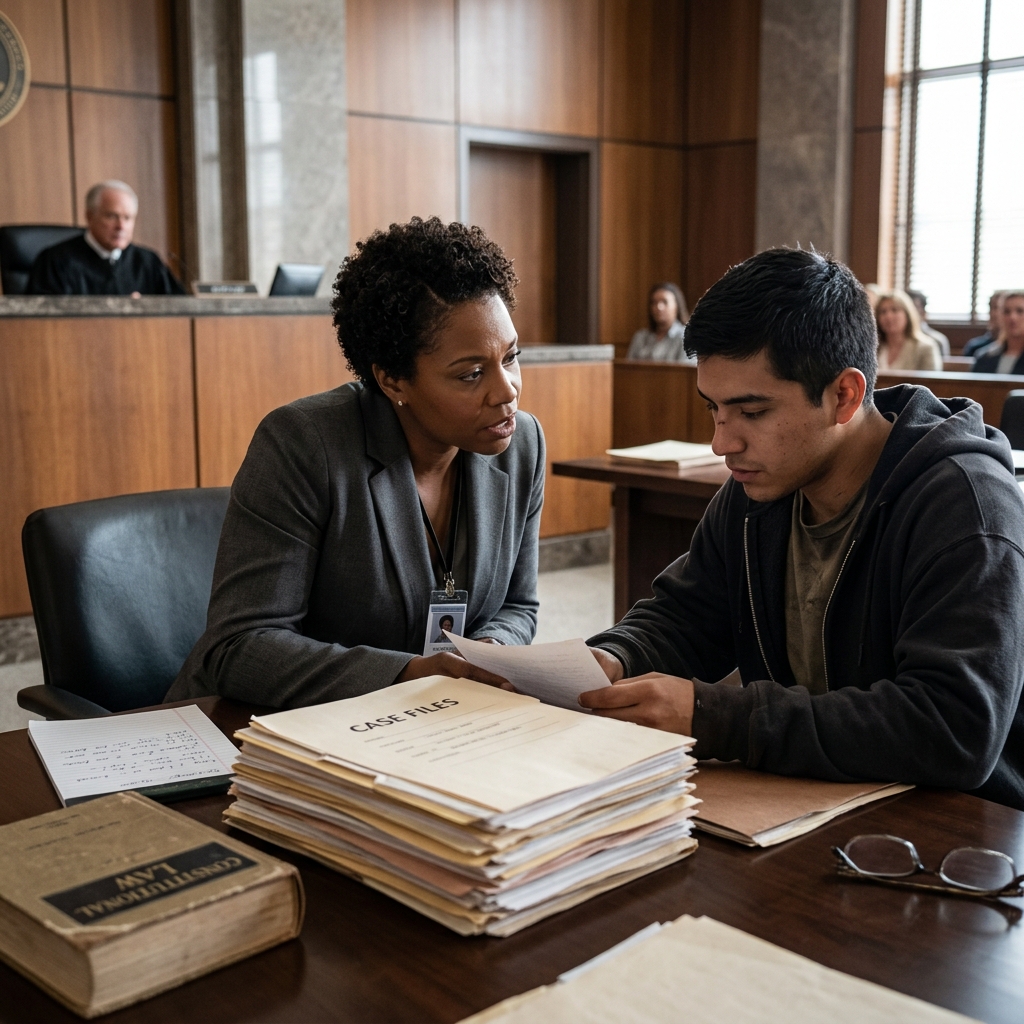
The promise of equal justice in the United States rests on a simple idea: no one should face criminal prosecution without a lawyer, regardless of their ability to pay. Yet across the country, people who are poor routinely encounter underfunded, overloaded, and fragmented indigent defense systems that fall short of constitutional guarantees.
This article examines how indigent defense is structured, why it is widely described as a national crisis, and what meaningful reform requires in policy, funding, and practice.
Understanding Indigent Defense: What It Is and Why It Matters
Indigent defense refers to the provision of legal representation to criminal defendants who cannot afford to hire an attorney. The constitutional basis is the Sixth Amendment right to counsel, applied to the states through the Fourteenth Amendment and firmly established in the landmark Supreme Court case Gideon v. Wainwright (1963).
In Gideon, the Court declared that lawyers in criminal courts are “necessities, not luxuries” and held that states must provide counsel to indigent defendants charged with serious offenses. This decision transformed criminal procedure and required every state to develop systems for delivering defense services to poor people.
Key Goals of Indigent Defense
- Protect constitutional rights: Ensure the Sixth Amendment right to counsel is meaningful, not merely symbolic.
- Promote fair trials: Safeguard against wrongful convictions by providing competent, effective advocacy.
- Control government power: Provide a counterweight to police and prosecutors, who have substantial investigative and charging authority.
- Enhance public safety: Prevent unjust incarceration, reduce recidivism through appropriate case outcomes, and bolster trust in the justice system.
- Save public funds: Avoid unnecessary jail time, appeals, and litigation that result from ineffective representation.
How Indigent Defense Systems Are Structured
States and local governments use several main models to provide indigent defense services, often combining them in different jurisdictions. The three core delivery systems are public defender offices, assigned counsel programs, and contract attorney arrangements.
Major Delivery Models
| Model | Who Provides Representation | Common Advantages | Common Risks |
|---|---|---|---|
| Public Defender Offices | Government-employed lawyers specializing in criminal defense. | Specialized expertise; institutional support; structured supervision; potential for training and standards. | Chronic caseload overload; dependence on governmental funding decisions; risk of burnout and high turnover. |
| Assigned Counsel Programs | Private attorneys appointed case-by-case, typically from a list maintained by courts. | Flexibility in rural or low-volume jurisdictions; ability to draw on broad bar membership. | Variable quality; limited oversight; compensation often too low to allow thorough preparation. |
| Contract Attorney Systems | Private firms or attorneys paid a flat fee to represent indigent clients over a specified period. | Budget predictability; administrative simplicity. | Incentives to minimize time spent per case; potential conflicts between volume and quality; risk of inadequate resources. |
In many states, these models exist side by side: urban counties may rely primarily on public defenders, while rural counties depend more heavily on assigned or contract counsel.
Funding Realities: How Money Shapes Representation
Providing constitutionally adequate defense services requires sustained investment in lawyers, investigators, experts, and support staff. Historically, state and local governments have underfunded indigent defense relative to other parts of the criminal justice system.
Federal statistics show that expenditures on indigent defense grew from roughly $350 million in 1979 to an estimated $1.3 billion in 1990, in constant dollars. Yet observers and research organizations consistently document that available resources still lag far behind what is needed for effective representation.
Workload Standards and Capacity Gaps
The American Bar Association and other organizations have developed evidence-based workload standards for public defenders in several states. These analyses often conclude that defender offices would need to double in size to meet constitutional and ethical obligations.
For example, the ABA reported that Oregon would require approximately 1,296 additional full-time equivalent attorneys—roughly double its existing number—to provide adequate representation to indigent defendants.
- Excessive caseloads limit time for investigation, client communication, and motion practice.
- Insufficient support staff forces attorneys to perform administrative tasks instead of legal work.
- Low pay and high stress contribute to rapid attrition and difficulty recruiting experienced lawyers.
Evidence on Effectiveness: Do Different Systems Perform Differently?
Empirical research comparing defense delivery models suggests that the type of counsel a defendant receives can significantly affect case outcomes.
Studies summarized by legal scholars find that defendants represented by public defenders often achieve more favorable outcomes than those represented by appointed private counsel, controlling for case characteristics.
Comparative Outcome Indicators
- Defendants with public defenders were less likely to be convicted and less likely to receive prison sentences than similarly situated defendants with appointed counsel in several state court studies.
- On average, public defender clients received shorter prison terms and had higher odds of probation. These differences, while not uniform across all jurisdictions, point to systematic gaps in performance and resources.
Researchers attribute these differences partly to experience, specialization, and institutional support within public defender offices, as opposed to the more fragmented and often undercompensated work of assigned counsel.
The Indigent Defense Crisis: A National Problem
Legal scholars, bar associations, and advocacy organizations describe the state of indigent defense in the United States as a national crisis. Despite formal recognition of the right to counsel for more than half a century, many poor defendants receive representation that is rushed, underprepared, or functionally unavailable.
Core Features of the Crisis
- Chronic underfunding: Defense budgets often lag far behind spending on prosecution, policing, and corrections.
- Excessive workloads: Attorneys in some offices handle hundreds of felonies or thousands of misdemeanors per year, far exceeding recommended standards.
- Fragmented responsibility: In many states, counties bear primary responsibility for funding and organizing indigent defense, producing large disparities between jurisdictions.
- Limited oversight: Quality control, training requirements, and performance evaluation vary widely and are often minimal for assigned and contract counsel.
- Special challenges in rural areas: Sparse attorney populations, travel burdens, and smaller tax bases make it especially difficult to maintain robust services outside metropolitan regions.
Public Defense as a Pillar of Constitutional Democracy
Public defense systems do more than serve individual clients; they help make real the promises of the Bill of Rights. Without effective counsel, other constitutional protections—against unreasonable searches, coerced confessions, and unfair trials—lose much of their force.
Broader Social and Systemic Impacts
- Legitimacy of the courts: When poor people experience hurried guilty pleas and little contact with their lawyers, trust in the justice system erodes.
- Racial and economic inequality: Because poverty and race intersect in complex ways, weaknesses in indigent defense often magnify existing disparities in arrests, charging, and sentencing.
- Economic costs: Ineffective assistance of counsel can lead to longer jail stays, more appeals, and litigation over wrongful convictions, increasing costs for taxpayers.
Special Focus: Rural Indigent Defense Challenges
Rural areas present distinctive obstacles for delivering high-quality indigent defense. Legislatures and courts have documented difficulties recruiting and retaining qualified counsel, as well as the logistical burdens of serving geographically dispersed populations.
Common Rural Barriers
- Few lawyers with criminal defense experience within reasonable travel distance.
- Long travel times for attorney-client meetings and court appearances.
- Limited availability of experts, investigators, and interpreters.
- Greater reliance on assigned counsel with minimal supervision or training.
State policy responses include regional defender offices, distance-based compensation structures, and programs to encourage attorneys to practice in underserved areas.
Pathways to Reform: Building Robust Indigent Defense Systems
Addressing the indigent defense crisis requires systemic changes that go beyond incremental budget increases. Reform efforts focus on funding, structure, workload control, and accountability mechanisms.
Priority Reform Strategies
- Stable, adequate funding
- Shift primary responsibility to the state level to reduce county-by-county disparities.
- Index budgets to evidence-based workload standards and population needs.
- Workload management
- Adopt enforceable caseload limits grounded in empirical research.
- Empower defender leadership to decline new appointments when ethical obligations cannot be met.
- Quality assurance and training
- Create state-level oversight bodies tasked with setting standards, monitoring performance, and supporting training.
- Require initial and ongoing education on criminal law, procedure, and trial advocacy for all attorneys accepting indigent cases.
- Data, transparency, and evaluation
- Collect robust data on caseloads, outcomes, and attorney assignments.
- Use empirical analysis to identify gaps and target resources, building on research comparing delivery systems.
Frequently Asked Questions (FAQ) on Indigent Defense
What does “indigent” mean in the criminal justice context?
In criminal cases, an indigent person is someone who lacks the financial resources to hire a private attorney. Courts typically determine indigence by considering income, assets, and costs of living, though standards vary by jurisdiction.
Is the right to counsel guaranteed in all criminal cases?
The Sixth Amendment right to counsel applies to prosecutions where imprisonment is a realistic possibility. Following Gideon v. Wainwright, states must provide lawyers to indigent defendants charged with felony offenses and many misdemeanors that carry potential jail time.
How do public defenders differ from private defense lawyers?
Public defenders are salaried employees of government or quasi-governmental offices who specialize in representing indigent clients. Private defense lawyers generally work on a retained basis or accept court appointments. Empirical studies show that public defenders, on average, often achieve better outcomes than appointed private counsel in similar cases, likely due to specialization and institutional support.
Why is indigent defense often described as being in crisis?
Observers use the term “crisis” because structural problems—chronic underfunding, overwhelming caseloads, and fragmented responsibility—are widespread and persistent. These conditions undermine the ability of defense lawyers to meet ethical and constitutional obligations to their clients.
What can policymakers do to improve indigent defense?
Policymakers can strengthen indigent defense by increasing and stabilizing funding, centralizing responsibility at the state level, adopting and enforcing workload standards, and creating independent oversight bodies. They can also incentivize service in rural areas and invest in training, data collection, and research-based evaluation.
References
- Indigent Defense Systems in the United States — Spangenberg & Beeman, Duke Law Journal. 1995-01-01. https://scholarship.law.duke.edu/lcp/vol58/iss1/3/
- Indigent Defense — Bureau of Justice Statistics, U.S. Department of Justice. 1996-03-01. https://static.prisonpolicy.org/scans/bjs/id.pdf
- Empirical Research on the Effectiveness of Indigent Defense Delivery Systems — UNC School of Government. 2012-01-01. https://cjil.sog.unc.edu/resource/empirical-research-on-the-effectiveness-of-indigent-defense-delivery-systems/
- Reframing the Indigent Defense Crisis — Harvard Law Review Blog. 2023-03-10. https://harvardlawreview.org/blog/2023/03/reframing-the-indigent-defense-crisis/
- Why We Have a Public Defense System — North Carolina Office of Indigent Defense Services. 2020-06-01. https://www.ncids.org/why-public-defense/
- Indigent Defense Services in Rural Areas — National Conference of State Legislatures. 2021-09-01. https://www.ncsl.org/civil-and-criminal-justice/indigent-defense-services-in-rural-areas
Similar Articles








Read full bio of medha deb




