
Honoring Heritage: Tribal Regalia and the Law
Explore the cultural and legal battles over Indigenous graduation regalia.
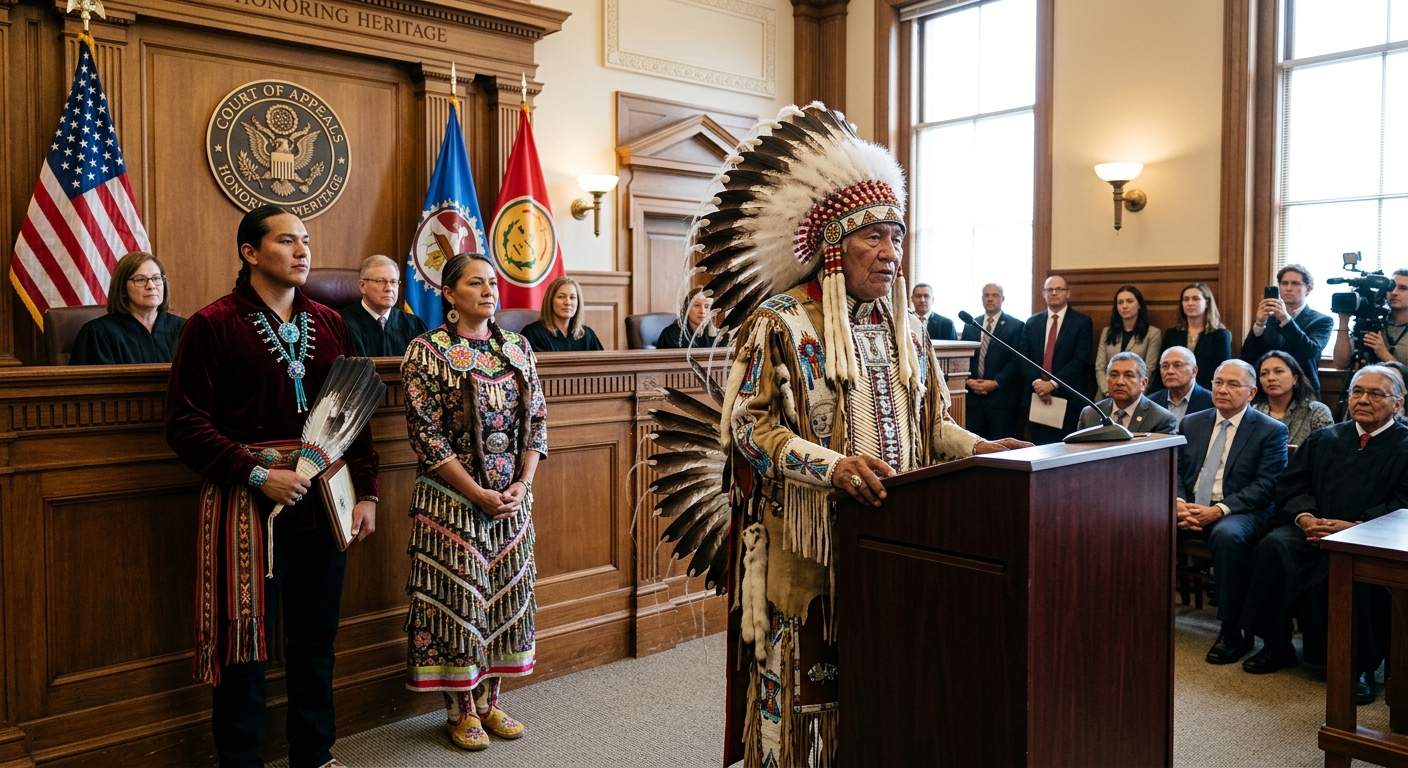
Graduation ceremonies are universally recognized as pivotal rites of passage within the American educational system. They mark the culmination of years of academic dedication, personal growth, and the crucial transition into early adulthood. For the vast majority of students across the country, the standard uniform of a matching cap and gown serves as a symbol of egalitarianism, unity, and collective achievement. However, for Native American, Alaska Native, and Indigenous students across the United States, this generic, mandated attire can represent an erasure of identity at a moment when their heritage deserves profound and visible celebration. In recent years, a powerful, youth-led movement has emerged to challenge restrictive public school dress codes that prohibit the wearing of traditional tribal regalia at commencement ceremonies.
For Indigenous youth, crossing the graduation stage is not just an individual victory; it is a monumental community triumph that defies centuries of systemic marginalization and educational inequity. Adorning themselves in culturally significant items—such as sacred eagle feathers, intricately beaded caps, traditional moccasins, and vibrant ribbon skirts—is a deeply spiritual practice that connects them to their ancestors. Yet, year after year, many Native students find themselves at a heartbreaking crossroads. They are forced to choose between participating in their graduation ceremony and honoring the ancestral traditions that helped them achieve that milestone. This ongoing clash between strict institutional policies and fundamental rights of cultural expression has sparked a nationwide debate, leading to vital legislative reform and high-profile civil rights advocacy.
Understanding the Deep Significance of Traditional Adornments
To fully comprehend why the fight for graduation regalia is pursued with such unyielding tenacity, it is essential to understand that these items are not merely decorative accessories or rebellious fashion statements. In mainstream educational settings, customizing a graduation cap with colorful glitter, a witty quote, or a university logo is a common form of individual self-expression. In stark contrast, tribal regalia represents a profound spiritual, religious, and communal connection. These items are earned, formally gifted in ceremonies, and held sacred by the community. They carry the weight of generations and are deeply intertwined with Indigenous religious beliefs, community values, and cultural survival in the modern era.
The Sacred Nature of the Eagle Feather
Among the most contested and culturally essential items in this educational debate is the eagle feather. For a vast majority of tribal nations across North America, the eagle is revered as a sacred messenger. Because the eagle flies higher than any other creature, many Indigenous communities believe it is the animal closest to the Creator. It carries the prayers of the people up to the heavens. The presentation of an eagle feather is one of the highest possible honors an individual can receive in Native cultures, serving as a powerful symbol of honesty, truth, majesty, strength, courage, and wisdom.
When an Indigenous student reaches a major life milestone, such as graduating from high school or obtaining a college degree, tribal elders, community leaders, or beloved family members may formally gift them an eagle feather to recognize their academic achievement and to bless their transition into adulthood. To be forced to hide this feather, or to be explicitly denied the right to wear it during the exact ceremony it was meant to commemorate, is viewed by many as a deep spiritual affront and a denial of their religious rights. Federal law explicitly acknowledges the unique religious importance of the bald and golden eagle to Native Americans. In fact, the U.S. Fish and Wildlife Service operates the National Eagle Repository specifically to provide enrolled members of federally recognized tribes with eagle feathers for religious and ceremonial purposes. Given this federal recognition of their sacred, protected status, advocates passionately argue that local school districts should not have the authority or jurisdiction to ban them from commencement stages.
Beadwork, Moccasins, and Traditional Garments as Living History
Beyond the sacred eagle feather, Indigenous students frequently seek to incorporate other forms of regalia into their graduation attire to fully represent who they are. Beaded mortarboards, intricately designed stoles, ribbon skirts, and traditional moccasins are all utilized to honor a student’s specific tribal affiliation and family lineage. Beadwork, for instance, is a meticulous, highly respected art form passed down through generations. A beaded cap is rarely mass-produced; it is often the result of hundreds of hours of labor by loving family members, designed with specific colors, geometries, and patterns that tell a familial or tribal story.
Similarly, ribbon skirts and traditional shirts hold deep historical and spiritual meaning, often representing resilience, empowerment, and the survival of Indigenous identities despite historical efforts to eradicate them. When a student wears these items underneath or alongside a traditional graduation gown, they are figuratively and literally bringing their ancestors with them onto the stage. Denying these adornments under the guise of maintaining “uniformity” fails to recognize that for Native youth, graduation is a collective community milestone rather than an isolated, individual achievement. Forcing uniformity strips away the visual representation of their hard-fought survival.
The Shadow of the Past: Assimilation and Indigenous Education
The contemporary struggle over graduation regalia cannot be understood in a vacuum; it must be situated within the dark, traumatic history of Indigenous education in the United States. For well over a century, the federal government funded and operated Indian boarding schools designed explicitly to forcibly assimilate Native children into Euro-American culture. The Department of the Interior’s comprehensive Federal Indian Boarding School Initiative Investigative Report, published in recent years, extensively documented the trauma, abuse, and cultural suppression inflicted by these institutional facilities .
Within these institutions, Native children were systematically stripped of their cultural identities and familial connections. Upon arrival at these boarding schools, their traditional clothing was immediately confiscated and replaced with rigid, military-style uniforms. Their long hair, which holds significant spiritual importance and physical connection to the earth in many tribes, was forcibly cut. They were severely punished, often physically, for speaking their Native languages or practicing their spiritual traditions. The overt, stated goal of this federal policy was cultural eradication—summarized by the infamous, historical mantra of the era: “kill the Indian, save the man.”
Against this harrowing historical backdrop, the modern public educational system remains fraught with intergenerational trauma for many Indigenous families. When a Native student successfully navigates the public school system and reaches the point of graduation, it is a profound, generational victory over a documented history of educational violence. To then have a contemporary school administrator dictate that the student must conform to a Euro-centric dress code—specifically forbidding traditional Native attire—feels to many like a painful continuation of the assimilationist boarding school policies of the 19th and 20th centuries. Protecting the right to wear regalia is therefore a crucial, necessary step in healing historical wounds and reclaiming the educational space as one of empowerment, respect, and diversity, rather than erasure.
Dress Codes vs. Civil Rights: The Clash at the Graduation Stage
The resistance from local school districts typically stems from a stated desire to maintain decorum, tradition, and strict uniformity during commencement exercises. Administrators often argue that allowing one student to alter their graduation attire will open the floodgates, leading to a chaotic environment where students wear distracting, offensive, or inappropriate secular items. However, legal experts, civil rights organizations, and tribal leaders consistently point out that religious and cultural regalia are fundamentally different from secular, pop-culture decorations, and deserve distinct legal protections.
The legal arguments supporting Native students often lean heavily on both constitutional guarantees and federal statutory protections. The First Amendment of the U.S. Constitution strongly protects the free exercise of religion and freedom of speech. Because eagle feathers and traditional tribal regalia are intimately tied to Indigenous spiritual practices and religious beliefs, prohibiting them can easily be interpreted as an unconstitutional infringement on religious liberty.
Furthermore, Title VI of the Civil Rights Act of 1964 prohibits discrimination on the basis of race, color, or national origin in any program or activity receiving federal financial assistance . The U.S. Department of Education has long maintained that school policies must not disproportionately harm or exclude students based on their racial or ethnic background. When a ostensibly “neutral” dress code prevents Native students from participating in their graduation because they rightfully refuse to abandon their cultural practices, advocates argue that the policy has a disparate impact and is therefore inherently discriminatory. Despite these robust federal protections, the highly decentralized nature of U.S. public education means that enforcement is often inconsistent, leaving many vulnerable students at the mercy of localized, restrictive policies unless targeted state legislation intervenes.
Legislative Momentum: States Taking Action
Recognizing the persistent challenges and emotional toll faced by Indigenous students every graduation season, a rapidly growing wave of states has taken proactive legislative measures to firmly guarantee the right to wear tribal regalia. These state laws are specifically designed to supersede the discretionary, often arbitrary power of local school boards, ensuring that no Native student is turned away at the graduation stage due to cultural adornments.
For example, the State of California enacted AB 1248, officially adding to its Education Code the explicit right for students to wear traditional tribal regalia or recognized objects of cultural or religious significance at graduation ceremonies . The state recognized that forcing aesthetic uniformity at the expense of cultural heritage was counterproductive to educational inclusivity. Similarly, Oregon passed House Bill 2052, powerfully solidifying the rights of Native American and Alaska Native students to wear items of cultural significance. The Oregon legislation explicitly acknowledged the historical graduation gap and the importance of supporting Indigenous educational sovereignty to improve student outcomes .
Washington State, South Dakota, and Texas have also codified similar protections, prohibiting public schools from restricting eagle feathers, plumes, or appropriate beaded caps during honoring or graduation ceremonies. Most recently, states like Wisconsin have joined this positive legislative momentum, passing laws that provide clear, unambiguous directives to school districts to respect and fully accommodate Native identity during all school-sponsored milestone events. This massive shift from localized, case-by-case debates to state-level statutory protection signifies a major, hard-won victory for tribal advocates, families, and Indigenous youth who simply want to graduate as their authentic selves.
Best Practices for School Districts
To avoid costly legal disputes, negative media attention, and, most importantly, to foster a genuinely inclusive educational environment, school districts must proactively update their graduation policies. Clinging to outdated rules harms students and fractures community trust. Below is a clear comparison of outdated, restrictive practices versus inclusive, culturally responsive policies that districts should adopt.
| Policy Area | Restrictive (Outdated) Approach | Inclusive (Best Practice) Approach |
|---|---|---|
| Cap Adornments | Blanket ban on all cap alterations, including beadwork. | Allows beaded caps and eagle plumes, recognizing them as protected cultural honors. |
| Additional Garments | Only school-issued stoles, cords, and generic gowns permitted. | Permits the wearing of ribbon skirts, traditional moccasins, and tribal stoles. |
| Approval Process | Administrator makes arbitrary, split-second decisions on the day of the event. | Clear, early communication allowing students to formally notify the school of cultural regalia. |
| Disciplinary Action | Students are pulled out of line, shamed, or have items confiscated at the door. | Staff is thoroughly trained on cultural significance and laws; no student is penalized. |
Frequently Asked Questions (FAQs)
What exactly is considered traditional tribal regalia?
Tribal regalia encompasses a wide, diverse variety of clothing, accessories, and adornments that hold specific cultural, spiritual, or historical significance to Indigenous peoples. Depending on the specific tribe and region, this can include, but is not limited to, eagle feathers, meticulously beaded caps, cedar sprigs, traditional woven blankets, sashes, moccasins, and ribbon skirts.
Can public schools legally ban eagle feathers at graduation?
In a growing number of states, it is entirely illegal for public schools to ban eagle feathers, as state legislatures have passed specific, binding laws protecting this right. Even in states without specific statutes, students may still be legally protected under the First Amendment (which guarantees freedom of religion and expression) and Title VI of the Civil Rights Act.
Why do some schools still try to ban graduation regalia?
Schools typically cite the need for visual uniformity, institutional tradition, and avoiding disruption as their primary reasons for enforcing strict dress codes. Administrators sometimes express fear that allowing cultural regalia will set a precedent leading to students wearing distracting, secular, or inappropriate decorations, failing to recognize the distinct legal and spiritual difference between the two.
How can a student officially request to wear their regalia?
Students and their families should review their state laws and local school board policies early in the academic year. It is highly recommended to submit a formal, written request to the school administration detailing the deep cultural and religious significance of the items, while explicitly referencing relevant state laws or federal civil rights protections to ensure compliance.
Conclusion
The growing movement to protect Indigenous graduation regalia is far more than a simple debate over high school dress codes; it is a fundamental assertion of cultural survival, religious freedom, and civil rights. For Native youth, graduating from high school or college is a monumental achievement that honors not just their personal hard work, but the enduring resilience of their ancestors who survived systemic assimilation. As more states actively enact legislation to protect these fundamental rights, the hope is that the agonizing choice between honoring one’s heritage and walking across the graduation stage will finally become a relic of the past. The ultimate goal of education should be to uplift a student’s identity, not to suppress it.
References
- Tribal Regalia at Graduation Ceremonies — State of California Department of Justice. 2024. https://oag.ca.gov/nativeamerican/tribal-regalia
- Tribal Regalia at Public School Ceremonies – Oregon.gov — Oregon Department of Education. 2021. https://www.oregon.gov/ode/students-and-family/equity/NativeAmericanEducation/Pages/Tribal-Regalia.aspx
- Federal Indian Boarding School Initiative Investigative Report — Bureau of Indian Affairs. 2022-05-11. https://www.bia.gov/sites/default/files/dup/inline-files/bsi_investigative_report_may_2022_508.pdf
- 3-200-15a: Eagle Parts for Native American Religious Purposes — U.S. Fish & Wildlife Service. 2021. https://www.fws.gov/program/national-eagle-repository
- Education and Title VI — U.S. Department of Education. 2023. https://www2.ed.gov/about/offices/list/ocr/docs/hq43e4.html
Similar Articles








Read full bio of Sneha Tete


