
Indigenous Hair And School Dress Codes: What You Need To Know
Defending sacred Indigenous cultural expression in modern classrooms.
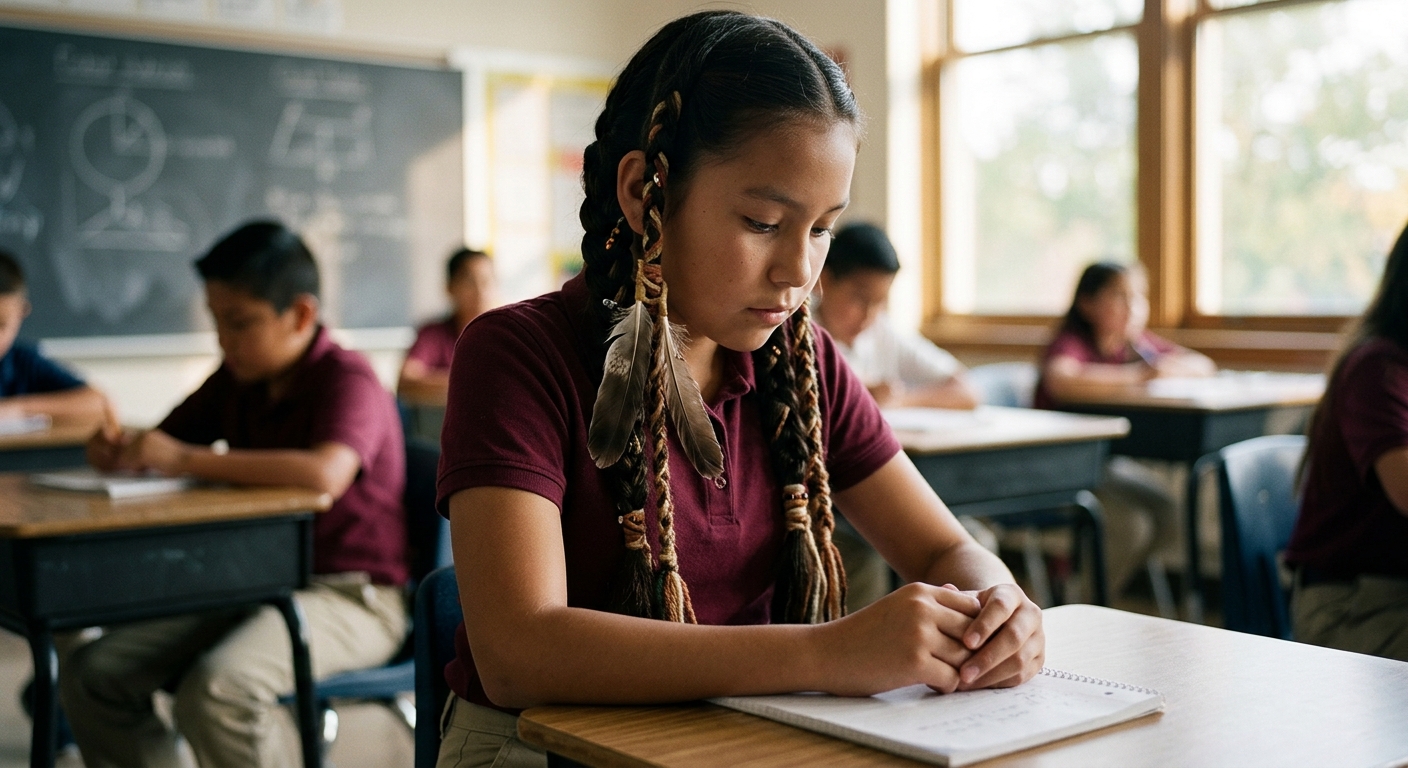
Introduction: When Cultural Heritage Meets Restrictive Educational Policies
For centuries, Indigenous communities have viewed their physical being as deeply intertwined with their spiritual beliefs and ancestral lineage. Among the most visible and sacred representations of this connection is hair. However, in contemporary educational settings, this profound cultural expression frequently collides with rigid, secular school dress codes. Across the United States, Native American students—particularly boys who maintain traditional long hair or braids—find themselves penalized, suspended, or threatened with expulsion simply for adhering to the customs of their people. This ongoing conflict is not merely a dispute over a perceived fashion statement; it is a profound civil rights issue that touches on religious freedom, cultural erasure, and the right to an equal education. The clash highlights a significant blind spot in modern educational administration: the failure to recognize and accommodate the diverse cultural realities of the student body. As civil rights advocates and families push back against these restrictive policies, it becomes increasingly crucial to understand the historical context and legal frameworks that underscore the necessity for culturally responsive educational environments.
The Deep Roots of Hair in Indigenous Traditions
To fully grasp the magnitude of the conflict over school dress codes, one must first understand the profound cultural significance of hair within many Native American nations. While it is important to acknowledge that there are hundreds of distinct Indigenous tribes in North America—each with its own unique traditions, languages, and spiritual practices—the reverence for long hair is a widely shared characteristic. In many of these traditions, hair is considered a physical manifestation of a person’s spirit, an extension of the soul, and a living connection to their ancestors and the natural world.
Braiding hair is often a sacred, communal act, passed down through generations. The strands of a braid can symbolize the mind, body, and spirit working in unison, or they can represent the intertwining of the past, present, and future. For many Indigenous boys and men, growing their hair long is not a cosmetic choice but a deeply held religious or spiritual commitment. Furthermore, the cutting of hair in many tribal cultures is reserved exclusively for times of profound grief or mourning. Forcing an Indigenous child to cut their hair outside of these specific, solemn circumstances is viewed as a severe violation of their spiritual well-being. It is an act that can bring about deep psychological distress and spiritual disruption. Therefore, when educational institutions dismiss long hair as a distraction or a violation of grooming standards, they are inadvertently mocking a thousand-year-old belief system, treating sacred traditions with the same flippancy as they would a passing adolescent trend.
A Dark History: Assimilation and the Boarding School Era
The enforcement of short hair on Native American children carries a particularly dark and traumatic historical weight. During the late nineteenth and early twentieth centuries, the federal government of the United States—alongside various religious organizations—implemented a systematic and aggressive assimilation policy. The cornerstone of this policy was the Indian Boarding School system, with institutions like the Carlisle Indian Industrial School and the Fort Spokane Indian Boarding School designed to forcibly integrate Indigenous youth into Euro-American society.
The operating philosophy of these institutions was notoriously summarized by the goal to essentially erase the Indigenous identity to save the individual in the eyes of western society. When Native children were forcibly removed from their families and brought to these schools, the very first step in this systemic erasure of identity was the shearing of their long hair. This traumatic initiation was meant to strip the children of their heritage, humiliate them, and sever their connection to their families and tribal communities.
The historical trauma associated with forced haircuts makes modern dress code disputes deeply painful for Native American families today. When a contemporary school board demands that an Indigenous boy cut his hair to conform to a grooming policy, it immediately echoes the violent assimilation tactics of the boarding school era. The United States government, through the National Park Service and various historical archives, has documented how the removal of hair, alongside the banning of Native languages and traditional clothing, was used as a deliberate tool to dismantle Indigenous identities. By failing to account for this history, modern schools risk perpetuating the same traumatic legacies, weaponizing policies to enforce conformity at the expense of cultural survival.
The Modern Battleground: Dress Codes as a Tool of Exclusion
Today, the formal boarding school era has ended, but the underlying mechanisms of cultural exclusion persist in the form of subjective school dress codes and grooming policies. Many school districts maintain regulations that stipulate hair length for male students—often requiring hair to be kept above the collar, ears, and eyebrows. While these policies are typically defended as neutral guidelines necessary for maintaining a professional learning environment, their application is overwhelmingly disproportionate in its impact on minority students.
For a Native American boy, a supposedly neutral policy capping hair length is an immediate barrier to his cultural expression and religious freedom. When these students are targeted by school administrators, the consequences extend far beyond a simple reprimand. Students who refuse to cut their sacred hair often face severe disciplinary actions, including in-school suspension, exclusion from extracurricular activities, isolation from their peers, or being barred from walking in their graduation ceremonies. This creates a hostile educational environment where the child is forced to choose between receiving an education and honoring their identity.
The psychological toll on a young student who is repeatedly told that their cultural identity is unacceptable in an academic setting is immense. It fosters feelings of alienation, lowers self-esteem, and can significantly hinder academic performance. Restrictive grooming policies often disproportionately target and penalize students based on their cultural, racial, or gender identities. When schools prioritize arbitrary grooming standards over the well-being and inclusion of their students, they undermine the fundamental goal of providing an equitable education for all attendees.
Legal Protections: Civil Rights and the First Amendment
The defense of Indigenous students’ rights to wear their hair traditionally is deeply rooted in established civil rights law and constitutional protections. When schools enact punitive measures against Native American students for their hair, they often run afoul of the First Amendment of the United States Constitution, which guarantees the free exercise of religion. Because long hair is an integral component of many Indigenous spiritual practices, mandatory haircuts or length restrictions infringe upon these constitutionally protected rights.
Furthermore, Title VI of the Civil Rights Act of 1964 prohibits discrimination on the basis of race, color, or national origin in any program or activity that receives federal financial assistance—which includes nearly all public schools. Enforcing dress codes that disproportionately penalize Native American cultural practices can be interpreted as a direct violation of Title VI. The U.S. Department of Education’s Office for Civil Rights is responsible for ensuring that schools do not implement policies that create a discriminatory or hostile environment for minority students.
It is also important to note the intersectional nature of these legal battles. While some cases are argued purely on the basis of religious freedom, others focus on racial discrimination, as hair textures and cultural hairstyles are inextricably linked to a student’s racial and ethnic background. The Department of Justice and the Office for Civil Rights have increasingly recognized that subjective grooming codes can serve as a proxy for racial discrimination, prompting investigations into districts whose policies disproportionately alienate minority students. Many states have begun to pass legislation explicitly designed to protect the religious and cultural expressions of Native Americans, ensuring that schools must permit traditional regalia and hairstyles.
Toward Culturally Responsive Educational Environments
Creating a genuinely inclusive educational system requires more than simply eliminating discriminatory rules; it necessitates a proactive shift toward culturally responsive education. Culturally responsive policies recognize that the student body is not a monolith and that standardized rules often fail to account for the diverse realities of different communities. Administrators must work collaboratively with tribal leaders, parents, and cultural experts to develop dress codes that respect religious and cultural differences without sacrificing the safety or functionality of the learning environment.
Traditional vs. Culturally Responsive Policies
| Aspect of Policy | Traditional/Restrictive Dress Code | Culturally Responsive Dress Code |
|---|---|---|
| Hair Length | Boys’ hair must not touch the collar or ears. | No gender-based length restrictions; traditional styles permitted. |
| Cultural Items | Banned as distractions or gang-related indicators. | Protected and accommodated as religious and cultural expressions. |
| Disciplinary Action | Immediate suspension or removal from class for violations. | Dialogue with families to understand the cultural context of attire. |
| Policy Development | Drafted uniformly by administration without community input. | Developed in consultation with diverse community representatives. |
Community Advocacy: The Push for Lasting Reform
The progress made in dismantling discriminatory dress codes has largely been driven by grassroots community advocacy. Parents, tribal elders, and student activists have consistently stood on the front lines, petitioning school boards and raising public awareness about the historical and cultural significance of Indigenous hair. When a school mischaracterizes a millennium-old tribal custom as a mere trend, it is the swift, organized response from the community that often forces a retraction and a comprehensive policy review. These local battles serve as vital catalysts for systemic reform, demonstrating that marginalized voices can effectively challenge and change entrenched bureaucratic systems.
Furthermore, these grassroots movements provide crucial educational moments for the broader public, bridging cultural divides and fostering empathy. Student activists who bravely wear their traditional braids to school despite the threat of disciplinary action are not just fighting for their own rights; they are paving the way for future generations to exist authentically. Their resilience highlights a profound shift in societal expectations, demanding that educational institutions evolve to serve all students equitably rather than forcing marginalized students to fit a narrow, Eurocentric mold.
Frequently Asked Questions (FAQs)
Why do some Indigenous cultures keep their hair long?
In many Native American cultures, hair is considered a physical extension of the spirit and a deep, living connection to one’s ancestors and the Earth. It is intricately tied to religious beliefs, personal identity, and tribal history. Long hair can symbolize strength, wisdom, and spiritual commitment, and is often only cut during periods of intense mourning.
Can public schools legally force a Native American student to cut their hair?
Generally, no. Public schools are bound by the First Amendment, which protects the free exercise of religion, and Title VI of the Civil Rights Act, which prohibits discrimination based on race or national origin. Policies that force Native students to cut their hair typically violate these robust legal protections.
How does the history of Indian Boarding Schools relate to modern hair policies?
During the boarding school era of the 19th and 20th centuries, Native American children were forcibly removed from their homes and subjected to systemic assimilation. This brutal process often began with cutting their long hair to intentionally erase their cultural identity. Modern policies that target Indigenous hair are deeply traumatic because they closely mirror these historical efforts of cultural erasure.
What can parents do if a school enforces discriminatory dress codes?
Parents can challenge the policy by first addressing the school board with educational resources regarding Indigenous culture and legal rights. If the administration refuses to adapt the policy, parents can file a formal complaint with the U.S. Department of Education’s Office for Civil Rights or seek assistance from legal advocacy groups specializing in civil liberties.
Conclusion: Fostering Environments of Belonging
The classroom should be a place where every single student feels safe, valued, and empowered to learn. When educational institutions cling to outdated and culturally insensitive dress codes, they betray this fundamental mission. Recognizing and honoring the deep cultural significance of Indigenous hair is not a concession; it is an essential act of respect and historical reckoning. By dismantling discriminatory policies and embracing culturally responsive frameworks, schools can finally move beyond the shadow of forced assimilation and build environments that celebrate the true, beautiful diversity of their student body.
References
- Addressing the Woodbury Collection — Peabody Museum of Archaeology & Ethnology at Harvard University. 2024-01-01. https://peabody.harvard.edu/addressing-woodbury-collection
- Fort Spokane Indian Boarding School — U.S. National Park Service. 2024-06-11. https://www.nps.gov/laro/learn/historyculture/fort-spokane-indian-boarding-school.htm
- Education and Title VI — U.S. Department of Education. 2024-01-01. https://www2.ed.gov/about/offices/list/ocr/docs/title6.html
- Department of Education Should Provide Information on Equity and Safety in School Dress Codes — U.S. Government Accountability Office (GAO). 2022-10-25. https://www.gao.gov/products/gao-23-105348
Similar Articles








Read full bio of Sneha Tete


