
How Indie Films Ignite Action on Immigrant Rights
Discover how indie films transform public perception and spark real advocacy.
The Catalyst of Storytelling: Bridging Empathy and Policy
At the intersection of art and civil rights, independent cinema occupies a unique and undeniably powerful position. While sweeping legislative changes, prolonged legal battles in the courts, and intense national debates dominate the daily headlines, it is often the quiet, character-driven narratives of independent movies—the proverbial “little films”—that most profoundly shift public consciousness. Historically, low-budget movies and deeply reported documentaries have tackled the labyrinthine and often harsh realities of immigration. They possess the unique ability to turn abstract statistics and dense legal rhetoric into deeply personal, lived human experiences that resonate on an emotional level.
Whether a narrative film portrays the psychological toll of prolonged border detention or a documentary highlights the sudden, invisible socio-economic barriers faced by undocumented families, these cinematic projects bridge an empathy gap that conventional news cycles frequently fail to close. When a low-budget, deeply resonant independent film garners top prizes at international film festivals, it does significantly more than elevate an emerging director’s career. It amplifies a critical social cause on a global stage, sparking urgent dialogue. This article explores how award-winning independent films serve as vital catalysts for immigrants’ rights, exploring their rich history, their strategic partnerships with grassroots advocacy groups, and their undeniable, long-lasting impact on the fight for human dignity and systemic reform.
The Enduring Power of the “Little Film”
A “little film” is rarely defined by its running time, but rather by its independent spirit, notably lower production budget, and lack of massive corporate studio backing. Free from the restrictive constraints of blockbuster commercialism and the pressure to appease global franchise markets, these films possess the creative liberty to delve unreservedly into complex, controversial social issues. Independent filmmakers frequently tackle subjects like systemic racism, xenophobia, and the deeply entrenched intricacies of border politics with a raw authenticity that mainstream media often dilutes.
Film festivals like Sundance, the Cannes Film Festival, and the Deauville American Film Festival have long served as vital launching pads for these marginalized narratives. When a smaller film tackles immigrants’ rights, it deliberately strips away the often polarizing and toxic rhetoric of partisan political discourse. Instead of endlessly debating the fiscal economics of border walls or the punitive legality of employment visas, viewers are invited into a quiet, intimate space. They sit across the table from a grieving mother, walk alongside a terrified child, or experience the harrowing isolation of a wrongfully detained agricultural worker. The visceral, immediate nature of visual storytelling fosters a profound connection that a standard government audit or policy report simply cannot achieve.
Academic analyses consistently highlight how independent cinema fundamentally shapes our understanding of the cultural “other.” Discourse analysis of the immigrant experience in modern U.S. cinema suggests that these films often provide a necessary, critical counter-narrative to the monolithic and sometimes outright hostile portrayals heavily circulated in mainstream political media. By focusing on psychologically complex characters rather than generic, villainized archetypes, independent directors compel audiences to recognize a shared, undeniable humanity. This enduring emotional power is precisely why small, independently financed films that manage to secure major accolades often spark a renaissance of public interest and direct action regarding the systemic issues they so poignantly depict.
Humanizing the Headlines: Immigration on Screen
The stark reality of immigration enforcement in the United States is staggering in its massive scale and life-altering impact. According to the U.S. Immigration and Customs Enforcement (ICE) Fiscal Year 2024 Annual Report, noncitizens from dozens of global nations pass through Enforcement and Removal Operations’ 129 designated detention facilities annually. The average daily population of detained individuals consistently hovers in the tens of thousands. However, behind these vast administrative figures and clinical government reports are individual lives completely suspended in terrifying uncertainty.
Independent cinema acts as a beacon, pulling these individuals out of the bureaucratic shadows. Documentaries and narrative features alike have painstakingly recreated or bravely documented the hidden conditions inside these facilities. For instance, recent comprehensive medical research published in JAMA Network Open (2025) strongly underscores the severe, long-term health harms experienced by individuals held in immigration custody. The study links prolonged detention duration directly to significantly higher rates of post-traumatic stress disorder (PTSD), severe psychological distress, and long-term physical health decline. While a prestigious medical journal presents these critical facts through rigorous data analysis, an independent film translates them into a gripping, accessible narrative. Cinema visually demonstrates the emotional unraveling of a detainee and the devastating collateral damage inflicted upon their helpless family members back home.
Furthermore, innovative digital projects like the University of California, Davis’s “Humanizing Deportation” initiative utilize community-based digital storytelling to give migrants a direct, unfiltered platform. By producing raw audiovisual shorts, those directly impacted by deportation reclaim their personal narratives from politicians and pundits. This grassroots, micro-budget form of the “little film” emphasizes that immigrants are not mere statistics, abstract legal problems, or political talking points, but rather the essential storytellers of their own lives.
- Empathy Through Character Arc: Viewers directly experience the paralyzing anxiety and the resilient hope of the protagonist, mirroring the actual psychological reality of navigating a foreign and hostile legal system.
- Exposing the Bureaucratic System: Films frequently reveal the opaque, labyrinthine nightmare of immigration courts, effectively illuminating human rights injustices that normally occur strictly behind closed doors.
- Centering Marginalized Voices: Empowering directors, screenwriters, and actors who possess firsthand, lived experience with the immigration system ensures vital authenticity and actively challenges long-held stereotypical depictions in media.
Advocacy Organizations and Cinematic Partnerships
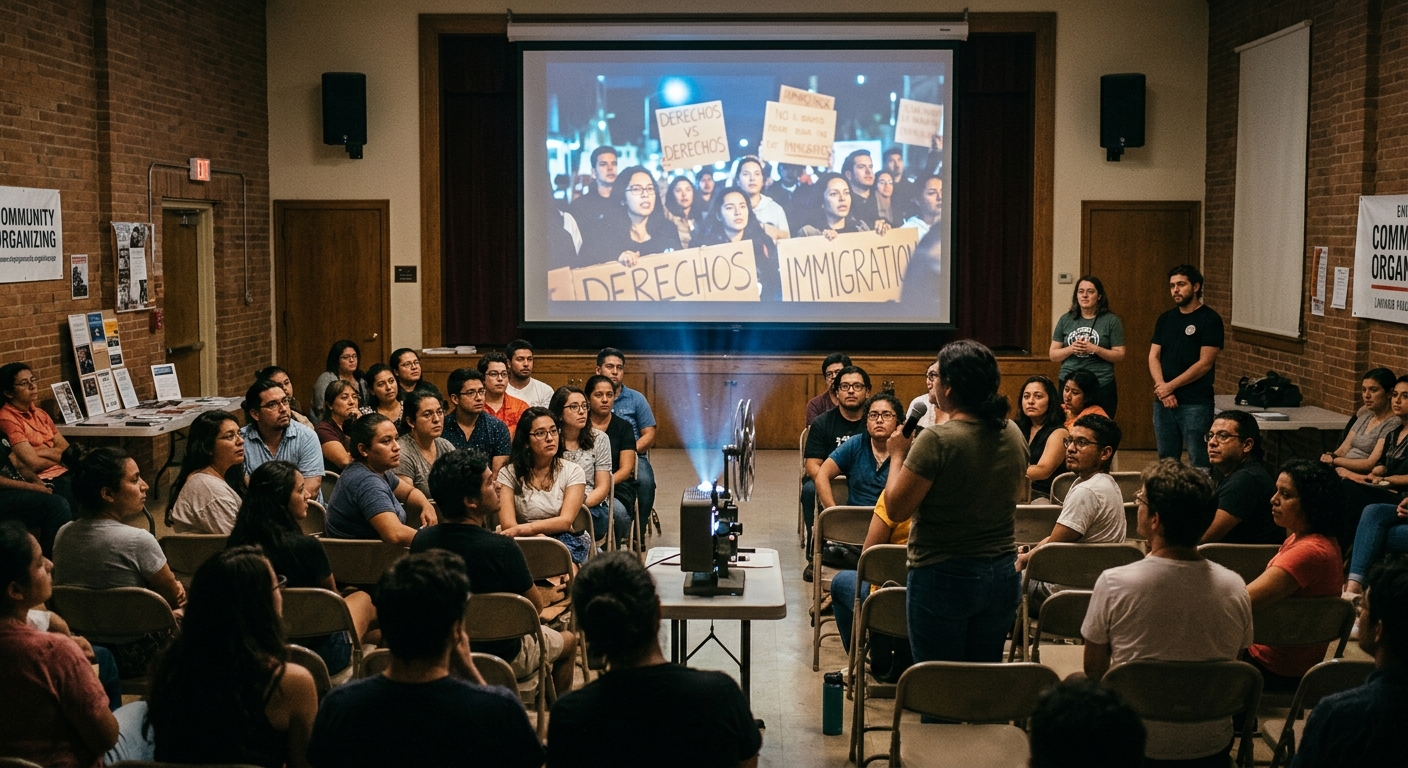
The relationship between visionary filmmakers and established civil rights organizations is deeply symbiotic and highly strategic. Groups dedicated to immigrants’ rights frequently utilize independent films as foundational tools for localized grassroots organizing, comprehensive educational campaigns, and large-scale donor mobilization. When a movie accurately and beautifully captures the harsh struggles of undocumented individuals, advocacy groups leverage the film’s momentum. They organize community screenings to mobilize local populations, raise emergency funds for legal defense, and pressure lawmakers to enact humane legislative changes.
These dynamic partnerships often take the structured form of specialized “impact campaigns.” Major philanthropic organizations recognize this power. For example, the Ford Foundation, through its acclaimed JustFilms initiative, explicitly and generously supports independent film and emerging media projects that boldly explore urgent social justice issues and seek to challenge systemic inequality in all its forms. By providing necessary financial grants to filmmakers who are thoroughly committed to highlighting the lived realities of marginalized communities, these organizations ensure that critical, diverse stories are produced, finalized, and strategically distributed to maximize their potential for social impact.
Moreover, these community screenings are rarely passive, quiet events. They are frequently followed by robust panel discussions featuring immigration attorneys, human rights activists, and the brave individuals whose stories were depicted on the screen. This interactive format seamlessly transforms the viewing experience from simple evening entertainment into a mobilized call to action. Attendees are often immediately provided with petitions to sign, practical information on how to contact their local congressional representatives, or direct opportunities to volunteer as translators for local legal aid clinics. In this practical way, the independent film becomes a powerful, localized engine for tangible, on-the-ground activism, directly feeding into the broader, national fight for immigrant justice.
Awards as Amplifiers for Social Justice
When an independent film concerning immigrants’ rights miraculously wins a top prize at a prestigious, globally recognized festival, the ripple effects extend far beyond the insular entertainment industry. Awards act as incredibly powerful amplifiers, effectively cutting through the relentless noise of a crowded, 24-hour media landscape. A “Best Picture,” “Best Documentary,” or “Grand Jury Prize” label instantly legitimizes a film’s subject matter. This coveted recognition guarantees significantly wider theatrical distribution, robust streaming contracts, and ultimately attracts audiences who might not normally seek out heavy social justice documentaries or nuanced indie dramas.
This suddenly heightened visibility forces mainstream news outlets to seriously discuss the film’s underlying subject matter. When major entertainment journalists interview the winning director on late-night television or morning news shows, the conversation inevitably and purposefully turns to the urgent political and social issues that inspired the cinematic work. Consequently, complex topics like arbitrary deportation quotas, heartbreaking family separations at the border, and the controversial legal statuses of sanctuary cities find their way into mainstream entertainment news. This strategic crossover reaches vast demographics that are otherwise completely disengaged from traditional, dry political reporting.
Furthermore, the high-profile prestige of an international award can sometimes offer a protective, visible shield for vulnerable filmmakers and activists operating in hostile, highly censored political climates. By bringing intense international attention to hyper-local injustices, a celebrated film can generate substantial diplomatic pressure and foster inspiring global solidarity. The “little film that could” ultimately proves to the world that a well-told story, recognized by peers for its profound artistic merit, is an unstoppable, formidable force for exposing and combating systemic inequities.
The Digital Age and the Future of Advocacy Cinema
The entire landscape of film distribution has undergone a radical, permanent transformation in the digital age, a shift that has further amplified the reach of social justice cinema. Historically, independent films struggled immensely to secure wide theatrical releases, heavily limiting their cultural impact to progressive enclaves in major coastal cities and specialized, niche art-house theaters. Today, the ubiquity of streaming platforms and robust digital archives has thoroughly democratized access. This technological shift allows an urgent, award-winning documentary about immigrant rights to literally reach a global audience of millions overnight.
The dominant rise of video-on-demand services effectively means that an award-winning documentary can be streamed directly into living rooms across the rural heartland, sparking necessary, sometimes uncomfortable conversations at family dinner tables far removed from the physical realities of the U.S.-Mexico border. This widespread, unprecedented accessibility is absolutely crucial for shifting public opinion on a massive national scale, bypassing the traditional gatekeepers of media.
As technology rapidly continues to evolve, so too do the very methods of documentary storytelling. Virtual reality (VR) and augmented reality (AR) experiences, for example, are aggressively pushing the traditional boundaries of human empathy by literally placing the viewer in the shoes of a migrant crossing a perilous, unforgiving desert border. As independent creators continue to bravely harness these new, immersive mediums, their core, unshakeable mission remains exactly the same: to humanize the often-ignored immigrant experience, advocate for fundamental human rights, and fearlessly challenge the political status quo.
| Cinematic Theme | Focus of the Narrative | Real-World Advocacy Impact |
|---|---|---|
| Border Crossings | The physical and psychological perils faced by migrants seeking asylum. | Raises funds for border search-and-rescue NGOs and medical aid groups. |
| Detention Conditions | The isolation, health decline, and lack of due process in holding facilities. | Pressures lawmakers to demand greater ICE oversight and facility inspections. |
| Family Separation | The emotional trauma experienced by children and parents torn apart by policy. | Drives massive public petition signatures and legal defense fund donations. |
| Labor Exploitation | The daily economic struggles and workplace hazards of undocumented workers. | Supports labor union organizing and sparks local boycotts of exploitative corporations. |
Frequently Asked Questions (FAQs)
Why are independent films uniquely effective in advocating for immigrants’ rights?
Independent films are highly effective because they prioritize deep character development, emotional authenticity, and raw truth over commercial viability. By avoiding the polarized, combative rhetoric of cable news, these films allow audiences to form a genuine empathetic connection with the real people directly affected by harsh immigration laws, making the political deeply personal.
How do civil rights organizations use movies for systemic advocacy?
Civil rights groups partner directly with filmmakers to launch strategic impact campaigns. They use targeted film screenings as community gathering points to educate voters, raise crucial funds for legal aid, spark panel discussions with experts, and mobilize audiences to immediately contact their representatives regarding pending immigration legislation.
What specific impact do film festival awards have on social issues?
Winning a major prize at a recognized film festival guarantees a film extensive media coverage and broader international distribution. This high-profile platform forces mainstream news outlets to discuss the systemic injustices highlighted in the film, thereby bringing marginalized social issues to the forefront of global public consciousness.
Where can audiences find independent films about immigration?
Many award-winning independent films and documentaries are available on major streaming platforms, through public broadcasting services (like PBS), and on specialized digital portals such as Kanopy (accessible via local libraries). Additionally, university initiatives like the UC Davis Humanizing Deportation project offer free, open-access archives of powerful digital stories.
References
- Duration in Immigration Detention and Health Harms — JAMA Network Open (Harvard Medical School & UC Berkeley). 2025-01-02. https://jamanetwork.com/journals/jamanetworkopen/fullarticle/2828359
- Immigration and Customs Enforcement Fiscal Year 2024 Annual Report — U.S. Immigration and Customs Enforcement (ICE). 2024-12-19. https://www.ice.gov/doclib/news/library/reports/annual-report/ice-fy24-annual-report.pdf
- About the Project – Humanizing Deportation — UC Davis. 2025-05-15. https://humanizandoladeportacion.ucdavis.edu/en/about-the-project/
- The Immigrant Experience in Recent US Cinema: A Discourse Analysis — KU ScholarWorks. 2022-11-17. https://kuscholarworks.ku.edu/handle/1808/32959
- JustFilms — Ford Foundation. 2023-01-01. https://www.fordfoundation.org/work/our-grants/justfilms/
Similar Articles








Read full bio of medha deb


