Indiana Foreclosure Guide: Laws and Processes
Comprehensive guide to Indiana's judicial foreclosure rules, timelines, borrower rights, and strategies to halt proceedings effectively.
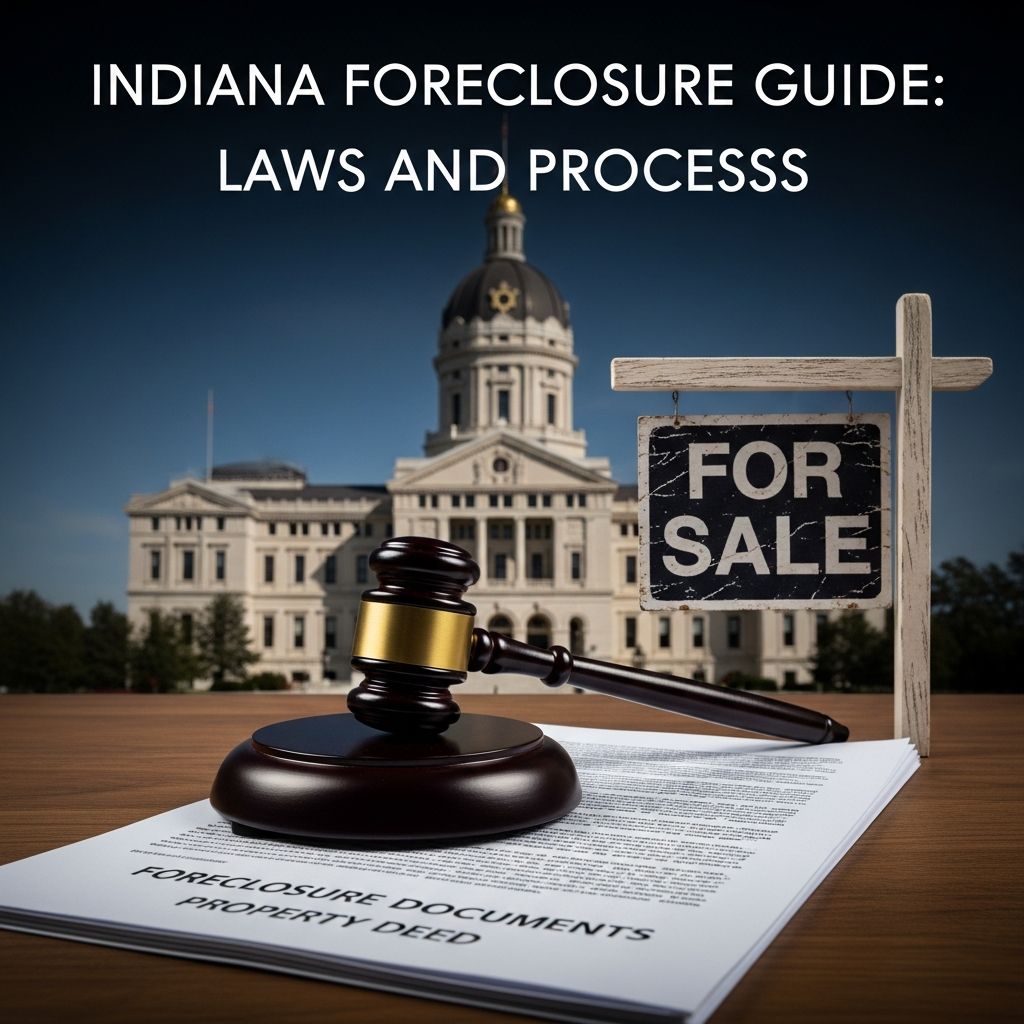
Indiana operates under a
judicial foreclosure
system, requiring lenders to file lawsuits in court to repossess properties after payment defaults. This process incorporates protections enacted post-2009 to aid homeowners amid rising defaults. Homeowners receive advance warnings, opportunities for negotiation, and chances to cure defaults before losing their residences.Overview of Indiana’s Judicial Foreclosure Framework
The state’s foreclosure statutes, primarily in Indiana Code Title 32, Article 30, mandate court supervision for all residential foreclosures. Lenders cannot seize properties without judicial approval, ensuring due process. Federal overlays, like 12 C.F.R. § 1024.41, prohibit foreclosures before 120 days of delinquency in most cases. This dual layer promotes loss mitigation, such as loan modifications or forbearance, before litigation.
Key statutes include Ind. Code § 32-30-10.5 (foreclosure mediation), § 32-30-10 (notice and reinstatement), and § 32-29-7 (sale procedures). These rules apply to mortgages on owner-occupied homes, emphasizing counseling referrals and settlement conferences.
Pre-Foreclosure Notice Requirements
Creditors must dispatch a certified mail notice at least
30 days
prior to court filing, detailing the default amount, cure instructions, and homeowner resources. This notice highlights:- Default status and overdue balance.
- Recommendation for free counseling via the Indiana Foreclosure Prevention Network.
- Right to request a settlement conference within 30 days of summons service.
- Options like reinstatement or redemption.
Failure to send this notice invalidates subsequent actions. Homeowners should verify receipt and contact approved counselors immediately for personalized advice.
Commencing the Foreclosure Lawsuit
Post-notice, lenders file complaints in the county circuit or superior court where the property lies. Borrowers receive summons and complaints, triggering a
20-day
response window. Ignoring this risks default judgments.Courts may schedule settlement conferences if requested timely. These mandatory sessions explore alternatives like payment plans or modifications. No resolution allows proceedings to advance.
Critical Timeline from Filing to Judgment
| Stage | Timeline | Key Actions |
|---|---|---|
| Pre-Suit Notice | 30 days before filing | Certified mail with rights info |
| Complaint Filing & Service | Day 0 | Summons served; 20-day answer due |
| Settlement Conference Request | Within 30 days of service | Optional mediation |
| Earliest Judgment | ~3 months post-filing | Court decree if uncontested |
| Sale Notice Publication | 30 days pre-sale | 3 weekly ads + courthouse posting |
This structure, updated post-2009, prevents rushed evictions. Older mortgages (pre-1975) may impose longer waits.
Reinstatement and Cure Opportunities
Indiana permits reinstatement—full payment of arrears, fees, and costs—to halt proceedings. Pre-judgment reinstatement dismisses the case outright; post-judgment but pre-sale stays it, though defaults restart the clock. High-cost loans extend this to title transfer.
- Pre-Judgment: Pays default + costs; suit dismissed.
- Post-Judgment: Similar, but sale postponable; new misses resume.
Federal rules reinforce this during the 120-day delinquency window.
Foreclosure Auction Procedures
Upon judgment, sheriffs conduct public auctions. Notices post at courthouses and publish weekly for three weeks, starting 30 days prior. Bidders, often the lender, offer cash or credit bids. Successful purchasers gain sheriff’s deeds after confirmation hearings.
No post-sale redemption period exists, unlike some states—full payoff must precede auction. Properties remain occupiable until eviction orders.
Deficiency Judgments and Waivers
Lenders may pursue deficiencies (sale price minus debt) unless waived. Borrowers can sign waivers accelerating sales (bypassing 3-month wait) in exchange for deficiency forgiveness. This trade-off suits those conceding loss but limiting liability.
Courts assess fair market value; anti-deficiency rules rarely apply to purchase-money mortgages.
Homeowner Defense Strategies
Beyond reinstatement, options include:
- Loss Mitigation: Apply for modifications via servicers.
- Bankruptcy: Automatic stays pause actions (Chapter 13 for cures).
- Short Sales/Deeds-in-Lieu: Negotiate lender approvals.
- Challenges: Contest improper notices, servicer errors, or predatory terms.
Recent data flags Indiana’s high foreclosure rates (7th nationally in 2025), underscoring urgency. Free aid via Indiana Legal Help aids navigation.
Recent Legal Developments
Post-pandemic, Indiana Supreme Court exemptions spared foreclosures from affidavit rules under Trial Rule 9.2(A)(2)(d). 2026 State of the Judiciary emphasizes accessible resources amid elevated activity.
Frequently Asked Questions
How long is the Indiana foreclosure process?
Typically 4-6 months from filing to sale, with 30-day pre-notice adding time.
Can I stay in my home during foreclosure?
Yes, until post-sale eviction; redemption possible pre-auction.
What if I miss the settlement conference deadline?
Foreclosure accelerates without mediation.
Does bankruptcy stop Indiana foreclosure?
Yes, via automatic stay; file before sale for best effect.
Are deficiency judgments common?
Possible but waivable for faster sales.
Consult attorneys for tailored strategies, as rules evolve.
References
- The Indiana Foreclosure Timeline — Camden & Meridew, P.C. 2023. https://camlawyers.com/indiana-foreclosure-timeline/
- Foreclosure Laws and Procedures: 50-State Survey — Justia. 2025. https://www.justia.com/foreclosure/foreclosure-laws-and-procedures-50-state-survey/
- Foreclosure Laws in Indiana — LawInfo.com. 2025. https://www.lawinfo.com/resources/foreclosure/indiana/
- Indiana Foreclosure Laws and Procedures — Nolo. 2025. https://www.nolo.com/legal-encyclopedia/indiana-foreclosure-laws-and-procedures.html
- Post-Pandemic Indiana Foreclosure Updates — MDK Legal. 2022-07-06. https://www.mdklegal.com/post/2022-07-06-post-pandemic-indiana-foreclosure-updates
- Indiana Foreclosure Law Summary 2026 — Got Trouble. 2026. https://gottrouble.org/indiana-foreclosure-law-summary/
Similar Articles








Read full bio of Sneha Tete