
Door Signs: Key to Business Success and Safety
Unlock the power of door signs: enhance safety, branding, navigation, and legal compliance for your business environment.
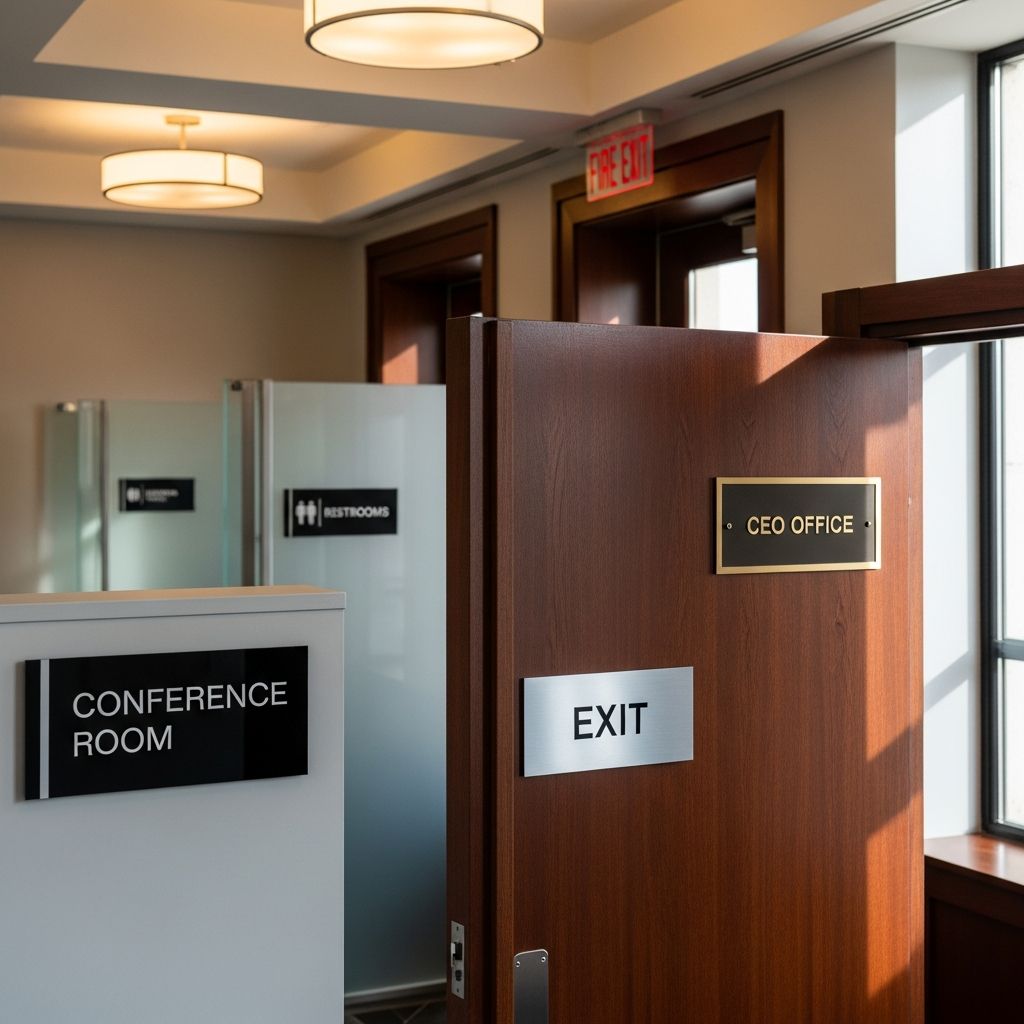
Door signs serve as silent ambassadors for any business, conveying essential information at a glance while upholding legal standards and enhancing operational efficiency. Beyond mere labels, they play a critical role in guiding visitors, reinforcing brand identity, and ensuring safety compliance.
The Strategic Role of Door Signs in Modern Workplaces
In today’s fast-paced business environments, effective signage is indispensable. Office door signs identify rooms, departments, and key personnel, reducing confusion and streamlining movement. Studies indicate that well-implemented wayfinding systems can cut navigation time by up to 20%, allowing employees and clients to focus on productive activities rather than searching for locations.
These signs also project professionalism. A polished acrylic or metal plaque on an executive’s door instantly signals competence and attention to detail. For shared spaces like clinics or co-working facilities, clear labeling prevents mix-ups, fostering a smooth experience for all users.
Legal and Regulatory Imperatives for Business Signage
Compliance with accessibility laws is non-negotiable. The Americans with Disabilities Act (ADA) mandates specific standards for door signage to accommodate individuals with visual impairments. Signs must feature raised tactile characters, Grade 2 Braille, and high-contrast finishes. Placement is equally precise: mount on the latch side of the door, with the centerline at 60 inches from the floor.
Failure to adhere can result in fines or lawsuits. Businesses must audit their signage regularly to align with updates from the U.S. Access Board, which oversees ADA guidelines. Primary sources like the ADA Standards for Accessible Design emphasize non-glare materials and sans-serif fonts for optimal readability.
- Tactile Requirements: Raised letters 1/32 inch above the surface.
- Braille Placement: Directly below corresponding text.
- Color Contrast: Light characters on dark background or vice versa.
Enhancing Safety Through Thoughtful Door Sign Design
Safety signs on doors alert to hazards, restricted areas, or emergency protocols. In industrial or high-traffic settings, symbols for fire exits, no-entry zones, or biohazards prevent accidents. Ergonomics research highlights how intuitive designs—using universal symbols and bold colors—reduce reaction times during crises.
For instance, green for safe exits and red for dangers align with human factors principles, minimizing cognitive load. UK studies mirror this, showing labeled spaces boost productivity by 12% and enhance safety perceptions. Regular maintenance, like wiping metal signs with mild soap, ensures longevity and visibility.
| Sign Type | Purpose | Recommended Materials |
|---|---|---|
| Exit Signs | Emergency Egress | Photoluminescent Acrylic |
| Restricted Access | Security Control | Brushed Aluminum |
| Room Identification | Navigation Aid | Engraved Plastic |
Branding Power: Door Signs as Marketing Tools
Door signs extend a company’s visual identity, incorporating logos, colors, and taglines. Custom designs in acrylic or stainless steel create a cohesive look, making lasting first impressions. Visitors associating sleek signage with reliability are more likely to trust the brand.
In multi-tenant buildings, distinctive signs differentiate your space. Research from workplace design firms notes that branded entryways increase perceived value by 15%, influencing client retention. Opt for durable, fade-resistant materials to maintain this edge over time.
Best Practices for Optimal Sign Placement and Design
Strategic placement unifies interior flow. Position signs at eye level, avoiding obstructions, to aid spatial orientation. A consistent logic—such as all room names at 58-60 inches—enhances comfort and efficiency.
Choose materials based on environment: acrylic for modern aesthetics, metal for durability in high-use areas. Test for readability under various lighting. Human factors experts stress intuitive layouts, considering user reaction time and competing visuals.
- Assess space layout and traffic patterns.
- Select compliant, branded designs.
- Install at standardized heights.
- Schedule periodic inspections.
Materials and Durability: Selecting the Right Fit
Material choice impacts longevity and appeal. Acrylic offers vibrant colors and weather resistance; engraved options provide elegance. Metal signs withstand heavy traffic, while vinyl suits temporary needs.
Maintenance is key: clean with non-abrasive solutions to preserve clarity. For outdoor-adjacent doors, UV-resistant coatings prevent fading. Businesses investing in quality see returns through reduced replacement costs and sustained professionalism.
Case Studies: Real-World Impact of Effective Signage
A UK firm revamped office signs, reporting 18% faster visitor onboarding and heightened brand recall. Similarly, U.S. clinics adhering to ADA saw zero compliance complaints post-upgrade. These examples underscore signage’s ROI in efficiency and liability reduction.
In ergonomics, highway sign studies inform indoor applications: clear, non-distracting designs save time and lives. Applying these lessons indoors optimizes workplaces holistically.
Frequently Asked Questions (FAQs)
What are ADA requirements for door signs?
ADA mandates tactile signs with Braille on the latch side, 60 inches centerline height, high contrast, and non-glare finishes.
How do door signs improve productivity?
They reduce search time by 20% and boost efficiency in navigation-heavy spaces.
What materials are best for office door signs?
Acrylic for style, metal for durability, engraved for professionalism.
Why is sign placement critical?
Unified placement enhances navigation comfort and spatial perception.
Can door signs reinforce branding?
Yes, custom designs with logos create strong, consistent brand impressions.
Implementing a Comprehensive Signage Strategy
Start with an audit: map current signs against compliance and branding goals. Collaborate with designers versed in regulations. Budget for quality—initial costs yield long-term savings. Train staff on updates to maximize benefits.
Digital integrations, like LED signs for dynamic info, represent future trends. Yet, timeless tactile signs remain foundational for accessibility.
References
- Why Choosing the Right Office Door Signs Matters — Zero Signs. 2023. https://zerosigns.co.uk/blog/why-choosing-the-right-office-door-signs-matters/
- 5 Door Signs For Business: Materials, Styles, And Tips — Safety Decals. 2024. https://www.safetydecals.com/blogs/news/door-signs-for-business
- Why Signs Are Important in Everyday Life — Taylor’d Ergonomics. 2023-10-15. https://www.taylordergo.com/why-signs-are-important-in-everyday-life/
- Everything You Need to Know About Door Signages for Your Business — Faabi Digital. 2024. https://www.faabidigital.com/everything-you-need-to-know-about-door-signages-for-your-business/
- How to Properly Organize Door Sign Placement in Interior Spaces — BSign Store. 2024. https://bsign-store.com/blogs/news/how-to-properly-organize-door-sign-placement-in-interior-spaces
Similar Articles








Read full bio of medha deb




