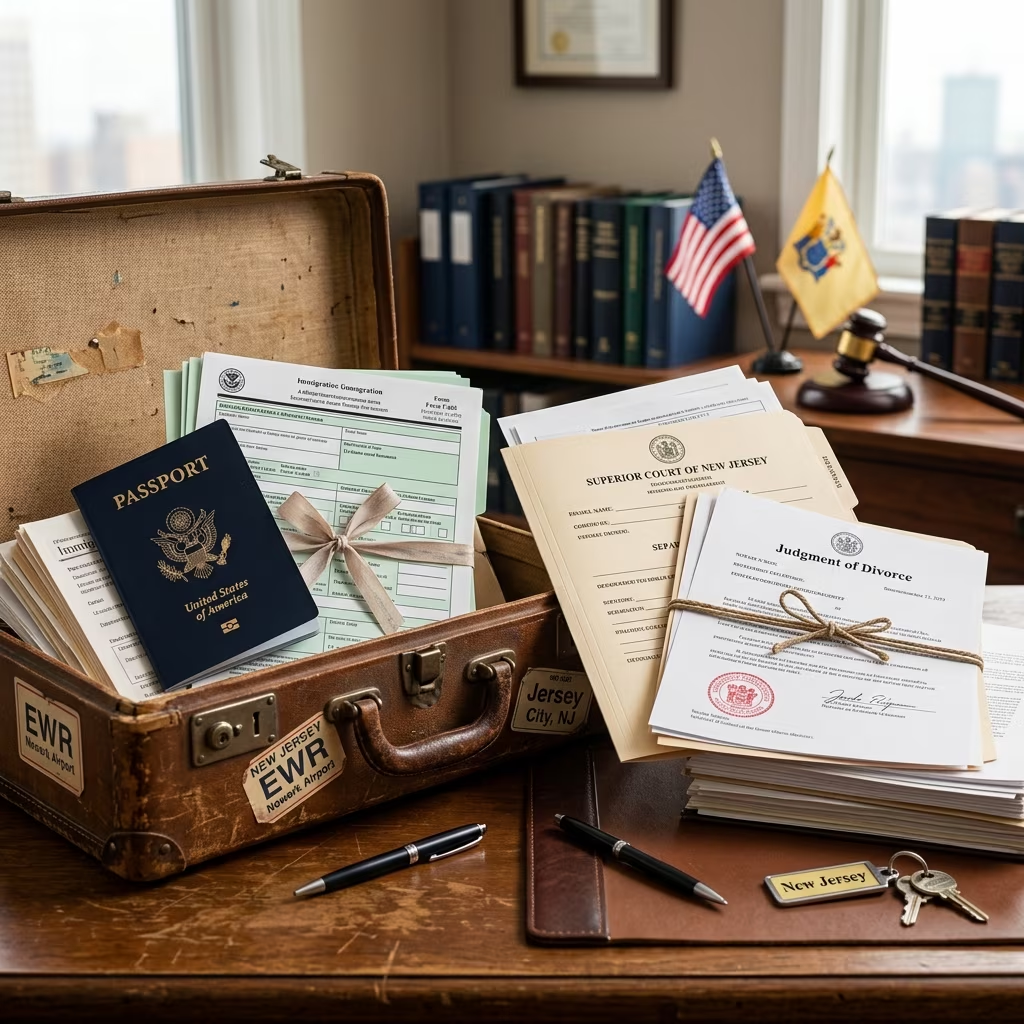
Ending a marriage is difficult for any family, but the process can feel especially overwhelming when one or both spouses are immigrants living in New Jersey. Questions about divorce, immigration status, custody, and financial support often overlap, creating fear and confusion. This guide explains how New Jersey divorce law works for immigrant families, what impact divorce may have on immigration status, and what legal protections are available.
1. Divorce Jurisdiction and Residency for Immigrants
In New Jersey, your immigration status does not determine whether you can file for divorce. What matters is residency and domicile, not citizenship or visa type. Any spouse—regardless of whether they are a citizen, permanent resident, or undocumented—may file for divorce if the state’s residency and jurisdiction requirements are met.
1.1 Who Can File for Divorce?
Either partner in a marriage, civil union, or registered domestic partnership can file for divorce in New Jersey.
- It does not matter if the filing spouse is a U.S. citizen, permanent resident, or has no lawful status.
- Courts focus on whether New Jersey is the spouse’s bona fide residence (true, good-faith home).
1.2 Basic Residency Requirements
New Jersey law generally requires at least one spouse to be a bona fide resident of the state for a set period before filing.
| Requirement | Standard Rule | Key Details |
|---|---|---|
| Residency length | At least 1 year before filing | Applies to most divorce grounds. |
| Adultery exception | No one-year minimum | At least one spouse must reside in New Jersey, even if less than a year. |
| Bona fide resident | Living in NJ with intent to remain | Physical presence plus intention to stay permanently or indefinitely. |
New Jersey’s courts acquire jurisdiction when the legal complaint is properly served and residency requirements are satisfied. Immigration status is not part of this jurisdiction test.
2. Grounds for Divorce and Procedure
Immigrant and non-immigrant spouses use the same legal grounds and procedures for divorce. The law does not create different rules based on citizenship.
2.1 Common Grounds for Divorce
New Jersey allows both no-fault and fault-based grounds for divorce.
- No-fault (irreconcilable differences) – persistent relationship breakdown for at least 6 months with no reasonable prospect of reconciliation, plus 12 months residency before filing.
- Separation – spouses have lived apart for at least 18 consecutive months with no expectation of resuming the marriage.
- Adultery – marital infidelity, which also triggers the special residency rule with no one-year requirement.
- Extreme cruelty – physical or emotional abuse, harassment, or severe mistreatment.
- Other grounds – including long-term imprisonment, institutionalization for mental illness, and habitual substance abuse.
2.2 Basic Steps in a New Jersey Divorce
While details can vary, the overall process follows similar steps for all couples.
- Meet residency and grounds requirements – confirm that at least one spouse qualifies as a resident and that there is a legal basis to end the marriage.
- Prepare court documents – including the divorce complaint and standard forms required by the New Jersey courts.
- File the complaint – with the Superior Court Family Division, electronically or in person, and pay the filing fee or request a waiver.
- Serve the other spouse – deliver the summons and complaint within 60 days and provide proof of service.
- Respond or contest – the other spouse can answer the complaint, agree, or contest issues such as custody, support, or property division.
- Resolve issues – through negotiation, mediation, or court hearings leading to a final judgment of divorce.
None of these steps require the spouse to prove legal immigration status. However, immigration consequences should be considered separately, particularly for those whose status depends on the marriage.
3. How Divorce Can Affect Immigration Status
Although New Jersey courts do not deny divorces based on immigration status, the end of a marriage can affect federal immigration rights. The impact depends on the type of status and how it was obtained.
3.1 Marriage-Based Green Cards
When a person gains permanent residence through marriage to a U.S. citizen or lawful permanent resident, divorce may change their path to citizenship but does not automatically cancel a permanent green card.
- Conditional permanent residents (green card valid for two years) must usually file a joint petition with their spouse to remove conditions.
- If the couple divorces before or during that petition, the immigrant must seek a waiver and prove the marriage was entered in good faith, not solely for immigration benefits.
- Permanent (10-year) green card holders keep their resident status after divorce, but the split can affect when and how they apply for naturalization, especially if they planned to use the shorter three-year rule based on marriage to a U.S. citizen.
3.2 Dependent Visa Holders
Many immigrants live in the United States under non-immigrant visas that depend on a spouse’s status (such as H-4, L-2, or other derivative visas). Divorce can threaten this dependent status.
- When immigration status is tied directly to the primary visa holder, divorce may cause the dependent spouse to lose status once the marriage ends.
- Loss of status often means they cannot simply switch to a different visa from inside the United States and may need to depart or seek separate relief.
- Those at risk should consult an immigration professional early, preferably before the divorce is final, to explore options such as self-petitions or other independent categories.
3.3 Common Misconceptions
- “My spouse can cancel my green card by divorcing me.” – Divorce alone does not automatically revoke permanent residency; immigration authorities examine whether the original marriage was genuine and whether conditions were properly removed.
- “Marriage gives instant citizenship.” – Marriage can open a path to a green card, but does not grant immediate citizenship or residency.
- “I cannot get divorced because I am undocumented.” – New Jersey law does not bar undocumented spouses from filing for divorce if they meet residency rules.
4. Custody, Parenting Time, and Immigration Concerns
Disputes about children can be especially stressful for immigrant parents who worry that their status is a disadvantage. Under New Jersey law, custody decisions are based on the best interests of the child, not the parent’s immigration status.
4.1 Best Interests of the Child Standard
New Jersey courts analyze multiple factors to decide what custody and parenting arrangements protect the child’s safety, stability, and emotional well-being.
- Each parent’s ability to provide a safe, stable home.
- History of caregiving and involvement in the child’s life.
- Any history of domestic violence, coercion, or threats.
- The child’s needs, school situation, health, and community ties.
Immigration status by itself is not listed as a deciding factor. A parent does not lose custody rights simply because they are not citizens.
4.2 Threats and Coercion Based on Immigration Status
Some spouses attempt to control the other by threatening deportation or claiming they will use immigration status to block access to children. New Jersey courts view such behavior seriously.
- Threats to have a spouse deported or to withdraw immigration sponsorship can be considered forms of harassment, intimidation, or coercion.
- These actions may qualify as domestic violence under New Jersey law, especially if used to control or frighten the other parent.
- If proven, such conduct can influence custody and visitation decisions and may lead to protective orders.
5. Financial Support, I-864 Sponsorship, and Divorce
For some immigrants, financial support after divorce involves both state family law and federal immigration contracts. One key document is the Form I-864 Affidavit of Support, signed by a sponsoring spouse when an immigrant seeks permanent residence.
5.1 Alimony and Child Support Under New Jersey Law
New Jersey courts can order alimony (spousal support) and child support based on state guidelines. Factors include income, earning capacity, length of marriage, and the needs of children. Immigration status is not a bar to receiving support.
5.2 The I-864 Affidavit of Support
When an immigrant obtains permanent residence through sponsorship, the sponsoring spouse signs Form I-864, promising to maintain the immigrant at a certain income level. This is a binding contract under federal law, independent of state divorce judgments.
- The sponsor’s obligation can continue even after the marriage ends, until specific federal conditions are met (for example, the immigrant becomes a citizen or works enough quarters in covered employment).
- This duty exists alongside state alimony rules; it does not automatically replace them or disappear at divorce.
- Courts examining support may consider whether the sponsoring spouse interfered with the immigrant’s ability to work or obtain authorization.
6. Protection for Immigrant Victims of Abuse or Coercion
Immigrants facing divorce sometimes endure domestic violence or threats tied to immigration status. There are legal protections that can help, both in state family court and through federal immigration programs.
6.1 Domestic Violence and Family Court Remedies
Conduct such as physical abuse, stalking, immigration-related threats, and other forms of coercive control may qualify as domestic violence. New Jersey courts can issue protective orders, grant temporary custody, and set support in appropriate cases.
6.2 Immigration Options for Abused Spouses
U.S. law offers potential remedies for certain victims of abuse or serious crimes:
- Some abused spouses of U.S. citizens or permanent residents may qualify to seek legal status without relying on the abusive spouse.
- Victims who cooperate with law enforcement may have access to specific immigration protections designed to encourage reporting and cooperation.
These options are complex and depend on individual circumstances, so professional immigration guidance is essential.
7. Practical Tips for Immigrant Spouses Considering Divorce
Because divorce can affect both your family and your immigration future, thoughtful planning is important. The following practical steps can help you protect your rights.
7.1 Key Steps to Take Early
- Clarify your current immigration status – determine whether you hold a conditional green card, a permanent green card, a dependent visa, or no lawful status.
- Assess residency eligibility – confirm that you or your spouse meet New Jersey’s residency requirements for divorce.
- Document the marriage – maintain evidence such as joint leases, bank accounts, photos, and communications, especially if you will need to prove good-faith marriage for immigration purposes.
- Gather financial records – including income statements, tax returns, and evidence related to any I-864 sponsorship obligations.
- Seek legal advice – ideally from both a family law attorney and an immigration attorney, since state and federal issues intersect.
7.2 Common Pitfalls to Avoid
- Assuming you must stay in an unsafe marriage to keep your immigration status.
- Ignoring deadlines for removing green card conditions or changing dependent status after divorce.
- Relying on a spouse’s threats or informal promises rather than actual legal information.
- Failing to appear in court due to fear of immigration consequences; family court participation is crucial to protect your rights.
8. Frequently Asked Questions (FAQ)
8.1 Can an undocumented spouse file for divorce in New Jersey?
Yes. As long as residency requirements are met and the complaint is properly served, immigration status—documented or undocumented—does not prevent a spouse from filing for divorce in New Jersey.
8.2 Will I lose my permanent green card if I get divorced?
Divorce does not automatically revoke a permanent (10-year) green card. However, it can affect the timing and eligibility for citizenship, and immigration authorities may review whether the original marriage was genuine.
8.3 What happens if we divorce while I still have a conditional green card?
If divorce occurs before conditions are removed, you generally need to apply for a waiver and demonstrate that the marriage was entered in good faith, not solely for immigration reasons. Approval is not automatic and requires evidence.
8.4 Can my spouse use my immigration status to take away our children?
Custody decisions are based on the child’s best interests, including safety and stability, not a parent’s immigration status alone. Threats to use immigration to block parenting time can be viewed negatively by the court and may even be considered domestic violence.
8.5 Does the Affidavit of Support (I-864) stop applying after divorce?
No. The sponsoring spouse’s obligations under Form I-864 usually continue even after divorce, until specific federal conditions are met. This duty exists alongside, not instead of, New Jersey alimony rules.
References
- Divorce — New Jersey Courts. 2024-01-05. https://www.njcourts.gov/self-help/divorce
- New Jersey Revised Statutes Section 2A:34-10 — Justia / State of New Jersey. 2025-01-01. https://law.justia.com/codes/new-jersey/title-2a/section-2a-34-10/
- New Jersey Divorce — WomensLaw.org. 2023-03-01. https://www.womenslaw.org/laws/nj/divorce
- Immigration, Marriage, and Ending a Union in NJ — Hebbon & Murphy Law Firm. 2023-07-10. https://www.hebbonlaw.com/immigration-marriage-and-ending-a-union-in-nj/
- The Effect of Divorce on Immigration Status in New Jersey — Law Offices of Peter Asaad. 2022-05-12. https://www.njimmigrationattorney.com/articles/the-effect-of-divorce-on-immigration-status-in-new-jersey/
- Divorce and Immigration Status: What You Need to Know to Protect Yourself — Weinberger Law Group. 2022-09-08. https://www.weinbergerlawgroup.com/blog/divorce-family-law/divorce-and-immigration-status-what-you-need-to-know-to-protect-yourself/
- Does Immigration Status Affect My Ability to File for Divorce? — Lyons & Associates P.C. 2022-07-15. https://www.lyonspc.com/2022/07/15/immigration-status-file-divorce/