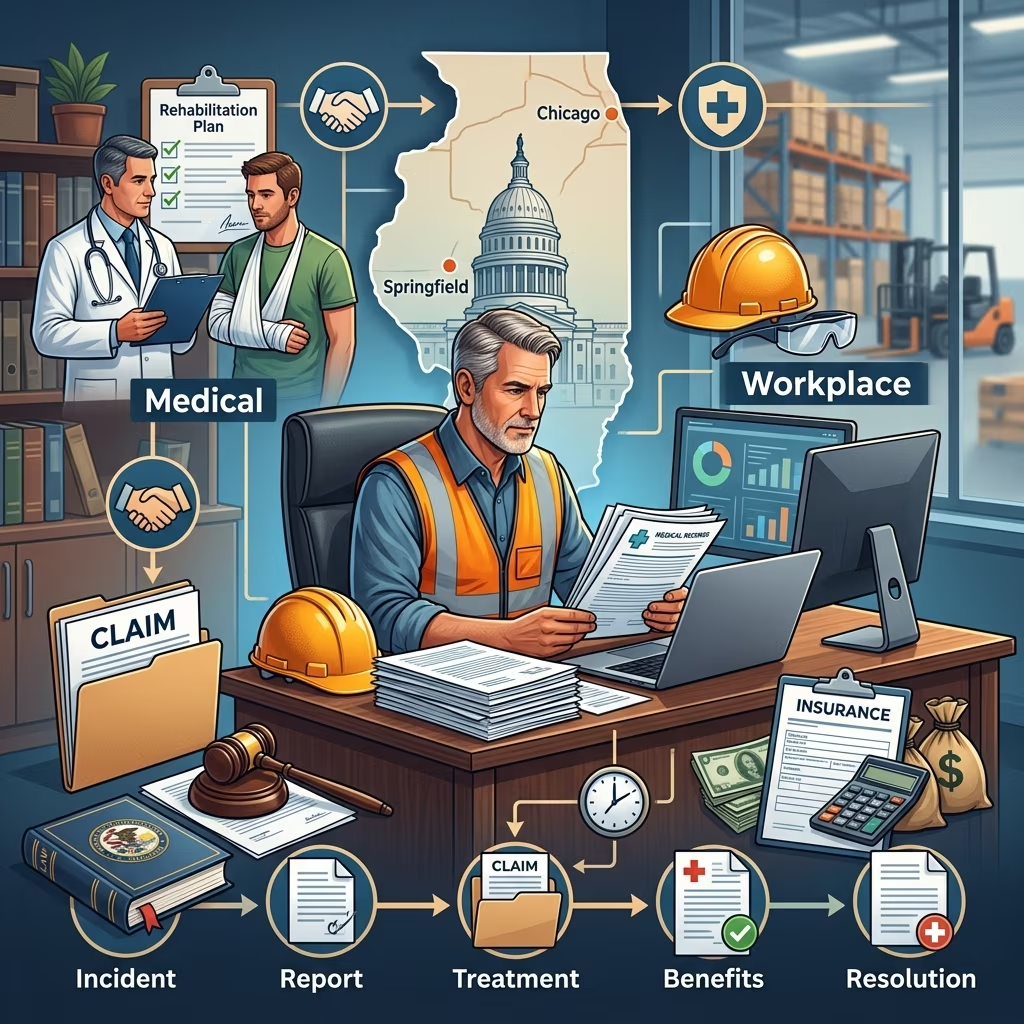
Illinois workers’ compensation law is designed to provide a streamlined path to benefits when a job-related injury or illness occurs. In place of a traditional lawsuit over fault, the system generally focuses on whether the condition arose from work and whether the required procedures were followed. For employees, that means medical care and wage-related benefits may be available even when no one acted carelessly. For employers, it means maintaining the required insurance coverage and responding properly when an injury is reported.
Because the rules are tied to deadlines, coverage status, and the relationship between the condition and the job, understanding the structure of the system matters. The details also differ depending on whether the issue involves a sudden accident, a repetitive-use injury, or an occupational disease. This guide explains the main parts of the Illinois system in clear terms and highlights the issues that often decide whether a claim moves forward successfully.
How the Illinois system works
Illinois uses a no-fault workers’ compensation model. In general, an injured worker does not have to prove that the employer was negligent. Instead, the key question is whether the injury or disease arose out of and in the course of employment. If that connection exists and the procedural rules are satisfied, the worker may be entitled to benefits regardless of who caused the accident.
The system is also administrative. Claims are handled through workers’ compensation procedures rather than ordinary civil litigation. That structure is intended to give injured workers a faster route to benefits while limiting the need for prolonged courtroom disputes. The tradeoff is that the claim process has rules about notice, filing, proof, and covered employers that must be followed carefully.
Who is covered under the law
Coverage in Illinois is broad. Most employees are covered from the moment they begin work, including many full-time and part-time employees. Coverage can also apply in situations where the worker is hired in Illinois, the employment is principally located in Illinois, or the injury occurs in Illinois under conditions recognized by the statute.
Some categories of business owners may choose whether to come under the Act. Sole proprietors, business partners, corporate officers, and certain limited liability company members may be able to opt in or opt out depending on their business structure and insurance setup. That flexibility generally does not extend to ordinary employees, who are typically covered automatically once the employment relationship begins.
- Most employees are covered immediately when employment starts.
- Coverage commonly extends to part-time workers as well as full-time workers.
- Some owners and officers may elect coverage rather than being automatically included.
- Out-of-state employers may still owe Illinois coverage if the work is localized in Illinois or the hire occurred in Illinois.
What kinds of injuries and illnesses qualify
Illinois workers’ compensation generally applies to both accidental injuries and occupational diseases linked to work. A single traumatic event, such as a fall or equipment accident, may qualify if it occurred in the course of employment. So may injuries caused by repeated motions, long-term exposure, or other job-related conditions that develop over time.
The worker still needs to show a work connection. That means the injury or illness must be tied to duties, exposure, or conditions of employment rather than to a purely personal cause. If the work made a condition worse, that aggravation may also matter. In practice, medical records, witness accounts, and prompt reporting often play a major role in proving the connection.
| Type of condition | Common examples | General issue in a claim |
|---|---|---|
| Traumatic injury | Falls, machinery accidents, lifting injuries | Showing the accident happened during work |
| Repetitive stress injury | Carpal tunnel, back strain from repeated lifting | Showing work activities caused or worsened the condition |
| Occupational disease | Exposure-related lung, skin, or hearing conditions | Showing the disease arose from workplace exposure |
Benefits an injured worker may receive
The Illinois system can provide several forms of benefits depending on the nature and severity of the injury. Medical care is often the first concern, but the law may also address wage loss, disability, and death benefits. The amount and duration of benefits depend on the facts of the claim and the applicable category of disability.
Medical benefits are intended to cover reasonable and necessary treatment for the work-related condition. Wage benefits may be available when the injury keeps the worker off the job or reduces earning capacity. In serious cases, compensation may also be available for permanent impairment or for survivors after a fatal workplace incident.
- Medical treatment for the work-related injury or disease
- Temporary disability payments when the worker cannot work during recovery
- Permanent disability compensation for lasting impairment
- Death benefits for eligible dependents in fatal cases
Wage replacement is commonly based on a percentage of the worker’s average weekly wage, subject to statutory limits. Because compensation formulas can vary based on the type of disability, the timing of the injury, and the worker’s wage history, the actual benefit amount often requires a case-specific calculation.
What employers must do
Illinois employers are generally required to maintain workers’ compensation insurance if they have employees. Even one employee can trigger the insurance obligation. A separate health plan, liability policy, or disability policy does not replace workers’ compensation coverage. The law requires a policy issued by a carrier authorized to write workers’ compensation insurance in Illinois.
Employers also need to respond quickly when an injury is reported. That response usually includes documenting the report, directing the employee to appropriate medical care, and notifying the insurer. Failing to carry the required coverage can create serious financial exposure, including penalties. For businesses, compliance is not just a formal requirement; it is a central part of managing workplace risk.
- Maintain valid workers’ compensation insurance when the law requires it.
- Keep a process for receiving and documenting injury reports.
- Coordinate promptly with the insurance carrier after an incident.
- Do not assume other forms of insurance satisfy the workers’ compensation requirement.
Notice and filing deadlines that matter
Deadlines are among the most important parts of an Illinois workers’ compensation claim. An employee generally must notify the employer of the injury within 45 days. That notice requirement gives the employer an opportunity to investigate and begin the claims process. Waiting too long can create problems even when the injury is otherwise valid.
In addition to employer notice, a formal case must be filed with the Illinois Workers’ Compensation Commission within the applicable statute of limitations, which is commonly three years from the accident in many cases. Some exceptions may extend the filing period, but the safest approach is to act early. Delays can make proof harder to gather and can jeopardize the right to benefits.
The filing process is not the same as simply telling the insurance company about the injury. A claim may need to be pursued through the Commission to preserve legal rights. Missing one step can be costly, especially when the employer or insurer disputes the work connection or the extent of the injury.
How a worker proves a valid claim
To succeed, a worker usually needs to establish several basic points. The first is that an employment relationship existed on the date of the accident or exposure. The second is that the condition arose from work activities or work exposure. The third is that the medical condition was caused or aggravated by the incident. The fourth is that notice and filing rules were followed.
When the injury is based on routine movement or everyday activity, the worker may also need to show that the job created a greater risk than ordinary life. This point can become important in repetitive-motion and gradual-onset claims. Medical evidence, job descriptions, and witness statements often determine how persuasive the claim will be.
Common misunderstandings about Illinois workers’ compensation
One common misconception is that a worker loses the right to benefits if the worker made a mistake or contributed to the accident. In most cases, Illinois’ no-fault structure means the worker can still be eligible if the injury is work-related. Another misconception is that filing an insurance claim alone is enough. In many situations, that is not true; the formal legal process matters.
Another frequent error is assuming that an injury must be dramatic to qualify. Many legitimate claims involve strains, repetitive trauma, exposure-related illnesses, or conditions that develop over time. Workers sometimes also underestimate the importance of early medical care. Prompt diagnosis can help connect the condition to the work incident and prevent disputes about causation.
Practical steps after a workplace injury
After a job-related injury or illness, a worker should focus on preserving evidence and protecting filing rights. Reporting the incident quickly, seeking appropriate medical care, and keeping copies of medical records and employer communications can all be important. Those records may later help show the timing, severity, and cause of the condition.
It is also useful to identify the doctor or hospital involved and to keep track of missed work, restrictions, and any changes in symptoms. If the employer or insurer questions the claim, those details can help support the worker’s position. In more serious cases, legal advice may be valuable because the timing and content of each step can affect the outcome.
- Report the injury to the employer as soon as possible.
- Get medical treatment and describe the work connection clearly.
- Keep copies of records, work restrictions, and communication.
- Track all deadlines tied to notice and filing.
When legal help may be useful
Not every claim requires a lawyer, but legal help can be valuable when the injury is serious, the employer disputes the claim, or the deadlines are unclear. Representation may also help when a worker is being pressured to return before fully recovering or when the insurance company challenges medical treatment. Because workers’ compensation law combines procedure, medical evidence, and statutory rules, professional guidance can prevent avoidable mistakes.
For employers, legal guidance can also be useful when determining whether coverage is required, how to classify workers, or how to respond after a disputed claim. Illinois law places real obligations on businesses, and mistakes about coverage or reporting can create expensive consequences. Knowing the rules early can reduce conflict later.
Frequently asked questions
Does Illinois workers’ compensation cover every employee?
It covers most employees, but some business owners and certain categories of workers may have different treatment under the law. Coverage can also depend on where the work is performed and where the hire occurred.
Do I have to prove my employer did something wrong?
No. Illinois generally uses a no-fault system. The main issue is whether the injury or illness arose out of and in the course of employment.
How long do I have to report an injury?
Workers generally must notify the employer within 45 days. Waiting too long can harm the claim even if the injury is real.
Is filing with the insurance company enough?
Not always. In many cases, a formal case must also be filed with the Illinois Workers’ Compensation Commission within the required time limit.
Can a repetitive injury qualify?
Yes. Repetitive strain and occupational disease claims can qualify if the worker can show the condition is connected to the job.
References
- Illinois Workers’ Compensation Commission — Insurance — Illinois Workers’ Compensation Commission. 2026-07-10. https://iwcc.illinois.gov/about/insurance.html
- Illinois Workers’ Compensation Commission — Handbook — Illinois Workers’ Compensation Commission. 2026-07-10. https://iwcc.illinois.gov/content/dam/soi/en/web/iwcc/about/handbook/documents/handbook.pdf
- Illinois Workers’ Compensation Guide — University of Illinois Chicago, Center for Healthy Work. 2026-07-10. https://healthywork.uic.edu/illinois-workers-compensation-guide/
- Understanding workers’ compensation benefits — Illinois Legal Aid Online. 2026-07-10. https://www.illinoislegalaid.org/legal-information/understanding-workers-compensation-benefits
- Illinois Workers’ Compensation Insurance | The Hartford — The Hartford. 2026-07-10. https://www.thehartford.com/workers-compensation/illinois