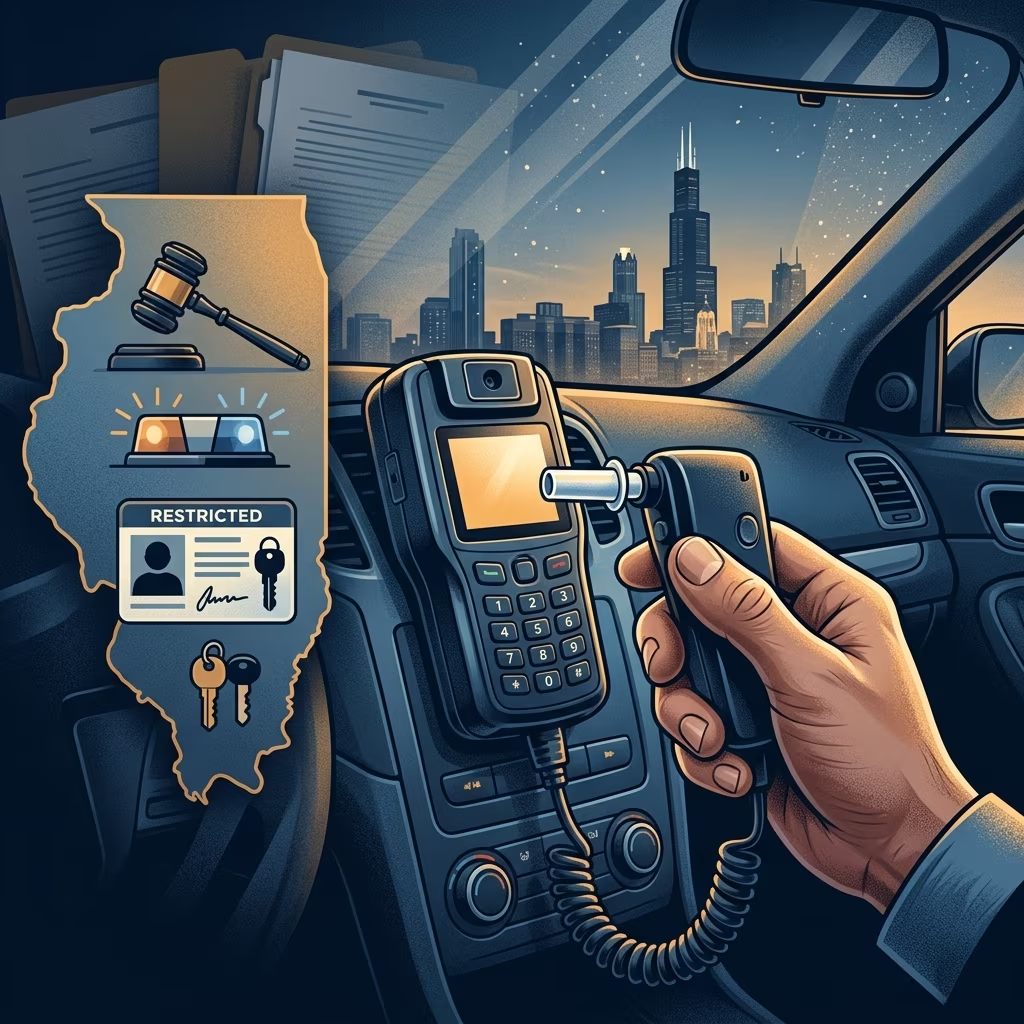
Illinois has built one of the more aggressive drunk driving control systems in the United States by combining traditional DUI penalties with mandatory ignition interlock devices and closely supervised driving permits. This article explains how those devices work, when they are required, and how they fit into the broader penalty structure for driving under the influence in Illinois.
From DUI Arrest to Driving Restrictions in Illinois
Under Illinois law, a driver arrested for DUI can face both criminal charges and an administrative suspension of their driver’s license, often before the criminal case is resolved. A conviction typically leads to license revocation, fines, potential jail time, and mandatory alcohol education or treatment. Because losing the ability to drive can affect employment and family obligations, the state has created restricted driving options that rely heavily on ignition interlock technology.
- Administrative suspension after a failed or refused chemical test.
- Criminal DUI conviction with fines, possible jail, and license revocation.
- Restricted driving permits tied to ignition interlock device installation.
What Is a Breath Alcohol Ignition Interlock Device (BAIID)?
Illinois refers to ignition interlock units as Breath Alcohol Ignition Interlock Devices (BAIIDs). They are small, in‑vehicle breath testing instruments wired into the car’s starting system. The device requires the driver to deliver a breath sample before the engine will start and may demand additional samples while the vehicle is moving.
Key functional features include:
- A handheld mouthpiece connected to a dashboard unit for breath samples.
- Direct integration with the ignition circuit so the car will not start if alcohol is detected above the preset limit.
- Rolling retests during a trip to verify continued sobriety.
- Data logging of test results, failed attempts, and tampering events, which are later reviewed by authorities.
In Illinois, the threshold is lower than the criminal DUI limit: if a BAIID detects a blood alcohol concentration (BAC) at or above approximately 0.025, the device treats this as a violation and may lock the vehicle. Three failed start attempts within a defined window can cause a 24‑hour lockout.
Why Illinois Promotes Ignition Interlock Devices
Ignition interlock programs are grounded in public safety data. Research cited by advocacy groups and health agencies indicates that drivers using interlock devices are significantly less likely to be rearrested for DUI while the device is installed. One widely referenced study by the U.S. Centers for Disease Control and Prevention found that interlocks can cut repeat drunk driving by roughly two‑thirds compared with traditional sanctions alone. This reduction in recidivism is a major reason Illinois has expanded mandatory use.
Benefits emphasized by policymakers include:
- Immediate prevention: intoxicated drivers cannot start the vehicle.
- Behavior change: consistent sober driving habits may form during the monitoring period.
- Data collection: logged results give authorities objective information about compliance.
- Safer license reinstatement: interlocks create a safer pathway for offenders to drive again.
When Illinois Requires Ignition Interlock Devices
Illinois has moved toward broad mandatory BAIID use for DUI offenders, though the exact requirements depend on whether the case involves a first conviction or multiple prior offenses. In general, drivers who want to resume driving during a suspension or revocation period must install a state‑approved BAIID.
| Offender Type | License Status | Common BAIID Requirement |
|---|---|---|
| First DUI conviction | Revocation or suspension | BAIID typically required to obtain Monitoring Device Driving Permit or restricted driving relief. |
| Multiple DUI convictions | Long‑term revocation | BAIID often mandatory on every vehicle titled to the offender when seeking a Restricted Driving Permit. |
| High BAC (e.g., ≥0.16) | Enhanced penalties | BAIID plus increased fines, community service, or jail time. |
Some Illinois programs also require BAIIDs with cameras to ensure that the person providing the breath sample is the actual driver, not a sober friend.
Monitoring Device Driving Permits (MDDP)
The Monitoring Device Driving Permit (MDDP) is a central mechanism through which Illinois allows certain DUI offenders to drive while their license is suspended or revoked. Instead of complete loss of driving privileges, an eligible driver can apply for this permit, install a BAIID, and then operate a vehicle under strict conditions.
Applying for an MDDP
Although details can vary, the basic process generally includes:
- Submitting a completed MDDP application to the Illinois Secretary of State.
- Receiving notice of approval and the fees that must be paid.
- Installing a BAIID from an approved provider within a specified period, often within 14 days of approval.
Once the permit is active and the device installed, the driver may resume limited driving, subject to monitoring and data review.
Employer Vehicle Exemptions
In some situations, offenders who drive an employer‑owned vehicle as part of their job can seek a work exemption so that the company vehicle does not need to be equipped with a BAIID. This usually requires documentation from the employer and approval by the Secretary of State. Even with an exemption, personal vehicles driven by the offender typically must remain equipped with a BAIID.
Financial and Practical Burdens of BAIID Use
Illinois places the cost of ignition interlock devices on the offender. That means installation, monthly leasing, calibration, and monitoring fees are all the driver’s responsibility. Typical leasing costs in Illinois have been estimated in the low single digits per day, though total expenses can add up over months or years.
Common practical obligations include:
- Installation appointment with an approved provider.
- Initial monitoring visit within the first month after installation.
- Regular service visits, often every 60 days, to download data and calibrate the device.
- Rolling retests during driving to ensure continued sobriety; missed or failed tests can trigger alarms and be reported.
Non‑compliance, tampering, or repeated failed breath tests may lead to additional sanctions, including extended interlock requirements or renewed license suspension.
DUI Penalties and How Interlocks Fit In
Ignition interlock requirements do not replace core DUI penalties in Illinois; they supplement them. Penalties escalate with each offense and may be harsher when aggravating factors are present, such as an especially high BAC or a child passenger.
Illustrative Penalty Progression
- First conviction: License revocation for at least one year (longer if under age 21), fines, possible jail, and mandatory BAIID use to obtain a permit or drive after suspension.
- Second conviction: Longer revocation periods and mandatory BAIID if driving privileges are partially restored.
- Third conviction: Treated as a Class 2 felony with a 10‑year revocation, higher fines, potential prison time, and strict BAIID obligations for any restricted driving.
Higher BAC levels (such as 0.16 or more) can trigger mandatory minimum fines and community service requirements, while certain child‑related circumstances can add enhanced penalties. Within that framework, BAIIDs serve as a condition for driving relief and a tool for verifying compliance.
Illinois in the National Landscape of Interlock Laws
Across the United States, states vary in how extensively they require ignition interlocks for DUI offenses. The National Conference of State Legislatures tracks these laws and notes that many states now mandate interlocks for at least repeat offenders, and some for all convictions. Illinois is among the states that have adopted broad BAIID requirements and monitoring permits, especially for convicted offenders who wish to drive again.
This national trend is driven largely by evidence showing reductions in alcohol‑related crashes when interlock programs are fully enforced. As technology improves and costs stabilize, states like Illinois continue to rely on BAIIDs as a central component of impaired‑driving policy.
Frequently Asked Questions (FAQs)
1. Do all Illinois DUI offenders have to use an ignition interlock device?
Illinois has enacted laws making ignition interlock use mandatory for many convicted DUI offenders who want any form of driving relief, particularly through permits such as the Monitoring Device Driving Permit. Specific requirements depend on offense history, BAC level, and whether the driver is seeking a restricted permit or full reinstatement.
2. How does a BAIID know I am sober enough to drive?
The device measures the alcohol content of your breath and estimates blood alcohol concentration. If your BAC is below the preset limit (around 0.025 in Illinois), the vehicle will start. If you are above that threshold, the device records a failure and may prevent the car from starting or lock it out for a period of time.
3. Who pays for the ignition interlock device in Illinois?
Offenders pay the full cost of installation, leasing, monitoring, and calibration in Illinois. While daily leasing fees may seem modest, total costs can be significant over months or years of required use.
4. Can I drive my employer’s car without a BAIID?
Illinois allows certain work‑related exemptions for employer‑owned vehicles, but these are not automatic. You generally need an approved exemption tied to your Monitoring Device Driving Permit or Restricted Driving Permit, and you must still use a BAIID on your personal vehicles.
5. What happens if I fail or skip a rolling retest while driving?
If you miss a rolling retest or provide a breath sample above the limit, the BAIID may trigger an alarm until you safely stop the vehicle and turn off the ignition, and the incident will be recorded in the device’s memory. Repeated violations can result in stricter sanctions, extended interlock requirements, or additional license consequences.
References
- Understanding Illinois’s Mandatory Interlock Device Program — Seidman Margulis & Fairman, LLP. 2014-06-19. https://www.seidmanlaw.net/blog/understanding-illinois-s-mandatory-interlock-device-program/
- Illinois State DUI Laws and BAIID Requirements — ADS Interlock. 2023-01-10. https://www.adsinterlock.com/state-laws/illinois
- Ignition Interlock Near Me in Illinois — Smart Start, Inc. 2023-07-01. https://www.smartstartinc.com/locations/illinois/
- Breath Alcohol Ignition Interlock Device 101: Understanding the Basics — Richard’s Law Office. 2013-09-18. https://www.richardscriminallaw.com/articles/breath-alcohol-ignition-interlock-device-101-understanding-the-basics/
- State Ignition Interlock Laws — National Conference of State Legislatures (NCSL). 2023-11-15. https://www.ncsl.org/transportation/state-ignition-interlock-laws