
Illegal Search and Seizure: A Practical Guide to Your Rights
Learn how the Fourth Amendment protects you from unreasonable police searches and what you can do if your rights are violated.
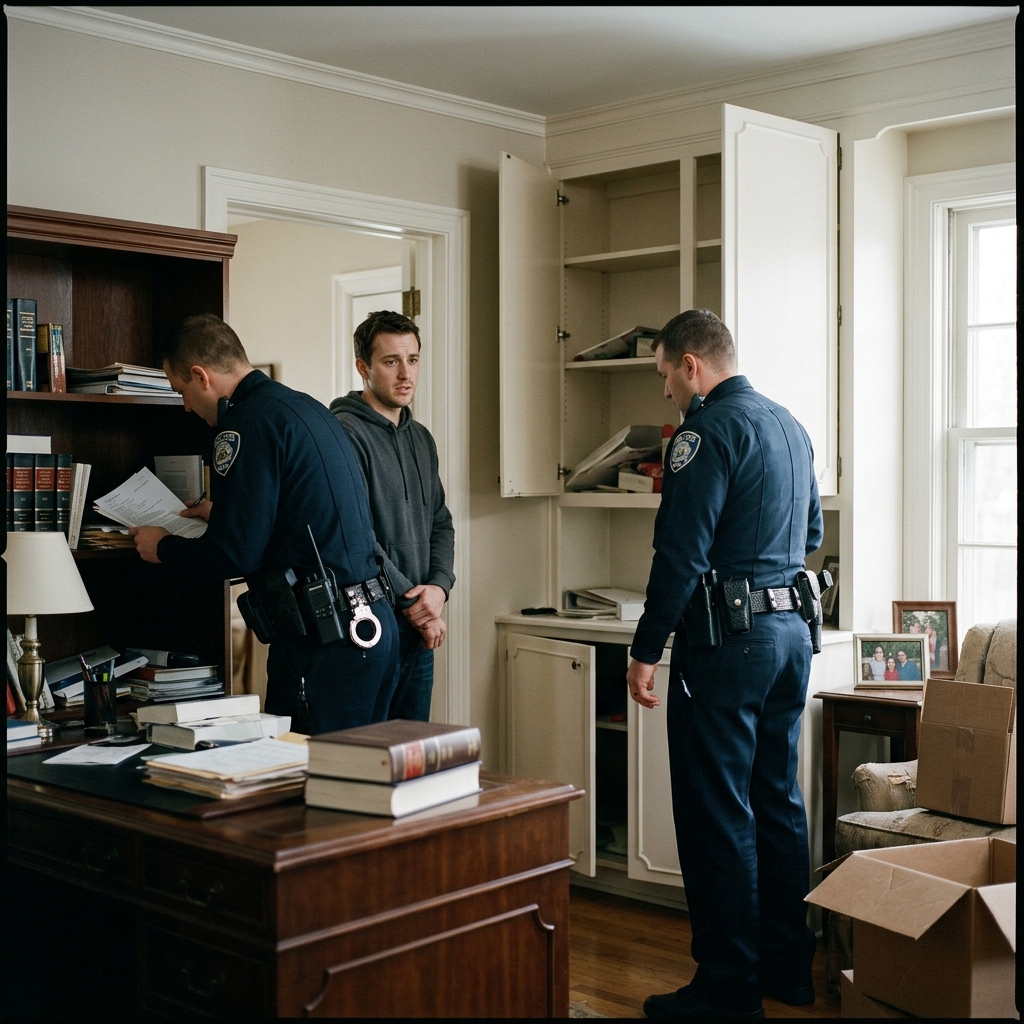
The United States Constitution gives you important protections against government intrusion into your privacy and property. At the core of those protections is the Fourth Amendment, which limits when and how police may search you, your home, your vehicle, or your belongings, and seize evidence or property.
This article explains what an illegal search and seizure is, when police need a warrant, the most common exceptions, and what you can do if you believe officers violated your rights. It is a general educational overview and not a substitute for personalized legal advice.
1. The Fourth Amendment in Plain Language
The Fourth Amendment to the U.S. Constitution states that people have the right to be secure in their persons, houses, papers, and effects against unreasonable searches and seizures, and that warrants may only issue on probable cause with a particular description of what is to be searched or seized.
In everyday terms, this means:
- The government cannot intrude on areas where you reasonably expect privacy without a strong legal justification.
- Most searches of private property require a warrant signed by a judge, based on sworn information showing probable cause.
- Even with a warrant, police must stay within the scope the judge authorized.
- Evidence obtained in violation of these rules may be excluded from use in a criminal case.
These protections apply against government actors such as police officers, federal agents, and other law enforcement officials, not against private individuals acting on their own.
2. What Counts as a Search or a Seizure?
2.1 Definition of a Search
A search occurs when government officers intrude on an area where you have a reasonable expectation of privacy to look for evidence, contraband, or information. Courts typically find a reasonable expectation of privacy in places like homes, hotel rooms, many personal containers, and certain digital data, but not in obvious public view or in information you voluntarily share broadly.
Example situations that may involve a search:
- Entering your home to look for illegal items.
- Opening closed drawers or closets.
- Examining the contents of your backpack or purse.
- Using technology to explore areas not visible to the naked eye, depending on the circumstances.
2.2 Definition of a Seizure
A seizure can involve either people or property:
- Seizure of a person occurs when an officer restrains your freedom of movement, such as an arrest or a stop where a reasonable person would not feel free to leave.
- Seizure of property happens when officers take possession or control of items, such as impounding a vehicle or confiscating a bag, phone, or other belongings.
Both searches and seizures must meet constitutional standards or risk being classified as unreasonable.
3. When Is a Search or Seizure Illegal?
Under the Fourth Amendment, a search or seizure is generally illegal when it is unreasonable. Several patterns commonly lead to a violation:
- No warrant and no valid exception: Officers enter a home or search personal property without a warrant and without circumstances that justify a warrantless search.
- Lack of probable cause: Police act without sufficient facts to reasonably believe that a crime has been committed and that evidence will be found in the place searched.
- No voluntary consent: Officers claim consent but the person did not freely agree, or was coerced or misled.
: Police search locations or seize items not authorized by the judge, unless those items are in plain view and lawfully observable. - Pretextual or discriminatory enforcement: While complex to prove, stops or searches influenced by impermissible factors can raise constitutional concerns.
Not every uncomfortable or inconvenient police encounter is illegal. The key question is whether the government’s intrusion was reasonable under established legal standards.
4. Search Warrants: How They Work
A search warrant is a written order from a judge allowing law enforcement to search a specific place for particular evidence. To obtain one, an officer must present sworn information showing probable cause.
| Key Feature | What It Means |
|---|---|
| Probable Cause | Reasonable, factual basis to believe a crime occurred and evidence is located in the place to be searched. |
| Oath or Affirmation | Officer must swear or affirm the truth of the information presented to the judge. |
| Particularity | Warrant must clearly describe the location to be searched and the items or people to be seized. |
| Judicial Authorization | A neutral judge or magistrate reviews the request and decides whether to approve it. |
Once officers have a valid warrant, they are generally allowed to search the areas described in the warrant and seize the items identified. They may not automatically search other locations unrelated to the warrant unless another legal doctrine applies, such as the plain view rule.
5. Common Exceptions to the Warrant Requirement
Although warrants are the default rule, the Supreme Court has recognized several carefully limited situations where warrantless searches and seizures can be lawful. These exceptions are grounded in case law and practical needs of law enforcement.
5.1 Consent Searches
If a person with authority over a space or item voluntarily agrees to a search, officers usually do not need a warrant.
- Consent must be freely given, not coerced.
- You generally have the right to refuse consent.
- Officers do not always have to tell you that you can refuse.
5.2 Searches Incident to a Lawful Arrest
When officers lawfully arrest someone, they may search the person and the immediate area around them to look for weapons or evidence that could be destroyed.
- This search must be tied closely in time and location to the arrest.
- It normally does not authorize a broad search of a home or vehicle beyond the area under the arrestee’s control.
5.3 Exigent Circumstances and Emergencies
Exigent circumstances exist when waiting for a warrant would risk harm to people, allow evidence to be destroyed, or enable a suspect to flee. In these situations, courts may uphold warrantless entry and searches.
- Hot pursuit of a fleeing felon.
- Immediate threats to public safety or officers.
- Situations where evidence is being actively destroyed.
5.4 Plain View Doctrine
If officers are lawfully present in a location and see contraband or evidence clearly visible, they may be allowed to seize it without a warrant.
- The officer must have a right to be where they are.
- The illegality of the item must be immediately apparent.
- The officer cannot manipulate or move objects to create plain view.
5.5 Vehicle Searches
Vehicles are treated differently from homes because they are mobile and heavily regulated. If officers have probable cause that a vehicle contains evidence of a crime, they may search areas of the vehicle where that evidence could reasonably be located.
- Traffic stops usually require reasonable suspicion of a violation or criminal activity.
- Officers may conduct limited pat-downs during lawful stops to check for weapons.
- Consent or other exceptions can broaden what officers may do during a stop.
6. Reasonable vs. Unreasonable: How Courts Decide
Ultimately, whether a search or seizure is illegal turns on its reasonableness. Courts balance the government’s interest in enforcing laws and ensuring safety against the individual’s expectation of privacy and liberty.
Key factors often include:
- How intrusive the search or seizure was.
- Whether officers had probable cause or at least reasonable suspicion.
- Whether a warrant was obtained when practical.
- Whether recognized exceptions were properly applied.
- Whether officers acted in good faith based on then-existing law.
Where searches occur in schools, at borders, or in other specialized settings, courts may apply modified standards but the core concept of reasonableness remains central.
7. What Happens to Illegally Obtained Evidence?
One of the most important consequences of an illegal search or seizure is the potential exclusion of evidence. Under the exclusionary rule, evidence obtained in violation of the Fourth Amendment generally cannot be used against a defendant in a criminal trial.
Important points about exclusion:
- Defendants usually must ask the court to suppress the evidence, often through a pretrial motion.
- If successful, the prosecution may lose key evidence, which can significantly weaken or even end a case.
- There are limited exceptions, such as when officers relied in good faith on a warrant later found invalid, or when the connection between the violation and the evidence is too remote.
Exclusion aims to deter future constitutional violations by removing the incentive for unlawful searches.
8. Practical Tips During Police Encounters
Knowing your rights is only useful if you can apply them calmly and safely. While every situation is different, the following general guidelines are common recommendations from legal and civil rights organizations:
- Stay calm and respectful: Sudden movements or hostile behavior can escalate a situation.
- Ask if you are free to leave: This can help clarify whether you are being detained or are free to walk away.
- Clearly state if you do not consent to a search: You might say, “I do not consent to any searches.” This may protect your rights even if the officer proceeds.
- Do not physically resist: Challenging a search is generally safer through the legal system afterward, not through physical confrontation.
- Document details: If safe, note officer names, badge numbers, location, and time for later reference.
Because laws and interpretations vary by jurisdiction, speaking with a qualified criminal defense attorney as soon as possible after a questionable encounter is often critical.
9. If You Believe You Were Subject to an Illegal Search
If you suspect your rights were violated, there are several steps to consider:
- Consult an attorney promptly: A lawyer can evaluate whether the search appears unlawful and advise you on your options.
- Preserve evidence: Keep any paperwork, photographs, videos, or witness contact information related to the event.
- Discuss suppression motions: In a criminal case, your attorney may file a motion asking the court to exclude improperly obtained evidence.
- Explore civil remedies: In some situations, you may have grounds for a civil rights lawsuit seeking damages or other relief.
- Consider internal or external complaints: Administrative complaints to a police department or oversight body may be appropriate in some cases.
Time limits (statutes of limitations) may apply to both criminal procedure motions and civil claims, so delay can affect your legal options.
10. Frequently Asked Questions (FAQs)
10.1 Do police always need a warrant to search my home?
In general, searches inside a home without a warrant are presumed unreasonable, but there are exceptions such as consent, emergencies, or hot pursuit. If officers enter your home without a warrant, courts will closely scrutinize whether an exception applied.
10.2 Can officers search my car without my permission?
Officers may search a vehicle without your consent if they have probable cause to believe it contains evidence of a crime, or in some circumstances related to a lawful arrest or other recognized exceptions. However, they cannot freely search every vehicle they stop; legal thresholds still apply.
10.3 What if I agreed to a search because I felt pressured?
Consent must be voluntary. If the agreement was given under strong pressure, threats, or deception, a court may find the consent invalid. The specific facts—tone, wording, and circumstances—are critical and should be reviewed with an attorney.
10.4 Is a pat-down the same as a full search?
A pat-down or frisk is usually a limited search of outer clothing aimed at detecting weapons, often allowed when officers reasonably suspect a person may be armed and dangerous. A more thorough search of pockets, bags, or personal items typically requires higher justification, such as probable cause or a lawful arrest.
10.5 What if the police found evidence through an illegal search?
If a court finds that evidence was obtained through an unreasonable search or seizure, the evidence may be excluded from your criminal case. This is not automatic; your attorney usually must file a motion and present arguments supporting suppression.
10.6 Do these protections apply in every state?
Yes. The Fourth Amendment applies nationwide, and states may provide additional protections under their own constitutions or laws. Some state courts interpret similar provisions more broadly, offering stronger privacy rights than the federal baseline.
11. Summary Table: Legal vs. Illegal Searches
| Scenario | Typically Legal? | Reason |
|---|---|---|
| Home search with valid warrant | Yes | Judge-authorized, based on probable cause and particular description. |
| Vehicle search with probable cause | Yes | Automobile exception allows warrantless searches with probable cause. |
| Search after voluntary consent | Yes | Consent is a recognized exception if freely given. |
| Home entry with no warrant, no consent, no emergency | Usually no | Presumed unreasonable under the Fourth Amendment. |
| Body search after lawful arrest | Usually yes | Search incident to arrest doctrine allows limited search. |
Understanding these patterns can help you recognize when police actions are likely within the law and when they may cross constitutional boundaries.
References
- Fourth Amendment – Protection Against Unreasonable Search and Seizure — FindLaw. 2023-05-01. https://constitution.findlaw.com/amendment4.html
- Unreasonable search and seizure — Legal Information Institute, Cornell Law School. 2022-09-15. https://www.law.cornell.edu/wex/unreasonable_search_and_seizure
- Search and Seizure and the Bill of Rights — EBSCO Research Starters. 2021-06-10. https://www.ebsco.com/research-starters/law/search-and-seizure-and-bill-rights
- Overview of Unreasonable Searches and Seizures — Constitution Annotated, U.S. Congress. 2020-01-02. https://constitution.congress.gov/browse/essay/amdt4-3-1/ALDE_00013715/
- Search & Seizure Supreme Court Cases — Justia. 2023-04-20. https://supreme.justia.com/cases-by-topic/search-seizure/
- What Does the Fourth Amendment Mean? — United States Courts. 2019-08-01. https://www.uscourts.gov/about-federal-courts/educational-resources/about-educational-outreach/activity-resources/what-does-fourth-amendment-mean
- California Search & Seizure Laws – Know Your Rights — Shouse Law Group. 2022-11-05. https://www.shouselaw.com/ca/defense/search-and-seizure/
Similar Articles








Read full bio of Sneha Tete




