Illegal Ammunition: Federal and State Bans Explained
Navigate the complex landscape of prohibited bullets, from armor-piercing rounds to incendiary shells, with federal and state regulations.
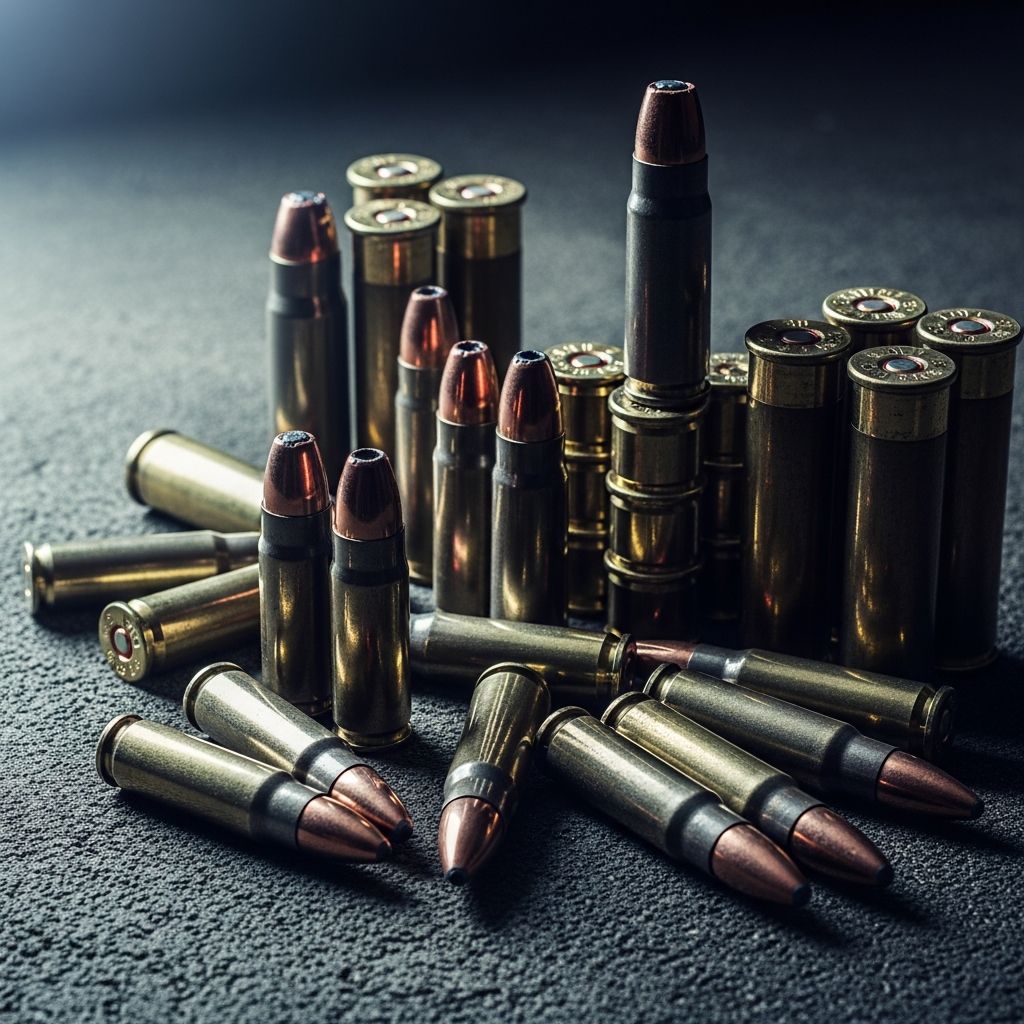
Firearm owners must navigate a patchwork of federal and state laws governing ammunition. While standard rounds like full metal jacket or hollow points are widely legal, certain specialized types face strict prohibitions due to public safety concerns, risks to law enforcement, and environmental hazards. This article breaks down key banned categories, explores state variations, and provides practical advice for compliance.
Federal Restrictions on Dangerous Ammunition
At the national level, U.S. law targets ammo that poses exceptional threats. The primary federal ban centers on armor-piercing (AP) handgun ammunition, prohibited for civilian manufacture, import, sale, or possession under 18 U.S.C. § 922(a)(7)-(8). These bullets feature cores of tungsten alloys, steel, iron, brass, bronze, beryllium copper, or depleted uranium, designed to penetrate body armor worn by police. Exceptions apply for licensed dealers supplying government agencies.
Explosive ammunition falls under the National Firearms Act (NFA) as destructive devices, banning rounds that detonate on impact for civilians without special permits. Tracer and incendiary rounds, which leave visible trails or ignite targets, are classified as explosive materials by the ATF, requiring permits for storage and transport due to fire risks.
These laws stem from the Law Enforcement Officers Protection Act of 1986, which specifically addressed ‘cop-killer’ bullets capable of defeating vests. Misconceptions persist about Teflon-coated bullets; while often called ‘cop killers,’ they are regulated only if they meet AP criteria.
State-Specific Prohibitions and Variations
States impose additional bans beyond federal rules, creating a complex regulatory map. Over 20 states prohibit AP ammunition entirely, including California, New York, and surprisingly Texas, where it’s deemed unnecessary for hunting or self-defense.
| State | Banned or Restricted Ammo Types | Key Notes |
|---|---|---|
| California | AP, flechettes, tracers, incendiary, high-capacity mags (>10 rounds) | Classifies flechettes as fixed ammo; wildfire risks ban tracers |
| Florida | Dragon’s breath, flechettes, bolo shells | Incendiary fire hazards primary concern |
| Illinois | Flechettes, dragon’s breath, bolo, incendiary | Broad exotic ammo prohibitions |
| New Jersey | Hollow points (permit required), AP, explosive | Strict self-defense ammo rules |
| Hawaii | AP, explosive, Teflon-coated, >10 round mags | Tungsten/steel core bullets restricted |
Maryland restricts explosive/incendiary ammo and bullets with hard metal cores. New Jersey limits hollow points with exceptions. Oklahoma bans bullets penetrating body armor with fluorocarbon coating. These variations demand location-specific research before purchase.
Exotic and Specialty Rounds Under Scrutiny
Beyond basics, exotic ammo draws heavy regulation. Flechette rounds, firing dart-like projectiles, are federally unregulated but banned in California (as fixed ammo), Florida, and Illinois due to lethality and over-penetration. Massachusetts and New Jersey treat them as AP equivalents.
Dragon’s breath shotgun shells propel burning magnesium shards over 100 feet, illegal in Florida, Illinois, and Iowa for fire dangers. Bolo shells, with wire-connected projectiles that entangle targets, face bans in Florida and Illinois. Exploding bullets remain universally prohibited.
Tracers, useful for military training, are legal federally but banned in fire-prone California and restricted on public lands. Incendiaries share similar fates in Illinois and Florida. High-capacity magazines, while not ammo, are capped at 10 rounds in states like California, Maryland, and New Jersey.
Common Myths and Misconceptions About Ammo Legality
- Hollow points are universally illegal: False. Legal nationwide for self-defense except New Jersey (permit needed). They expand on impact, reducing over-penetration.
- Teflon bullets are uniquely banned: No, only if AP-qualified; coating alone doesn’t trigger bans.
- All tracers are NFA items: Incorrect. Federally civilian-legal with restrictions.
- States can’t ban more than federal law: Wrong. States routinely add prohibitions for local safety.
These myths lead to accidental violations. Always verify with ATF resources or state statutes.
Legal Alternatives and Best Practices for Firearm Owners
Opt for compliant options like standard FMJ for range use, hollow points for defense. Bulk deals on legal calibers abound from reputable vendors. Before buying:
- Check federal ATF guidelines.
- Review state attorney general or fish & wildlife sites.
- Confirm range and hunting rules.
- Avoid reloads with questionable components.
Private security or reloaders have faced charges from innocent hard-core bullets. Compliance prevents legal troubles.
Historical Context and Future Trends
Ammo regulation surged in the 1980s with AP bans amid officer shootings. Recent years see states targeting incendiaries amid wildfires and exotic rounds for mass violence fears. By 2026, expect tighter high-capacity mag limits and AP expansions, though Supreme Court rulings like Bruen may challenge overreaches.
Giffords Law Center advocates strict controls on AP, .50 caliber, and specialty bullets lacking sporting purpose. Public safety drives evolution, balancing rights and risks.
Frequently Asked Questions (FAQs)
Are hollow-point bullets illegal anywhere in the U.S.?
Primarily restricted in New Jersey with permits; legal elsewhere for self-defense.
Can civilians buy tracer or incendiary ammo?
Federally yes with ATF compliance, but many states ban them due to fire hazards.
Is flechette ammunition legal for hunting?
Rarely; banned in CA, FL, IL, and restricted elsewhere for over-penetration.
What makes a bullet ‘armor-piercing’ federally?
Handgun-compatible with specific hard metal cores that defeat vests.
Do magazine capacity laws affect ammo choice?
Indirectly; states like CA limit to 10 rounds, influencing loadouts.
References
- What Ammo Types Are Illegal for Civilians in 2026? — True Shot Ammo. 2026. https://trueshotammo.com/blogs/true-shot-academy/what-ammo-types-are-illegal-for-civilians-in-2026
- Types of Ammo You Can Legally Use — Orlando Criminal Team. 2016-09. https://www.orlandocriminalteam.com/blog/2016/september/types-of-ammo-you-can-legally-use/
- Banned & Restricted Guns & Ammo List: A 2025 Review by State — Ammo.com. 2025. https://ammo.com/research/list-of-banned-guns-and-ammo-by-state
- 8 Self-Defense Ammo BANNED in Some States — YouTube (Gun Tech). 2023. https://www.youtube.com/watch?v=HMdl8r6LJoY
- Ammunition Regulation: Why Hasn’t “Bullet Control” Caught On? — The Trace. 2023-01. https://www.thetrace.org/2023/01/bullet-ammunition-regulation-guns/
- Ammunition Regulation — Giffords Law Center. Accessed 2026. https://giffords.org/lawcenter/gun-laws/policy-areas/hardware-ammunition/ammunition-regulation/
- Can My Choice of Ammo Land Me in Jail? — US Law Shield. Accessed 2026. https://www.uslawshield.com/can-my-choice-of-ammo-land-me-in-jail/
Similar Articles







Read full bio of medha deb