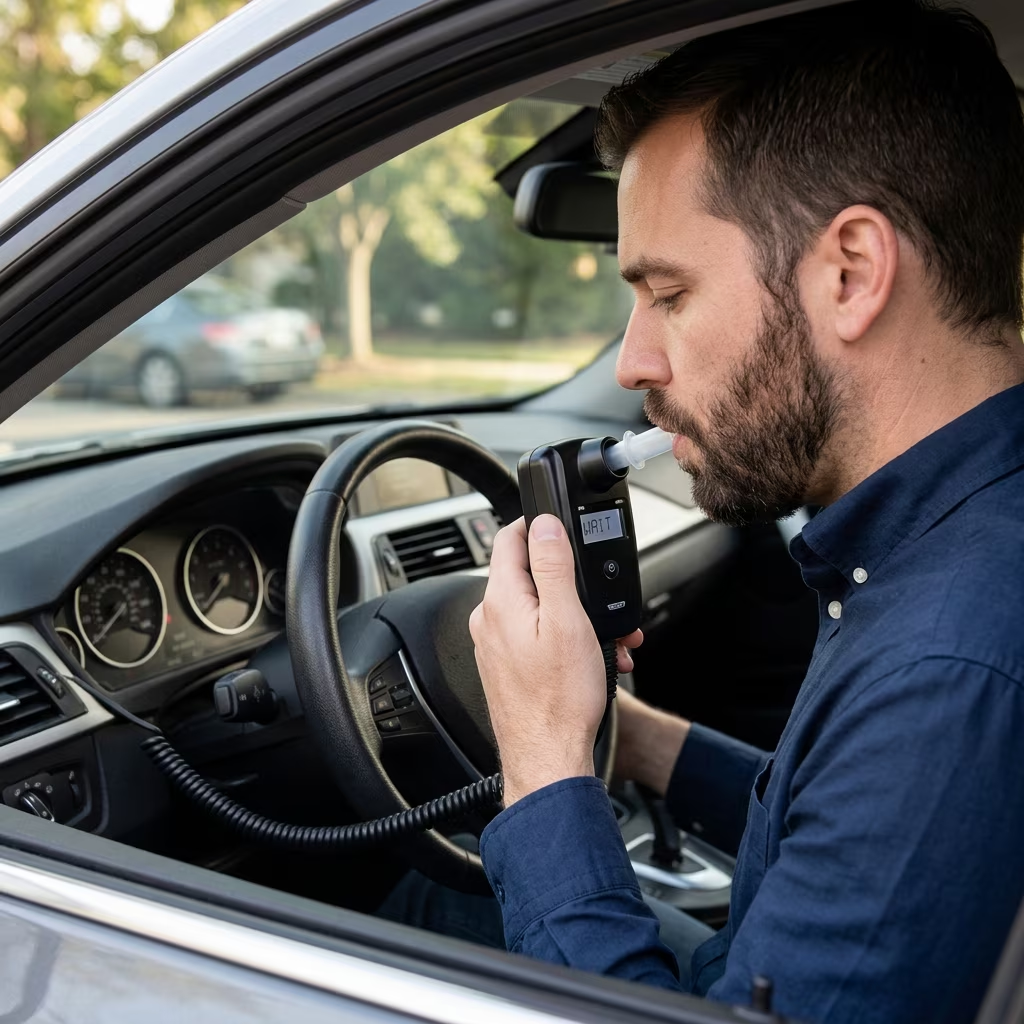
Ignition interlock devices have become one of the most widely used tools in DUI enforcement and highway safety policy in the United States. These small, breath‑testing units attach to a vehicle’s ignition system and block the engine from starting if the driver’s breath alcohol level is above a set threshold. For many people convicted of driving under the influence, an ignition interlock is now a mandatory condition for regaining or maintaining the right to drive.
This article explains what ignition interlock devices are, how they work, when courts and motor vehicle agencies require them, and what practical and legal consequences they carry. It is written for drivers, families, and anyone trying to understand the legal landscape surrounding DUI offenses and interlock programs.
What Is an Ignition Interlock Device?
An ignition interlock device (IID) is a breath alcohol analyzer wired directly into a vehicle’s ignition system. Before the engine can start, the driver must blow into a mouthpiece connected to the device. If the breath alcohol concentration (BrAC) is below a preset limit—typically around 0.02— the car will start. If the reading is above that threshold, the engine is locked and cannot be started.
To prevent drivers from drinking after the initial test or having someone else blow into the device, most IIDs also require periodic retests while the vehicle is in motion. The unit will beep or display a prompt; if the driver fails to provide a sample, or if the BrAC is too high, the device records a violation and may trigger alarms such as horn honking or lights flashing to signal a problem.
- Core purpose: prevent drivers who have consumed alcohol from operating a vehicle.
- Target users: primarily individuals with DUI or DWI convictions, or those facing DUI-related suspensions.
- Technology: fuel cell or similar sensors that measure breath alcohol concentration.
- Integration: wired into the ignition system so the car cannot start without a compliant test.
How Ignition Interlock Devices Operate in Daily Use
For drivers enrolled in an ignition interlock program, the device changes the routine of using a vehicle. The main steps are consistent across states and vendors, even though technical details vary.
Starting the Vehicle
Each time the driver wants to start the car, the IID requires a breath sample.
- The driver turns the key or presses the start button.
- The device signals that a test is required, often with lights or a small screen.
- The driver blows into the mouthpiece for several seconds.
- If the BrAC is below the programmed limit, the ignition unlocks and the engine can start.
- If the BrAC is too high, the engine remains disabled and the event is logged as a violation.
Rolling Retests While Driving
Most programs require random or periodic retests after the vehicle is in motion.
- The device prompts the driver at unpredictable intervals.
- The driver must blow into the mouthpiece within a short time window.
- A high BrAC or missed test is logged; alarms may sound and can be reported to authorities or licensing agencies.
Data Recording and Monitoring
Modern ignition interlocks include a data recorder that stores every test, attempt, and violation.
- Each test logs the date, time, BrAC result, and whether the engine was started.
- Violations—such as failed tests, tampering alerts, or missed retests—are flagged.
- Service providers download the data and transmit it to probation officers, courts, or motor vehicle departments.
This record can influence whether a driver successfully completes the program and regains unrestricted driving privileges, or faces extensions, sanctions, or new criminal charges.
Legal Reasons Courts and Agencies Require Interlocks
States use ignition interlocks primarily as a behavioral countermeasure against alcohol‑impaired driving. Laws vary widely, but most jurisdictions require or allow interlocks in several common scenarios:
- First-time DUI or DWI convictions, especially when blood alcohol concentration exceeds a specified level (often 0.10 or 0.15).
- Repeat drunk driving offenses, where interlocks can be mandatory for probation or reinstatement of a license.
- Refusal to take chemical tests (breath or blood), which in some states triggers a license suspension that can be mitigated through interlock participation.
- Driving a vehicle without a required interlock, sometimes treated as a separate offense that can lead to extended interlock terms or jail time.
- Bond or pretrial release conditions, where judges order interlocks to allow defendants to keep driving while cases are pending.
In many states, using an ignition interlock is the only route to legally drive during a DUI-related suspension or to obtain a restricted or limited license.
Typical State Program Structures and Requirements
Although each state designs its own ignition interlock laws, most programs share several structural elements. Understanding these common features helps drivers anticipate what to expect if ordered to install an IID.
Mandatory vs. Discretionary Use
States differ in whether interlocks are required for all offenders or only certain categories.
| Program Feature | Common Approach |
|---|---|
| First-time offenders | Interlock often mandatory at higher BAC levels; discretionary at lower levels. |
| Repeat offenders | Interlock frequently mandatory, sometimes for extended periods (1–2 years or more). |
| Chemical test refusals | Interlock can be required as part of reinstatement after long suspensions. |
| License reinstatement | Completion of interlock program often prerequisite to full restoration. |
Program Duration
Interlock terms typically range from a few months to several years, depending on the offense history and state law.
- Short terms: 90 days to 1 year for many first-time DUI offenders.
- Extended terms: 1 to 2 years or more for repeat offenders and serious cases.
- Conditional completion: program may be extended if violations occur, such as failed tests or tampering.
Licensing During Interlock Use
Motor vehicle agencies often issue special licenses to drivers in an interlock program.
- Ignition interlock license: a credential indicating the driver may operate only vehicles equipped with an IID.
- Limited or restricted licenses: allow driving for specific purposes—such as work, school, or medical care—if the vehicle has an interlock.
- Unrestricted license restoration: requires successful completion of the full interlock period and proof of compliance from the vendor or DMV.
Effectiveness in Reducing Drunk Driving and Crashes
Research consistently shows that ignition interlocks are effective at reducing repeat drunk driving arrests while they are installed. A review of multiple studies found that offenders using interlocks had about 75% lower recidivism rates compared with similar offenders without interlocks during the monitored period.
Interlocks also have measurable effects at the broader traffic safety level. In one study, states that required interlocks for all DWI offenders had 26% fewer alcohol‑involved fatal crashes than states with no interlock laws. Researchers estimate that thousands of lives could be saved annually if every state imposed interlock requirements on all convicted DWI offenders.
However, once devices are removed, differences in recidivism between interlock users and non‑users largely diminish. This suggests that interlocks are most effective as a temporary protective measure, and that long‑term change in drinking and driving behavior may require complementary strategies such as treatment, education, and strong enforcement.
Practical Burdens and Responsibilities for Drivers
While ignition interlocks can allow drivers to retain lawful access to a vehicle after a DUI, they also impose significant obligations. Failing to meet these responsibilities can lead to extended program terms, fines, or even incarceration.
Financial Costs
Drivers typically pay for installation, monthly monitoring, and removal of the device.
- Initial installation fees.
- Recurring service or calibration charges.
- Possible repair or replacement costs if the device is damaged.
Although some states offer financial assistance or sliding‑scale fees, many offenders bear these costs on their own as part of the penalty for DUI.
Compliance with Testing
Drivers must follow strict rules for use.
- Provide a valid sample each time they start the car.
- Submit to retests within the time window when prompted.
- Avoid consuming alcohol before driving or during trips; even mouthwash or certain foods can produce low readings that need to dissipate before testing.
- Attend scheduled service appointments for data downloads and calibration.
Prohibited Conduct and Violations
Common violations include:
- Attempting to bypass or tamper with the device.
- Having another person blow into the IID.
- Driving a non‑interlock vehicle when a restriction applies.
- Repeated test failures indicating alcohol consumption.
Each violation can trigger consequences such as extended interlock requirements, new criminal charges, or revocation of limited licensing privileges.
Benefits and Drawbacks for Offenders and the Public
Ignition interlocks sit at the intersection of public safety and individual liberty. They offer significant benefits, but also raise concerns about cost, inconvenience, and fairness.
Key Benefits
- Enhanced safety: reduce the likelihood that DUI offenders drive while impaired, protecting other road users.
- Ability to keep driving: allow many offenders to maintain employment and family responsibilities through limited licenses.
- Objective monitoring: provide courts and probation officers with detailed records of drinking and driving behavior.
- Evidence for treatment needs: repeated failed tests can signal underlying alcohol dependence requiring intervention.
Common Drawbacks
- Financial burden: installation and monthly fees can be difficult for low‑income offenders.
- Stigma and privacy: visible devices and frequent testing can feel intrusive or embarrassing.
- Technical issues: occasional malfunctions or false positives can prevent lawful drivers from starting their vehicles.
- Limited long‑term effect: behavior improvements often fade once the device is removed.
Frequently Asked Questions About Ignition Interlock Devices
1. Who decides whether I must install an ignition interlock?
In most cases, the requirement comes from a combination of statute and court order. Legislatures establish which offenses trigger mandatory interlock use, and judges apply those laws when sentencing DUI cases. Motor vehicle agencies then enforce interlock requirements through licensing rules and reinstatement procedures.
2. Can I drive any vehicle once I have an interlock license?
Usually, no. Interlock or limited licenses typically allow you to operate only vehicles equipped with a compliant IID. Driving a non‑equipped vehicle when restricted can be treated as a violation and may lead to penalties or program extensions.
3. What happens if I fail a breath test on the device?
If your BrAC is above the threshold, your car will not start, and the event is recorded by the device. Multiple failed tests can be reported to supervising authorities and could result in additional sanctions or lengthening of your interlock term.
4. Do ignition interlocks completely replace license suspension?
Not usually. In many states, there is a mandatory suspension period before you are eligible for an interlock license, especially for serious or repeat offenses. After serving part or all of the suspension, you may qualify for limited driving with an IID, but full, unrestricted driving generally requires successful completion of the interlock program.
5. Are ignition interlocks used for drugs or only for alcohol?
Current ignition interlocks are designed to detect alcohol in breath, not other drugs. Some laws distinguish between alcohol‑based violations, where interlocks are required, and drug‑related or combined substance offenses, which may involve different penalties and may not be eligible for certain interlock programs.
6. Can ignition interlock data be used against me in court?
Yes, in some circumstances. Because devices record each test result and violation, those records can be introduced in court proceedings—for example, to show non‑compliance with probation or a pattern of attempts to drive while intoxicated. The specific rules depend on state law and evidentiary standards.
Key Takeaways for Drivers Facing DUI Charges
For individuals charged with or convicted of DUI, understanding ignition interlock devices is crucial. They are not simply gadgets; they are legal tools that can determine whether and how you are allowed to drive.
- Expect interlocks to be part of sentencing or probation conditions, especially for high‑BAC or repeat offenses.
- Plan for both the financial cost and the daily practical requirements of blowing into the device and attending service visits.
- Recognize that strict compliance is essential; violations can jeopardize limited driving privileges and delay full reinstatement.
- Use the interlock period as an opportunity to address underlying alcohol use issues and avoid future impaired driving.
References
- Alcohol Ignition Interlocks — National Highway Traffic Safety Administration (NHTSA). 2021-12-01. https://www.nhtsa.gov/book/countermeasures-that-work/alcohol-impaired-driving/countermeasures/other-strategies-behavior-2
- Ignition Interlock FAQs — Pennsylvania Driver & Vehicle Services (PennDOT). 2023-06-01. https://www.pa.gov/agencies/dmv/faqs/driver-licensing-faqs/ignition-interlock-faqs
- Ignition Interlock — Pennsylvania DUI Association. 2017-08-25. https://padui.org/ignition-interlock/
- Ignition Interlock Program — Colorado Department of Revenue, DMV. 2024-01-15. https://dmv.colorado.gov/ignition-interlock-program
- Texas Ignition Interlock Laws — Texas A&M Transportation Institute. 2019-07-01. https://cades.tti.tamu.edu/files/2019/07/blow2go_texaslaws_TC.pdf
- State Ignition Interlock Laws — National Conference of State Legislatures (NCSL). 2023-05-10. https://www.ncsl.org/transportation/state-ignition-interlock-laws