
Ignition Interlock Devices After a DUI: A Practical Guide
Understand how ignition interlock devices work, when they are required, and how they affect your driving privileges after a DUI conviction.
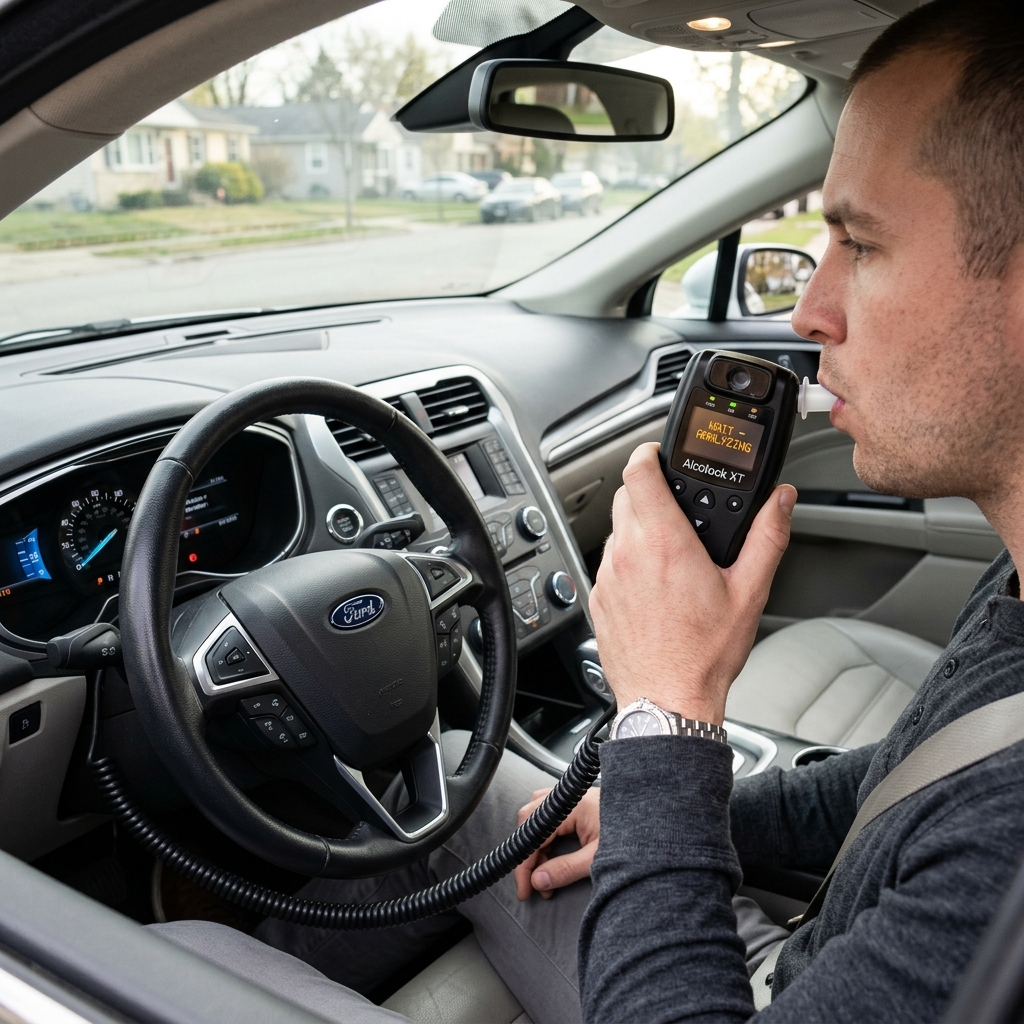
For many people convicted of driving under the influence, an ignition interlock device (IID) becomes a central part of life after the case is resolved. An IID can be both a burden and an opportunity: it imposes strict monitoring but often allows you to keep driving instead of facing a total license suspension. Understanding how these devices work, when they are required, and what happens if you violate the rules is critical if you are navigating DUI consequences.
What Is an Ignition Interlock Device?
An ignition interlock device is a small, electronic unit wired into a vehicle’s ignition system. It functions like an in-car breathalyzer: before the engine will start, the driver must provide a breath sample through a mouthpiece attached to the device. If the device detects alcohol above a pre-set threshold, usually around 0.02 breath alcohol concentration (BrAC), the vehicle will remain locked and cannot be started.
Modern interlock systems are designed to prevent impaired driving while still allowing sober drivers to use their vehicles. The devices typically:
- Require a breath test before the engine starts.
- Store test results and any violations in tamper-resistant electronic logs.
- Prompt random “rolling retests” while driving to ensure the driver remains alcohol-free.
- Transmit data to a monitoring agency or service center on a regular schedule.
The technology is now widely used across the United States as a condition of probation, license reinstatement, or special restricted driving privileges for people with alcohol-related driving offenses.
Why Courts and Legislatures Use IIDs
Ignition interlock programs exist because traditional penalties, such as license suspensions alone, do not always prevent repeat drunk driving. Research has shown that many people continue to drive even when their licenses are revoked. Interlocks aim to break this pattern by physically blocking a vehicle from starting when the driver has been drinking.
High-quality studies and national reviews have found significant benefits from interlock programs:
- Major reduction in re-arrests: A review of multiple studies found that offenders with IIDs installed had DUI arrest rates approximately 75% lower than similar offenders without interlocks during the installation period.
- Fewer fatal crashes: States requiring interlocks for all DWI offenders experienced about 26% fewer alcohol-involved fatal crashes compared with states that had no interlock laws.
- Improved compliance monitoring: Continuous data collection allows authorities to see patterns of attempted drinking and driving, which can influence probation decisions and future sentencing.
Because of this evidence, many states have expanded interlock requirements from repeat offenders to include high blood alcohol concentration (BAC) first-time offenders and those who refuse chemical testing.
When Are Ignition Interlock Devices Required?
Specific rules vary by state, but broad patterns can be seen across the country. Generally, an IID may be required in the following situations:
- Repeat DUI / DWI offenses: Many states require interlocks for second or subsequent drunk driving convictions, often for periods ranging from one to four years depending on the number of prior offenses.
- DUI with injury or high BAC: Some laws impose mandatory interlocks for first-time offenders whose BAC exceeds a certain threshold (for example 0.10 or higher) or when the DUI results in bodily injury.
- Refusal of chemical testing: In certain jurisdictions, refusing a breath or blood test under implied consent laws can trigger interlock requirements as a condition of restoring driving privileges.
- License reinstatement after lengthy suspensions: Offenders whose licenses were suspended for twelve months or more may need to complete a mandatory interlock period before regaining unrestricted driving rights.
- Optional alternative to full suspension: Some states allow eligible offenders to choose an IID-based restricted license instead of a complete loss of driving privileges, enabling them to drive to work, school, medical appointments, or treatment.
Rules can be complex. For example, under California’s statewide pilot program, certain first-time alcohol-related DUI offenders can be ordered to install an IID for up to six months, while repeat or injury-involved offenders must install an IID for one to four years depending on prior convictions. Other states, such as Pennsylvania, create special “ignition interlock limited licenses” for drivers who meet specific criteria but are otherwise suspended.
How an IID Affects Your Driving Privileges
In many cases, an IID is the difference between not driving at all and being able to drive legally. If your license is suspended or revoked, an interlock requirement can serve as the gateway to restricted or conditional driving privileges.
| Scenario | Without IID | With IID |
|---|---|---|
| First DUI, no injury | Suspension or limited travel-only license, depending on state. | Option for restricted license allowing broader driving if IID is installed. |
| Repeat DUI or DUI with injury | Long suspension or revocation; no legal driving until requirements are satisfied. | Mandatory IID for 1–4 years; legal driving allowed only in interlock-equipped vehicles. |
| Refusal of chemical test | Automatic suspension under implied consent laws. | In some states, ignition interlock limited license can restore partial driving rights if conditions are met. |
Failure to comply with interlock installation when it is mandatory can leave you unable to legally drive at all. For example, if a driver subject to California’s mandatory IID requirement never installs the device, the Department of Motor Vehicles will not issue a new license and the driver remains barred from driving.
Costs and Practical Responsibilities
IIDs impose not only behavioral restrictions, but also financial and logistical obligations. While exact figures differ among providers and states, common categories of costs include:
- Installation fees: A one-time fee charged by the service provider to wire the device into the vehicle’s ignition system.
- Monthly leasing or monitoring fees: Ongoing costs to rent the device and cover data reporting, often billed every month.
- Service and calibration visits: Regular appointments, typically every 30 to 60 days, to download data, calibrate the device, and check for tampering.
- Removal fees: Charges for safely uninstalling the interlock when the court or licensing authority authorizes removal.
Beyond cost, drivers must manage day-to-day obligations:
- Arriving at appointments on time to avoid missed service violations.
- Planning extra time before trips to complete testing.
- Ensuring that anyone else who drives the vehicle understands that they must use the device correctly.
- Keeping the device clean and protected from damage, extreme temperatures, or improper handling.
What Counts as an Ignition Interlock Violation?
Interlock programs monitor more than just failed breath tests. A variety of behaviors can be classified as IID violations, each with potentially serious consequences.
Common Types of Violations
- Failed breath tests: Providing a sample above the allowed BrAC limit, either when trying to start the car or during a rolling retest.
- Missed rolling retests: Not responding to prompts for a breath test while driving, which may be recorded as a violation.
- Driving a non-equipped vehicle: Operating a vehicle without an IID when you are under an interlock restriction, even if you own another compliant vehicle.
- Tampering or circumvention: Altering, disconnecting, or attempting to bypass the device; having someone else blow into the mouthpiece can also be treated as circumvention.
- Failure to install or maintain: Not installing the device when required, skipping scheduled service visits, or allowing the device to become non-functional.
Potential Consequences of IID Violations
Iid violations can trigger both administrative and criminal penalties. These consequences vary by state but frequently include:
- Immediate license suspension: Licensing authorities may suspend your driving privileges upon notification of certain violations, sometimes for months or years.
- Extension of interlock requirements: The required period with an IID can be extended—an originally two-year requirement might become three years or more after violations.
- Loss of restricted license: Drivers using an IID-limited or restricted license can lose those privileges and be forced to serve the full suspension with no driving.
- Vehicle impoundment or lockout: Serious or repeated violations can lead to vehicle impoundment, or a permanent lockout requiring towing the vehicle to a service center for reset.
- Fines and fees: Additional fines, surcharges, and device reset costs can create a significant financial burden.
- Criminal charges: Tampering with an IID or driving a vehicle without a required device can be charged as a misdemeanor, potentially leading to jail time and a criminal record.
For example, Pennsylvania law treats tampering with an ignition interlock system as a third-degree misdemeanor, punishable by fines and up to 90 days of imprisonment. Other jurisdictions impose similar penalties for circumventing or violating interlock restrictions.
Benefits and Limitations of IIDs
IIDs are not perfect, but they offer significant public safety benefits and can help offenders rebuild lawful driving habits.
Key Benefits
- Prevention of impaired driving: By requiring a clean breath sample, an IID prevents a vehicle from being operated by a driver with alcohol above the set threshold.
- Opportunity to keep working: With a compliant interlock and restricted license, many drivers can commute to work and meet family obligations despite a DUI conviction.
- Objective monitoring data: Electronic logs provide clear records of attempted and actual alcohol use while driving, which can support rehabilitation or highlight risk behaviors.
- Reduced recidivism: Robust research shows substantial reductions in repeat offenses while interlocks are installed.
Common Limitations
- Cost burdens: Installation, leasing, and service fees can be challenging, especially for lower-income drivers.
- Limited impact after removal: Some studies suggest that once devices are removed, recidivism rates can rise if underlying alcohol problems remain unaddressed.
- Inconvenience and stigma: Using an interlock can feel intrusive or embarrassing, especially when others see the device or are asked to provide breath samples.
- Technology issues: Malfunctions, environmental factors, or user error can cause lockouts or false positives, requiring service visits to fix.
Because of these limitations, many policymakers recommend pairing interlock requirements with alcohol education, treatment programs, and ongoing evaluation to support long-term change rather than focusing solely on device monitoring.
Practical Tips for Staying Compliant
If you are ordered to use an IID, planning ahead and understanding the rules can reduce stress and violations. Consider the following practical strategies:
- Know your state’s exact requirements: Clarify how long you must use the IID, which vehicles it must be installed on, and whether your license is restricted to interlock-equipped vehicles only.
- Choose a reputable provider: Work with an approved vendor experienced in your state’s program; they can explain reporting schedules, fees, and how to avoid common mistakes.
- Plan for extra time: Allow several minutes before each trip to complete the initial breath test and respond to any prompts.
- Avoid drinking before driving at all: Even low levels of alcohol can trigger violations due to strict thresholds; it is safest not to drink in any period when you may need to drive.
- Attend all service appointments: Missing scheduled calibration or data downloads can count as non-compliance and may lead to penalties.
- Educate other drivers of your vehicle: If family members use the car, ensure they know how to properly operate the IID to prevent accidental violations.
Frequently Asked Questions About IIDs
Does every DUI conviction require an ignition interlock device?
No. Requirements depend on state law, prior offenses, BAC level, and whether there was an injury or other aggravating factor. Many states reserve mandatory interlocks for repeat offenders, high-BAC first offenders, or those who refused testing, while others have broader “all offender” laws.
Can I drive any vehicle if I am under an IID requirement?
Generally, no. If your license is restricted due to an IID order, you may only drive vehicles equipped with a compliant, functioning interlock. Driving a vehicle without an IID under such a restriction can be treated as a violation and may lead to new criminal charges or extended penalties.
What happens if I fail a breath test on the device?
If the IID detects alcohol above the preset limit, the car will not start, and the failed test will be recorded in the device’s data log. The incident can be reported to supervising authorities and may result in warnings, mandatory counseling, extended interlock periods, or more serious sanctions depending on program rules.
Are ignition interlock devices effective in reducing drunk driving?
Yes. Studies reviewed by national traffic safety agencies show that interlocks substantially reduce both repeat DUI arrests and alcohol-related crashes while they are installed. States with strong interlock laws covering all DWI offenders experience fewer alcohol-involved fatal crashes than those without such laws.
Can an IID detect drugs or other substances?
No. Ignition interlock devices are designed to measure alcohol in breath, not drugs. However, a drug-impaired driving offense can still lead to license sanctions or other penalties. Some states distinguish between alcohol-only DUIs and drug-only DUIs when deciding whether to require an IID.
References
- Alcohol Ignition Interlocks — National Highway Traffic Safety Administration (NHTSA). 2021-12-01. https://www.nhtsa.gov/book/countermeasures-that-work/alcohol-impaired-driving/countermeasures/other-strategies-behavior-2
- Statewide Ignition Interlock Device Pilot Program — California Department of Motor Vehicles. 2023-01-01. https://www.dmv.ca.gov/portal/driver-education-and-safety/dmv-safety-guidelines-actions/driving-under-the-influence/statewide-ignition-interlock-device-pilot-program/
- Ignition Interlock Devices After DUI Convictions — Justia. 2022-06-01. https://www.justia.com/criminal/drunk-driving-dui-dwi/dui-penalties/ignition-interlock-device-iid-information/
- Ignition Interlock — Pennsylvania DUI Association. 2017-08-25. https://padui.org/ignition-interlock/
- What Is An Ignition Interlock Violation? — ALCOLOCK. 2021-05-10. https://alcolockusa.com/faq/what-is-an-ignition-interlock-violation/
- Consequences of Ignition Interlock Violations for Massachusetts Drivers — RMV Lawyer. 2020-09-15. https://rmvlawyer.com/blog/consequences-of-ignition-interlock-violations-for-massachusetts-drivers/
- State Ignition Interlock Laws — National Conference of State Legislatures (NCSL). 2023-03-01. https://www.ncsl.org/transportation/state-ignition-interlock-laws
Similar Articles








Read full bio of medha deb




