
ICE Accountability for Sexual Assaults in Detention Centers
Exploring legal responsibility of ICE and private operators for sexual violence against detainees in immigration facilities.
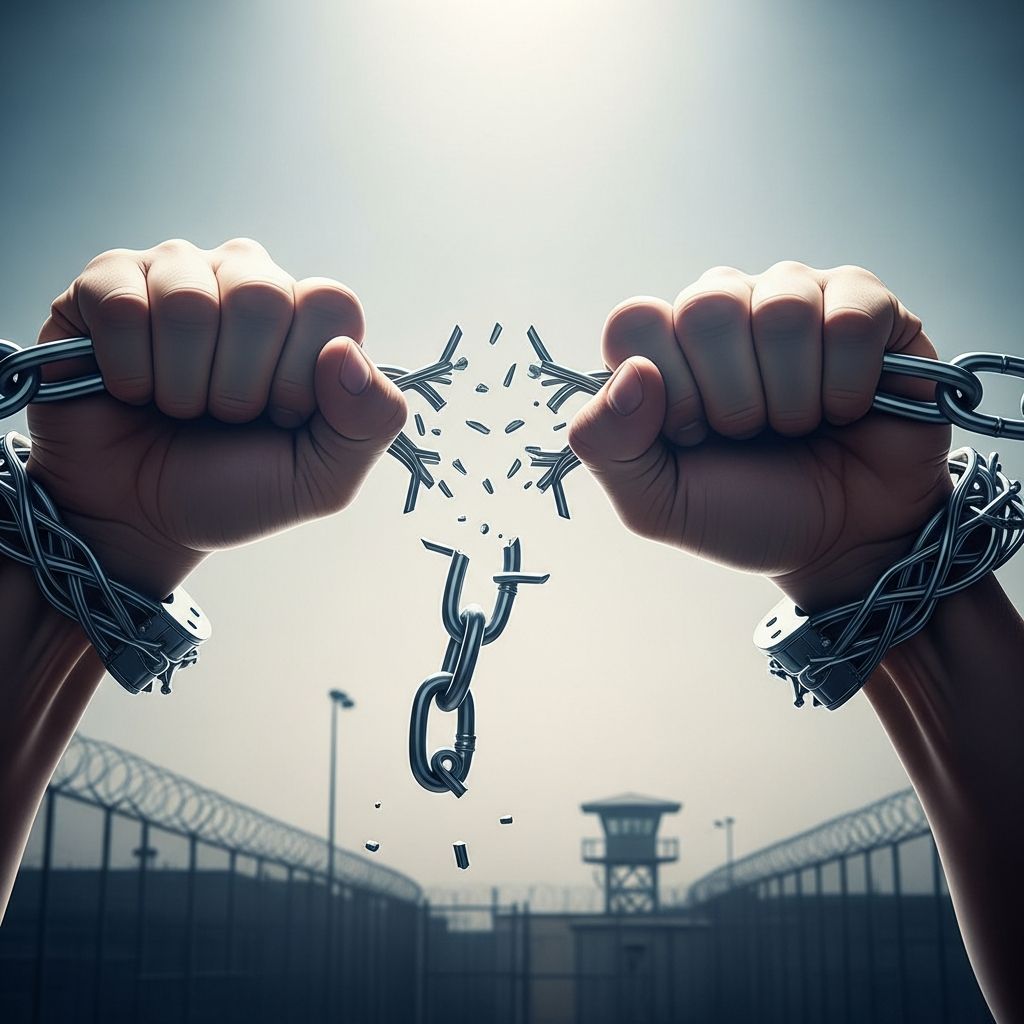
Sexual assaults in U.S. Immigration and Customs Enforcement (ICE) detention facilities represent a persistent crisis, raising critical questions about governmental and private operator liability. Detainees, often vulnerable migrants awaiting legal proceedings, face heightened risks of abuse by staff or fellow inmates, with investigations frequently falling short of standards set by the Prison Rape Elimination Act (PREA).
The Scale of Sexual Violence in ICE Facilities
Reports of sexual assault in ICE detention centers have remained alarmingly consistent over recent years. From 2018 to 2022, 922 allegations were documented across 129 facilities, with 70.3% of these sites reporting incidents. Perpetrators included facility staff in 29.5% of cases (272 incidents), other detainees in 66.4% (613 cases), and external individuals in 4.1% (37 cases). This stability in numbers, despite PREA’s zero-tolerance mandate since 2017, points to systemic deficiencies in prevention and response.
Historical data amplifies the concern. Between 2012 and March 2018, ICE received 1,448 sexual abuse complaints, peaking at 237 in 2017 alone. A 2013 Government Accountability Office report revealed that 40% of allegations were not even reported to ICE headquarters. In another analysis of 70 cases from 2009-2013 across 10 centers, only 7% of 215 claims were substantiated, highlighting flawed reporting and investigative processes.
- Staff-perpetrated assaults rose notably from 2018-2022, potentially indicating either increased incidents or better reporting.
- Rates in some facilities exceed general U.S. population figures by up to 3.5 times (0.58 per 1,000).
- Privately operated centers, like Otay Mesa and Jena/LaSalle, dominate complaint lists.
Legal Framework: PREA and Federal Tort Claims
The Prison Rape Elimination Act (PREA), adopted by ICE in 2017, mandates zero tolerance for sexual abuse, requiring thorough reporting, investigation, and victim support. Yet, compliance remains uneven. Only a fraction of allegations result in substantiation, with ICE’s processes lacking transparency. Detainees may pursue remedies under the Federal Tort Claims Act (FTCA), which permits suits against the U.S. government for negligence by federal employees. However, private contractors like CoreCivic complicate claims, often shielded unless direct negligence is proven.
In cases like E.D. v. Sharkey, a Honduran asylum-seeker alleged assault by a Berks Family Residential Center employee, with staff aware of risks yet failing to intervene. Defendants argued consent, underscoring defensive tactics that retraumatize victims. Bivens actions against individual federal officers for constitutional violations offer another avenue, though sovereign immunity limits direct suits against ICE.
| Legal Pathway | Description | Challenges |
|---|---|---|
| FTCA | Sue U.S. for employee negligence | Private contractors often exempt; proof burden high |
| Bivens Claim | Constitutional rights violations by officers | Qualified immunity; narrow Supreme Court scope |
| PREA Enforcement | Mandatory standards for prevention | Low substantiation rates; poor oversight |
| State Claims | Local law against contractors | Intergovernmental agreements limit jurisdiction |
Private Contractors and Investigative Shortfalls
Many ICE facilities are managed by for-profit entities like CoreCivic, which housed nearly 1,500 at Otay Mesa in 2025. A 2020 memorandum with San Diego County Sheriff’s Department grants the warden authority over rape investigations, bypassing local law enforcement for at least seven 2025 reports. This privatization cedes criminal probes to civilian administrators, potentially prioritizing operations over justice.
Freedom for Immigrants data shows top complaint facilities—Jena/LaSalle, Houston, Adelanto, Northwest, and San Diego—are all private. The DHS Office of Inspector General (OIG) received 1,016 sexual abuse reports from May 2014-July 2016 (over one daily), investigating just 2.4%. ICE faced 44.4% of all DHS abuse complaints.
Victim Testimonies and Patterns of Abuse
Personal accounts reveal harrowing patterns. At Fort Bliss, detainees reported officers crushing testicles during assaults, even on restrained individuals refusing coerced removal. Women like Rosanna Santos at York County Jail endured harassment and threats of sodomy, followed by 11 days in solitary after complaining.
Children and pregnant women face acute risks. Over 4,500 complaints targeted migrant youth shelters. Senator Ossoff’s investigation uncovered abuses against pregnant detainees and children. Migrant women filed 1,224 assaults by ICE officials from 2010-2017.
Immigrant women in detention are particularly vulnerable, as noted by the DOJ’s National Prison Rape Elimination Commission.
Government Oversight and Response Gaps
Despite PREA, ICE’s reporting lags. The ACLU documented failures to protect known at-risk individuals, with staff joking amid coercion threats. Human rights groups urged ICE to address Fort Bliss brutality patterns violating standards.
Psychiatric experts highlight mental health tolls: PTSD, depression, suicide among already traumatized migrants. Calls for independent oversight grow, as internal processes substantiate few claims.
Potential Paths to Justice and Reform
Holding ICE liable demands multifaceted strategies:
- Strengthen PREA Enforcement: Mandate external audits and higher substantiation thresholds.
- End Privatization: Shift to federal oversight in high-risk facilities.
- Expand Legal Remedies: Waive sovereign immunity for systemic negligence.
- Victim Support: Fund trauma-informed care and legal aid.
- Transparency: Publish annual substantiated rates and facility rankings.
Cases like arrests of three ex-employees abusing children show accountability is possible, though one facility closed without broader fixes.
Frequently Asked Questions (FAQs)
What percentage of sexual assault allegations in ICE facilities involve staff?
Approximately 29.5% from 2018-2022, totaling 272 cases.
Has PREA reduced assaults in detention centers?
No, trends remained stable post-2017 adoption, with low substantiation rates.
Can victims sue ICE directly?
Direct suits face sovereign immunity; FTCA or Bivens claims are primary routes.
Why do private firms handle investigations?
Agreements like Otay Mesa’s MOU grant wardens control, sidelining sheriffs.
How many abuse complaints did OIG receive from 2014-2016?
1,016 sexual abuse reports, investigating only 2.4%.
Conclusion: Urgent Need for Systemic Change
The persistent sexual assault crisis in ICE detention demands immediate reform. With hundreds of annual allegations, low accountability, and vulnerable populations at stake, robust oversight and legal evolution are essential to protect human rights.
References
- Why A Private Company Is Investigating Rapes At An ICE Detention Center Instead Of The Sheriff — CalMatters (Wendy Fry and Nigel Duara). 2025. https://www.edhat.com/california/news/why-a-private-company-is-investigating-rapes-at-an-ice-detention-center-instead-of-the-sheriff/
- ICE Detention Center Says It’s Not Responsible for Staff’s Sexual Abuse of Detainees — ACLU (Victoria López). N/A. https://www.aclu.org/news/immigrants-rights/ice-detention-center-says-its-not-responsible
- Detained Immigrants Detail Physical Abuse and Inhumane Conditions at Largest Immigration Detention Center in the U.S. — ACLU. N/A. https://www.aclu.org/news/immigrants-rights/detained-immigrants-detail-physical-abuse-and-inhumane-conditions-at-largest-immigration-detention-center-in-the-u-s
- Trends in Sexual Assault Against Detainees in US Immigration Detention Facilities, 2018-2022 — PMC/NCBI. 2023-08-21. https://pmc.ncbi.nlm.nih.gov/articles/PMC10408271/
- Sexual Assault — Freedom for Immigrants. N/A. https://www.freedomforimmigrants.org/sexual-assault
- Position Statement on Sexual Abuse of Migrants in ICE Custody — American Psychiatric Association. N/A. https://www.psychiatry.org/getattachment/7e36150b-d235-4815-a412-1d6069e62613/Position-Sexual-Abuse-ICE-Detention-Centers.pdf
- Too Swift for Human Rights: The Catastrophic Cost of Eliminating Government Oversight — Women’s Refugee Commission. N/A. https://www.womensrefugeecommission.org/blog/too-swift-for-human-rights-the-catastrophic-cost-of-eliminating-government-oversight-over-immigration-enforcement/
Similar Articles








Read full bio of Sneha Tete




