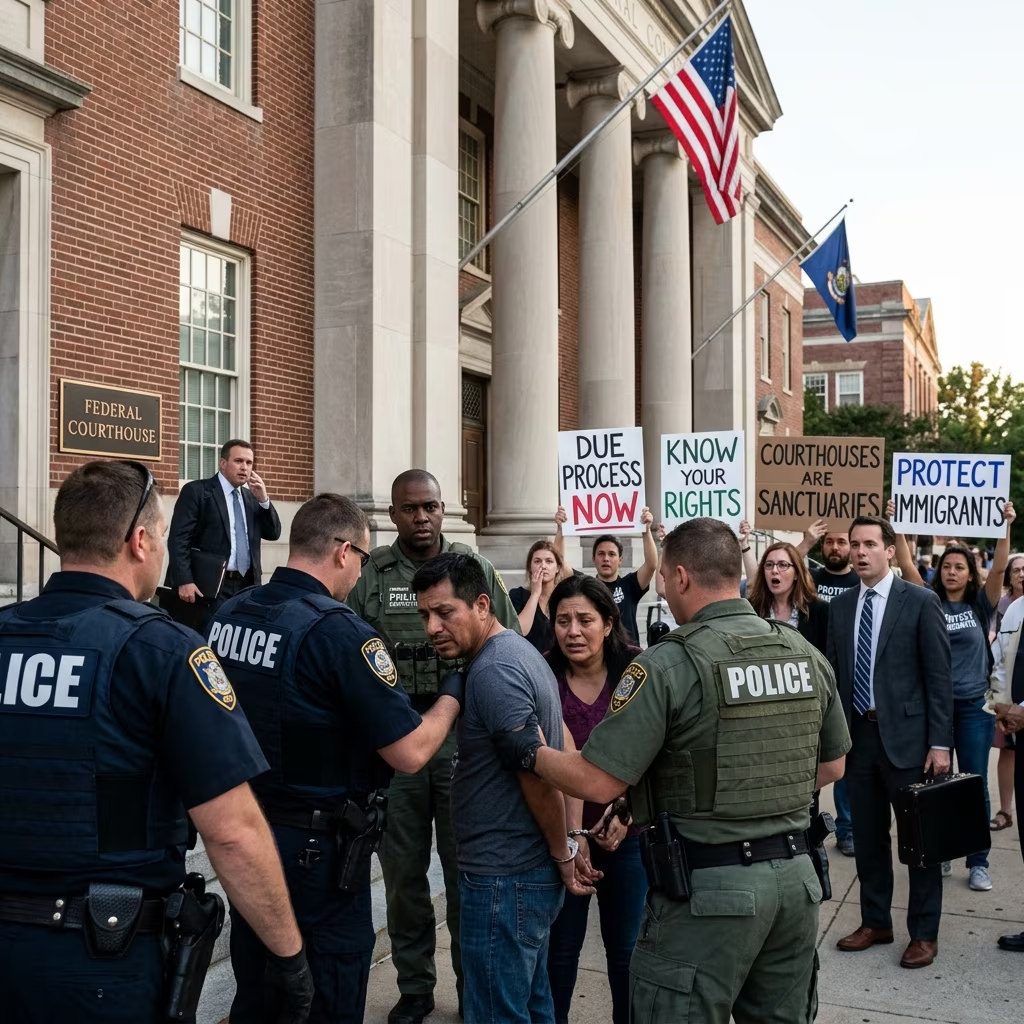
Immigration and Customs Enforcement (ICE) has, for years, carried out civil immigration arrests in and around courthouses, targeting people who appear for hearings or who accompany friends and family to court. These operations sit at the intersection of federal immigration authority, state court control over their premises, and fundamental due process rights. Understanding how courthouse arrests work—and how they are limited—is critical for immigrants, lawyers, judges, and anyone who relies on the courts.
This article explains the legal landscape surrounding ICE courthouse arrests, outlines key federal policies and state protections, and offers practical considerations for people worried about immigration enforcement when they go to court.
Why Courthouse Arrests Matter
Courthouses are intended to be places where people can seek justice, resolve disputes, and comply with legal obligations. When immigration enforcement occurs in or near these buildings, it can have serious consequences:
- Deterrence from appearing in court — Many immigrants fear that showing up for a hearing could lead directly to arrest and detention.
- Due process concerns — Detaining people as they attend or exit immigration court can interfere with their ability to pursue legal relief and fully participate in their proceedings.
- Impacts on public safety — When victims, witnesses, or defendants are too afraid to come to court, criminal cases can collapse and communities become less safe.
Advocates, courts, and legislatures have responded by challenging courthouse arrests, limiting them through policy and law, and pressing ICE to scale back enforcement that undermines access to justice.
Federal Authority and ICE’s Stated Policy
At the federal level, ICE relies on its statutory authority to arrest people suspected of violating civil immigration law. However, internal guidance has evolved significantly as courthouse enforcement has come under scrutiny.
ICE Courthouse Operations Guidance
In recent years, ICE has issued guidance on when agents may conduct civil immigration enforcement in or near courthouses. While specific directives have changed over time, recent interim guidance emphasizes that courthouse operations should be limited to certain situations.
| Permitted Courthouse Operations (Recent ICE Guidance) | Examples |
|---|---|
| National security threats | Targets suspected of terrorism or espionage. |
| Imminent risk of death or serious violence | Intervening to prevent harm where no safer alternative exists. |
| Threats to public safety | Individuals with serious criminal histories posing ongoing danger. |
| Hot pursuit or preservation of key evidence | Acting quickly to prevent destruction of crucial evidence. |
Outside of such circumstances, ICE policy has, at times, advised against routine civil arrests at courthouses, in recognition of the importance of court access and due process. In some instances, federal courts have gone further, issuing orders that prohibit ICE from conducting civil arrests at immigration courthouses or require strict compliance with limited guidance.
Targeted vs. Collateral Arrests
Courthouse operations often distinguish between:
- Targeted arrests — Where ICE seeks a specific person for alleged immigration violations.
- Collateral arrests — Where other individuals encountered during the operation (such as family members or witnesses) are also arrested.
Recent guidance indicates that collateral arrests should be evaluated case-by-case and are not automatically permitted in courthouse settings, though the criteria and practice can vary. For court users, this distinction matters because attendance as a witness or support person may still carry risk in some jurisdictions.
State Laws and Court Rules Limiting Courthouse Arrests
Several states have enacted laws or adopted policies that restrict civil immigration arrests in and around courthouses. These measures are grounded in the states’ interest in ensuring that people can safely access the courts to resolve legal matters and exercise their rights.
Examples of State-Level Protections
- California — California law limits civil arrests in courthouses unless the arresting officers have a judicial warrant, reinforcing judges’ authority to protect the right to participate in court proceedings.
- New York — The Protect Our Courts Act makes it unlawful for law enforcement, including ICE, to arrest a person for a civil violation while the person is going to, attending, or leaving court, unless a valid judicial warrant or court order is presented.
- Court administration safeguards — In New York, the Office of Court Administration designates attorneys to review judicial warrants before allowing non-local law enforcement to enter courthouses to make civil arrests.
These laws also typically empower judges to enforce protections through contempt powers and provide avenues for affected individuals to seek civil remedies if they are arrested in violation of the statutes.
How State Protections Work in Practice
State protections do not prevent federal immigration enforcement altogether, but they can significantly change how and where arrests occur. For example:
- ICE may be forced to move operations outside of state courtrooms, such as to hallways or outdoor areas, to avoid violating state courthouse arrest bans.
- Agents may need to present a judicial warrant signed by a federal judge, not just an administrative immigration warrant, to lawfully arrest someone in or near a courthouse.
- Judges can intervene if officers attempt to make an unlawful civil arrest on court property, and state attorneys general may pursue enforcement actions against violations.
The result is a complex environment where federal and state authorities must navigate overlapping rules. Conflicts have led to litigation, policy revisions, and, in some instances, sharply worded judicial decisions criticizing the government’s approach to courthouse arrests.
Due Process and Litigation Over Courthouse Arrests
Courthouse arrests have prompted lawsuits challenging federal policies that allegedly strip individuals of due process rights guaranteed by the Fifth Amendment and federal immigration law.
Concerns Raised by Advocates
Advocates and impacted individuals have argued that certain ICE practices at immigration courts:
- Interfere with access to hearings — People who appear for scheduled immigration court hearings seeking protection may have their cases dismissed and be immediately arrested, undermining the right to a full removal hearing.
- Discourage lawful compliance — Fear of arrest discourages individuals from complying with court obligations, potentially leading to in absentia orders or other adverse outcomes.
- Undermine judicial authority — Directing officers to arrest individuals despite judges declining to dismiss cases or while appeals are pending can conflict with the courts’ role in overseeing proceedings.
In some cases, federal courts have agreed that ICE lacked adequate justification for mass arrests at immigration courthouses and have issued orders temporarily or permanently restricting these practices. These decisions highlight the tension between enforcement objectives and the constitutional requirement that people receive fair process before being deported.
Impact on Immigration Court Functioning
Historically, policies from both the Department of Homeland Security (DHS) and the Department of Justice (DOJ) limited civil immigration-related arrests in immigration courts because of the risk to due process and court participation. When such limits are relaxed, the effects can include:
- Increased cancellations or dismissals of immigration cases tied to enforcement objectives.
- Greater reliance on expedited removal processes that bypass full hearings.
- Heightened anxiety among noncitizens and legal service providers, who must plan for possible arrests at or after hearings.
These developments have spurred ongoing litigation and advocacy aimed at restoring stronger protections for people who engage with the court system.
Practical Considerations for Court Users
For immigrants and advocates, the question is not simply whether ICE can make courthouse arrests, but how to navigate a legal system where such arrests are possible in some circumstances and restricted in others. While this article cannot provide individualized legal advice, several general considerations emerge from existing laws and guidance.
Key Points to Keep in Mind
- Know your jurisdiction — State laws differ. In some states, civil courthouse arrests are broadly restricted; in others, they are less regulated. Understanding local rules is crucial.
- Judicial vs. administrative warrants — A judicial warrant is signed by a judge and typically carries more authority on court premises than an internal ICE administrative warrant. Some state laws require a judicial warrant for any civil arrest at or near a courthouse.
- Alternative appearance options — In jurisdictions with high enforcement risk, lawyers may seek to waive in-person appearances or request remote participation to protect clients who fear arrest.
- Court protections — Judges may issue orders designed to safeguard the right to attend and return from court without civil arrest, and may use contempt powers against officers who violate those protections.
Legal advocates often work closely with clients to tailor strategies—such as using pseudonyms in sensitive cases, seeking protective writs, or modifying hearing formats—to minimize the risk of immigration enforcement interfering with court participation.
Common Myths and Misconceptions
Public debate about ICE and courthouses has generated several misconceptions. Clarifying these points can help people better understand their legal environment.
- Myth: Courthouses are always “safe zones” from immigration enforcement.
Some policies treat certain locations as sensitive for enforcement, but courthouses are not categorically off-limits. ICE guidance allows operations in or near courthouses under specific conditions, and state protections vary. - Myth: ICE must have a criminal warrant to arrest someone at court.
Civil immigration arrests are distinct from criminal arrests. In many places, ICE can act based on administrative warrants; however, state laws like those in California and New York may demand a judicial warrant for arrests on or near courthouse grounds. - Myth: Appearing in immigration court eliminates the risk of arrest.
Recent litigation has highlighted that individuals appearing for immigration hearings may still face arrest and fast-tracked removal, especially where policies encourage dismissing cases and transferring people to ICE custody.
Frequently Asked Questions (FAQs)
Can ICE arrest someone inside a state courthouse?
It depends on the jurisdiction and the type of warrant. In some states, laws prohibit civil arrests inside courthouses unless officers present a judicial warrant or court order. Where such protections exist, ICE may shift operations to hallways or outside the building rather than the courtroom itself.
Are immigration courthouse arrests currently restricted anywhere?
Yes. In certain locations, federal courts have issued orders largely prohibiting ICE from conducting civil immigration enforcement in or near immigration courthouses and requiring adherence to more protective guidance. These rulings reflect findings that ICE failed to justify mass courthouse arrests and that such practices can undermine due process.
Does going to court for a criminal case put someone at higher risk of ICE enforcement?
In some jurisdictions, ICE has tracked court appearance dates and arrested people as they travel to, attend, or leave criminal and family court hearings. Where state protections are strong, this may be more difficult, but individuals with pending immigration issues should discuss risks with counsel before appearing.
What should someone do if they are worried about ICE at their hearing?
People concerned about immigration enforcement at court should speak with a qualified immigration or defense attorney. Lawyers may be able to explore options such as remote participation, protective orders, or adjustments to court schedules, depending on local law and the specifics of the case.
Do courthouse arrests affect witnesses and crime victims?
Yes. When witnesses or victims fear that court attendance could lead to immigration arrest, they may avoid testifying or seeking protective orders, which can harm criminal prosecutions and public safety. State laws restricting courthouse arrests are often justified in part by the need to ensure that all residents can safely access the justice system.
Looking Ahead: Policy Trends and Ongoing Debate
Courthouse arrests remain a contested aspect of immigration enforcement. On one side, ICE emphasizes its mandate to enforce immigration law and claims that courthouses can be controlled environments for locating specific individuals. On the other side, courts, state legislatures, and advocates stress the need to preserve access to justice and constitutional rights.
Key trends include:
- Increased state legislation — More states may adopt laws modeled on protections like California’s civil arrest limits and New York’s Protect Our Courts Act.
- Continued litigation — Lawsuits challenging courthouse arrests on due process and statutory grounds are likely to continue, especially as policies change.
- Policy revisions within ICE — Internal guidance has already shifted multiple times, and further modifications are possible as public scrutiny, court decisions, and political priorities evolve.
For now, whether ICE can make arrests at courthouses is not a simple yes-or-no question. It is shaped by federal guidance, court orders, state statutes, and the specifics of each enforcement operation. Anyone interacting with the courts while facing potential immigration consequences should seek informed legal advice to understand the current rules in their jurisdiction.
References
- After ICE Admitted Having No Justification for Arrests at Immigration Courthouses, District Court Grants Stay Prohibiting ICE From Conducting Courthouse Arrests — American Civil Liberties Union. 2024-03-27. https://www.aclu.org/press-releases/after-ice-admitted-having-no-justification-for-arrests-at-immigration-courthouses-district-court-grants-stay-prohibiting-ice-from-conducting-courthouse-arrests
- ICE Courthouse Arrests in California: Explainer and Legal Strategies — Immigrant Legal Resource Center. 2020-02-01. https://www.ilrc.org/sites/default/files/resources/courthouse_arrest_advisory_final-feb2020.pdf
- ICE Issues Interim Guidance for Civil Immigration Enforcement at or Near Courthouses — Immigration Policy Tracking Project. 2025-04-15. https://immpolicytracking.org/policies/ice-issues-interim-guidance-for-civil-immigration-enforcement-at-or-near-courthouses/
- Protect Our Courts Act FAQ — Immigrant Defense Project. 2018-06-11. https://www.immigrantdefenseproject.org/wp-content/uploads/Protect-Our-Courts-FAQ-061118.pdf
- Unlawful ICE Arrests at Immigration Courthouses Prompt Lawsuit by Advocates and Immigrants — National Immigrant Justice Center. 2024-01-30. https://immigrantjustice.org/press-release/unlawful-ice-arrests-at-immigration-courthouses-prompt-lawsuit-by-advocates-and-immigrants/
- Federal Judge Rules ICE Can’t Make Arrests at Immigration Courthouses — Courthouse News Service. 2024-04-02. https://www.courthousenews.com/federal-judge-rules-ice-cant-make-arrests-at-immigration-courthouses/
- ICE’s New Courthouse Arrest Policy Set Them on a Collision Course With State Courts — State Court Report. 2025-06-10. https://statecourtreport.org/our-work/analysis-opinion/ices-new-courthouse-arrest-policy-set-them-collision-course-state-courts