
I-9 Citizenship Check: Green Card Risk Alert
Discover how incorrectly marking U.S. citizen or national on Form I-9 can jeopardize your permanent residency application and lead to serious immigration consequences.
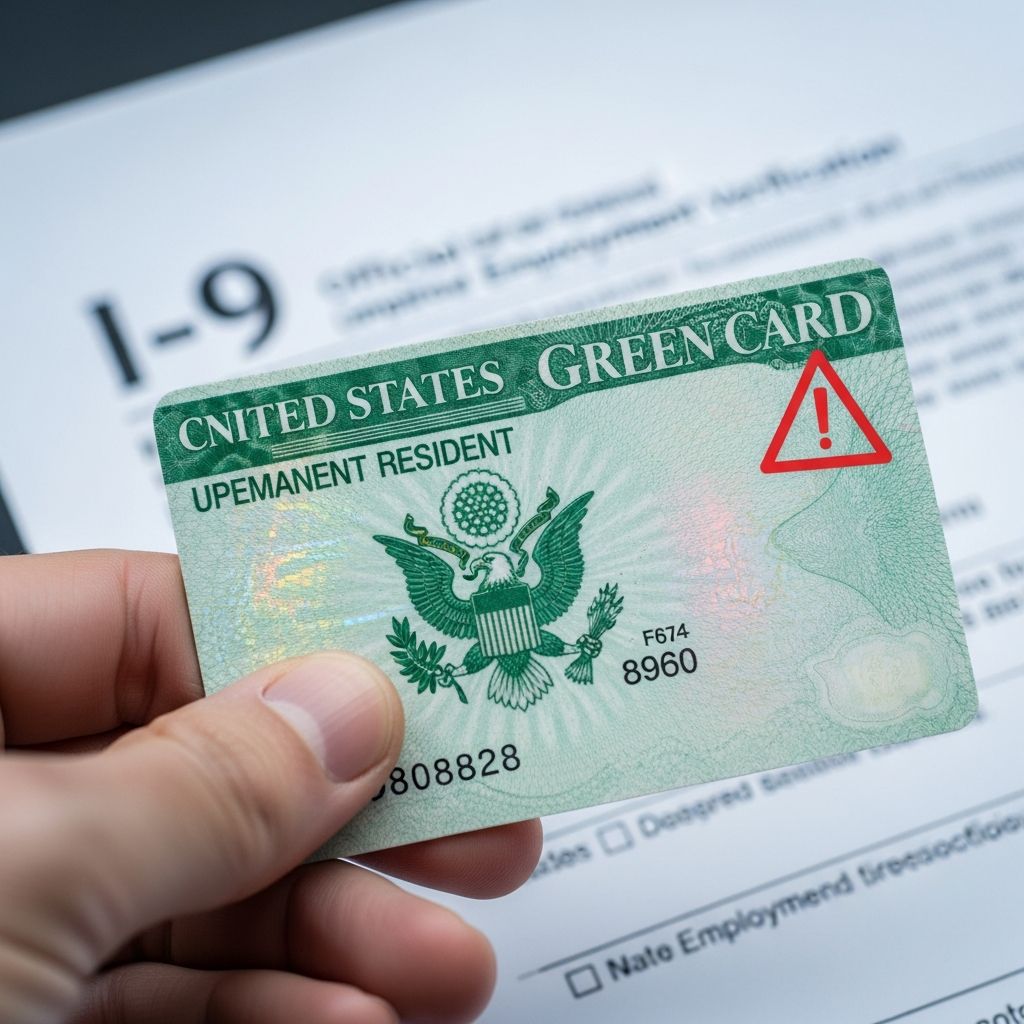
Form I-9 serves as a critical tool for verifying employment eligibility in the United States, requiring workers to declare their citizenship or immigration status. However, mistakenly selecting ‘U.S. citizen’ or ‘noncitizen national’ when applying for a green card can trigger severe repercussions, potentially derailing permanent residency efforts. This article delves into the mechanics of Form I-9, the dangers of inaccurate attestations, employer responsibilities, correction strategies, and proactive measures to safeguard your immigration journey.
Understanding Form I-9 and Its Core Requirements
The Employment Eligibility Verification Form I-9, mandated by the Immigration Reform and Control Act of 1986, ensures that only authorized individuals work in the U.S. Employers must complete it for every new hire, with employees filling Section 1 on or before their first day and employers handling Section 2 within three business days. Section 1 demands an attestation of status via one of four boxes: U.S. citizen, noncitizen national, lawful permanent resident, or alien authorized to work.
Failure to check exactly one box constitutes a substantive violation, rendering the form invalid and exposing employers to fines from U.S. Immigration and Customs Enforcement (ICE). Employees bear the onus of truthful disclosure; falsifying status invites immigration sanctions, including green card denials.
Why Falsely Claiming U.S. Citizenship on I-9 Harms Green Card Prospects
Declaring oneself a U.S. citizen or national on Form I-9 when holding temporary work authorization, such as an H-1B visa or Employment Authorization Document (EAD), misrepresents facts to the federal government. U.S. Citizenship and Immigration Services (USCIS) views this as material misrepresentation under INA Section 212(a)(6)(C)(i), a ground of inadmissibility lasting potentially forever unless waived.
During green card adjudication via Form I-485, USCIS cross-references I-9 records through databases like E-Verify or SAVE. A mismatched attestation flags fraud, prompting Requests for Evidence (RFEs) or outright denials. Even if undetected initially, it surfaces in naturalization (Form N-400), where applicants swear under oath, risking perjury charges if prior lies are uncovered.
- Database Linkage: USCIS accesses employer I-9 data during background checks.
- Interview Scrutiny: Officers probe employment history, requesting I-9 copies.
- Long-Term Impact: Misrepresentation bars future benefits without a successful I-601 waiver.
Common I-9 Pitfalls That Trigger Immigration Red Flags
Beyond citizenship box errors, several substantive mistakes amplify risks for non-citizen applicants. Missing signatures, undated sections, or accepting expired documents all undermine form integrity.
| Error Type | Description | Consequence for Green Card |
|---|---|---|
| No Citizenship Box Checked | Employee skips or checks multiple boxes in Section 1. | ICE fines employer; USCIS questions employee’s honesty. |
| Missing Employee Signature | Section 1 lacks attestation signature/date. | Form invalid; signals non-compliance in residency review. |
| Untimely Section 2 | Employer delays beyond three business days. | Pattern of errors suggests systemic issues, indirectly harming applicant credibility. |
| Invalid Documents | Expired or mismatched List A/B/C docs used. | Raises doubts on work authorization history for adjustment of status. |
These errors, if widespread, prompt ICE audits, indirectly exposing individual I-9s to USCIS scrutiny during green card processing.
Employer Obligations: Navigating Compliance Without Jeopardizing Workers
Employers cannot complete Section 1 but must review it promptly for glaring omissions, returning it for correction before signing Section 2. They examine original documents in person, recording details without discrimination. Anti-discrimination laws under 8 U.S.C. § 1324b prohibit rejecting valid docs based on citizenship status.
For reverification, employers update Supplement B (prior Section 3) before work authorization expires, a frequent oversight leading to substantive violations. Electronic I-9 systems must meet USCIS standards, with regular audits recommended to preempt issues.
Steps to Correct I-9 Errors Before They Derail Your Green Card
Technical errors—like omitted addresses or document titles—qualify for ICE’s 10-business-day correction window during audits. Substantive ones require attaching a memo explaining the mistake, signed by the preparer, without altering original entries. Employees seeking corrections should:
- Notify HR immediately upon spotting errors.
- Provide updated, unexpired documents if needed.
- Request a new I-9 if over three years old or status changed.
- Document all communications for USCIS submissions.
For green card applicants, disclose corrections in I-485 supplements, framing them as honest oversights with evidence like pay stubs proving ongoing eligibility.
Legal Ramifications: Fines, Audits, and Immigration Bars
ICE penalties escalate with violation count: $281-$2,789 per substantive error for first offenses, up to $23,331 for repeaters or patterns. Criminal falsification invites jail time. For immigrants, false claims invoke permanent bars, complicating waivers that demand extreme hardship proof to qualifying relatives.
Recent enforcement trends show ICE prioritizing E-Verify users, with seven-figure fines for systemic failures like Abercrombie & Fitch’s platform glitches.
Best Practices for Immigrants Protecting Their Path to Permanent Residency
To sidestep I-9 traps:
- Double-Check Section 1: Verify exact status matches visa/EAD; enter ‘N/A’ for optional fields.
- Present Strong Documents: Use List A combos like passport with I-94 for clarity.
- Track Expirations: Alert employer 30 days before EAD renewal.
- Retain Copies: Keep personal I-9 records for green card filings.
- Consult Experts: Immigration attorneys review forms pre-submission.
Employers should train staff via USCIS’s M-274 Handbook, conduct self-audits quarterly, and use compliant software.
Case Studies: Real-World I-9 Mishaps and Lessons Learned
In one instance, a tech worker on L-1 visa checked ‘citizen’ inadvertently; USCIS denied I-485 citing misrepresentation, requiring I-601 waiver after two years. Another firm faced $1M+ fines for missing signatures across 1,000 forms, triggering applicant RFEs.
Conversely, proactive correction—attaching memos and reverifying timely—allowed smooth green card approvals despite initial errors.
Frequently Asked Questions (FAQs)
What if I accidentally checked the wrong box on Form I-9?
Contact HR for correction via memo; disclose in green card app with explanation to mitigate misrepresentation claims.
Can employers be fined for my I-9 mistake?
Yes, substantive errors like unchecked boxes draw ICE fines, but technical ones offer correction grace periods.
Does E-Verify share my I-9 with USCIS for green cards?
Yes, it confirms status and flags discrepancies during adjustment of status background checks.
How long must employers retain I-9 forms?
Three years after hire or one year post-termination, whichever longer; destruction errors invite penalties.
Is backdating an I-9 ever allowed?
No—it’s criminal falsification; always note current dates with correction memos.
Proactive Strategies for Seamless Employment and Residency
Integrate I-9 compliance into onboarding checklists, leveraging USCIS resources like the latest form (10/21/2019 edition as of 2026) and video tutorials. Immigrants should align I-9 attestations with visa petitions (I-129/I-140) for consistency. For family-based green cards, ensure sponsor’s I-9 history doesn’t implicate you.
Ultimately, accuracy on Form I-9 fortifies your immigration profile, transforming a routine employment step into a foundation for enduring U.S. residency.
References
- Top 10 Substantive Form I-9 Errors to Avoid — OutSolve. 2023. https://www.outsolve.com/blog/top-10-substantive-form-i-9-errors
- Top 10 Most Common Form I-9 Mistakes — Mitratech. 2023. https://mitratech.com/resource-hub/blog/top-10-most-common-form-i-9-mistakes/
- Employers Must Pay Close Attention to Form I-9 Processing — Woods Rogers. 2023. https://www.woodsrogers.com/insights/publications/employers-need-to-pay-close-attention-to-form-i-9-processing
- Mistakes You Should Avoid on Your Green Card Application — Weldon Legal. 2024. https://www.weldonlegal.com/latest-news/mistakes-you-should-avoid-on-your-green-card-application/
- I-9 Procedures and Penalties — Baker Donelson. 2023. https://www.bakerdonelson.com/i-9-procedures-and-penalties
Similar Articles








Read full bio of Sneha Tete


