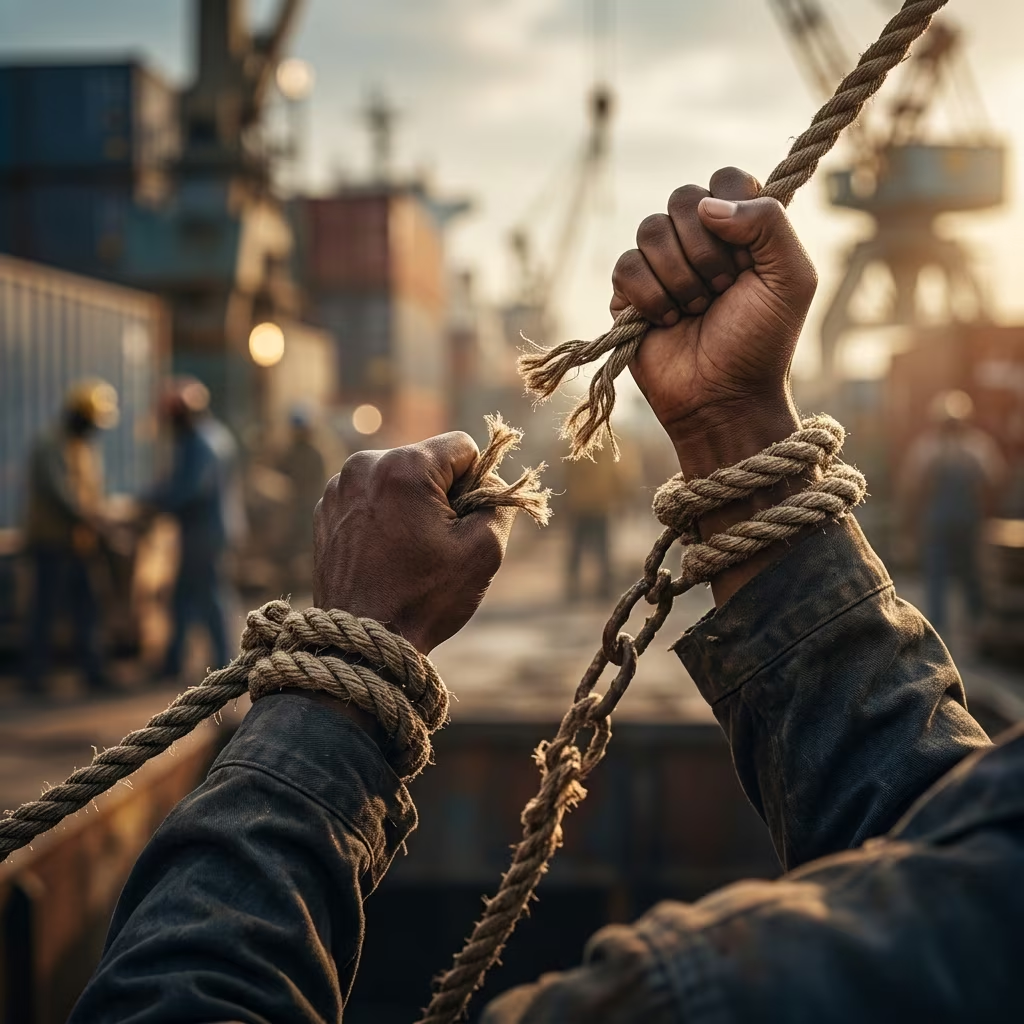
Labor trafficking is one of the most pervasive forms of human trafficking and a direct assault on basic human rights. It thrives on coercion, deception, and abuse of vulnerability, forcing people into exploitative work in agriculture, construction, domestic service, manufacturing, and other sectors across the world. Addressing labor trafficking requires more than criminal prosecutions; it demands a comprehensive response that centers workers’ rights, protections, and access to justice.
What Labor Trafficking Is – And What It Is Not
Under widely used international and national definitions, labor trafficking (often called forced labor) occurs when someone exploits another person’s labor or services through force, fraud, or coercion. This may involve physical threats, psychological manipulation, debt bondage, document confiscation, or abuse of legal processes, such as threats of deportation.
Key elements often used to describe forced labor include:
- Acts: Recruiting, transporting, harboring, providing, or obtaining a person for labor or services.
- Means: Using force, fraud, or coercion, including threats of harm, withholding pay, manipulation of debts, or retention of identity documents.
- Purpose: Exploiting the person’s work or services, often in conditions that amount to involuntary servitude, peonage, or slavery.
Not all labor abuses rise to the level of trafficking. Wage theft, unsafe conditions, or excessive overtime are serious violations of labor law, but they become trafficking only when combined with compelling mechanisms that strip workers of any meaningful choice to leave. Distinguishing between severe labor exploitation and trafficking is crucial for both legal enforcement and victim protection.
Global Patterns and Scale of Labor Trafficking
Labor trafficking is not confined to any one region or industry. According to recent United Nations assessments, forced labor is now the most common form of human trafficking globally, accounting for about 42 percent of victims in 2022. Between 2019 and 2022, trafficking for forced labor surged by nearly half, overtaking trafficking for sexual exploitation as the leading form of trafficking.
Common sectors where forced labor is detected include:
- Agriculture – crop harvesting, livestock work, and fishing.
- Construction – large infrastructure projects and informal building sites.
- Domestic work – live-in housekeepers, caregivers, and cleaners.
- Manufacturing – factories producing garments, electronics, and other goods.
- Mining and extractive industries – small-scale or informal operations.
Men make up a substantial majority of detected forced labor victims, though women and girls face significant exploitation, especially in domestic service and certain manufacturing and agricultural contexts. In many countries, migrant workers and people in irregular legal status are at heightened risk because traffickers can leverage their precarious position to control and silence them.
| Sector | Typical Risk Factors |
|---|---|
| Agriculture and Fishing | Remote worksites, dependence on employers for housing and transport, seasonal or migrant workforce, limited labor inspection. |
| Construction | Subcontracting chains, informal recruitment, language barriers, hazardous conditions with weak oversight. |
| Domestic Work | Isolation in private homes, live-in arrangements, employer control over documents and mobility. |
| Manufacturing | High-pressure production quotas, long hours, recruitment fees, and threats tied to immigration status. |
How Labor Trafficking Violates Human Rights
Labor trafficking is fundamentally a human rights violation. International human rights instruments guarantee rights such as freedom from slavery and servitude, the right to just and favorable work conditions, and the right to be free from violence and discrimination. Trafficking undermines these rights in systematic ways.
Victims of labor trafficking often experience:
- Loss of liberty – restrictions on movement, surveillance, or confinement at worksites or employer-controlled housing.
- Economic exploitation – nonpayment of wages, excessive deductions, debt bondage, and manipulation of contracts.
- Physical and psychological harm – violence, threats, intimidation, degrading working and living conditions.
- Social exclusion – isolation from family and community, barriers to health care and legal assistance.
Beyond individual harms, labor trafficking damages communities and economies by undercutting law-abiding businesses, distorting labor markets, and eroding trust in institutions tasked with protecting workers. It is both a crime of exploitation and a structural problem tied to inequality, weak labor protections, and the commodification of precarious workers.
Recognizing Indicators of Labor Trafficking
Accurate identification is a critical step in combating labor trafficking. The International Labour Organization (ILO) highlights a set of indicators that frequently appear in forced labor cases. While not every case involves all indicators, the presence of one or more strong signs can signal significant risk.
Common indicators include:
- Abuse of vulnerability – targeting people facing poverty, migration-related insecurity, discrimination, or language barriers.
- Deception – misrepresenting job conditions, wages, housing, or legal status.
- Restriction of movement – preventing workers from leaving worksites or employer-controlled housing.
- Isolation – cutting off contact with family, community, or outside support networks.
- Threats and intimidation – including threats of deportation, arrest, or harm to family members.
- Retention of identity documents – holding passports or IDs to control workers.
- Withholding wages – delaying or denying pay as a means of coercion.
- Debt bondage – binding workers to inflated recruitment fees or other debts they cannot reasonably repay.
- Abusive conditions – overcrowded or unsafe housing, unsanitary worksites, or excessive overtime.
These indicators help front-line workers, labor inspectors, advocates, and community organizations distinguish between labor disputes and trafficking-level exploitation. When indicators cluster, particularly around coercion and inability to leave, the likelihood of trafficking increases substantially.
Law, Policy, and the “3P” Framework
Modern anti-trafficking efforts often rely on the “3P” paradigm: prosecution, protection, and prevention. This framework, widely adopted in international and national policies, aims to balance criminal accountability with support for victims and structural interventions.
Core elements of this approach include:
- Prosecution – criminal laws that define trafficking, empower authorities to investigate and prosecute offenders, and provide penalties for those who profit from forced labor.
- Protection – measures to identify victims, offer safe housing, medical care, legal assistance, and pathways to regular immigration status where needed.
- Prevention – strategies to reduce vulnerability and demand, such as stronger labor protections, public awareness, ethical recruitment standards, and oversight of high-risk industries.
Some commentators argue that a stronger labor rights paradigm is needed to complement the traditional anti-trafficking approach, emphasizing collective bargaining, workplace organizing, and robust enforcement of labor laws to tackle exploitation before it escalates into trafficking. This perspective highlights that trafficking does not occur in a vacuum; it is often enabled by weak labor standards and power imbalances between employers and workers.
The Role of Labor Law and Enforcement Agencies
Labor trafficking sits at the intersection of criminal law and labor regulation. Agencies responsible for enforcing minimum wage, overtime, health and safety, and child labor laws can play a critical role in detecting and remedying exploitation that may overlap with trafficking.
For example, the U.S. Department of Labor focuses on:
- Enforcing labor protections – conducting inspections, investigating complaints, and ensuring payment of wages and compliance with safety standards.
- Supporting trafficking investigations – referring suspected trafficking cases to law enforcement, calculating restitution, and documenting systemic exploitation.
- Assisting survivors – offering employment and training resources to help victims rebuild economic independence.
- International monitoring – funding research and technical assistance to combat forced labor and the worst forms of child labor abroad.
Strengthening collaboration between labor agencies, law enforcement, and community organizations is vital. Workers are often more comfortable approaching labor inspectors or community advocates than police, especially if they fear immigration consequences or retaliation. When these institutions coordinate effectively, they can identify trafficking earlier and provide meaningful protection.
Corporate Responsibility and Supply Chains
Labor trafficking frequently appears in complex supply chains where production is outsourced, recruitment is privatized, and cost pressures are high. Companies risk benefiting from forced labor indirectly when they fail to examine and address risks in the full breadth of their operations.
Responsible business practices may include:
- Human rights due diligence – systematic risk mapping, auditing, and engagement with workers to uncover exploitation.
- Ethical recruitment – prohibiting recruitment fees, ensuring contracts are transparent, and preventing document confiscation.
- Supplier codes of conduct – clear standards against forced labor, with monitoring and consequences for violations.
- Remedy mechanisms – channels for workers to safely report abuses, receive compensation, and access support.
Legal tools such as civil liability provisions in anti-trafficking laws and trade measures targeting goods produced with forced labor can increase pressure on companies to act responsibly. However, meaningful change usually requires sustained advocacy, worker organizing, and transparency across global supply chains.
Empowering Workers and Communities
Preventing labor trafficking ultimately hinges on empowering workers and communities. When workers have credible avenues to assert their rights and collective power, traffickers lose a key source of leverage.
Effective empowerment strategies can include:
- Access to information – educating workers about their rights, risks of deceptive recruitment, and available support services.
- Community-based monitoring – local organizations and unions observing patterns of exploitation and supporting affected workers.
- Safe reporting mechanisms – hotlines, legal clinics, and trusted intermediaries that allow workers to seek help without fear of retaliation.
- Policy advocacy – campaigns to strengthen labor standards, protect migrant workers, and ensure that anti-trafficking responses prioritize human rights over punitive immigration controls.
Frequently Asked Questions About Labor Trafficking
Is movement across borders required for labor trafficking?
No. Human trafficking does not require crossing a border. A person can be trafficked entirely within their own country or even within a single region or city. What defines trafficking is the use of force, fraud, or coercion to exploit labor or services, not the movement itself.
How is labor trafficking different from migrant smuggling?
Migrant smuggling typically involves payment to facilitate unauthorized entry into a country, often with consent from the person being smuggled. Labor trafficking, by contrast, concerns exploitation of a person’s work or services through coercive means. Smuggling can turn into trafficking if smugglers later coerce migrants into forced labor or commercial sex.
Can labor trafficking happen in formal, legal workplaces?
Yes. Labor trafficking can occur in both informal and formal sectors, including businesses that appear legitimate on the surface. The key issue is whether workers are compelled to work through force, fraud, or coercion and cannot freely leave, regardless of whether the employer is registered or the work is otherwise lawful.
Who is most at risk of labor trafficking?
People facing economic hardship, discrimination, insecure immigration status, or language barriers are often most vulnerable. Migrant workers, temporary or seasonal laborers, and individuals recruited through informal networks are frequently targeted because traffickers can exploit their dependence and limited access to rights enforcement.
How can individuals and organizations respond?
Individuals can learn the indicators of trafficking, support worker-led initiatives, and report suspected cases through appropriate hotlines or labor agencies. Organizations can ensure ethical recruitment, strengthen internal grievance mechanisms, collaborate with community groups, and adopt human rights due diligence to prevent forced labor in their supply chains.
References
- About Human Trafficking — U.S. Department of State. 2023-06-15. https://2021-2025.state.gov/humantrafficking-about-human-trafficking/
- Combating Labor Exploitation and Human Trafficking — U.S. Department of Labor. 2023-05-01. https://www.dol.gov/agencies/oasp/resources/trafficking
- Understanding Human Trafficking — United Nations. 2024-01-30. https://www.un.org/en/peace-and-security/understanding-human-trafficking
- “I Didn’t Know It Had a Name”: Understanding Labor Trafficking and How to Spot It — UAB Institute for Human Rights Blog. 2025-11-12. https://sites.uab.edu/humanrights/2025/11/12/i-didnt-know-it-had-a-name-understanding-labor-trafficking-and-how-to-spot-it/
- Labor Trafficking Protocol Guidelines — The Advocates for Human Rights. 2016-08-01. https://www.theadvocatesforhumanrights.org/Res/labor_trafficking_protocol_guidelines_final%202.pdf
- Human Trafficking — California Civil Rights Department. 2022-09-01. https://calcivilrights.ca.gov/humantrafficking/
- Human Rights, Labor, and the Prevention of Human Trafficking: A Response to Shamir’s A Labor Paradigm for Human Trafficking — UCLA Law Review. 2014-03-01. https://www.uclalawreview.org/human-rights-labor-and-the-prevention-of-human-trafficking-a-response-to-shamirs-a-labor-paradigm-for-human-trafficking/