
How Your Social Media Posts Can Become Legal Evidence
An in-depth guide to how everyday social media activity can be discovered, preserved, and used against you in court or disputes.
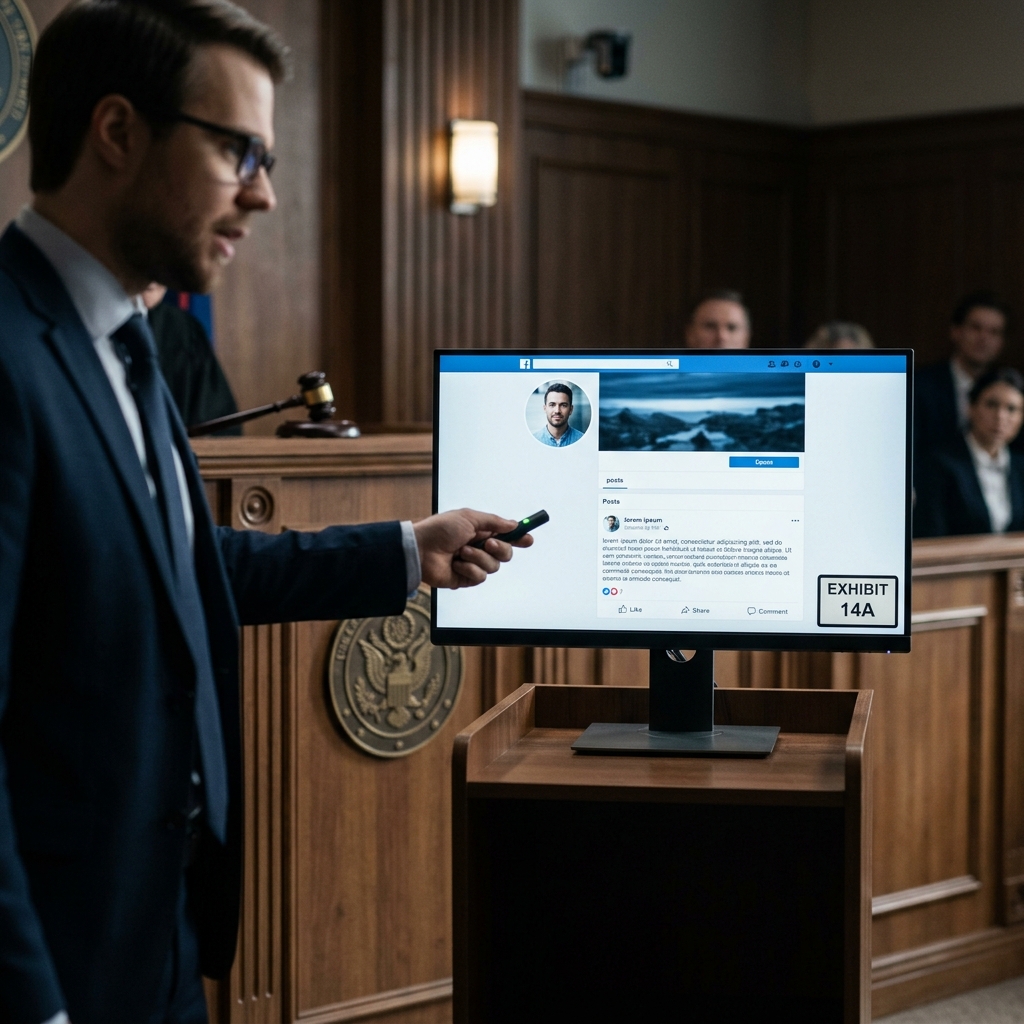
Social media has become a permanent part of daily life, but every status update, story, photo, and comment you publish can also become a permanent part of a legal case. Courts increasingly treat social media activity as electronically stored information (ESI), subject to the same rules of preservation, discovery, and admissibility as emails or paper documents. Social media posts can be requested by opposing parties, reviewed by investigators, and presented to a judge or jury to support or undermine a claim.
This article explains how social media content is used as evidence, what legal standards apply, how privacy expectations often fail, and the steps you can take to reduce risk without undermining your rights. It is written for everyday users, not technical experts or lawyers, but it draws on current legal practice and guidance from courts, regulators, and legal organizations.
Why Social Media Is So Valuable as Evidence
Social media platforms host massive volumes of personal information: photos, locations, opinions, interactions, and details about relationships, work, and daily activities. For lawyers, investigators, and regulators, this information can be an unrivaled source of factual material to test claims in a dispute or investigate misconduct.
- Real-time documentation: Posts often show what a person was doing, where they were, and what they were thinking at specific moments.
- Rich context: Comments, replies, and conversation threads provide context that can show intent, motive, or state of mind.
- Visual proof: Photos and videos can contradict or corroborate statements made in court, insurance claims, or investigations.
- Broad reach: Many posts are public or shared widely, reducing the need for complex technical access in some cases.
As a result, a growing share of lawsuits and regulatory matters involve social media evidence, and attorneys increasingly expect to encounter it in discovery.
Legal Discovery: When Your Posts Become Fair Game
Discovery is the formal legal process where each side in a case can request relevant information from the other side. Courts generally allow discovery of all relevant, non-privileged information, and social media content is treated as part of that universe.
Relevance Overcomes Privacy Settings
Courts have consistently held that social media content can be discoverable if it is relevant to the dispute, even if the account has strong privacy settings or is restricted to friends.
- Private messages and restricted posts are not immune from discovery.
- The key question is whether the content could reasonably bear on issues in the case, such as injury, credibility, motive, or damages.
- Platforms may be compelled (subject to jurisdiction and local law) to provide records in response to valid legal process.
In practical terms, if your social media activity relates in any way to the facts of a dispute, you should assume it can be requested, reviewed, and potentially used as evidence.
The Duty to Preserve Social Media Evidence
Once a person or business reasonably anticipates litigation, they generally have a legal duty to preserve potentially relevant evidence, including social media content. This duty is similar to the obligation to preserve emails or financial records, and failure to comply can result in sanctions.
Preservation typically requires:
- Stopping deletion or alteration of posts, messages, and account content related to the dispute.
- Capturing copies via screenshots, exports, or specialized tools that clearly show content, timestamps, and account details.
- Maintaining logs of what was preserved and how, to demonstrate integrity if challenged later.
Deleting or modifying posts after you know about a potential claim can be viewed as destruction of evidence (spoliation), which may lead courts to impose penalties ranging from adverse inferences (assuming the deleted content was unfavorable) to monetary sanctions or limitations on your legal arguments.
Authentication: Proving Who Really Posted It
Before social media content can be used in court, it must be authenticated, meaning there must be enough evidence for a judge or jury to reasonably conclude that the content is genuine and that it came from the person claimed.
Common Approaches to Authenticating Social Media
Courts and legal practitioners use several approaches, often in combination, to authenticate social media posts and profiles.
- Testimony from the alleged author: Asking the person if they created the profile and posted the content at issue.
- Device and technical evidence: Reviewing the user’s computer, phone, or internet history to see whether those devices were used to access the platform and publish the posts.
- Records from the platform: Obtaining logs, IP information, or account records from the social media company that link the content to a specific account and user.
- Context clues: Demonstrating consistency between the account and the person, such as name, photos, personal details, references to the incident, or prior communications identified by witnesses.
Some jurisdictions require more than just the presence of a name or profile photo matching the defendant. Courts may insist on additional “confirming circumstances” showing that the person controlled the account at the relevant time.
Self-Authenticating and Third-Party Records
Evidence rules sometimes allow certain records to be treated as self-authenticating, meaning they can be admitted without separate proof of authenticity if they meet recognized criteria, such as certified business records from a platform. However, even when a record is self-authenticating, questions about who actually authored a post or message can still arise.
The practical lesson is that social media evidence is rarely dismissed simply because it is digital. Courts have developed tools to evaluate authenticity, and those tools are becoming more sophisticated as platforms and usage evolve.
Privacy Expectations vs. Legal Reality
Many users believe that privacy settings and platform policies protect them from legal exposure. In practice, those protections are limited. Privacy controls may restrict who sees a post by default, but they do not block lawful discovery, regulatory access, or other compelled disclosure.
How Platforms Handle Your Data
Social media companies collect and process large amounts of data about users’ activities, interests, and behaviors, often for advertising and engagement purposes. This includes:
- Content you post, like, share, or comment on
- Metadata such as location, device information, and timestamps
- Interaction patterns, networks, and inferred interests
Because this data is stored and analyzed extensively, it can be retrieved later, sometimes long after a user assumes it has faded into obscurity. In the absence of comprehensive privacy legislation, users often have limited protection against broad data collection and potential breaches.
Regulators and Consumer Protection
Regulators like the U.S. Federal Trade Commission (FTC) pay close attention to how companies and individuals use social media, especially for advertising and consumer-facing statements.[10] For example:
- Influencer marketing: Influencers must clearly disclose when they have a financial or personal relationship with a brand, and these disclosures must be easy to see and understand.[10]
- Truthful claims: Users cannot make claims about products that require proof the advertiser does not have, such as medical benefits, and cannot misrepresent their own experiences with products.
- Data practices: Regulators encourage strict limits on collection and use of personal data and may enforce against deceptive or abusive practices.
These obligations show that what you post is not just socially visible but also legally and commercially significant.
Common Legal Situations Involving Social Media
Social media evidence can play a central role in many types of disputes. The following scenarios illustrate typical ways that posts influence outcomes.
| Type of Case | How Social Media Is Used |
|---|---|
| Personal injury or insurance claims | Photos and updates may suggest a different level of activity or travel than claimed, affecting damage assessments. |
| Employment disputes | Posts about workplace incidents, policies, or colleagues can support or undermine claims of discrimination, harassment, or wrongful termination. |
| Family law and custody | Content reflecting parenting behavior, lifestyle, or substance use can be reviewed when determining custody or visitation. |
| Criminal investigations | Messages, location check-ins, and photos may connect a suspect to a scene, show intent, or reveal contacts and associates. |
| Consumer protection and advertising | Brand endorsements, product claims, and disclosures are examined for compliance with advertising and consumer laws.[10] |
Practical Risk-Reduction Tips for Everyday Users
While no strategy can eliminate legal exposure entirely, thoughtful social media habits can significantly reduce risk. Consider the following practical steps.
Think Before You Post
- Assume a wide audience: Before posting, ask yourself how the content would look if shown to an employer, insurer, regulator, or judge.
- Avoid impulsive updates: Emotional posts about disputes, accidents, or conflicts can be misinterpreted or used against you later.
- Limit sensitive topics: Be cautious when posting about health, finances, legal disputes, or workplace issues.
Use Privacy Settings Wisely, But Don’t Rely on Them
- Enable the highest reasonable privacy settings so your posts are not publicly searchable by default.
- Review settings regularly; platforms change options and defaults over time.
- Remember that privacy settings do not protect you from lawful discovery or requests in litigation.
Preserve, Don’t Destroy, If a Dispute Arises
- If you become aware of a potential legal claim, do not delete or alter posts related to the incident.
- Consult a qualified attorney about what to preserve and how; they may advise capturing screenshots, exporting archives, or using specialized tools.
- Document preservation steps in case the integrity of your evidence is questioned.
Be Honest and Transparent in Endorsements
- If you receive payment, products, or other benefits in exchange for mentioning a brand, clearly disclose that relationship.
- Use simple terms like “ad” or “sponsored” in the same language as the endorsement and place the disclosure where it cannot be missed.[10]
- Share truthful experiences and avoid making claims the advertiser cannot substantiate with evidence.
Frequently Asked Questions (FAQs)
Can private messages and locked accounts still be used against me?
Yes. Private messages and restricted accounts may be discoverable if the content is relevant to a legal dispute. Courts focus on relevance and admissibility, not just public visibility. Although accessing private content typically requires legal process and cannot be done casually, you should not assume that privacy settings create legal immunity.
Is deleting old posts a good idea if I am worried about future problems?
Routine cleanup of old content is generally acceptable before you have any reason to anticipate a legal dispute. However, once you know or reasonably should know that a claim may arise, deleting or altering relevant posts can be considered destruction of evidence and may lead to serious consequences. In that situation, seek legal advice before making changes.
What if someone creates a fake profile in my name?
Fake accounts are a real concern, but courts do not assume authenticity based solely on a name or photo. To use social media content as evidence, parties typically need further proof linking the account to you, such as device records, platform logs, witness testimony, or contextual details. If you discover an impersonation, report it to the platform and document the issue.
Can social media posts be the main reason I win or lose a case?
In some cases, yes. Social media evidence has tipped the balance in many disputes, especially when it directly contradicts statements made under oath or written in formal claims. While posts are rarely the only evidence, they can significantly affect credibility, damages, or findings of fact.
Do international or regional laws change how my social media is treated?
Yes. Different jurisdictions have varying rules on privacy, data protection, and platform obligations. For example, in the European Union, the Digital Services Act and consumer laws impose specific requirements on platforms that facilitate commerce and interactions with traders. Nonetheless, across many legal systems, relevant social media content can still be discoverable and used as evidence, subject to local procedures and rights.
Key Takeaways for Consumers
Everyday social media use can have long-lasting legal consequences. Evidence rules, discovery obligations, and authentication standards have evolved specifically to handle digital content, and courts rarely treat social media as an informal or unreliable side channel.
- Your posts can be discovered and used against you if they relate to a dispute or investigation.
- Privacy settings offer limited protection once legal processes are involved.
- Deleting relevant posts after you anticipate a dispute can create new legal problems.
- Regulators monitor social media use for advertising, endorsements, and consumer protection issues.[10]
- Thoughtful posting habits and timely legal advice are your best tools for managing risk.
By understanding how social media functions as legal evidence and adjusting your online behavior accordingly, you can use platforms more safely while preserving your rights and reducing exposure.
References
- Discovery and Preservation of Social Media Evidence — American Bar Association. 2014-01-01. https://www.americanbar.org/groups/business_law/resources/business-law-today/2014-january/discovery-and-preservation-of-social-media-evidence/
- Status Update on Authenticating Social Media Evidence: The Three Primary Approaches Applied Nationally — National Association of Attorneys General. 2021-06-01. https://www.naag.org/attorney-general-journal/status-update-on-authenticating-social-media-evidence-the-three-primary-approaches-applied-nationally/
- Social Media Privacy — Electronic Privacy Information Center (EPIC). 2023-05-01. https://epic.org/issues/consumer-privacy/social-media-privacy/
- Disclosures 101 for Social Media Influencers — Federal Trade Commission. 2019-11-05. https://www.ftc.gov/business-guidance/resources/disclosures-101-social-media-influencers
- Your Next Case Could Turn on Social Media Evidence — Logikcull. 2018-09-12. https://www.logikcull.com/blog/your-next-case-could-turn-on-social-media-evidence
- Can Social Media Messages Be Used in Court Evidence? — JustAnswer Legal Guide. 2020-03-01. https://www.justanswer.com/family-law/k4662-cam-social-media-messages-pulled-no-reason-during.html
- The regulation of social media commerce under the DSA — Journal of European Consumer and Market Law (via ScienceDirect). 2025-01-01. https://www.sciencedirect.com/science/article/pii/S2212473X25000549
Similar Articles








Read full bio of medha deb


