
How Veterans Treatment Courts Help Former Service Members Rebuild Their Lives
An in-depth look at how veterans treatment courts provide structured rehabilitation, reduce recidivism, and offer a meaningful alternative to prison for former service members.
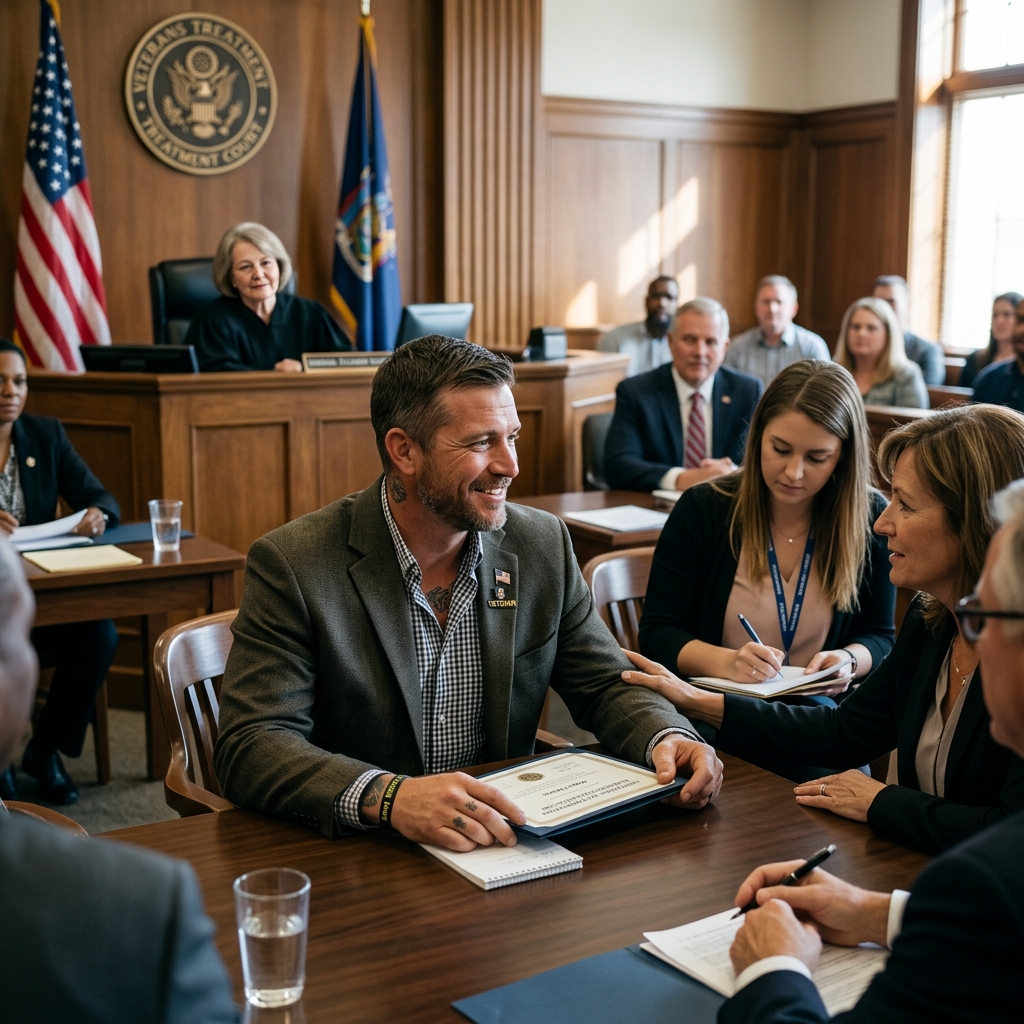
Across the United States, veterans treatment courts have emerged as a key alternative to traditional criminal courts for former service members facing criminal charges. Rather than focusing only on punishment, these courts aim to address the underlying issues that often drive criminal behavior among veterans, such as post-traumatic stress disorder (PTSD), traumatic brain injury (TBI), substance use, and difficulties reintegrating into civilian life.
This article explains how veterans treatment courts work, what participants must do to graduate, and why completion of these intensive programs can help many veterans avoid prison while still being held accountable. It also explores the broader benefits for public safety, communities, and the justice system.
Why Specialized Courts for Veterans Exist
Service in the armed forces can involve repeated exposure to trauma, life-threatening situations, and extreme stress. For some veterans, the transition back to civilian life is complicated by mental health conditions and substance use disorders linked to their service. When these challenges are not adequately treated, they can contribute to criminal behavior, especially in cases involving:
- Driving under the influence of alcohol or drugs
- Property offenses related to addiction or financial instability
- Low-level assaults or disorderly conduct connected to anger, hypervigilance, or PTSD symptoms
- Other non-violent misdemeanors and selected felonies
Traditional criminal courts focus primarily on determining guilt and deciding a sentence, often without fully confronting these underlying causes. Veterans treatment courts were created to fill that gap by blending legal accountability with targeted treatment and support.
Key Objectives of Veterans Treatment Courts
Although programs differ by state and county, veterans treatment courts generally share several core objectives:
- Reduce recidivism by addressing the root causes of offending behavior
- Promote rehabilitation through intensive treatment and structured support
- Connect veterans to federal, state, and community services, including the U.S. Department of Veterans Affairs (VA)
- Maintain public safety through close supervision, sanctions, and clear expectations
- Honor military service by acknowledging the unique experiences and culture of veterans while still holding them accountable
How Veterans Treatment Courts Operate
Veterans treatment courts are often described as problem-solving courts or collaborative justice courts, meaning they rely on a team approach. A typical team may include a judge, prosecutor, defense attorney, VA representatives, treatment providers, case managers, and volunteer veteran mentors.
Eligibility and Entry into the Program
Eligibility varies by jurisdiction, but common requirements include:
- Verified service in the U.S. armed forces, including reserves or National Guard
- Being charged with specific eligible offenses (often non-violent or low-level crimes)
- Screening indicating mental health conditions, substance use disorders, or related needs such as PTSD or TBI
- A willingness to plead guilty or accept responsibility, depending on local rules
- Agreeing to follow all program requirements, which may last 12–18 months or longer
Participation is typically voluntary, meaning the veteran chooses to enter the program instead of proceeding through the traditional court process.
Core Features of the Court Process
The structure of a veterans treatment court program is intensive and highly supervised. Participants are expected to comply with multiple overlapping requirements:
- Frequent court appearances, often bi-weekly in the early phase
- Mandatory participation in treatment for mental health, substance use, or both
- Random and frequent drug and alcohol testing
- Regular contact with case managers and treatment providers
- Meetings with veteran mentors who provide peer support
- Compliance with individualized plans, which may include employment goals, housing stability, and education or training
Judges play an active role, regularly checking on participants’ progress and responding quickly to both setbacks and achievements.
Alternatives to Prison: What Graduation Can Mean
One of the most powerful incentives for veterans to complete the program is the opportunity to avoid prison and, in many cases, to reduce the long-term impact of a criminal conviction. Successful completion can lead to different outcomes depending on the jurisdiction and the underlying offense.
| Possible Outcome After Graduation | Explanation |
|---|---|
| Reduced or dismissed charges | Some courts may drop or lessen charges if the veteran completes all program requirements. |
| Avoidance of incarceration | Graduates often receive probation, time served, or other non-custodial sentences instead of jail or prison. |
| Record relief | Certain programs provide options for expungement, sealing, or clearing specific convictions. |
| Connection to long-term support | Graduates leave the program with established relationships with VA and community services. |
These alternatives are not automatic; they are earned through consistent compliance and engagement with treatment and supervision. If a participant repeatedly violates program rules, they may face sanctions, including jail time or transfer back to the traditional criminal court.
Accountability: Incentives, Sanctions, and Judicial Oversight
Veterans treatment courts balance support with strict accountability. Participants are rewarded for progress but also face immediate consequences for non-compliance.
Positive Incentives
Courts use incentives to reinforce positive behavior and encourage continued engagement. Examples include:
- Praise from the judge during court sessions
- Reduced frequency of court appearances after sustained compliance
- Relaxed testing schedules when participants consistently test negative
- Certificates or recognition for milestones, such as stable housing or employment
Sanctions for Non-Compliance
When participants fail to follow program rules—such as missing treatment sessions, failing drug tests, or ignoring court orders—the court imposes sanctions to signal the seriousness of these violations.
- Verbal warnings and increased monitoring
- Additional treatment requirements or classes
- Community service or fines
- Short jail stays
- Removal from the program and return to traditional prosecution
Research indicates that the majority of participants experience some level of sanction, but only a smaller portion receive sanctions involving jail during the program. This calibrated approach allows courts to respond to setbacks without abandoning the goal of rehabilitation.
Evidence of Impact: What Research Shows
Because veterans treatment courts are relatively new compared to traditional courts, researchers have been studying their outcomes to determine whether they improve public safety and veterans’ lives. Several studies and policy reports suggest that these courts can produce meaningful benefits when programs are well-designed and participants complete them.
Criminal Justice Outcomes
A national study of veterans who participated in treatment courts found that those who completed the programs had lower recidivism rates than similar veterans processed through traditional courts. Another analysis of veterans court participants noted that:
- Only about 14% experienced a new incarceration during roughly one year in the program, compared with 23–46% one-year recidivism rates reported among U.S. prisoners broadly.
- Nearly 90% of veterans with co-occurring PTSD did not have additional arrests while in veterans court.
These findings suggest that combining supervision with treatment can reduce the likelihood of new offenses, especially among those who stay engaged and complete the program.
Housing, Employment, and Benefits
The impact of veterans treatment courts extends beyond criminal behavior. Research from the Veterans Affairs Veterans Justice Outreach program shows improvements in participants’ housing and access to benefits over the course of the program.
- A higher percentage of participants were in their own housing at program exit compared to entry.
- VA benefit receipt increased from roughly 38% at program admission to about 50% at exit.
These outcomes matter because stable housing, employment, and benefits are strongly associated with lower risk of reoffending and better long-term health.
The Role of the VA and Community Partners
Veterans treatment courts rely heavily on collaboration with the U.S. Department of Veterans Affairs and local service providers. VA representatives frequently participate in court teams to ensure that eligible veterans are connected to health care, mental health treatment, substance use services, and benefits.
For veterans who are not eligible for VA care, courts often partner with community organizations, non-profit agencies, and local health providers to deliver similar services. This blended network helps ensure that every participant has access to:
- Clinical assessment and diagnosis
- Individual and group therapy
- Medication management when appropriate
- Detoxification or residential treatment for severe substance use
- Vocational training, job placement, and educational support
- Housing assistance and case management
Volunteer Veteran Mentors: Peer Support in the Courtroom
One feature that distinguishes veterans treatment courts from other specialty courts is the use of volunteer veteran mentors. These mentors are typically veterans who understand military culture and can relate to participants’ experiences.
Mentors offer:
- Non-clinical emotional support and encouragement
- Help navigating community resources and benefits
- Accountability and guidance in meeting program requirements
- A sense of camaraderie and belonging that may be missing after leaving the military
By creating a peer-based support network, mentors help participants stay engaged during challenging phases of the program and reinforce the message that change is possible.
Challenges and Limitations
Despite their promise, veterans treatment courts are not a cure-all. Several challenges can affect their impact:
- Variability in program design: Different jurisdictions set different eligibility criteria, program lengths, and available services, which can lead to inconsistent outcomes.
- Limited capacity: Not all communities have veterans treatment courts, and existing courts may not have the resources to serve every eligible veteran.
- Voluntary nature: Because participation is voluntary, some veterans who could benefit may choose traditional prosecution instead of treatment court.
- Need for long-term follow-up: Evaluations often focus on short-term outcomes; more research is needed on long-term impacts after graduation.
Ongoing funding, training, and evidence-based practices are essential to ensure that these courts remain effective and equitable.
Frequently Asked Questions
1. Are veterans treatment courts only for combat veterans?
No. Eligibility typically includes any justice-involved veteran who meets program criteria, including those who served in support roles, reserves, or the National Guard. What matters most are the current charges and treatment needs, not the specific type of service.
2. Do participants have to plead guilty to enter a veterans treatment court?
In many jurisdictions, veterans must acknowledge responsibility or plead guilty to enter the program, but the exact legal pathway varies. Some courts use deferred prosecution models, while others require a formal plea before enrollment.
3. Can violent offenses be handled in veterans treatment courts?
Most veterans treatment courts focus on non-violent or lower-level offenses, especially those related to substance use and mental health. Some courts may consider selected violent offenses on a case-by-case basis, but many exclude serious violent crimes and sex offenses.
4. What happens if a participant drops out of the program?
Leaving the program or repeated serious non-compliance generally results in transfer back to the traditional criminal court, where the original charges proceed and the veteran may face standard sentencing, including incarceration.
5. How long does it take to complete a veterans treatment court program?
Program length varies, but many courts require at least 12 to 18 months of continuous participation, with multiple phases that gradually reduce supervision as the veteran demonstrates stability and recovery.
References
- Veterans Treatment Courts — Judicial Branch of California. 2024-01-10. https://courts.ca.gov/programs-initiatives/collaborative-justice-courts/adult-courts/veterans-treatment-courts
- Veterans Treatment Court Program: Overview — Bureau of Justice Assistance, U.S. Department of Justice. 2026-03-01. https://bja.ojp.gov/program/veterans-treatment-court-program/overview
- What Do You Know About Veteran Treatment Courts? — National Veterans’ Training Institute. 2023-08-31. https://www.nvti.org/2023/08/31/what-do-you-know-about-veteran-treatment-courts/
- A National Study of Veterans Treatment Court Participants — Tsai et al., Psychiatric Services (NIH / NCBI). 2018-02-01. https://pmc.ncbi.nlm.nih.gov/articles/PMC5776060/
- Veterans Treatment Court: Treatment & Alternatives to Prison — American Addiction Centers. 2024-05-01. https://americanaddictioncenters.org/veterans/veteran-treatment-court
- Veterans Treatment Courts in New York State: A Roadmap — New York Health Foundation. 2017-12-01. https://nyhealthfoundation.org/wp-content/uploads/2017/12/veterans-treatment-courts-new-york-state-roadmap-1.pdf
- Veterans Treatment Courts — New York State Unified Court System. 2023-06-01. https://www.nycourts.gov/problem-solving-courts/veterans-treatment-courts
Similar Articles








Read full bio of Sneha Tete




