
How Traffic Collision Evidence Shapes Injury Claims
Understand why the evidence collected after a traffic crash can make or break your personal injury compensation claim.
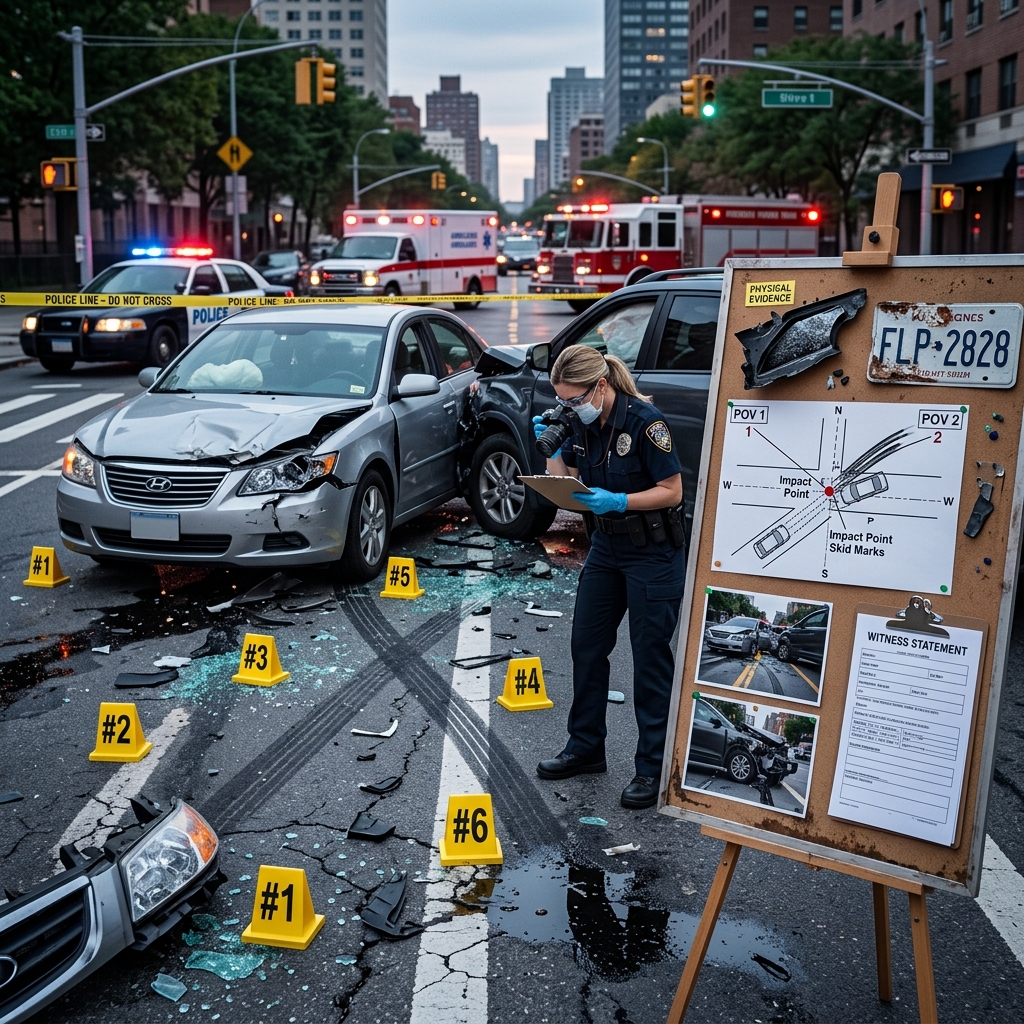
When a traffic collision leads to injuries, the outcome of any compensation claim usually depends less on what the drivers say and more on what the evidence shows. Courts, insurance adjusters, and lawyers rely on a wide range of information—official records, photos, videos, medical documentation, and digital data—to decide who is legally responsible and how much money should be paid for losses. Understanding these evidence types and how they are used can significantly improve the strength of a personal injury claim.
Why Evidence Is Central to Traffic Injury Claims
In a personal injury case arising from a car crash, the injured person must prove two core points: that another party was at fault (liability) and that the collision caused measurable losses (damages). Evidence is the bridge between what happened on the road and what can be shown in court or during settlement negotiations.
Key reasons evidence matters so much include:
- Establishing fault: Records and physical traces help show how and why the collision occurred.
- Confirming injury causation: Medical documentation ties specific injuries directly to the crash.
- Quantifying financial impact: Bills, repair estimates, and wage records demonstrate the economic cost of the event.
- Supporting credibility: Consistent, objective evidence backs up the injured person’s version of events.
Core Categories of Traffic Collision Evidence
Although every crash is unique, certain types of evidence appear repeatedly in successful injury claims. Many of these should be gathered as soon as reasonably possible after the collision, provided it is safe to do so.
1. Official Reports and Law Enforcement Documentation
The police crash report is often the foundational document in a traffic injury case. When officers respond to a collision, they usually record:
- Time, location, and roadway details
- Names, addresses, and insurance information of involved drivers
- Diagrams of the crash scene and vehicle positions
- Observed damage and visible injuries
- Weather and road conditions
- Any traffic citations or suspected law violations
While the officer’s initial assessment of fault is not decisive by itself, it can strongly influence insurers and may be considered by courts as part of the overall evidence picture.
2. Photographs and Video of the Scene
Visual documentation often provides some of the most persuasive evidence in collision cases. Photos and videos can capture details that might otherwise be disputed or forgotten, such as:
- Damage to each vehicle from multiple angles
- Skid marks, debris, and fluid spills on the road
- Traffic signs, signals, and lane markings near the impact point
- Lighting conditions, weather, and visibility
- Any obstruction or hazard, such as construction or parked vehicles
Dashcam recordings, surveillance footage from nearby businesses, or traffic cameras can show the crash in real time, sometimes providing decisive proof of speeding, failing to yield, or running a red light.
3. Eyewitness and Driver Testimony
Statements from drivers, passengers, and bystanders form another critical evidence layer. These accounts may include:
- How each vehicle was moving in the moments before impact
- Use of turn signals, headlights, or hazard lights
- Apparent distraction (such as a driver looking at a phone)
- Driver behavior after the crash (apologies, admissions, or denial)
Eyewitness testimony can either support or contradict the involved drivers’ stories, and it is often most reliable when collected soon after the incident, before memories fade.
4. Medical Records and Health Documentation
To recover money for injuries, it is not enough to show that a collision occurred; the injured person must prove that specific physical or psychological harm resulted and that it is connected to the crash. Medical evidence usually includes:
- Emergency room records and diagnostic imaging results
- Doctors’ notes, treatment plans, and prescriptions
- Physical therapy or rehabilitation reports
- Prognosis statements about long-term effects or disability
These documents help quantify pain, limitations, and future care needs, which are central to calculating damages in personal injury claims.
5. Financial and Employment Records
Traffic collisions often produce not just medical bills but wide-ranging financial consequences. Evidence of economic loss may include:
- Hospital and clinic invoices
- Medication and medical device receipts
- Car repair estimates or total loss valuations
- Rental car or transportation costs
- Pay stubs and employer letters documenting missed work or reduced hours
These records create a clear monetary picture of how the collision disrupted the injured person’s life and finances.
6. Technical and Digital Evidence
Modern vehicles and mobile devices can generate valuable data around the time of a crash. Depending on the circumstances, lawyers and insurers may use:
- Event data recorder (EDR) information from some vehicles, showing speed, braking, and other pre-impact metrics
- Cell phone records to confirm or refute suspected distracted driving, such as texting during the moments before the collision
- Advanced driver-assistance system logs that capture warning alerts or automatic braking events
These technical sources can corroborate or challenge human accounts of the crash and help establish negligence.
How Evidence Is Used to Prove Negligence
Most traffic injury claims rely on the legal concept of negligence. In practical terms, the injured person must show that the other driver failed to use reasonable care and that this failure caused the collision and resulting harm.
Evidence plays a specific role in demonstrating each element:
| Negligence Element | Purpose | Example Evidence |
|---|---|---|
| Duty of care | Show the driver had a legal obligation to operate the vehicle safely. | Traffic laws, licensing rules, and general driving standards. |
| Breach of duty | Prove the driver violated that duty. | Police citations, camera footage showing a red-light violation, witness statements about speeding. |
| Causation | Connect the breach to the collision and injuries. | Accident reconstruction, photos of impact points, medical reports tying injuries to the crash. |
| Damages | Demonstrate actual losses resulting from the collision. | Medical bills, wage loss documentation, repair estimates. |
Strengthening a Claim Through Evidence Management
Collecting evidence is only the first step; how it is organized and preserved can also affect the strength of a personal injury claim. Several practical strategies help make evidence more useful:
- Act promptly: Take photos and gather contact information as soon as you safely can, because physical conditions and memories change quickly.
- Maintain consistency: Keep written notes about symptoms, missed work, and daily limitations, and update them regularly to create a continuous record.
- Store documents carefully: Assemble police reports, medical records, and financial evidence in a single file, with digital backups.
- Avoid altering key evidence: If possible, preserve the damaged vehicle until insurers or experts can inspect it.
Role of Experts in Interpreting Collision Evidence
In more complex cases—such as multi-vehicle crashes, severe injuries, or disputed liability—specialist experts may be needed to interpret evidence.
- Accident reconstruction professionals use physics, vehicle damage patterns, and scene measurements to recreate the crash and explain how it likely occurred.
- Medical experts provide opinions on the severity, cause, and long-term impact of injuries, which can be crucial for future damage estimates.
- Mechanical or engineering experts may help determine whether mechanical failures or safety system malfunctions contributed to the collision.
Their testimony, combined with physical and documentary evidence, can significantly influence negotiations and trial outcomes.
Common Evidence Gaps That Harm Injury Claims
Some otherwise valid claims become difficult to prove because important evidence is missing or incomplete. Typical problems include:
- No immediate medical evaluation: Delaying treatment can make it harder to show that injuries were caused by the crash rather than another source.
- Limited scene documentation: Without photos or measurements, it is more challenging to reconstruct exactly how the collision happened.
- Lost or scattered records: Failing to retain bills, wage records, or repair documentation can weaken the damages portion of the claim.
- Unidentified witnesses: If bystanders are not asked for contact information, their helpful testimony may never be available.
Recognizing these potential gaps early gives injured people and their lawyers a chance to address them through additional investigation or expert analysis.
FAQs About Traffic Collision Evidence in Injury Claims
- 1. Is a police report enough to win my injury claim?
- No. A police report is highly important, but it is typically only one piece of the evidence puzzle. Claims are stronger when supported by medical records, photographs, witness testimony, and financial documentation.
- 2. What should I photograph after a crash?
- If it is safe, photograph vehicle damage, skid marks, debris, nearby traffic signs and signals, road and weather conditions, and any visible injuries. Multiple angles and wide shots help give context to the scene.
- 3. Why are medical records so important?
- Medical records link injuries directly to the collision and show their severity, treatment, and long-term impact. Without them, it is difficult to prove that pain, limitations, or disability are the result of the crash.
- 4. Can cell phone data be used in a car accident case?
- Yes. In some cases, phone records are reviewed to determine whether a driver was calling, texting, or using data at the time of the crash, which can support claims of distracted driving and negligence.
- 5. Do I need a lawyer to handle collision evidence?
- While it is possible to collect some evidence on your own, experienced personal injury lawyers often know which evidence carries the most weight, how to preserve it, and when to involve experts. This can be especially important in serious or contested cases.
References
- What Evidence is Needed to Prove a Car Accident Case? — Lawrence Law Firm. 2023-06-01. https://www.lawrencelaws.com/blog/evidence-needed-to-prove-car-accident-case/
- Types of Evidence Used in Car Accident Cases — Werner, Hoffman & Greer. 2023-04-14. https://wernerhoffman.com/blog/evidence-in-car-accident-cases/
- What Evidence Is Needed to Prove Negligence in a Car Accident? — Schiller & Hamilton Law Firm. 2022-09-20. https://schillerhamilton.com/faqs/what-evidence-is-needed-to-prove-negligence-in-car-accident/
- What Evidence Is Most Important in a Car Accident Lawsuit? — Williams, Kinsman & Scheck Law Office. 2023-01-10. https://www.wksmlawoffice.com/medina-county-ohio-attorney/what-evidence-is-most-important-in-a-car-accident-lawsuit
- Important Evidence in Car Accident Cases — Towey Law PLLC. 2022-11-05. https://www.briantoweylaw.com/important-evidence-in-car-accident-cases/
- Evidence in Car Accident Lawsuits — Justia. 2021-08-30. https://car-accidents.justia.com/what-to-do-after-a-car-accident/evidence-in-car-accident-cases/
Similar Articles








Read full bio of Sneha Tete


