
How to Watch Bank Accounts After Card Data Theft
Practical steps to catch fraud early and protect bank accounts after card data exposure.
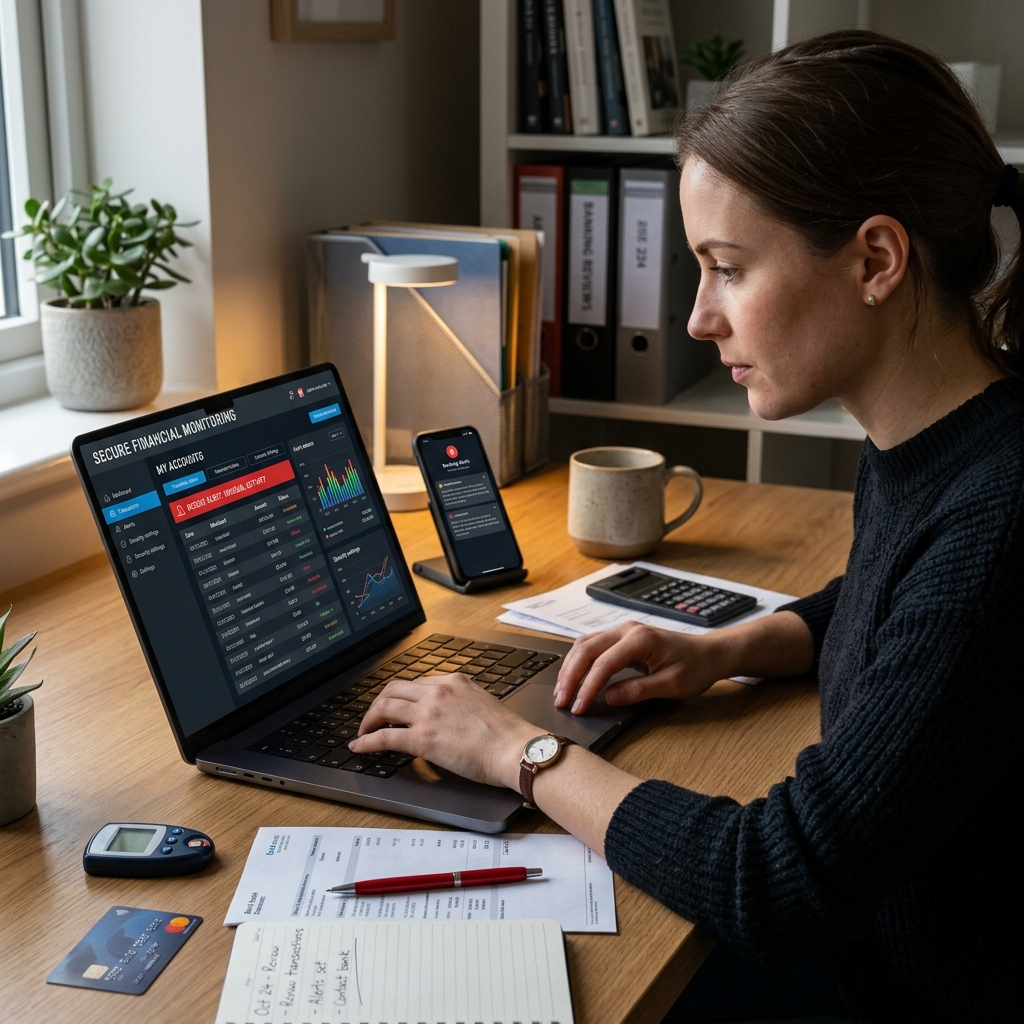
When card information is exposed in a breach, the most important next step is to monitor your financial accounts closely and respond quickly to any unfamiliar activity. The Consumer Financial Protection Bureau advises consumers to review statements, report suspicious transactions right away, and stay alert for signs that stolen account details are being used fraudulently. Expert consumer guidance from major financial institutions also recommends setting up alerts, changing passwords, and reviewing credit reports after a breach.
This article explains how to track account activity effectively, what warning signs matter most, and how to reduce the chance that a stolen card number turns into larger financial damage. The focus is practical: what to check, how often to check it, and what to do if something looks wrong.
Why monitoring matters after a breach
Card data breaches do not always lead to immediate fraud, but they can create a window of risk that lasts for months. Criminals may test stolen card details with small charges before attempting larger purchases, or they may use exposed information to try to access other financial accounts. That is why close monitoring is not just a precaution; it is a defense against fraud that may begin quietly.
Stolen financial information can be used in several ways. A thief might make a card purchase, add a digital wallet to an account, change contact details, or use personal data to attempt identity theft. Monitoring gives you a chance to catch suspicious activity before it spreads.
What to check first
Start with every account connected to the exposed card or banking relationship. Review your checking account, savings account, credit card accounts, debit card transactions, and any linked payment apps or external transfers. If the breach notice mentioned a specific account, place special attention on that account first.
Look at the most recent transactions and then work backward over the last few months. Fraud often appears as a small charge, a duplicate payment, a merchant name you do not recognize, or an online purchase in a location far from where you live. If you receive paper statements, open them immediately and read each line carefully rather than relying on a quick scan.
How often to review your accounts
After a breach, checking once a month is not enough. Review online or mobile banking activity as often as you can, ideally several times per week during the early period after the incident. Some banks and credit card issuers encourage regular monitoring and alerts because unusual activity is easier to stop when it is caught quickly.
A simple schedule can help:
- Check balances and recent transactions daily or every other day.
- Review pending charges and automatic payments weekly.
- Read monthly statements line by line as soon as they arrive.
- Compare older statements periodically for patterns you may have missed.
This routine matters because fraud does not always appear as one large transaction. Sometimes criminals begin with test charges, then move on to larger purchases once they confirm the card still works.
Warning signs that deserve attention
Not every unfamiliar entry is fraud, but several patterns should trigger immediate follow-up. These include unfamiliar merchant names, charges from businesses outside your area, duplicate debits, small “test” purchases, ATM withdrawals you did not make, and sudden changes in account contact details.
Also watch for alerts that mention new cards, new payees, password changes, or failed login attempts. If you receive a notification for activity you did not initiate, treat it as a warning sign even if the transaction amount is small.
| Activity | Why it matters | What to do |
|---|---|---|
| Small unfamiliar charge | May be a test transaction | Review immediately and contact the card provider |
| Duplicate payment | Could be a posting error or fraud | Confirm with the merchant and bank |
| Cash withdrawal not made by you | Possible debit card misuse | Report at once and ask about card replacement |
| New login alert | May signal account compromise | Change passwords and enable stronger authentication |
Set alerts so you do not have to rely on memory
Automated alerts make monitoring easier because they notify you when there is activity to review. Most banks and card issuers offer text, email, or app-based alerts for purchases, withdrawals, balance changes, password resets, and transfers. These alerts are especially useful after a breach because they shorten the time between a suspicious event and your response.
Use alerts for more than just large transactions. Lower dollar thresholds can help you catch testing behavior early. If your institution allows it, turn on alerts for card-not-present purchases, international use, cash withdrawals, and changes to login information. The goal is not to create noise; it is to surface behavior that should never happen without your knowledge.
Protect the account while you monitor it
Monitoring works best when paired with stronger account security. Change passwords and PINs for the affected account and any other account that may share the same login credentials. Use unique passwords so that a breach at one service does not expose you elsewhere.
Where available, enable multi-factor authentication. That extra step makes it harder for a fraudster to enter your account even if they already have a password. It also helps to review the email address and phone number tied to the account, because criminals sometimes change those details to block alerts or reset future access.
If the exposed account is a debit card linked to your checking account, consider whether you need to request a new card number. Reissuing the card can stop continued use if the number was copied or sold.
Keep a simple fraud record
Once you notice anything unusual, document it right away. Write down the date, the amount, the merchant or location name, the method of payment, and the time you saw the transaction. Keep screenshots or copies of statements if your bank portal allows it.
A clear record helps when you speak with the bank, file a dispute, or explain the issue later. It also prevents confusion if multiple transactions appear over several days. If the bank asks for a follow-up call or written notice, note the representative’s name and the date of the conversation.
How to respond if you spot fraud
Move fast. Report the suspicious charge or debit to your bank or card provider as soon as you see it. The earlier you report it, the better the chance of stopping additional losses.
Use a customer service number from your card, bank statement, or official banking app rather than replying to a message that claims to be from the institution. Banks and credit unions do not ask for sensitive account details through unsolicited calls or emails they initiate, so be cautious if someone contacts you first and asks for login information.
If fraud is confirmed, ask whether the card should be canceled and reissued. Ask what temporary protections the institution can place on the account while the investigation is open. In some cases, you may also need to update any linked recurring payments or digital wallets that used the compromised card number.
Do not forget your credit reports
Even if the problem begins with a card or bank account, broader identity misuse can follow. Several consumer guidance sources recommend reviewing credit reports after a breach and considering fraud alerts or credit freezes if personal information was exposed. A security freeze makes it harder for someone to open new credit in your name, while a fraud alert tells lenders to take extra steps to verify identity.
Credit report monitoring is especially important if the breach exposed identifying information beyond the card number, such as a Social Security number or account login details. Those data points can be used to try new accounts, loans, or other forms of identity theft.
A practical monitoring routine after a breach
The simplest approach is consistency. A short daily review is often more effective than an occasional long review because it helps you spot change quickly. Use the same process each time so nothing is overlooked.
- Open your banking app or website and check recent transactions.
- Scan for pending charges, transfers, or withdrawals you do not recognize.
- Review alerts and messages from your bank or card issuer.
- Confirm that your contact information has not changed.
- Save screenshots of anything suspicious.
- Call the institution immediately if you cannot explain an entry.
If you manage more than one account, focus first on the accounts most likely to be affected by the breach. Then move to connected cards, shared payment tools, and any credit accounts that may have reused the same password.
Helpful habits that reduce future risk
Breaches are common enough that it helps to build habits before the next one happens. Using unique passwords, turning on account alerts, checking statements regularly, and avoiding reuse of login credentials can all reduce the effect of a future incident. The CFPB also reminds consumers that suspicious activity should be reported immediately rather than waited on, even if the amount is small.
It is also wise to keep your financial life organized. If you know which payment apps, cards, and accounts are connected, you can react faster when a card is replaced or a bank asks you to verify activity. A well-organized account list can save time during a stressful event and help you spot changes more easily.
Frequently asked questions
Should I close my account after a card breach?
Not always. In many cases, a new card number or stronger security measures may be enough. If you see repeated fraud or the institution advises it, closing or replacing the account may be appropriate.
How long should I monitor after a breach?
Monitor closely for several months, not just a few days. Guidance from financial institutions notes that the months after a breach are especially important for spotting unusual activity.
What if the charge is only a few dollars?
Report it. Small charges can be test transactions that lead to larger fraud if ignored.
Should I trust emails about the breach?
Be careful. If you get an unexpected email or call, use a known official number or the contact information from your card or bank statement before sharing any information.
Do account alerts replace manual review?
No. Alerts are useful, but they work best alongside regular logins, statement review, and careful recordkeeping.
References
- Here’s What You Should Do After a Data Breach — Experian. 2026-07-09. https://www.experian.com/blogs/ask-experian/data-breach-five-things-to-do-after-your-information-has-been-stolen/
- What to Do After a Data Breach: Protect Your Identity — Wells Fargo. 2026-07-09. https://www.wellsfargo.com/privacy-security/fraud/articles/data-breach-security/
- Watch accounts closely when account data is hacked and report suspicious debits or charges — Consumer Financial Protection Bureau. 2014-01-01. https://files.consumerfinance.gov/f/201401_cfpb_consumer-advisory_card-security.pdf
Similar Articles








Read full bio of medha deb




