
How to Use the IC3 Internet Crime Complaint Form
Learn how to report online fraud, scams, and other cyber‑enabled crimes through the FBI’s IC3 complaint form safely and effectively.
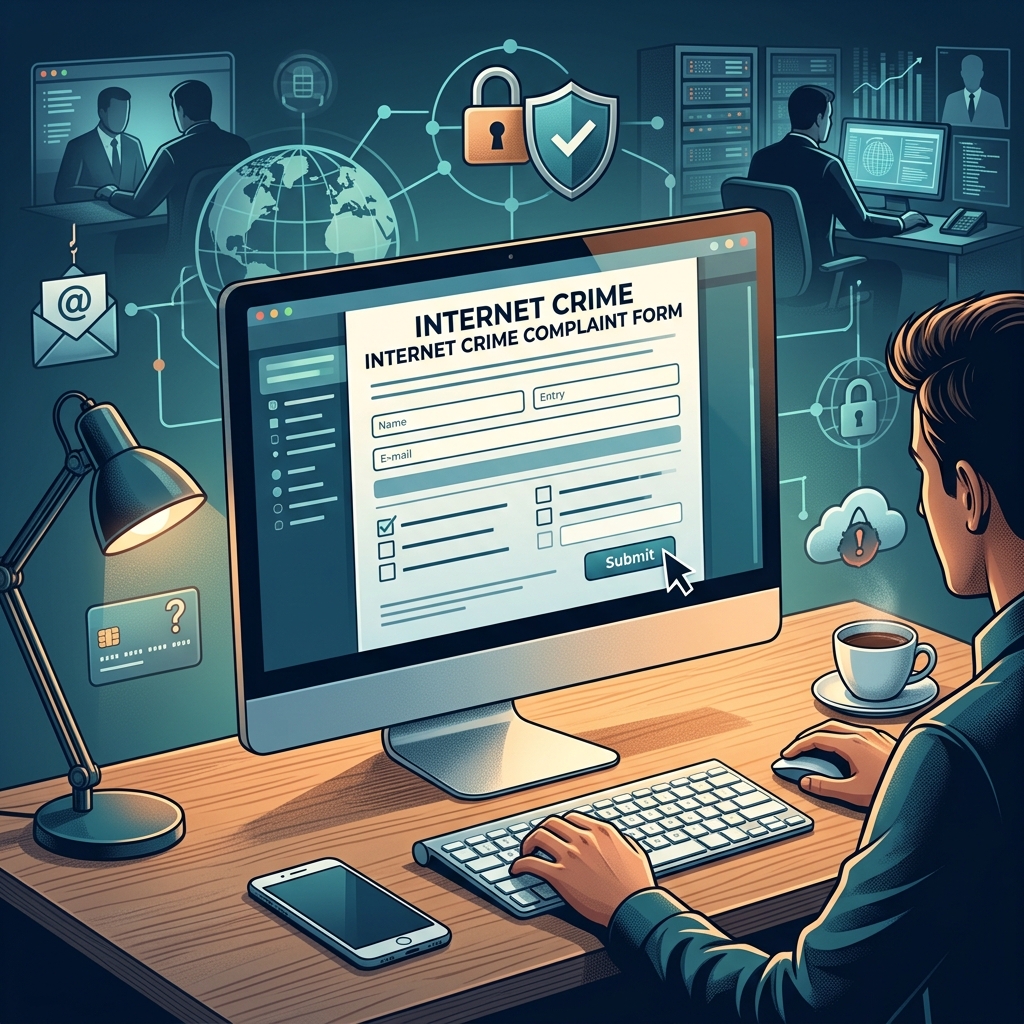
The Internet Crime Complaint Center (IC3) provides a secure online form that allows anyone affected by an internet-related crime to submit a complaint directly to the FBI and its partners. Using this form correctly increases the chances that investigators can understand what happened, connect your experience with similar incidents, and take action where possible.
This guide explains what IC3 is, when to use the online complaint form, what information you should prepare in advance, and how to complete the form safely and accurately. It also covers common types of internet crimes, evidence preservation tips, and answers to frequently asked questions.
Understanding IC3 and Its Role in Cybercrime Reporting
The IC3 is a collaborative initiative that serves as the FBI’s primary public intake point for cyber-enabled criminal activity, including online frauds, scams, and other internet-based offenses. It collects complaints from individuals and organizations, analyzes trends, and forwards information to appropriate law enforcement agencies when warranted.
- IC3 stands for: Internet Crime Complaint Center.
- Operated by: Federal Bureau of Investigation (FBI) in partnership with other entities, including the National White Collar Crime Center.
- Primary function: Intake, analysis, and referral of internet crime complaints.
The IC3 does not act as your personal attorney or provide direct restitution; instead, it functions as a central hub that helps law enforcement see the broader picture of cybercrime activity and identify patterns across multiple complaints.
When You Should Use the IC3 Online Complaint Form
You can submit a complaint to IC3 if you believe you have been affected by a crime that involved the internet or digital technologies at any stage of the incident.
Appropriate Situations for IC3 Reporting
- Online fraud and scams such as fake investment platforms, romance scams, auction fraud, or business email compromise.
- Identity theft where personal information is misused through online channels.
- Phishing and spoofing attempts involving deceptive emails or websites designed to steal credentials.
- Crypto-related fraud involving cryptocurrency wallets, exchanges, or ATMs.
- Other cyber-enabled crimes where computers, the internet, or mobile applications are integral to the scheme.
When IC3 Is Not the Right Channel
Some situations require immediate action or a different reporting mechanism:
- Emergencies or physical danger: Call 911 or your local police department if anyone is in immediate danger.
- Terrorism or violent crime threats: Submit tips through the FBI’s National Threat Operations Center (NTOC) at its dedicated tip portal, not IC3.
- Non-cyber local crimes: Contact your local law enforcement agency directly if the incident does not involve the internet.
Information You Should Gather Before You File
The effectiveness of your IC3 complaint strongly depends on the accuracy, detail, and completeness of the information you provide. Before you start the online form, gather as much relevant data as you can.
Key Data About You (the Complainant)
- Full name.
- Physical mailing address.
- Telephone number.
- Email address used during the incident, if different from your current email.
If you are filing on behalf of someone else, be prepared to provide both the victim’s details and your own contact information as the person submitting the complaint.
Financial Loss and Transaction Details
- Total estimated loss resulting from the incident.
- Account identifiers involved in the transaction (such as bank accounts, email addresses, phone numbers used in peer-to-peer apps).
- Dates and amounts of each payment, withdrawal, or transfer.
- Recipient details including names, account numbers, wallet addresses, or merchant identifiers.
Subject (Suspect) Information
Any information you can provide about the suspected offender helps IC3 group complaints and identify repeat perpetrators.
- Names or aliases used.
- Physical address, if known.
- Phone numbers.
- Email addresses.
- Websites, domain names, or social media profiles.
- IP addresses, if available.
Incident Narrative and Technical Evidence
You will be asked to describe in detail what occurred. It is useful to prepare a concise timeline beforehand:
- How contact began (for example, email, text, social media, website).
- What the perpetrator said or claimed.
- Steps you took in response (payments, login attempts, sharing information).
- How you discovered the crime.
- Any follow-up contact or threats.
IC3 may ask about specific technical items, such as email headers or logs, which you should preserve even if you do not upload them directly.
Preserving Evidence for a Stronger Complaint
IC3 advises you to retain all relevant evidence you have, without altering it, in case investigators later request copies.
Examples of Useful Evidence
- Bank and payment records: canceled checks, wire transfer receipts, credit card or money order receipts.
- Cryptocurrency-related documents: ATM or kiosk receipts, wallet transaction records.
- Mailing evidence: envelopes, shipping labels, tracking receipts from services such as USPS, FedEx, or UPS.
- Communication records: printed or electronic copies of emails (including full headers), chat transcripts, SMS logs, call records.
- Digital artifacts: screenshots of fraudulent websites, PCAP files containing malicious traffic, firewall or endpoint security logs, copies of malware samples.
Keep these materials in a secure location. Avoid marking or writing directly on originals, as that can sometimes compromise their evidentiary value. Create copies for your own reference when necessary.
Step-by-Step Overview of the IC3 Complaint Form
The IC3 complaint form is organized into several logical sections designed to capture information about you, the incident, the suspected offender, and any related financial transactions.
| Form Section | Purpose | Examples of Requested Information |
|---|---|---|
| Who is Filing This Complaint? | Identifies whether you are the victim or filing on someone else’s behalf. | Complainant vs. representative selection, relationship to victim. |
| Complainant Information | Captures victim contact details for follow-up or cross-referencing. | Name, address, phone, email. |
| Financial Transactions | Documents monetary losses and how funds moved. | Account identifiers, transaction dates and amounts, payment methods. |
| Information About the Subject(s) | Collects available data about the suspected offender. | Names, contact information, websites, IP addresses. |
| Description of Incident | Provides a narrative of what happened and how. | Timeline, method of scam, communications, impact. |
| Other Information | Allows you to add related details or context. | Previous reports, related case numbers, additional notes. |
| Privacy & Signature | Ensures you understand terms and certifies your submission. | Consent acknowledgments, digital signature. |
Mandatory vs. Optional Fields
Fields marked with a red asterisk are required; all other fields are optional. However, IC3 specifically emphasizes that the FBI’s ability to address your complaint depends on how complete and accurate your information is. Providing optional details can make your complaint far more useful for investigative purposes.
Protecting Your Personal Information
The IC3 form explicitly instructs complainants not to enter certain sensitive data like Social Security numbers or dates of birth anywhere in the form. Stick to the requested categories of information and do not voluntarily add extra personal identifiers unless the form specifically asks for them.
Special Considerations for Cryptocurrency and Prepaid Cards
Many modern internet fraud schemes involve cryptocurrencies or prepaid cards. The IC3 form includes dedicated fields to capture this information.
Cryptocurrency Transactions
- Type of currency: Identify the cryptocurrency used (e.g., Bitcoin, Ethereum, Tether, Litecoin).
- Wallet addresses: Provide originating and recipient wallet addresses, even if you only have partial information.
- Crypto ATMs or kiosks: Include the name and physical address of any machine you used (such as well-known kiosk brands).
IC3 also maintains focused guidance on what information is most valuable in crypto-related complaints, accessible through its cryptocurrency resources.
Prepaid and Gift Cards
- Specify the type of card (for example, major card networks, retail cards, online gaming cards).
- Retain purchase receipts and card numbers as evidence, but follow IC3’s instructions on how much of this data to include in the form.
After You Submit Your IC3 Complaint
Once your complaint is submitted, IC3 stores and analyzes the information, and may share it with appropriate law enforcement or regulatory agencies as part of ongoing investigations or intelligence assessments.
- You may receive a reference number or confirmation that the complaint was received.
- Your information may be compared with other complaints to identify large-scale schemes.
- Follow-up contact is not guaranteed; depending on resources and investigative priorities, authorities may or may not reach out directly.
Regardless of the outcome, submitting a complaint helps authorities understand how cybercriminals operate, supports public awareness campaigns, and may inform future enforcement actions.[10]
Best Practices for Safe and Effective Cybercrime Reporting
To make your IC3 complaint as helpful as possible while protecting yourself, consider the following practical tips.
- Act promptly: The sooner you report, the more likely authorities can trace transactions or preserve logs.
- Be factual and objective: Describe what happened clearly, without speculation about motives.
- Use a secure device: File your complaint from a trusted computer or mobile device with up-to-date security software.
- Check for ongoing fraud: Contact your bank, card issuer, or relevant platforms to limit further losses.
- Avoid retaliation: Do not confront suspected offenders directly; leave investigation to law enforcement.
Frequently Asked Questions About the IC3 Complaint Form
Who can file a complaint with IC3?
Anyone affected by a cyber-enabled crime can submit a complaint, including individuals and organizations, whether located in the United States or abroad. You may also file on behalf of someone else if you provide correct information about the victim and your role.
Does filing a complaint guarantee an investigation?
Submitting to IC3 does not guarantee that a case will be opened or that you will receive restitution. IC3 prioritizes complaints based on many factors, including available leads, scale of losses, and law enforcement resources. However, your report contributes to a larger dataset used for trend analysis and future enforcement.
Can I update my complaint after submission?
The IC3 platform does not operate like a user account portal where you can freely edit past submissions. If new information emerges, you may need to file an additional complaint referencing the earlier incident, or follow any update instructions provided in your confirmation message.
How is my information protected?
The IC3 complaint form is hosted by the FBI and is governed by federal privacy and information security standards. You are advised to avoid entering unnecessary sensitive data and to follow the form’s instructions regarding what information is appropriate to share.
Should I still contact local law enforcement?
Yes. While IC3 is the central hub for internet crime complaints, you may also wish to notify your local police or other relevant agencies, especially if significant financial loss or identity theft is involved. Local authorities can help you document the incident, which may be useful for insurance claims, financial institutions, or future investigations.
How to Access the IC3 Online Internet Crime Complaint Form
The U.S. Department of Justice and FBI provide a dedicated online portal where you can access the IC3 complaint form. From there, you can begin the submission process and follow on-screen instructions tailored to your situation.
- Ensure you are visiting the legitimate IC3 site associated with the FBI.
- Do not follow links to IC3 from suspicious emails; instead, navigate to the site directly.
- Review any terms, conditions, and privacy notices presented before completing your submission.
By carefully preparing your information and using the IC3 complaint form as intended, you play an active role in combating online fraud and other cyber-enabled crimes. Your report helps authorities track offenders, protect other potential victims, and strengthen the collective response to threats in the digital environment.
References
- IC3 Online Internet Crime Complaint form — U.S. Department of Justice. 2024-10-24. https://www.justice.gov/doj/resource/ic3-online-internet-crime-complaint-form
- Home Page – Internet Crime Complaint Center (IC3) — Federal Bureau of Investigation. 2024-04-23. https://www.ic3.gov/
- FAQ – Internet Crime Complaint Center (IC3) — Federal Bureau of Investigation. 2024-04-23. https://www.ic3.gov/Home/FAQ
- Directing Your Complaint – Internet Crime Complaint Center (IC3) — Federal Bureau of Investigation. 2024-04-23. https://www.ic3.gov/Home/DirectComplaint
- Complaint Form – Internet Crime Complaint Center (IC3) — Federal Bureau of Investigation. 2024-04-23. https://complaint.ic3.gov/
- About – Internet Crime Complaint Center (IC3) — Federal Bureau of Investigation. 2024-04-23. https://www.ic3.gov/Home/About
- IC3: The Central Hub for Reporting Internet Crimes — US Legal Resources. 2023-06-01. https://legal-resources.uslegalforms.com/i/ic3
Similar Articles








Read full bio of Sneha Tete


