
How to Take Your Credit Card Company to Court
A practical guide to suing a credit card company, from dispute letters to small claims and beyond, so you can protect your rights confidently.
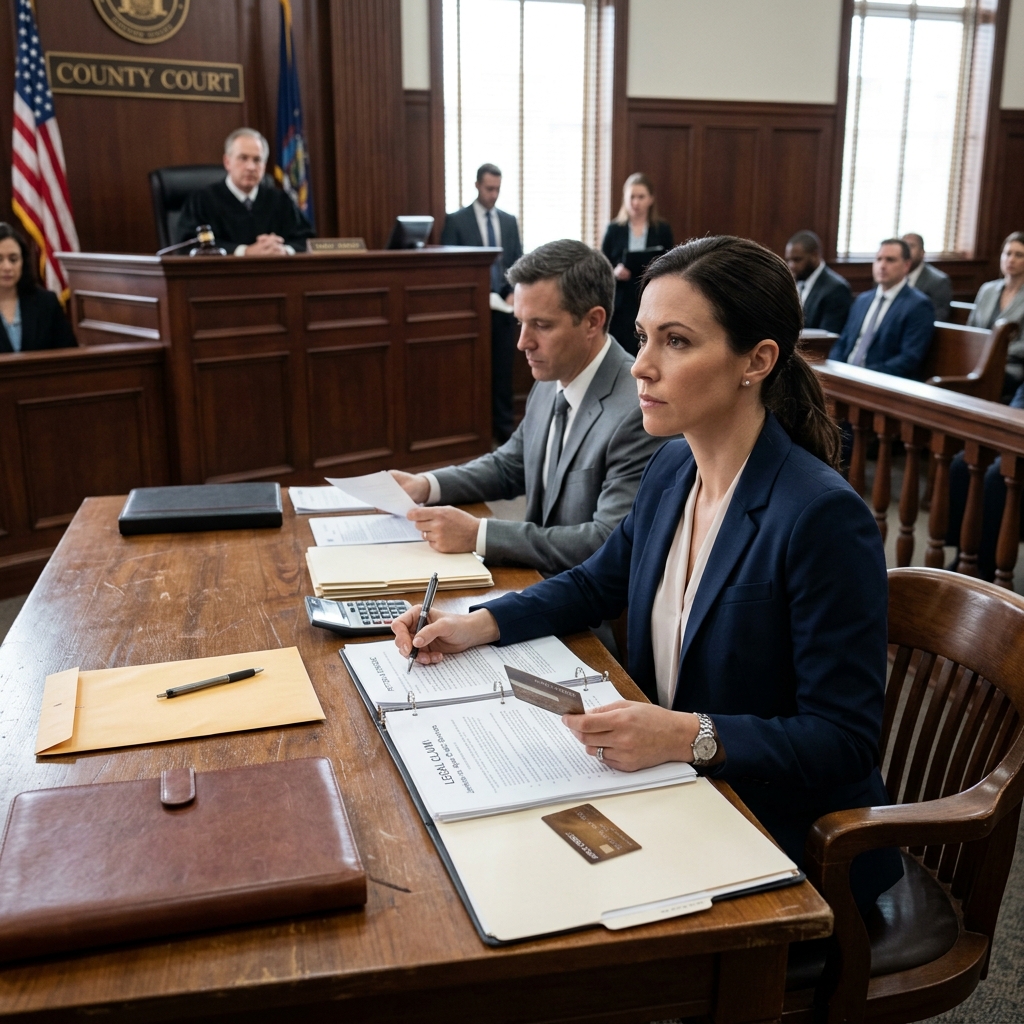
Credit card companies handle millions of accounts and transactions, and mistakes happen. Sometimes those errors are minor and quickly fixed. Other times, they lead to unfair fees, damaged credit, or aggressive collection tactics. When a credit card issuer refuses to correct a serious problem, going to court may be the only way to protect your rights and recover your losses.
This guide explains, in clear language, how to decide whether a lawsuit makes sense, which laws protect you, the steps to take before you sue, and what to expect if your dispute ends up in small claims court, state court, or even as part of a class action.
1. When Does Suing a Credit Card Company Make Sense?
Not every billing mistake justifies a lawsuit. Court is usually a last resort for situations where the company’s conduct is serious, ongoing, or costly, and where informal efforts have failed.
1.1 Common reasons consumers consider a lawsuit
- Unresolved billing errors – charges you didn’t make, payments applied incorrectly, or fees added without explanation, after you disputed them in writing.
- Wrongful interest or fee practices – sudden rate hikes, improper penalty APRs, or undisclosed fees that violate the card agreement or consumer protection laws.
- Credit reporting damage – the company reports inaccurate late payments or charge-offs and refuses to correct them, harming your credit opportunities.
- Illegal collection behavior – threats, harassment, calls at prohibited times, or false statements by collectors attempting to collect your credit card debt.
- Improper account closures or freezes – sudden closure or suspension that causes losses, and the bank won’t provide a reasonable explanation or remedy.
1.2 Questions to ask before you think about court
- Have you tried to resolve the issue through customer service and formal disputes?
- Do you have clear documentation (statements, letters, emails, screenshots) to support your position?
- How much money is at stake, including fees, interest, and any damage to your credit?
- Are there non-monetary issues, like ongoing harassment, that you need to stop?
- Does your card agreement require arbitration instead of court, and if so, are there exceptions (like small claims)?
Honest answers to these questions help you decide whether a lawsuit is justified and where it should be filed.
2. Know Your Legal Rights Against Credit Card Companies
Several federal laws, along with state consumer protection statutes, regulate how credit card issuers and debt collectors must treat you. Understanding the basics of these protections can help you frame your claim properly.
2.1 Truth in Lending Act and billing errors
The Truth in Lending Act (TILA) and its implementing regulation (Regulation Z) require card issuers to provide clear disclosures about interest rates, fees, and key terms. They also give you rights to challenge billing errors within set time limits. Typical covered errors include:
- Unauthorized transactions (fraud or theft).
- Charges with the wrong amount or date.
- Failure to credit a payment you made.
- Failure to send statements to your correct address after you notify them.
If the company fails to properly investigate or correct these issues after you follow the dispute steps, that mishandling may become part of your legal claim.
2.2 Fair Credit Billing Act (FCBA)
The Fair Credit Billing Act is part of TILA and provides specific rules for disputing billing errors on open-end credit accounts like credit cards. Under FCBA, when you send a written dispute to the address listed for billing inquiries within 60 days of the statement date, the issuer generally must:
- Acknowledge your dispute in writing within a set time (often 30 days).
- Investigate and either correct the error or explain why the bill is correct, usually within two billing cycles.
- Stop trying to collect the disputed amount while the investigation is ongoing (though they may still bill you for undisputed charges).
A lawsuit might argue that the issuer violated FCBA by failing to investigate, continuing to report nonpayment of disputed charges, or imposing interest and fees on amounts properly in dispute.
2.3 Fair Debt Collection Practices Act (FDCPA)
If a third-party debt collector is pursuing your credit card debt, the Fair Debt Collection Practices Act restricts what they can do. It prohibits:
- Harassing or abusive calls, threats, or obscene language.
- False statements about the amount owed, legal status of the debt, or consequences of not paying.
- Contacting you at unusual times (generally before 8 a.m. or after 9 p.m.) or at work if you tell them not to.
- Continuing to contact you after you send a written request to stop.
FDCPA violations can support a separate claim against the collector, which may be joined with your case against the credit card company in some situations.
2.4 Consumer Financial Protection Bureau and enforcement
The Consumer Financial Protection Bureau (CFPB) supervises major credit card issuers and enforces federal consumer financial laws. While you cannot usually sue directly under every regulation it enforces, you can:
- Submit a complaint to the CFPB describing the card issuer’s conduct.
- Use CFPB regulations and guidance as a roadmap to identify violations.
- Point to enforcement actions against similar practices to support your legal theory.
3. Use Non-Court Options First
Courts often expect that you at least tried to solve the problem informally. You also might get what you want faster and at lower cost by using the tools below.
3.1 Contact customer service and escalate
- Call the number on the back of your card to describe the problem calmly and factually.
- Ask for written confirmation of any promise to reverse charges or fees.
- If the initial representative cannot help, request a supervisor or the company’s “executive” or “resolution” team.
Keep a written log of every call: date, time, names, and what was said. This becomes evidence later.
3.2 Send a formal dispute letter
Next, send a written dispute to the billing inquiries address shown on your statement, not just the payment address. In your letter:
- Identify your account and the specific charges or issues you are disputing.
- Explain why the charges are wrong or unfair.
- Include copies (not originals) of statements, receipts, police reports, or correspondence.
- Mail it by certified mail with return receipt so you can prove it was delivered.
This step is essential for FCBA protections and helps show the court that you gave the issuer a fair chance to fix the problem before suing.
3.3 File regulatory and consumer complaints
If the company still refuses to correct the issue, consider filing complaints with:
- CFPB – collects complaints about credit card companies and often forwards them to the company for a response.
- Federal Trade Commission (FTC) – especially for abusive collection practices or deceptive practices.
- Your state attorney general or consumer protection office – many states enforce their own unfair and deceptive practices laws.
These complaints can produce useful written responses from the company and may support your case. They may also reveal patterns of similar conduct affecting many consumers.
4. Is Court Even Allowed? Arbitration Clauses and Small Claims
Many credit card agreements include a mandatory arbitration clause requiring you to resolve disputes through private arbitration rather than a public courtroom. Whether you can still sue depends on the exact wording of your agreement and your state’s laws.
4.1 How to find and read your arbitration clause
- Download or request the full cardmember agreement from your issuer’s website.
- Look for sections labeled “Arbitration,” “Dispute Resolution,” or “Waiver of Class Actions.”
- Check for any right to opt out within a certain time after account opening.
- See whether small claims court actions are excluded from the arbitration requirement.
If your dispute falls within an exception, you may file in small claims court even if arbitration is mandatory for other issues.
4.2 When small claims court is a good fit
Small claims court is designed for individuals to handle relatively low-dollar disputes without lawyers. Each state sets its own dollar limit and rules.[10] Suing your credit card company in small claims may make sense when:
- The amount in dispute is within the court’s monetary limit.
- Your claim is relatively straightforward (for example, a single unauthorized charge and resulting fees).
- You prefer a simpler, faster process with an informal hearing.
For larger claims or complicated legal issues, you may need to use a higher-level state or federal court and consider hiring an attorney.
| Feature | Small Claims Court | Higher State/Federal Court |
|---|---|---|
| Typical dollar limits | Low to moderate (varies by state) | Much higher; complex and large claims |
| Lawyers required? | Often optional; many people represent themselves | Lawyers are common and often recommended |
| Procedures | Informal, simplified rules of evidence | Formal rules of evidence and procedure |
| Speed and cost | Generally faster and lower filing fees | Longer timelines and higher costs |
| Suitable for | Clear, smaller disputes | Complex, high-value, or multi-party cases |
5. Preparing Your Case: Evidence and Legal Theory
A successful lawsuit requires more than frustration; you must prove that the card issuer or collector violated a legal duty and that you were harmed. Preparation is crucial.
5.1 Gather and organize documentation
Create a file—paper, digital, or both—with all relevant materials, such as:
- Monthly statements showing the disputed charges, fees, or interest.
- Letters and emails you sent or received regarding the dispute.
- Notes and logs of telephone calls (dates, times, names, what was said).
- Credit reports showing reporting errors or damage to your score.
- Proof of payment (bank records, receipts, confirmation numbers).
- Copies of complaints filed with CFPB, FTC, or state agencies, and any responses.
Organize these documents chronologically so you can show the judge a clear story from start to finish.
5.2 Identify your legal claims
Your complaint will typically include one or more of these legal theories:
- Violation of federal law – for example, failure to follow FCBA billing error procedures, or unlawful debt collection under FDCPA.
- Breach of contract – the company did not follow its own cardmember agreement (such as applying interest rates not permitted under the contract).
- Unfair or deceptive acts – violating state unfair and deceptive acts and practices (UDAP) law, such as misrepresenting fees or rewards.
- Negligence or other state common-law claims – for mishandling your account or failing to secure your data, depending on your state’s law.
If you are unsure how to state your legal claims, it is wise to consult a consumer law attorney, even if only for a brief consultation.
5.3 Calculate your damages
Courts need to know how you were harmed and in what amount. Consider:
- Improper charges and fees that were never reversed.
- Extra interest you paid because of the company’s error.
- Out-of-pocket costs, such as postage, long-distance calls, or identity theft services.
- Losses from denied credit applications due to inaccurate credit reporting, if you can document them.
- Statutory damages that some laws allow (for example, FDCPA provides for certain statutory amounts in addition to actual damages).
Prepare a simple spreadsheet or list to show how you reached your total.
6. Filing the Case and Going to Court
Once you have gathered evidence and clarified your claims, you are ready to file the case in the appropriate court.
6.1 Starting a small claims case
While procedures vary by state, the basic steps often include:[10]
- Visiting your local small claims court website or clerk’s office to obtain forms.
- Filing a claim form that briefly explains who you are suing, what happened, and how much you seek.
- Paying the filing fee (sometimes reduced or waived for low-income litigants).
- Arranging proper service of the claim on the credit card company, often by certified mail or process server.
- Receiving a hearing date and instructions from the court.
Be sure to file within any applicable statute of limitations, which sets how long you have to bring a lawsuit. This period depends on your state and the type of claim.
6.2 What to expect at the hearing
On your court date:
- Arrive early with copies of all your evidence organized in a folder or binder.
- Check in with the clerk and wait to be called.
- When your case is called, you will have a short time to explain your story to the judge.
- Speak clearly, stick to facts, and refer to documents as needed.
- The company’s representative may present their side; you can respectfully respond.
The judge may rule immediately or take the case under advisement. If you win, the court will issue a judgment stating what the company must do—often paying you a specific amount or correcting an error.
6.3 Appeals and enforcement
In some jurisdictions, either party may appeal a small claims judgment within a short window. If you win but the company does not comply, you may need to use court procedures to enforce the judgment. Court staff or a lawyer can explain the local process.
7. What If the Credit Card Company Sues You First?
Often, the shoe is on the other foot: the credit card company or a debt buyer sues you to collect an unpaid balance. You still have rights, and your defenses may overlap with the claims you would bring if you sued first.
7.1 Never ignore a summons
If you receive court papers (a summons and complaint):
- Read them carefully to learn who is suing you, why, and in which court.
- Note the deadline to respond. Missing it can result in a default judgment against you.
- Consider contacting a consumer lawyer or legal aid organization for help.
7.2 Common defenses and counterclaims
Depending on the facts, you may be able to argue that:
- The debt is not yours (identity theft or mistaken identity).
- The amount is incorrect, inflated by unauthorized fees or interest.
- The collector cannot prove it owns the debt (common with debt buyers).
- The statute of limitations has expired, making the debt legally unenforceable.
You may also file counterclaims for violations of FCBA, FDCPA, state consumer laws, or breach of contract—essentially suing the company back within the same case.
8. When to Hire a Lawyer (and When You May Not Need One)
While you can represent yourself in many disputes, professional legal advice can be valuable, especially if the sums are large or the issues are complex.
8.1 Situations where legal help is strongly recommended
- Potential damages are significant, or the dispute involves complex financial products.
- You are being sued in a higher court with formal procedures and discovery.
- Your case involves possible class action issues affecting many consumers.
- You feel overwhelmed by court procedures, deadlines, or evidence rules.
8.2 Lower-cost options for legal assistance
If you cannot afford typical attorney fees, you may still have options:
- Legal aid organizations that provide free or reduced-fee services to eligible clients.
- Pro bono programs through local bar associations.
- Limited-scope representation, where a lawyer helps with specific parts (like drafting a complaint) while you handle the rest.
9. FAQs: Suing and Being Sued by a Credit Card Company
Q1. Can I really sue a big credit card company as an individual?
Yes. Individuals sue major card issuers every day in small claims and higher courts. The key is choosing the right venue, understanding your legal claims, and presenting organized evidence. Mandatory arbitration clauses can limit some lawsuits, but small claims exceptions and regulatory complaints may still be available.
Q2. How much does it cost to sue my credit card company?
Costs vary by state and court, but small claims filing fees are usually modest. You may also pay for service of process and copies. If you hire a lawyer, fees can be substantial, although some consumer protection laws allow successful plaintiffs to recover attorney’s fees from the defendant, which you can discuss with counsel.
Q3. Will suing the company hurt my credit score?
The act of filing a lawsuit generally does not appear on your credit report. However, the underlying dispute may involve late payments or charge-offs that can affect your score. If your case leads to corrections on your credit report, your credit profile may improve over time.
Q4. What if I lose my case?
If you lose, you may not recover any money, and in some courts you could be responsible for certain costs. However, in many small claims courts, each side pays its own costs and lawyers (if any), unless a statute or contract says otherwise. It is important to weigh the strength of your evidence before filing.
Q5. Can I join a class action instead of suing alone?
Class actions may be available when the credit card company’s conduct affects many consumers in similar ways. Class actions are typically handled by specialized law firms. If you think your issue is part of a broader pattern, consult a consumer class action attorney or review public enforcement actions and class settlements through official court records or regulatory announcements.
References
- What should I do if I’m sued by a debt collector or creditor? — Consumer Financial Protection Bureau. 2023-03-01. https://www.consumerfinance.gov/ask-cfpb/what-should-i-do-if-im-sued-by-a-debt-collector-or-creditor-en-334/
- What To Do if a Debt Collector Sues You — Federal Trade Commission. 2021-12-01. https://consumer.ftc.gov/articles/what-do-if-debt-collector-sues-you
- Credit card debt lawsuits in California — Judicial Council of California. 2024-01-01. https://selfhelp.courts.ca.gov/credit-card-debt-california
- What To Do When You Get Sued For Credit Card Debt — Bankrate. 2023-06-15. https://www.bankrate.com/credit-cards/advice/what-to-do-when-sued-for-credit-card-debt/
- When Can You Sue a Credit Card Company? — Attorneys.us. 2022-09-10. https://attorneys.us/when-can-you-sue-a-credit-card-company/
Similar Articles








Read full bio of medha deb




