Why grant scams target small businesses
Small businesses often need funding quickly, which makes grant offers especially appealing. Scammers know that urgency, optimism, and limited time can lead owners to overlook warning signs. Fake grant messages often copy the language of real public programs, use official-sounding names, and promise easy money with little effort.
Legitimate grants do exist, but they are usually tied to clear eligibility rules, formal applications, and a review process. That difference matters because scammers rely on confusion. If an offer feels fast, secretive, or unusually generous, it deserves close scrutiny before you share any information.
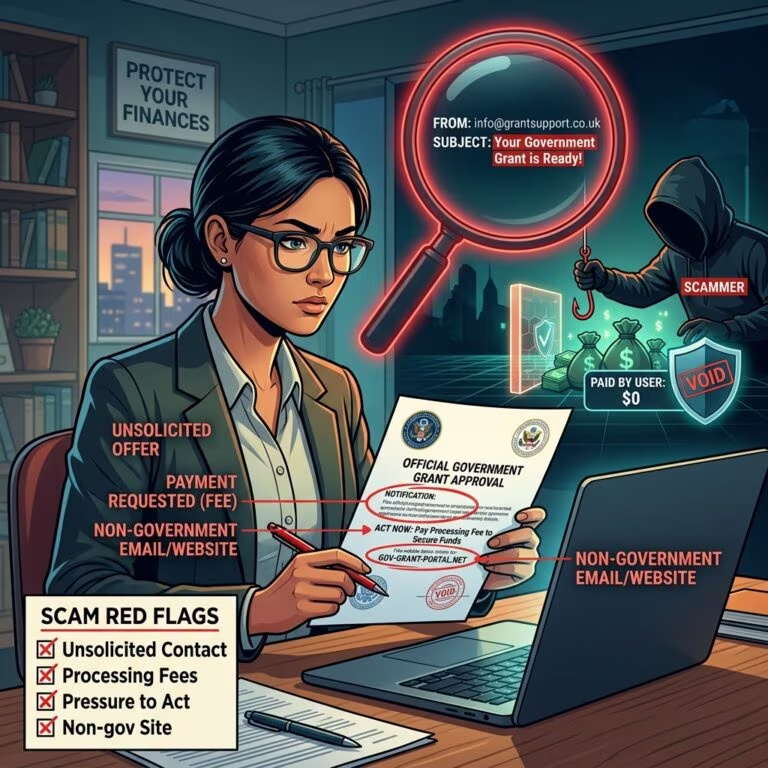
Common clues that a grant offer is not real
Most grant scams share a few recurring patterns. No single clue proves fraud on its own, but several together should make you stop and verify the source.
- Upfront fees: A demand for payment to apply, process, unlock, or release funding is a major warning sign.
- Instant approval: Real grants usually require applications, review, and documentation. A promise that you are already approved is suspicious.
- Requests for sensitive data: Bank account numbers, Social Security numbers, and similar details should not be collected at the start of an unverified process.
- Pressure tactics: Scammers often urge quick action, secrecy, or immediate responses to prevent careful review.
- Poorly matched web addresses: A site or email that imitates a government agency but uses the wrong domain or a lookalike spelling is a strong red flag.
These tactics appear repeatedly because they work. A legitimate grant provider does not need to rush you into paying money or handing over private information before you can confirm who they are.
The five red flags to check first
When evaluating a grant offer, it helps to focus on five specific questions. If the answer to any of them feels off, pause before moving forward.
1. Is the offer mixing up grants and loans?
Grant language is often distorted by fraudsters who use the words “grant,” “loan,” and “free money” interchangeably. That wording is meant to create excitement while blurring the legal difference between money that must be repaid and money that does not. A real grant announcement should clearly explain whether funds are a grant, a loan, or another type of program.
If the message is vague about repayment, fees, or terms, treat it as a warning sign rather than an opportunity.
2. Is the offer from a federal source that does not fit your business type?
Federal grant opportunities are typically designed for specific public purposes and are not usually available to ordinary for-profit businesses. Some programs are directed to nonprofit organizations, government entities, research institutions, or highly targeted projects. If a random message claims your for-profit company has been selected for a federal business grant, verify that claim through the official program site.
Scammers often exploit the prestige of the federal government to make an offer feel more credible than it is. In practice, a real federal grant program will be easy to identify, clearly documented, and hosted on an official government domain.
3. Do the mailing address and agency details actually match?
Fraudulent letters may look official at first glance. They can include seals, letterhead, and names that resemble agencies such as the Small Business Administration. The problem is that the return address, payment instructions, or contact information may lead somewhere entirely different.
Compare every address and contact detail against the official organization’s published information. If the correspondence says one agency is involved but tells you to send money or documents somewhere else, the inconsistency should be treated as a serious warning.
4. Is the grant supposedly for a business owner starting or growing a for-profit venture?
Many owners are surprised to learn that grants for individual entrepreneurs are rare. That does not mean no opportunities exist, but it does mean you should be skeptical of bold claims that a person can casually receive startup cash just by applying through a promotional form. Scams often exploit the idea of “seed money” or “business expansion funds” to attract small companies that need capital now.
When a real grant is available, the eligibility rules are usually specific and the funding source is transparent. A mass email sent to random business owners is not how most legitimate grant programs operate.
5. Is anyone asking for banking details too early?
Requests for banking information, tax identifiers, or other private data at the beginning of the process are among the clearest danger signs. A scammer may say the information is needed to verify eligibility or transfer funds, but the real goal may be identity theft or unauthorized withdrawals.
If a site or caller asks for account numbers before you have confirmed the organization, the program, and the application process, stop immediately. The safest choice is to leave the conversation and verify the offer through an official source.
How legitimate grant programs usually work
Real grant programs tend to follow a predictable pattern. They explain who may apply, what the money can be used for, what documents are required, and how decisions are made. They also provide a timeline, contact details, and a written explanation of the award process.
Most importantly, trustworthy programs do not rely on secrecy or pressure. They expect applicants to review requirements carefully and submit information through a formal channel. If a funding opportunity avoids those basics, it is much less likely to be legitimate.
| Feature | Legitimate grant program | Likely scam |
|---|---|---|
| Application process | Clear forms, stated eligibility, and review steps | Instant approval or unclear requirements |
| Fees | No fee to apply for a genuine grant | Payment demanded before funds are released |
| Information request | Limited, relevant information collected securely | Banking or identity data requested too early |
| Contact style | Official contacts, published domains, and verifiable staff | Lookalike emails, strange domains, or vague identities |
| Pressure | Time to review and ask questions | Urgency, secrecy, and threats of losing the offer |
What to do before you respond
You do not need to be a fraud investigator to protect yourself. A few basic habits can prevent most grant-related scams from causing damage.
- Search for the official source: Go directly to the agency, foundation, or grant database instead of clicking the message link.
- Check the domain carefully: Government grant pages should use official government web addresses.
- Review the organization’s public details: Look for a physical address, phone number, and staff or contact page that match the offer.
- Read the eligibility rules: Real grant programs clearly state who may apply and what the funds are for.
- Refuse early payment requests: Never pay to apply for a grant or to “release” money that has supposedly already been awarded.
- Avoid sharing private data on unverified pages: Use only secure portals from sources you have confirmed.
When in doubt, treat the offer as unproven until you verify it independently. That simple habit is often enough to avoid costly mistakes.
Where legitimate funding searches should begin
Owners looking for real assistance should start with trusted public and nonprofit sources rather than unsolicited messages. Official government grant platforms, small business development resources, and recognized economic development organizations are better places to begin than random social media posts or unexplained emails.
A useful rule is this: if the offer found you, verify it; if you found the opportunity through an official directory or agency page, read the rules carefully and apply through the stated channel. That distinction helps separate marketing noise from actual funding programs.
If you think you may have seen a scam
If you already replied to a suspicious offer, do not panic. The best next step is to stop communication, preserve the messages, and review what information you shared. If you gave out financial details, contact your bank or credit provider quickly to discuss possible safeguards.
You can also report suspected fraud to the proper consumer protection and fraud-reporting channels. Reporting matters because it may help prevent the same scam from reaching other business owners.
Frequently asked questions
Are all unsolicited grant offers scams?
No, but unsolicited offers should be treated with caution. A real grant program will still be easy to verify, and it will not demand secrecy, payment, or private information before you can confirm its legitimacy.
Can a real grant ever require a fee?
Legitimate grants are generally free to apply for. If someone says a fee is needed to unlock funds or speed up approval, that is a strong sign the offer is not genuine.
What if the offer uses an official-looking logo?
Design alone does not prove authenticity. Logos, seals, and letterhead can be copied. Always verify the agency, the web address, and the contact information independently.
How can I tell whether a government grant page is real?
Start with the official agency website and confirm that the page lives on a government domain. Then compare the listed program name, application rules, and contact details with what you were sent.
What is the safest response to a suspicious message?
Do not click links, do not send money, and do not share private information. Save the message, verify the source separately, and report it if it appears fraudulent.
Practical habits that reduce risk
Protecting your business from grant fraud is less about memorizing every scam technique and more about building a habit of verification. Pause before responding. Check the web address. Confirm the organization through its official site. Read the terms. And if the offer depends on urgency or secrecy, walk away.
That careful approach also improves your chances of finding real financing. Legitimate funding takes research, but the time spent checking details is far cheaper than recovering from fraud, identity theft, or a drained business account.
References
- Grant-Related Scams — Grants.gov. 2024-12-01. https://www.grants.gov/learn-grants/grant-fraud/grant-related-scams
- Avoid Grant Scams — U.S. Department of Health and Human Services. 2024-12-01. https://www.hhs.gov/grants-contracts/grants/avoid-grant-scams/index.html
- Protect yourself from scams and fraud — U.S. Small Business Administration, Office of Inspector General. 2024-12-01. https://www.sba.gov/about-sba/oversight-advocacy/office-inspector-general/protect-yourself-scams-fraud
- Small Business Grant Scams: How to Spot & Avoid Them — Tailor Brands. 2024-12-01. https://www.tailorbrands.com/grants/grant-scams
- Avoiding Business Grant Scams: Best Practices for SMBs — Ulink Business. 2024-12-01. https://ulinkbusiness.com/blog/avoid-smb-business-grant-scam/