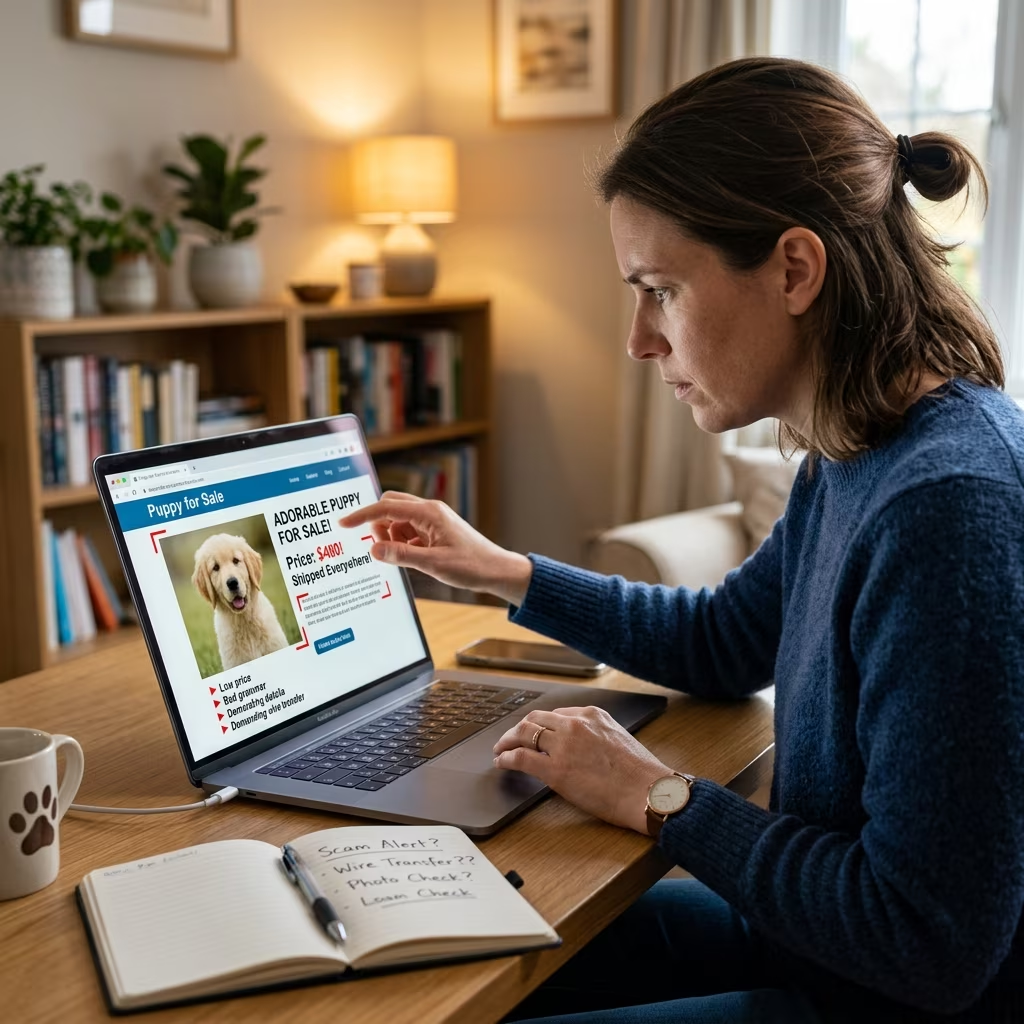
Buying a puppy online can be exciting, but it also creates an opening for fraudsters who count on urgency, emotion, and incomplete research. The safest approach is to slow down, verify every detail, and treat the transaction like any other high-risk purchase.
Puppy scams follow a predictable pattern: a charming listing, a persuasive seller, and a request for fast payment before you can confirm that the animal exists. Knowing the warning signs can help you avoid losing money and protect your personal information.
Why puppy scams work so well
Scammers understand that people looking for a new pet often act with their hearts first. They use adorable photos, emotional stories, and urgent deadlines to make buyers feel they must decide immediately. That pressure can keep you from checking the seller’s identity, comparing prices, or asking for proof that the puppy is real.
These schemes also work because many buyers do not know what legitimate breeders or shelters normally provide. A trustworthy seller usually welcomes questions, offers documentation, and does not rush payment. A scammer, by contrast, tries to push the conversation toward a deposit as quickly as possible.
- They create emotional pressure by saying other buyers are waiting.
- They use low prices to make the offer look irresistible.
- They prefer payment methods that are difficult to trace or recover.
- They avoid live interaction, in-person visits, or verifiable records.
The clearest warning signs to watch for
One of the biggest red flags is a price that is far below market value. If a rare breed, designer mix, or purebred puppy is being offered for much less than comparable dogs, that discount may be the bait.
Another warning sign is pressure to pay immediately. Scam sellers often say the puppy will be sold to someone else unless you send money right away. They may also insist on wire transfers, gift cards, payment apps, or cryptocurrency because those methods are harder to reverse.
Be cautious if the seller refuses a phone call or video chat. A legitimate breeder or rescue organization should be able to answer basic questions and show the puppy live. If the seller only wants to communicate by text or email, that can be a sign that the listing is fake.
Pay attention to the quality of the photos and description. Reused stock photos, copied text, vague health details, or inconsistent location information can all point to a scam. The same warning applies if the seller keeps adding extra fees, such as shipping, insurance, special crates, or urgent delivery charges after you have already agreed to buy.
| Red flag | What it may mean |
|---|---|
| Very low price | The ad may be designed to attract quick deposits. |
| Urgent deadline | The seller wants you to decide before you verify anything. |
| Untraceable payment | Recovering your money may be difficult or impossible. |
| No live contact | The puppy or seller may not be real. |
| Extra surprise fees | The scam may continue after the initial payment. |
How to verify a seller before sending money
Before paying anyone, research the seller’s name, business name, phone number, and email address. Search for reviews, complaints, and any signs of repeated fraud claims. If the seller says they are affiliated with a kennel, breeder group, or rescue, confirm that claim through independent sources.
Ask for a live video call and request to see the puppy in real time. During the call, notice whether the animal matches the photos, whether the setting looks consistent, and whether the seller answers questions comfortably. Responsible breeders are usually willing to discuss the puppy’s age, parents, vaccinations, diet, and living conditions.
If possible, meet in person before paying. Seeing the puppy, the environment, and the people involved gives you much more information than a photo gallery ever could. If the seller has an explanation for why an in-person visit is impossible, treat that explanation as a major warning sign rather than a minor inconvenience.
- Search the seller’s name with words like “review,” “scam,” and “complaint.”
- Ask for a live video call showing the puppy and the surroundings.
- Request written details about vaccinations, age, and veterinary care.
- Verify the address and confirm that it matches the listing.
- Use reverse image search to see whether the photos appear elsewhere online.
Safer ways to pay
The payment method matters as much as the seller’s story. Scammers often insist on options that leave little or no buyer protection. That is why you should avoid wiring money to someone you do not know, especially if the transaction is based entirely online.
When possible, use a payment method with stronger consumer protections, such as a credit card, and ask whether the seller offers an invoice or another paper trail. A real seller should not object to a transaction method that is legitimate and traceable. If the seller only accepts cash, gift cards, or a payment app that cannot be reversed, step away.
Also be careful if the seller says the card “failed” and then pressures you to use another method. That tactic can be a way to push you from a protected payment option into one that is much harder to dispute. Once money is gone through a hard-to-trace channel, recovery becomes much less likely.
What legitimate sellers usually provide
While every breeder or rescue works differently, honest sellers usually share enough information to help you make a careful decision. They are generally comfortable discussing the puppy’s background and are not offended by reasonable questions.
Common signs of a trustworthy seller include a verifiable address, clear records, live communication, and documentation for the puppy’s age, vaccinations, and veterinary visits. Many reputable sellers also have a consistent online presence, references from previous buyers, and a process that does not rely on fear or haste.
Legitimate rescues and shelters may have an application process, but they should be transparent about fees and requirements. They also do not typically pressure you to make a same-day payment to secure an animal you have never seen.
What to do if you think you found a scam
If a listing starts to feel suspicious, stop communicating and do not send money. The best protection is often refusing to continue once the seller’s behavior becomes inconsistent or evasive.
If you already paid, contact your bank or payment provider immediately and ask whether the transaction can be disputed or reversed. Speed matters, especially if the payment went through a credit card, debit card, wire service, or mobile app. Save all messages, screenshots, receipts, usernames, and listing details before the scammer deletes anything.
You should also report the scam to federal consumer authorities. Reporting helps investigators identify patterns and may prevent other people from falling for the same scheme. If you used a platform or marketplace, submit a complaint there as well so the listing can be reviewed.
- Stop sending money or personal information.
- Document every message, payment, and profile detail.
- Contact your bank or card issuer right away.
- Report the fraud to the appropriate consumer protection agency.
- Warn the platform where the listing appeared.
How to shop for a pet with less risk
The safest path is to treat the search like a due-diligence process, not an impulse purchase. Compare several sellers, ask more questions than you think you need, and never let a good-looking photo override basic verification. If you are buying from an individual, insist on transparency. If you are adopting from a shelter or rescue, confirm the organization’s legitimacy and review its policies carefully.
It also helps to learn the typical price range for the breed or mix you want. That gives you a realistic baseline and makes suspicious bargains easier to spot. In many cases, a “deal” that looks amazing is simply a trap designed to pull in quick deposits.
Consider whether adoption may be a better fit than buying from a distant online seller. Local shelters and rescue groups often have animals waiting for homes, and visiting in person reduces the chance that the transaction is a fabrication. Even if you plan to use a breeder, local and verifiable options are usually safer than anonymous listings.
Questions buyers should ask before committing
Asking direct questions is one of the easiest ways to test whether a seller is real. A legitimate seller should be able to answer without becoming defensive or evasive.
- Can you show the puppy live on video right now?
- What veterinary care has the puppy received?
- Can you provide references from previous buyers?
- Where exactly is the puppy located?
- What payment methods do you accept, and why?
- May I see the puppy’s living environment?
If the answers are vague, contradictory, or delayed, do not interpret that as a minor inconvenience. In a high-risk purchase, hesitation can be a sign that the listing exists only to collect money.
Frequently asked questions
How can I tell if a puppy listing is fake? Look for unusually low prices, rushed payment demands, refusal to video chat, copied photos, and vague details about the puppy’s location or health.
What payment methods should I avoid? Be very cautious with wire transfers, gift cards, cryptocurrency, and payment apps when the seller is not verified, because these methods are difficult to recover.
Is it safe to buy a puppy I have never met? It is much safer to meet the seller and puppy in person or, at minimum, verify the animal through a live video call and confirm the seller’s identity.
What if I already sent money? Contact your bank or payment provider immediately, save all evidence, and file a fraud report as quickly as possible.
Are shelters and rescues immune to scams? No online listing is completely risk-free, so you should still verify the organization, review fees, and confirm that the animal is actually available.
References
- Getting a pet? Avoid scams — Federal Trade Commission. 2024-12. https://consumer.ftc.gov/consumer-alerts/2024/12/getting-pet-avoid-scams
- How to Protect Yourself from Puppy Scams Online — Western Union. n.d. https://www.westernunion.com/blog/en/puppy-scams-outsmart-the-tricksters-before-they-bite/
- How to Spot a Puppy Scam Online — American Kennel Club. n.d. https://www.akc.org/expert-advice/advice/spot-puppy-scam/
- Puppy Scams on the Rise this Holiday Season — Stockman Bank. n.d. https://www.stockmanbank.com/blogs/puppy-scams-on-the-rise-this-holiday-season
- How to avoid online puppy scams — 12 News Arizona. n.d. https://www.youtube.com/watch?v=u6_nuO3EccQ