
Federal Election Crimes: 6 Red Flags And How To Report Them Now
Learn the warning signs, legal definitions, and reporting channels for suspected federal election wrongdoing.
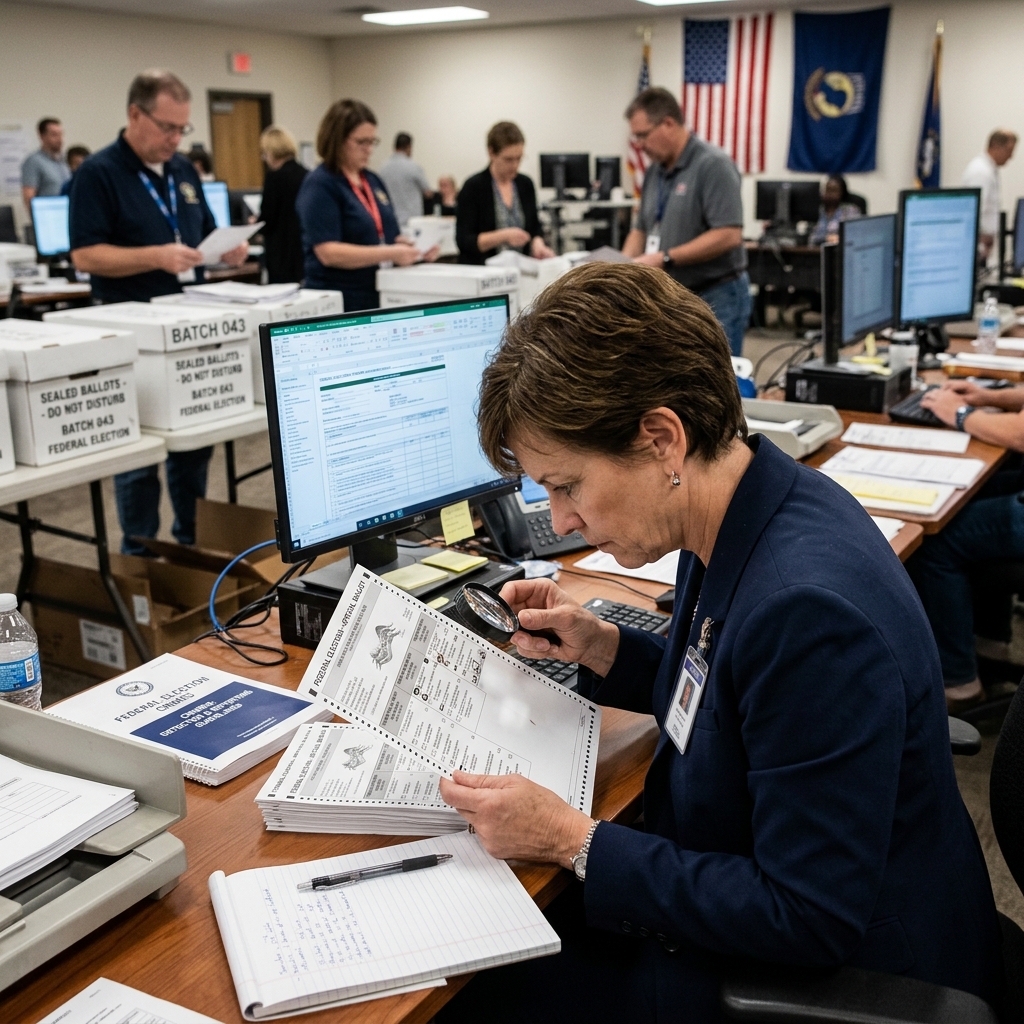
Federal election crimes are serious violations that can affect the integrity of voting, registration, and campaign activity in elections for federal office. They can involve false registration records, fraudulent ballots, intimidation, illegal donations, or other conduct that interferes with a fair and lawful election process. Under federal law, some election offenses carry criminal penalties of up to five years in prison, depending on the conduct and intent involved.
This guide explains the most common warning signs, the difference between suspicious activity and ordinary mistakes, and the main places to report possible violations. It is designed to help readers recognize conduct that may rise to the level of a federal offense without assuming every irregularity is criminal.
What Counts as a Federal Election Crime?
Not every election problem is a crime, and not every crime is federal. A matter becomes a federal election crime when it involves a federal election, such as one with candidates for Congress or the presidency, or when it implicates federal law in areas like voter intimidation, ballot fraud, voter registration fraud, or campaign finance violations.
Federal law focuses heavily on conduct that is knowingly and willfully deceptive, coercive, or fraudulent. That means investigators usually look for intent, not just a paperwork error or a misunderstanding of voting rules. This distinction matters because many suspicious-looking events turn out to be clerical mistakes, duplicate records, or poor data matching rather than criminal acts.
Common Red Flags to Watch For
Possible election crimes often appear in patterns. One isolated irregularity may have a simple explanation, but repeated or coordinated behavior can indicate a larger problem. The following warning signs are among the most important:
- Large numbers of registration forms that contain obviously false or inconsistent information
- Attempts to submit ballots for people who do not exist, have moved, or are otherwise ineligible
- Pressure, threats, or intimidation directed at voters, poll workers, or election staff
- Promises of payment or other benefits in exchange for voting or not voting
- Repeated reports of illegal ballot collection, tampering, or submission
- Unexplained coordination among individuals submitting suspicious voter records
These signs do not prove a crime by themselves, but they can justify reporting the conduct to the proper authorities for review.
Fraud in Voter Registration
One of the clearest areas of concern is voter registration fraud. This can include submitting registration applications that are known to be false, fictitious, or fraudulent under state law. It can also involve registering ineligible people, forging information, or using a false address in an effort to alter the electorate.
Warning signs include a batch of applications with the same handwriting, repeated errors that do not look accidental, or registrations that contain impossible names, addresses, or birth dates. In some situations, registration fraud is discovered when many forms are turned in together by the same person or organization and contain nearly identical defects. Federal law treats knowingly false registration activity as a punishable offense because it can distort who is eligible to participate in the election.
Ballot Misconduct and Illegal Voting
Another major category involves fraudulent ballots or illegal voting. Federal law prohibits the procurement, casting, or tabulation of ballots known to be materially false, fictitious, or fraudulent. This can include submitting a ballot for another person, casting multiple ballots, or using false information to get around eligibility rules.
Suspicious ballot activity may appear as a pattern of duplicate votes, mismatched signatures, ballots tied to people who are deceased or no longer live in the jurisdiction, or unexplained ballot handling by unauthorized persons. It is important to distinguish these issues from harmless administrative problems. For example, a signature mismatch or an incomplete form may reflect an error that election officials can correct through standard procedures rather than a criminal scheme.
Ballot fraud allegations should always be evaluated carefully because the presence of an irregular record does not automatically show intent. Prosecutors generally need evidence that the person acted knowingly and willfully.
Intimidation, Threats, and Coercion
Federal election law also covers behavior that prevents or discourages people from voting through intimidation, threats, or coercion. It is a crime to knowingly and willfully intimidate, threaten, or coerce a person because they are registering to vote, voting, helping others vote, or exercising election-related rights.
Signs of this type of offense can include aggressive confrontations at polling places, threats against voters based on political identity or race, pressure from employers or community leaders to vote in a certain way, or messages that appear designed to scare eligible voters away from the polls. These cases are especially serious because they can suppress participation without leaving obvious documentary evidence.
Federal agencies treat voter intimidation and suppression as civil rights issues as well as election offenses. The Department of Justice provides a reporting line for these violations, along with state and local election offices that can respond quickly when voting is underway.
Campaign Finance Violations That Can Cross the Line
Not all election crimes involve ballots or registration forms. Some involve money. Campaign finance violations may include illegal contributions, donations made in someone else’s name, concealed sources of funds, or deliberate efforts to exceed legal limits while hiding the true donor.
Possible warning signs include unusually large contributions broken into smaller amounts to avoid reporting rules, donations routed through multiple people, or coordinated spending that is not properly disclosed. While some finance errors are paperwork problems, deliberate concealment can become a criminal matter when the conduct is knowing and willful.
Because campaign finance law can be complex, suspicious patterns should be examined in context. A single reporting error may not be enough to suggest wrongdoing, but repeated omissions, fake identities, or shell donations are reasons for further review.
Why Election Mistakes Are Not Always Crimes
A key part of spotting federal election crime is understanding what does not qualify. Research organizations and government sources repeatedly note that election fraud is rare and that many alleged cases are actually the result of clerical mistakes, database problems, or incorrect assumptions.
The distinction between error and crime is critical. An incorrect address, a missing signature, or a duplicate name in a database may create concern, but those issues often come from administrative processes rather than intentional misconduct. Federal criminal statutes generally require proof of knowledge and intent, which is why investigators must look for more than suspicious-looking paperwork.
| Issue | Possible Explanation | Why It Matters |
|---|---|---|
| Duplicate registration record | Database overlap or clerical duplication | May be administrative, not criminal |
| Unsigned ballot envelope | Voter mistake or curing process needed | Does not automatically show fraud |
| False address on multiple forms | Potential organized scheme | May indicate knowing misconduct |
| Threats at the polls | Possible intimidation | Can implicate federal civil rights law |
How to Document Suspicious Activity
If you observe something unusual, careful documentation can help authorities decide whether a crime occurred. Record the date, time, location, names of any witnesses, and a factual description of what happened. If there are documents, photos, or messages, preserve them without altering the original evidence.
Try to avoid speculation in your notes. Facts are more useful than conclusions. Instead of writing that someone “stole an election,” describe exactly what was seen: for example, “three people submitted identical forms with the same address and birth date.” That kind of precise record can be much more useful to investigators.
Where to Report Possible Election Crimes
There are several official channels for reporting suspected election misconduct. The U.S. government recommends first contacting the relevant state, local, or territorial election office when voter fraud is suspected. Depending on the type of conduct, reports may also be made to a local FBI office, a local U.S. attorney’s office, or the Public Integrity Section of the Department of Justice’s Criminal Division.
If the issue involves voter intimidation or suppression, the DOJ Civil Rights Division’s Voting Section also accepts reports and provides a dedicated complaint line. Reporting to the correct office matters because different agencies handle different parts of the election law system.
What Investigators Usually Look For
Investigators often ask whether there is evidence of coordination, repetition, and intent. A one-time mistake usually looks different from a pattern of conduct across many records or many voters. They may also look for false names, forged signatures, unauthorized ballot handling, or communications that show a plan to violate election law.
Public studies have found that proven voter fraud is uncommon, and large-scale schemes are rare. That does not mean suspicious conduct should be ignored. It means that credible reporting should focus on concrete facts, not assumptions about election outcomes.
Frequently Asked Questions
What is the difference between voter fraud and election fraud?
Voter fraud usually refers to illegal acts connected to registration or voting by individuals. Election fraud is broader and can include ballot tampering, intimidation, campaign finance violations, or manipulation of election administration.
Does every irregular ballot mean a crime happened?
No. Many irregular ballots are the result of clerical mistakes, missing information, or procedural issues that election officials can resolve without criminal enforcement.
Can false registration forms be a federal crime?
Yes. Knowingly submitting materially false or fraudulent voter registration applications can violate federal law when the conduct involves a federal election.
Where should I report suspected intimidation at the polls?
You can report it to the DOJ Civil Rights Division’s Voting Section, your state or local election office, and in some cases a local FBI office or U.S. attorney’s office.
Why are election crimes often hard to prove?
Because prosecutors usually need evidence of intent. A suspicious result is not enough by itself; officials often need records, testimony, or other proof that the person acted knowingly and willfully.
Final Practical Takeaway
The most reliable way to spot a possible federal election crime is to look for deliberate conduct, not just irregular paperwork. False registration data, fraudulent ballots, intimidation, and illegal campaign money can all point to criminal activity when they are done knowingly and connected to a federal election.
At the same time, many election problems are administrative rather than criminal. Careful observation, accurate documentation, and prompt reporting to the correct authority are the best tools for turning suspicion into a meaningful review.
References
- 52 U.S. Code § 20511 – Criminal penalties — Cornell Law School, Legal Information Institute. n.d. https://www.law.cornell.edu/uscode/text/52/20511
- Voter fraud, voter suppression, and other election crimes — USA.gov. n.d. https://www.usa.gov/voter-fraud
- Debunking the Voter Fraud Myth — Brennan Center for Justice. n.d. https://www.brennancenter.org/our-work/research-reports/debunking-voter-fraud-myth
- Election Crimes Branch — U.S. Department of Justice, Criminal Division. n.d. https://www.justice.gov/criminal/criminal-pin/election-crimes-branch
Similar Articles








Read full bio of Sneha Tete




