
Spot Fake Reviews: Expert Guide To Trustworthy Feedback Today
Learn the warning signs that separate authentic feedback from manipulated reviews.
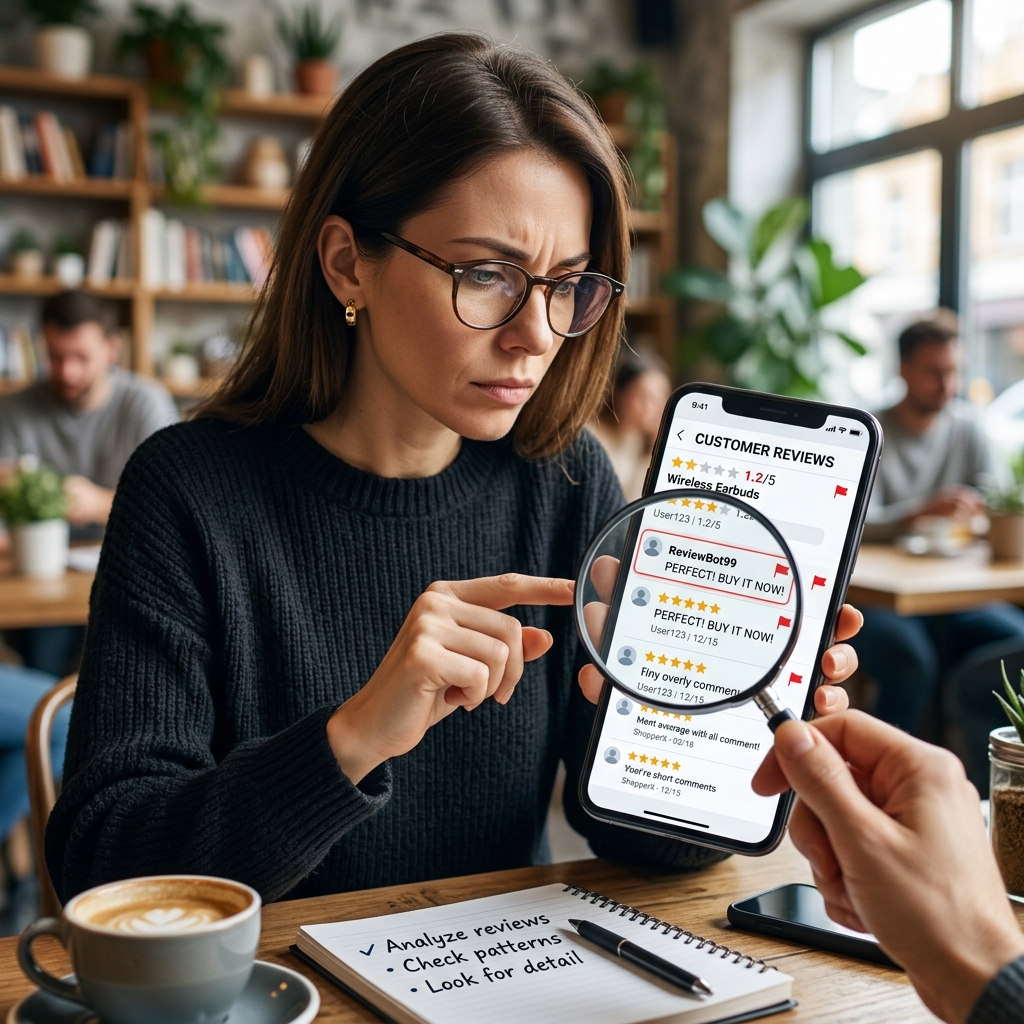
Online reviews can be useful, but they are not always trustworthy. Some are written by paid promoters, disgruntled competitors, automated tools, or people with incentives they do not disclose. Knowing how to separate credible feedback from manipulated praise or criticism can help you make safer buying decisions and avoid misleading claims.
The best way to read reviews is to look for patterns, not isolated comments. A single review may be honest or fake, but clusters of suspicious behavior, repetitive wording, and implausible enthusiasm often reveal a problem. Research and consumer guidance from organizations such as the Better Business Bureau, Cornell University, and recent reporting on AI-generated reviews all point to the same conclusion: the details matter more than the star rating.
What Makes a Review Suspicious
Fake reviews often try to imitate the rhythm of genuine customer feedback, but they usually miss the small human details that make real experiences believable. Reviews that are extremely brief, oddly generic, or packed with promotional language deserve extra scrutiny.
- Overly polished praise without any concrete information can be a warning sign.
- Extreme language that is only glowing or only hostile may be designed to influence, not inform.
- Repeating phrases across multiple reviews can point to copy-and-paste behavior.
- Unnatural timing, such as many reviews appearing within a short window, can suggest coordinated posting.
Authentic customers usually mention a product feature, a service interaction, delivery timing, fit, durability, or a specific problem they experienced. Fake reviews, by contrast, often stay at a vague level and avoid details that could be checked.
Read the Language, Not Just the Rating
Star ratings are easy to manipulate. A five-star score alone tells you very little if the written review sounds generic or unnatural. Likewise, a one-star review may be persuasive on the surface but still be part of a coordinated attack.
One useful method is to read reviews out loud. If the wording sounds stiff, awkward, or strangely promotional, it may have been produced by a non-native writer, a content farm, or a generative tool. The Better Business Bureau notes that grammar, spelling, and overall naturalness can all provide clues. Recent reporting on AI-generated reviews adds that machine-written text often sounds highly structured while remaining empty of genuine experience.
| Signal | What it may mean | Why it matters |
|---|---|---|
| Vague praise | Possibly fake or incentivized | Real customers usually mention specifics |
| Repetitive wording | Template-based posting | Suggests mass production of reviews |
| Perfect grammar in every review | Not proof, but worth checking further | Can indicate professional or paid writing |
| Sudden bursts of emotion | Possible manipulation | Fake reviews often push a reaction quickly |
None of these signs proves fraud by itself. The goal is to notice combinations of warning signs and then investigate more carefully.
Check the Reviewer’s Profile
A review is more believable when it comes from someone with a history that makes sense. If the profile looks empty, newly created, or strangely one-dimensional, it may not reflect a real customer.
- Look at the reviewer name for generic or placeholder-like patterns.
- Scan the review history to see whether the person has reviewed only one category or only gives five stars.
- Check for unrelated products or services reviewed in rapid succession.
- Note whether the account appears new and lacks normal activity.
Some platforms show whether a reviewer is a verified purchaser. That label does not guarantee honesty, but it does raise confidence compared with a review from an unverified account. If a large share of a product’s feedback comes from unverified reviewers, caution is warranted.
Look for Timing Patterns and Review Spikes
Real customers leave reviews at different times based on when they buy, try, and evaluate a product. Fake campaigns often behave differently. They may generate a wave of praise or criticism in a short period, especially after a launch, controversy, or competitive dispute.
Timing can reveal what the text cannot. If several reviews appear within hours, use nearly identical wording, and all rate the item at the same extreme, the pattern may be organized rather than organic. This is especially important for products with relatively few total reviews, where a small number of fake posts can distort the overall picture.
It also helps to sort by newest. Recent feedback may reveal whether quality has changed over time or whether a handful of early reviews created a misleading impression.
Pay Attention to Specificity and Balance
Genuine reviews usually contain a mix of strengths and weaknesses. They may praise one feature while criticizing another, or they may describe a product that worked well in one context but not in another. That balance is difficult to fake convincingly.
Suspicious reviews often sound one-note. They may read like advertisements, using phrases such as “best ever,” “life-changing,” or “complete scam” without explaining why. The University of Louisville research reported in 2024 and other current coverage note that fake or AI-assisted reviews often feel generic, repetitive, and promotional rather than personal.
When reading, ask these questions:
- Does the reviewer mention a specific feature, location, or interaction?
- Does the review describe a real sequence of events?
- Does it include a drawback, tradeoff, or limitation?
- Does it sound like a person who used the product, rather than someone describing it from afar?
Free Products, Incentives, and Other Disclosures
A review is not automatically fake because the reviewer received something in exchange for writing it. Some platforms allow pre-release programs or sampling arrangements where users receive a free product and are expected to provide an honest opinion. Amazon Vine is one example of a structured disclosure-based program mentioned by consumer guidance.
The key issue is transparency. When a reviewer was paid, incentivized, or given a free item, that relationship should be disclosed. If a review is enthusiastic but fails to mention the incentive, readers should treat it with caution. Undisclosed compensation can distort public perception even when the reviewer believes they were being fair.
Businesses and consumers should therefore separate three issues:
- Honest compensated reviews, which may still be useful if clearly disclosed.
- Undisclosed incentivized reviews, which can mislead readers.
- Fabricated reviews, which are intentionally deceptive.
Use Context Before You Trust the Crowd
A product with only a handful of reviews should be treated differently from one with hundreds or thousands. The smaller the sample, the easier it is for a few fake posts to tilt the average. Consumer guidance also suggests comparing a product’s review volume with similar products in the same category to see whether the pattern looks normal.
Context matters in another way too. A business with mostly recent reviews after years of silence may not have suddenly become popular; it may have launched a review campaign. Likewise, a service with only five-star comments and no meaningful criticism may not be as flawless as it appears. Balanced reputations are usually more believable than perfect ones.
Tools, Reporting, and What to Do Next
Third-party tools can help identify suspicious review patterns, especially for larger purchases or marketplaces where a single misleading rating could influence a decision. These tools are not perfect, but they can flag repetitive language, unusual review distributions, and other anomalies worth a closer look.
If you think a review is fake, report it to the platform. Most major sites have a process for flagging abuse or policy violations. Businesses can also submit complaints to the Federal Trade Commission through its fraud-reporting system when deceptive practices are involved.
When reporting, it helps to provide concrete evidence rather than a general complaint. Useful details may include:
- the date and time of the suspicious reviews
- repeated phrases or nearly identical wording
- patterns in rating spikes
- profile clues, such as empty or new accounts
- screenshots that show the pattern clearly
Practical Habits for Smarter Review Reading
The most reliable defense against fake reviews is a consistent reading habit. Instead of scanning only the headline score, review the full page with a skeptical but fair eye. Check the most recent feedback, then compare it with older reviews. Look for verified purchases when available. Read a mix of positive and negative comments. If a review feels too perfect, too vague, or too repetitive, treat it as a clue rather than a verdict.
It also helps to compare sources. A product or business that looks amazing on one platform but weak on another may deserve a closer look. Differences are not proof of fraud, but they can show how a review system is being shaped by incentives, moderation rules, or user demographics.
FAQ
How can I tell if a review is fake quickly? Look for generic wording, extreme praise or criticism, repeated phrases, suspicious timing, and profiles with little history.
Are verified purchases always genuine? No. Verified purchase labels can improve credibility, but they do not guarantee honesty.
Why are short reviews sometimes suspicious? Very short reviews often lack the concrete details that real customers naturally include, especially when they are part of a wave of similar comments.
Should I trust a product with only a few reviews? Use extra caution. A small number of reviews can be easier to manipulate and may not represent the broader customer experience.
What should I do if I spot a fake review? Report it through the platform’s abuse tools and, if relevant, file a complaint with the appropriate consumer authority.
References
- BBB Tip: How to spot a fake review — Better Business Bureau. 2024-01-01. https://www.bbb.org/all/spot-a-scam/how-to-spot-a-fake-review
- How to Tell if Reviews are Fake: Spot Fake from Real Reviews — Reputation.com. 2024-01-01. https://reputation.com/resources/articles/spot-fake-reviews-how-to
- Fake Reviews: How to Spot & Address Them — InMoment. 2024-01-01. https://inmoment.com/blog/fake-reviews/
- How to spot fake online reviews (with a little help from AI) — Loughborough University. 2024-05-01. https://www.lboro.ac.uk/media-centre/press-releases/2024/may/spot-fake-online-reviews/
- The internet is filled with fake reviews. Here are some ways to spot them — Associated Press. 2024-04-09. https://apnews.com/article/fake-online-reviews-generative-ai-40f5000346b1894a778434ba295a0496
- Fake Reviews Are Everywhere: Here’s How to Find Them — YouTube. 2024-01-01. https://www.youtube.com/watch?v=7nm0JQvSeq0
Similar Articles








Read full bio of medha deb


