
Undefined: 6 Warning Signs And How To Verify Calls Safely Today
Practical ways to recognize scam calls, protect personal information, and respond safely.
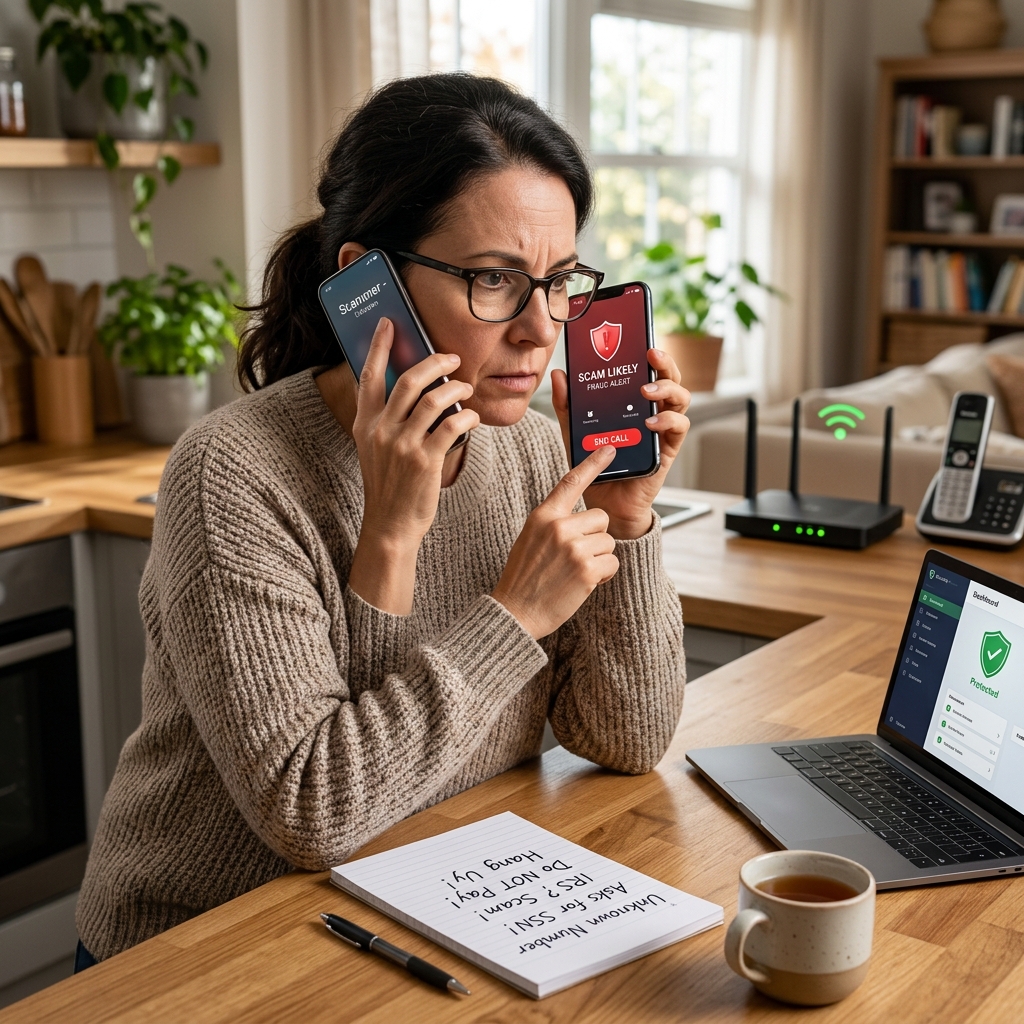
Phone scams continue to work because they exploit speed, confusion, and trust. A caller may sound polished, use an urgent tone, or appear to come from a familiar company, but those signals do not make the call real. Scammers often rely on pressure, spoofed caller ID, and requests for payment or personal information to push people into acting before they have time to think.
The safest response is to slow down, verify independently, and avoid sharing sensitive details over the phone unless you initiated the call and confirmed the number yourself. Consumer protection agencies consistently recommend hanging up on suspicious calls, refusing unknown payment demands, and using call-blocking tools to reduce exposure to fraud.
Why scam calls still succeed
Many people assume a scam call will be obvious, but modern fraud is often designed to sound routine. Scammers may impersonate banks, delivery services, tech support, government offices, charities, or even a relative in trouble. Their goal is not just to convince you; it is to keep you engaged long enough to collect money, passwords, account numbers, or one-time verification codes.
One reason these schemes remain effective is that callers can use technology to disguise their real location and number. Caller ID may display a local area code, a recognizable business name, or a government-like label, but that information can be manipulated. A familiar number should never be treated as proof that the caller is legitimate.
Common warning signs that a call is fake
Scam calls usually contain one or more red flags. You do not need to hear every warning sign to treat the call as suspicious. Even one of the following should be enough to pause the conversation and verify the claim separately.
- Urgency: The caller says you must act immediately, or you will miss a prize, face a penalty, or lose access to an account.
- Threats: The caller claims you could be arrested, fined, deported, or sued if you do not comply.
- Secrecy: You are told not to tell anyone else, including family members or your bank.
- Payment pressure: The caller demands payment by wire transfer, gift card, payment app, or cryptocurrency.
- Unsolicited contact: The call arrives without warning, and the reason for it is unclear.
- Requests for sensitive data: The caller asks for a Social Security number, password, or account code.
Legitimate organizations do not usually force split-second decisions or demand unusual forms of payment. If the call becomes emotional, threatening, or confusing, that is a strong sign to stop the conversation.
How to respond in the moment
The best immediate action is often the simplest one: end the call. You do not owe a stranger your attention, and you do not need to prove that you are suspicious before hanging up.
- Hang up: Do this as soon as the call feels wrong. Do not stay on the line to argue or explain.
- Avoid pressing buttons: If the call is a robocall, pressing a number may confirm that your line is active and lead to more calls.
- Do not call back using the number shown on caller ID: That number may be spoofed and could route you back to scammers.
- Do not share one-time codes: These codes are often used to protect accounts, and giving one away can open the door to fraud.
- Do not pay to “unlock” a prize or problem: A real prize should not require you to send money first.
If you are uncertain, end the call and use a verified phone number from a statement, official website, or card you already trust. Calling back through a known channel is far safer than relying on a number provided during the suspicious call.
How to verify a caller safely
Verification should always happen outside the suspicious call. Scammers often provide fake callback numbers, fake websites, or fake extensions that route you back into the fraud. Instead, find contact details independently and confirm the matter yourself.
| Situation | Safer response |
|---|---|
| The caller says they are from your bank | Hang up and call the number on your bank card or official statement. |
| The caller says a package problem needs payment | Check the shipment status using the retailer or carrier website you normally use. |
| The caller claims to be tech support | Close the call and contact the company through its published support channel. |
| The caller says you owe taxes or fees | Use official government contact information from a trusted source, not the caller’s instructions. |
Verification is not rude; it is responsible. Any caller who pressures you not to check independently is giving you a reason to distrust the conversation.
Caller ID is useful, but not trustworthy on its own
Caller ID can help screen calls, but it cannot prove identity. Criminals can spoof numbers so the display looks local, official, or familiar. Some scams even imitate a business name or use rotating numbers to avoid detection.
Because of that, caller ID should be treated as a clue, not evidence. A call from a number that resembles your bank, utility company, or local agency still requires confirmation through a separate, trusted channel.
Tools that reduce unwanted calls
Technology cannot eliminate scam calls entirely, but it can reduce the number you receive and help you spot suspicious activity faster. Consumer agencies recommend combining phone features, carrier services, and reporting tools to create multiple layers of protection.
- Call blocking: Many phones and carriers offer built-in blocking for known spam numbers.
- Call labeling: Some services mark calls as spam, telemarketing, or suspected fraud.
- Do Not Call registration: This can reduce lawful telemarketing calls, although it will not stop criminals or illegal robocalls.
- Spam filters and reporting tools: Carrier apps and mobile security tools may flag suspicious calls and let you report them.
- Voicemail screening: Let unknown callers leave a message so you can assess the claim without immediate pressure.
Even with these tools, judgment still matters. A scammer can get through a filter, and a legitimate call can still look strange. The goal is not to trust automation blindly, but to use it as one layer in a larger defense.
How to protect your personal information
Most phone scams are not trying to have a casual conversation. They are fishing for details that can be used to access accounts, open new accounts, or move money. That is why the safest default is to keep sensitive information off the phone unless you initiated the contact and know exactly who you are speaking with.
- Do not give out bank account numbers, passwords, or PINs.
- Do not read verification codes sent by text or email to a caller.
- Do not confirm your Social Security number, date of birth, or home address unless you know the request is legitimate.
- Do not provide payment information to “resolve” a surprise problem.
If a company truly needs information from you, there is usually a safer way to handle it through your account dashboard, a secure web portal, or a customer service number you locate yourself.
What to do after a suspicious call
Once the call ends, take a few minutes to document what happened. Small details can help identify patterns, protect your accounts, and support a fraud report.
- Write down the time and date of the call.
- Record the number shown on caller ID, even if you suspect it was fake.
- Note any callback number, extension, company name, or payment method mentioned.
- Save voicemails or text messages connected to the call.
- Check your financial accounts if you gave out any information.
If money was transferred or a card was used, contact the bank, card issuer, payment app, or cryptocurrency platform as soon as possible and explain that the transaction was fraudulent.
Reporting helps others avoid the same scam
Reporting a scam call does not always recover money, but it can help investigators trace patterns, identify repeat offenders, and shut down active fraud campaigns. Sharing the number used, the number on your caller ID, and the exact wording of the request can provide useful evidence.
Reports can usually be made through consumer fraud portals, the Federal Communications Commission, or official complaint systems that handle unwanted calls and robocalls. If the call involved a financial loss, contact your bank or payment provider immediately in addition to filing a report.
Simple habits that make you harder to scam
The most effective defense is a consistent routine. Fraud attempts often succeed when the target reacts automatically. A few steady habits make that much less likely.
- Let unknown calls go to voicemail when possible.
- Pause before acting on urgent instructions.
- Verify using contact details you found yourself.
- Keep your phone software updated so filtering and security tools work properly.
- Tell family members, especially older adults and teens, what scam calls look like.
Scammers often depend on isolation and haste. A habit of verifying first and responding later removes both advantages.
FAQs
What is the safest first move when a call sounds suspicious?
Hang up. If the call is legitimate, the company or agency can be reached again through a verified number you find independently.
Can caller ID be trusted?
No. Caller ID can be spoofed, so the name or number you see on the screen may not reflect the real caller.
Should I press a number to get removed from a robocall list?
No. Pressing buttons can confirm your number is active and may lead to more unwanted calls.
What payment methods are most suspicious in a scam call?
Wire transfers, gift cards, payment apps, and cryptocurrency are all common red flags when demanded by a stranger on the phone.
What if I already gave out information?
Contact your bank, card issuer, or relevant platform immediately, change passwords if needed, and report the incident through the appropriate fraud-reporting channel.
References
- Protect Yourself: How to Spot and Stop Phone Scams — Statesville, NC Police Department. 2024-12-12. https://police.statesvillenc.net/2024/12/12/16047/protect-yourself-how-to-spot-and-stop-phone-scams
- How to Avoid Phone Scams to Protect Personal Information — National Insurance Crime Bureau. 2024. https://www.nicb.org/news/blog/how-avoid-phone-scams-protect-personal-information
- Learn Phishing by Phone — McAfee Blog. 2024. https://www.mcafee.com/blogs/mobile-security/learn-phishing-phone/
- Scammers Calling: How to Prevent Getting Scammed Over the Phone — U.S. Department of Veterans Affairs, Privacy Service. 2024. https://department.va.gov/privacy/fact-sheet/scammers-calling-how-to-prevent-getting-scammed-over-the-phone/
- Stop Unwanted Robocalls and Texts — Federal Communications Commission. 2025. https://www.fcc.gov/consumers/guides/stop-unwanted-robocalls-and-texts
- Phone Scams — Federal Trade Commission. 2025. https://consumer.ftc.gov/articles/phone-scams
- Complain about Phone and Text Scams, Robocalls, and Telemarketers — USA.gov. 2025. https://www.usa.gov/telemarketer-scam-call-complaints
Similar Articles








Read full bio of medha deb




