
Property Deed Records: How To Search Deeds And Related Records
Learn where deed records are kept, how to find them, and what to check before relying on them.
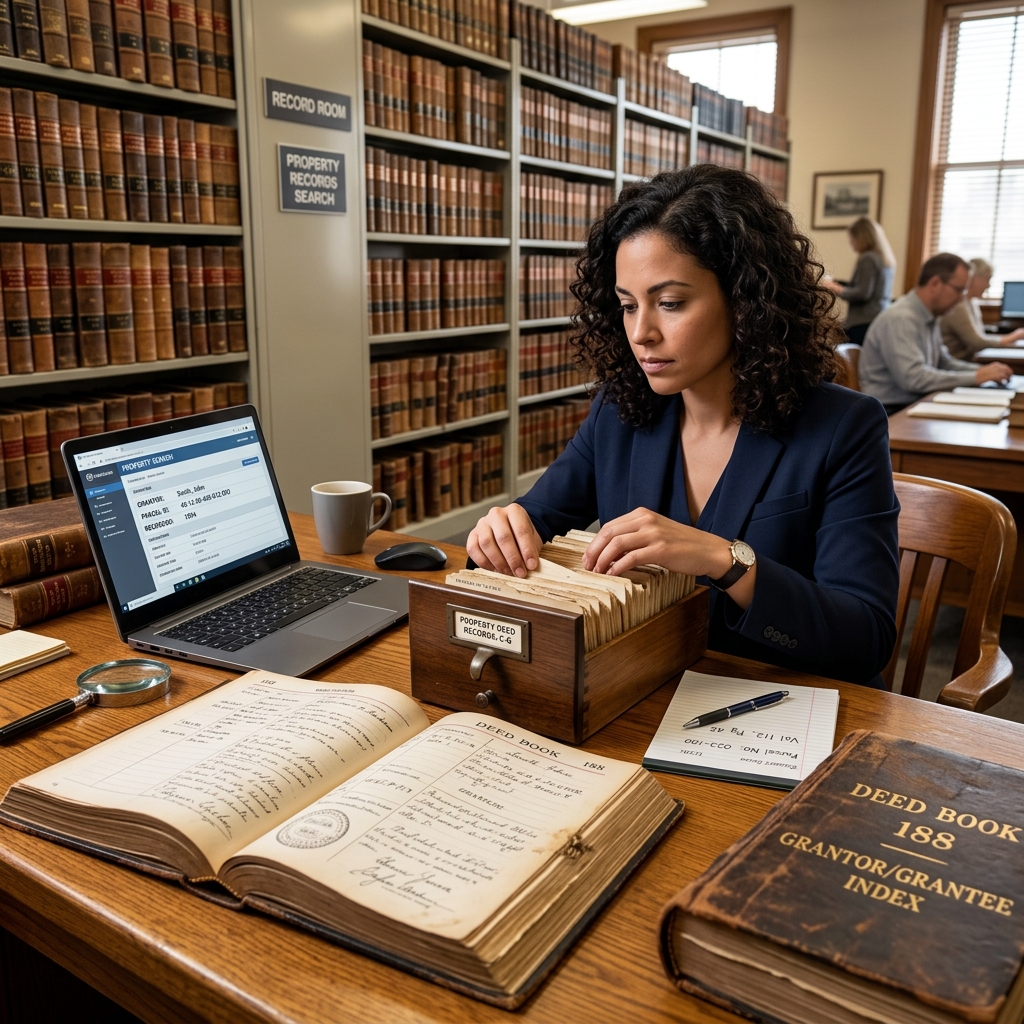
Property deed records are among the most useful public documents in real estate. They help show who owns a parcel, how the ownership changed over time, and whether there are related records that may affect the property’s status. Anyone researching a home, a lot, or an inherited property can use deed records to confirm basic facts before making decisions.
This guide explains where deed records are kept, what information they usually contain, and how to use them alongside related records such as liens, tax filings, and court matters. It is written for readers who want a clear, practical way to start a property record search without needing legal training.
Why deed records matter
A deed is the document that transfers an interest in real property from one person or entity to another. Once recorded in the proper public office, it becomes part of the land records system and can be searched by members of the public. In many jurisdictions, deed records are open to anyone, which makes them a foundational source for ownership research.
People review deed records for many reasons:
- to confirm the current owner of a property
- to trace past transfers and changes in title
- to identify the legal description of the land
- to look for recorded liens or other encumbrances
- to support a purchase, refinance, inheritance, or boundary review
Deed records do not replace a full title examination, but they are often the best starting point for basic ownership research.
Where deed records are usually stored
Most deed records are kept by a county recorder, clerk of court, registry of deeds, land records division, or another local office responsible for recording real property documents. The exact office depends on the state and county, but the records are generally organized by location rather than by statewide system.
Many offices now provide online access. Some also maintain in-person terminals at courthouses or land records offices. In Maryland, for example, deeds can be viewed online through the state’s land records system, while many courthouses also offer computer terminals for searching or reviewing records. Similar online search systems exist in other states, including Massachusetts and parts of New York.
What information a deed search can reveal
A deed search can show more than just a name on a property. A recorded deed often includes the names of the grantor and grantee, the date of transfer, the property’s legal description, and the recording details used by the local office. In some systems, documents are indexed by property address, party names, or both.
Common details you may find include:
| Record detail | What it may tell you |
|---|---|
| Grantor | The person or entity transferring the property |
| Grantee | The person or entity receiving the property |
| Recording date | When the deed was officially entered into public records |
| Book and page number or reference number | The index location used to find the document in the records system |
| Legal description | The formal description of the parcel, often more precise than a street address |
Some jurisdictions still use older book-and-page systems, while others use document numbers or similar reference formats. In Maryland, every recorded deed has a reference number tied to the book and page where it is stored, and some records may use the Latin terms liber and folio for book and page.
How to begin a property deed search
The easiest starting point is often the property address. Many record systems allow you to search by address and then use the results to identify the deed reference number or the current owner. In some states, property assessment websites can also provide the record reference number needed to locate the deed in land records.
If you already know the current owner’s name, that may also help. Search systems frequently index both parties to the transaction, so you can sometimes locate a deed by the grantor or grantee name. Where digital search is limited, staff at the local records office may help point you to the right record if you have the address, a parcel number, or a deed reference number.
A practical search order is:
- Start with the property address.
- Check the county assessor or property tax page for parcel and reference details.
- Use the local land records portal, registry, or clerk database.
- Search by owner name if address lookup is incomplete.
- Use the deed reference, book, page, or document number to open the record.
Online search versus in-person search
Online systems are convenient because they can be accessed from home and may include scanned copies of recorded deeds. Some offices provide free access, while others may charge for copies or for certain document services.
In-person searching still matters in some situations. Older records may not be fully digitized, and some counties keep partial archives or special historical indexes on site. Public terminals at the courthouse can also be helpful if online search tools are limited or if you need staff guidance.
If the online system gives limited results, an in-person visit can be the fastest way to resolve missing information, especially when researching older property transfers or records that have been scanned with incomplete indexing.
How to read the record reference
Once you locate a record, you may see a reference number rather than a plain document title. That number can help you identify the exact deed and confirm you have the right file. Some systems organize documents by book and page; others use searchable document IDs.
To avoid confusion, compare the following details carefully:
- the property address
- the names of the parties
- the recording date
- the legal description
- the parcel or tax identification number, if shown
Matching all of these details gives you better confidence that you are reviewing the correct property and not a similarly named parcel elsewhere in the county.
Other records to check along with the deed
Deed records are useful, but they do not tell the entire story of a property. A careful search should also look for records that may affect ownership, transferability, or value.
Important related records include:
- Liens: Recorded claims against the property may appear in land records and can affect the title.
- Court judgments: Some liens arise from court actions and may need to be searched in a case database rather than in land records alone.
- Tax issues: Unpaid property taxes or municipal charges may create liens handled by a local finance office.
- Foreclosure filings: These are often tracked separately from land records and may appear in a court system instead.
Because these records may be held in different places, a complete search often means checking both the land records office and the relevant court or tax office.
What to do if a deed search is incomplete
Not every search produces a clean result. A property may have changed hands many times, the record may be indexed under an old name, or the deed may be stored in a system that uses an unusual search format. In those cases, work backward from the newest known owner, then use earlier transaction data to trace older records.
If a deed cannot be located online, try these steps:
- search under former owner names
- check alternate spellings or initials
- search by parcel or tax ID instead of street address
- contact the land records office for help
- use in-person archives or courthouse terminals if available
In some counties, clerks can help identify a deed reference number when you provide the property address or other identifying details.
Why deed records are public
Property deeds are generally public because land ownership has long been treated as a matter of public record. Public recording helps protect buyers, lenders, and later researchers by creating an official trail of ownership and notice. Maryland’s courts, for example, state plainly that deeds are public information and may be viewed and copied by anyone.
This public access serves an important purpose: it helps prevent secret transfers and allows interested parties to confirm who owns the property and whether recorded claims exist against it. Public access also supports transparency in real estate transactions.
Limits of a deed search
Even though deed records are valuable, they have limits. A deed shows a transfer and the terms recorded in that document, but it does not guarantee a property is free of every problem. An unrecorded claim, an unfiled agreement, or a title defect may not appear in the deed index. A deed search is therefore a starting point, not the final word on ownership quality.
It is also possible for the public record to show ownership that differs from what someone assumes based on occupancy, family history, or informal arrangements. For example, a property may still be listed in the name of a prior owner if a later deed was never recorded. That is why the recorded chain of title matters so much.
Special situations: removing or changing an owner name
If you are trying to remove a person’s name from a deed, the change usually requires a new deed that transfers the property from all current owners to the remaining owners. The exact document type may depend on the reason for the change, such as divorce, inheritance, or a voluntary transfer.
Because changing ownership can affect tax treatment, lender rights, and future sale rights, it is wise to confirm the legal effect before signing anything. A deed search can show the current state of title, but the way to change title is through a properly recorded transfer document.
Practical checklist before you rely on a deed record
Before using a deed record for a purchase decision, estate matter, or ownership dispute, make sure you have reviewed the most relevant details and nearby records.
- confirm the correct parcel and address
- check the recording date and reference number
- verify the names of all current and prior owners
- look for liens, judgments, tax claims, or foreclosure activity
- compare the deed with tax and assessor information
- save copies of the records you reviewed
If your goal is to buy, sell, inherit, or refinance property, these checks can help you spot problems early and decide whether you need a title company, attorney, or local records clerk for additional help.
Frequently asked questions
Are deed records always available online?
No. Many counties offer online access, but some older or less digitized records may only be available in person or through courthouse terminals.
Can anyone look up a property deed?
Yes, in most places deed records are public and can be viewed by anyone, though the search process and copying fees vary by office.
What if I only know the address?
An address is often enough to start. Many systems let you search by address, and assessor records may help you find the deed reference number.
Does a deed search show all liens?
Not always. Some liens are recorded in land records, but others may be tied to court judgments or tax offices and require a separate search.
Is a deed the same as title?
No. A deed is the recorded document that transfers property, while title refers more broadly to ownership rights and the status of ownership. A deed search helps establish part of the title history, but not every possible title issue.
References
- Land Records — Maryland Courts. 2026. http://www.mdcourts.gov/legalhelp/landrecords
- Real Property Official Records Search — US Land Records. 2026. https://www.uslandrecords.com/ctlr/
- Land Records Division — Westchester County Clerk. 2026. https://www.westchesterclerkny.gov/land-records
- Massachusetts Land Records — Massachusetts Land Records. 2026. https://www.masslandrecords.com/
- Land Records — Nassau County, NY Official Website. 2026. https://www.nassaucountyny.gov/3998/Land-Records
- SC Land Records Search — South Carolina Land Records. 2026. https://www.sclandrecords.com/
Similar Articles








Read full bio of Sneha Tete


