
How To Search Copyright Records: 7-Step Practical Checklist Now
Learn how to research copyright ownership, renewal status, and public domain clues using official records.
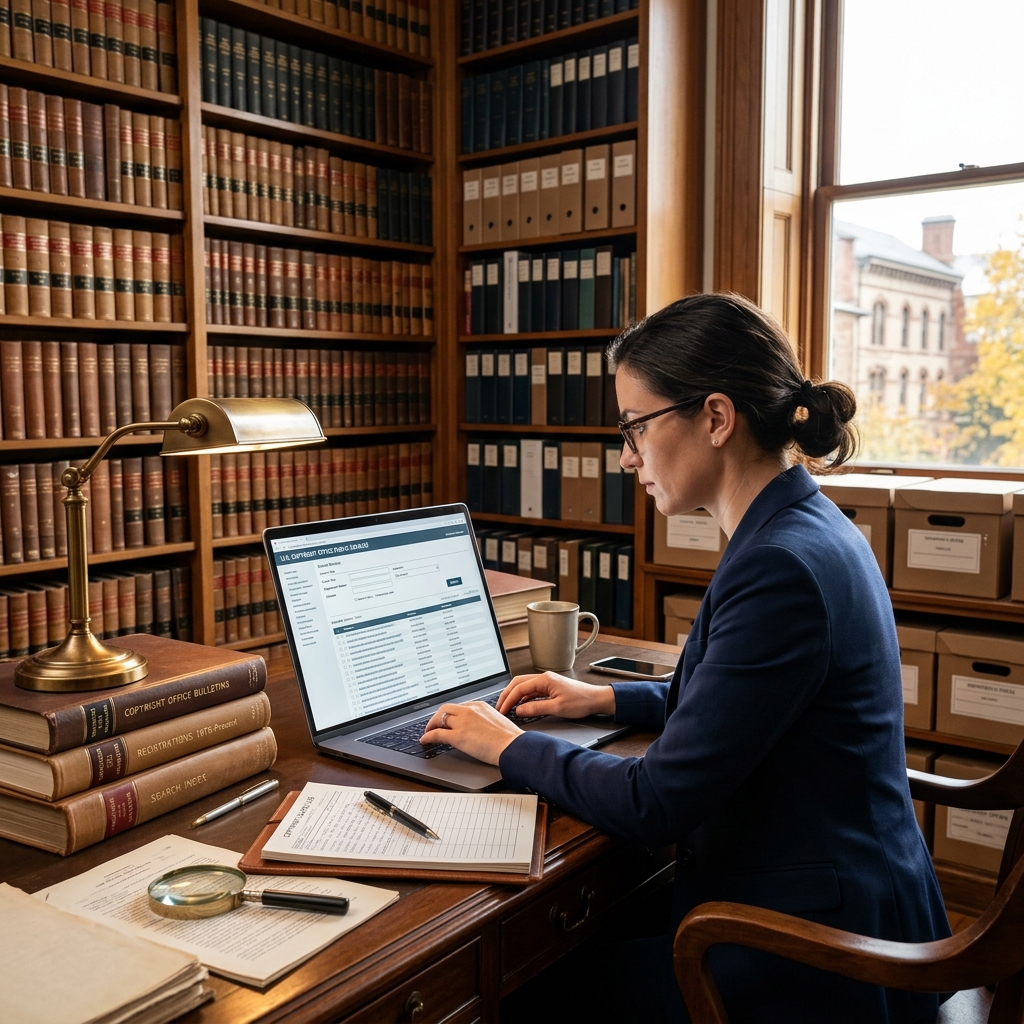
Searching copyright records is often the fastest way to figure out who owns a work, whether it was renewed, and whether it may be in the public domain. The process is easier for modern works than for older ones, but both can be researched with the right records and a clear plan. Public copyright files, Library of Congress catalogs, and historical entry indexes all serve different purposes, so the key is knowing which source matches the time period and question you are trying to answer.
This guide explains how copyright research works, what each major record set can tell you, and how to narrow your search when you only have partial information. It also outlines when it makes sense to use professional help or request a search service instead of doing everything yourself.
Start With the Question You Need to Answer
Before you search any database, define exactly what you want to learn. A copyright search can be used for several different goals, and the best source changes depending on the goal. For example, you may want to know whether a work is protected, who the current claimant is, whether a transfer was recorded, or whether an old registration was renewed.
- If you need to identify an owner, focus on registration data and transfer records.
- If you need to evaluate public domain status, focus on publication date and renewal information.
- If you need general bibliographic details, a Library of Congress catalog search may help you find the author, title, publisher, or subject.
In practice, the first step is usually to gather the basic facts you already know. A title, creator name, approximate publication date, or publisher can dramatically reduce search time and improve accuracy.
Know Which Record Set Fits Your Search
Not all copyright-related records do the same job. The U.S. Copyright Office maintains records tied to registrations, renewals, and recorded documents. The Library of Congress catalog is broader and is often more useful for bibliographic research than for ownership questions. That distinction matters because a searcher who begins in the wrong database can spend hours looking in the wrong place.
| Record source | Best for | Typical use |
|---|---|---|
| Copyright Office records | Ownership, registration, renewal, transfers | Confirming copyright facts about a specific work |
| Library of Congress catalog | Author, title, publisher, subject | Locating a work when details are incomplete |
| Catalog of Copyright Entries | Older copyright entries and renewals | Researching pre-1978 works |
Thinking of the Copyright Office as the copyright-record source and the Library of Congress catalog as a broad bibliographic catalog helps clarify the difference. One tells you about copyright claims; the other helps you identify a work and then move toward the right copyright record.
Use the Online Copyright Records System First
For works registered from January 1978 forward, online searching is usually the most efficient starting point. Those records are available in the Copyright Office’s public records system, which is designed for searching registrations and related recordation data. The system supports searches by common fields such as author, claimant, title, and registration number.
When searching modern records, use the most specific term available. If the title is common, add the creator’s name or another identifying detail. If you know the registration number, that is often the fastest route because it removes ambiguity. Search results may also help you confirm whether a work has related filings such as transfers or other recorded documents.
- Search by title when you have a distinctive work name.
- Search by author or claimant when ownership is your main issue.
- Search by registration number when you already have a specific filing reference.
- Use additional filters or search options when the initial results are too broad.
Because record systems are updated over time, it is wise to verify any result that matters legally or commercially. A single search result may not tell the whole story, especially if ownership has changed or if multiple versions of a work exist.
Research Older Works With Historical Entry Sources
For works published before the modern digital records era, older indexes become important. The Catalog of Copyright Entries is one of the main tools for tracing historical copyright information. It functions as an index to entries made by the Copyright Office and can help you determine whether a copyright was renewed and who the recorded owner was at the time.
This source is especially useful for pre-1978 works because many older records were not originally created in a modern searchable format. In some cases, a physical or scanned copy of the catalog may be the only practical path to finding the relevant registration data. Public libraries and research collections may hold copies or scans that cover specific years.
When working with older materials, expect to gather clues gradually. You may begin with a title search, then identify an author, then confirm the publication year, and finally locate the actual entry. This process is normal for historical research and often requires more than one source.
Use Publication Date to Narrow the Possibilities
The publication date is one of the most useful pieces of information in copyright research. It helps you decide which record set to search and can also guide your public domain analysis. Works published after 1978 are covered by modern online records, while earlier works often require historical indexes or physical archives.
For public domain questions, date is especially important. Under current U.S. copyright rules, works published before 1923 are generally in the public domain. Works published between 1923 and 1963 may still be protected if their copyrights were renewed, and later works are generally safer to assume are still protected unless you have evidence to the contrary.
That does not mean date alone solves the issue. Copyright duration can vary based on factors such as publication status, renewal, author identity, and whether formalities were followed under older law. Still, date is usually the best starting point because it tells you which legal regime likely applies.
Focus on the Right Fields When You Need Ownership Information
If your goal is to identify the current owner or claimant, registration records are usually more useful than general catalog entries. In a registration document, specific fields may indicate who claimed the copyright and whether rights were transferred. That makes the record more valuable than a basic title listing.
When reviewing a registration record, pay attention to claim and transfer details. These fields can show the original claimant, later assignments, and other recorded changes. If a work has changed hands more than once, you may need to follow the chain of ownership across several records.
- Look for the claimant name to identify the original rights holder.
- Check transfer fields to see whether rights were assigned to another party.
- Compare registration data with renewal or later recorded documents when available.
Ownership research is often less about finding a single perfect record and more about assembling a chain of evidence. The more complex the work’s history, the more important it is to document each step carefully.
Combine Library of Congress Research With Copyright Research
A smart search strategy often uses both the Library of Congress catalog and copyright records. The catalog can help you discover bibliographic facts that are not obvious from a copyright database alone. For example, if you only know a subject, an approximate title, or a publisher, the catalog may help you identify the exact work before you search for its copyright entry.
This two-stage approach is especially helpful for older publications, books with common titles, or works published under pseudonyms. Once you identify the likely author or edition in the catalog, you can use that information to search the copyright records more precisely.
In other words, the catalog helps you identify the work; the copyright record helps you confirm the legal status. Used together, they are far more effective than relying on a single search path.
Document Your Search as You Go
Copyright research is much easier to trust when you keep a record of what you searched and what you found. If you later need to justify a decision, locate a record again, or brief a lawyer, your search notes become valuable.
- Write down the exact title or titles you searched.
- Record author names, claimant names, and publishers.
- Note the databases, catalogs, or indexes you used.
- Save registration numbers, renewal details, and any transfer references.
- Capture the date you performed the search in case records change later.
Good documentation also helps you avoid duplicate work. If a search leads to a dead end, your notes will show what has already been tried and what clues remain worth following.
When to Ask for Professional Help
Some copyright searches are straightforward, but others become time-consuming quickly. If the work is old, the title is common, the authorship is unclear, or the ownership chain is complicated, a lawyer or records specialist may save time and reduce risk. Professional help can be especially useful when the result will affect licensing, publishing, litigation, or a commercial release.
The Copyright Office may also conduct searches or provide document-related services for a fee. That option can be useful when you need an official search result and do not have the time or ability to dig through the records yourself. Before choosing that route, make sure you understand the scope of the service, the fee structure, and what information you expect to receive.
Outside help does not replace your own judgment, but it can improve the quality of the search and reduce the chance of overlooking an important record.
Common Mistakes to Avoid
Many search problems come from simple mistakes rather than complex legal issues. A search can fail because the title was entered incorrectly, the wrong date range was used, or the researcher assumed that one record source was enough.
- Do not assume every work is searchable in the same database.
- Do not rely only on a title if you have other identifying information.
- Do not treat an incomplete record as proof that no copyright exists.
- Do not assume an old publication is public domain without checking renewal history and applicable rules.
Copyright records are evidence, not magic answers. The best results come from combining careful search habits with a clear understanding of what each record can and cannot prove.
FAQs
How do I search for a copyright if I only know the title?
Start with the title in the most relevant records system, then narrow the results using the author, claimant, or publication date if the title is common. If the work is older, use historical indexes and catalog records to identify the exact entry before drawing conclusions.
Can I search copyright records for free?
Many online records can be searched without charge, especially modern public records. Some older records, copy requests, or staff-assisted searches may involve fees depending on the service and scope of the request.
What is the fastest way to check whether a work may be public domain?
Start with the publication date and then confirm whether the work falls into a period with different renewal or duration rules. If the work was published before 1923, it is generally public domain in the United States, but later works require closer review.
Do I need a lawyer to search copyright records?
No, but a lawyer or records professional can help when the search is complex or the result matters commercially. Professional assistance is often worthwhile when ownership is disputed or when you need a defensible answer.
What if the record I find does not match what I expected?
Double-check spelling, search variant titles, and look for related filings or transfers. Older records may use different naming conventions, so comparing multiple sources is often necessary before drawing a conclusion.
Practical Search Checklist
A structured checklist makes the process more manageable and reduces the chance of missing something important.
- Identify the work as precisely as possible.
- Gather title, author, publisher, and publication date.
- Search the modern copyright records if the work is post-1978.
- Use historical indexes for older works.
- Review renewal, claimant, and transfer fields where available.
- Document each search step and save the results.
- Escalate to professional help if the record trail is unclear.
With a disciplined approach, copyright searches become much less intimidating. The most effective searches are rarely the broadest ones; they are the ones that use the right source, the right date range, and the right identifying details.
References
- How to Search the Library of Congress Copyright Office — Rocket Lawyer. n.d. https://www.rocketlawyer.com/business-and-contracts/intellectual-property/copyrights/legal-guide/how-to-search-the-library-of-congress-copyright-office
- Searching the Copyright Office and Library of Congress Records — Stanford Libraries, Fair Use Project. n.d. https://fairuse.stanford.edu/overview/copyright-research/searching-records/
- Copyright Registration Searches — Library of Congress. n.d. https://guides.loc.gov/intellectual-property-law/copyright-registration-searches
- Copyright Public Records Portal — U.S. Copyright Office. n.d. https://www.copyright.gov/public-records/
- U.S. Copyright Office — U.S. Copyright Office. n.d. https://www.copyright.gov/
- U.S. Copyright Office Replaces Online Public Catalog with Copyright Public Records System — Library of Congress Newsroom. 2024-01-24. https://newsroom.loc.gov/news/u.s.-copyright-office-replaces-online-public-catalog-with-copyright-public-records-system/s/4cc10c12-c24e-4014-b798-3fc0fa3258f7
Similar Articles








Read full bio of Sneha Tete




