
Disaster Fraud Reporting Guide: What To Report And How To File
A practical guide to recognizing, reporting, and redirecting disaster-related fraud complaints.
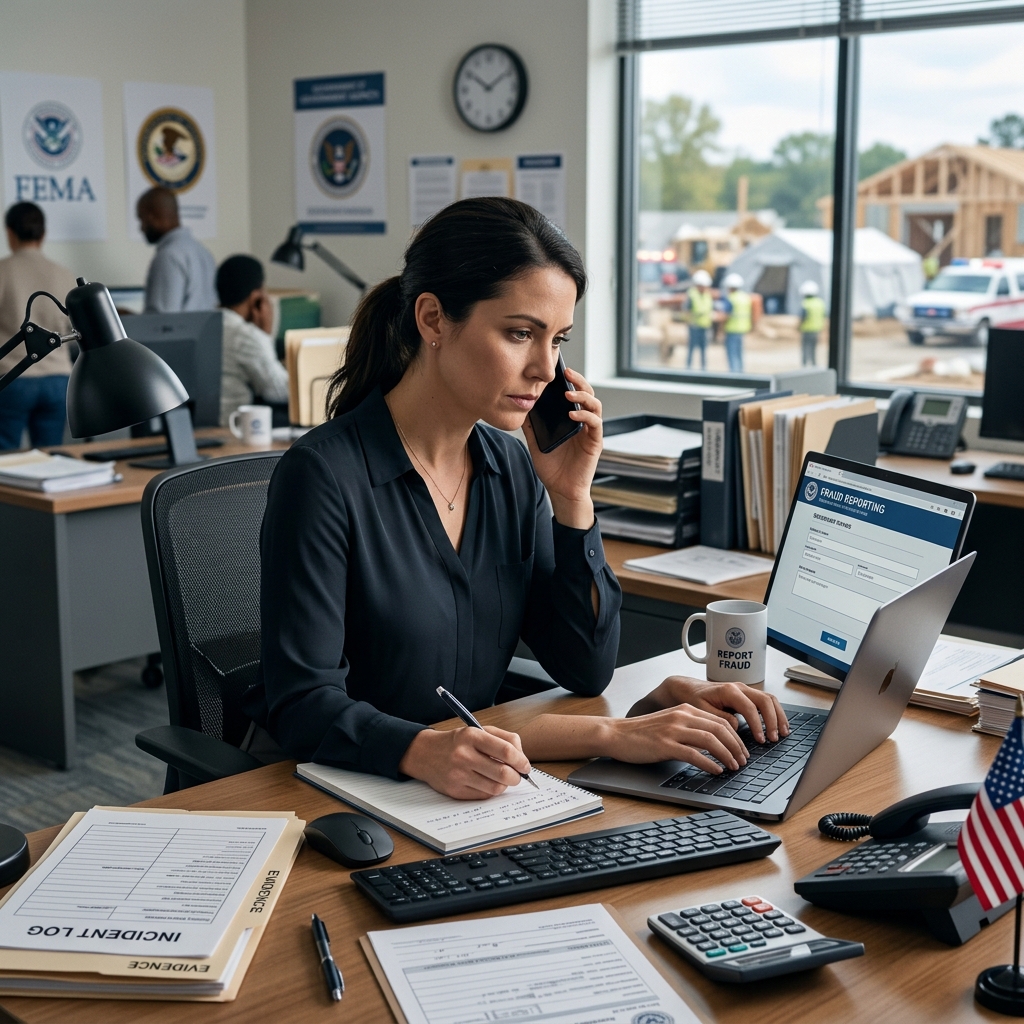
Disasters create urgency, confusion, and financial strain, and those conditions often give scammers room to operate. A clear reporting process matters because fraud related to emergencies can involve fake charities, price gouging, identity theft, improper benefit claims, and other forms of abuse that harm people who are already under pressure.
This guide explains what disaster fraud is, how it is typically reported, and how to direct a complaint to the right authority when the issue involves emergency relief, medical supplies, insurance, or online scams. It also outlines common warning signs and practical steps people can use to reduce risk before and after a disaster.
What counts as disaster fraud
Disaster fraud is a broad term for dishonest conduct tied to a natural or man-made emergency. According to the Department of Justice, complaints may involve fraud, waste, abuse, or mismanagement connected to disasters and other emergencies, including criminal activity related to COVID-19.
In practice, that can include false claims for relief money, misuse of federal assistance, deceptive repair offers, fake contractors, and attempts to take advantage of shortages. It can also include schemes aimed at people seeking help from government programs after a crisis.
Common situations that should be reported
Some complaints belong in a disaster fraud report because they are directly tied to an emergency. Others should be sent elsewhere to avoid delays. The Department of Justice identifies several types of conduct that fit the disaster-fraud category, especially when they involve federal assistance or emergency conditions.
- Fraud involving natural disasters, severe weather, or other emergency events.
- Criminal conduct linked to disaster response or recovery programs.
- Hoarding or price gouging of medical items such as masks, gloves, respirators, ventilators, disinfecting devices, or sterilization services.
- Fraud involving federal assistance for individuals, businesses, or government entities.
- COVID-19-related criminal activity, including schemes that rely on emergency relief or public-health confusion.
When another agency is the better choice
Not every emergency-related complaint belongs with a disaster fraud program. The Justice Department directs some issues to other offices depending on the subject matter, which is important because sending a complaint to the wrong place can slow down action.
| Issue | Where it should go |
|---|---|
| Hoarding or price gouging of non-medical items | Local law enforcement or the state attorney general’s office |
| Medicare or Medicaid fraud, including coronavirus testing or treatment fraud | Department of Health and Human Services Office of Inspector General |
| Fraud related to a U.S. Treasury COVID-19 relief check | Treasury Inspector General for Tax Administration |
| Online fraud and other cybercrimes | FBI Internet Crime Complaint Center |
| FEMA fraud unrelated to disaster fraud | Department of Homeland Security Office of Inspector General |
This type of routing matters because disaster fraud is only one part of a larger fraud-reporting ecosystem. Matching the complaint to the right agency improves the chance that it reaches investigators with the right authority.
How people usually recognize a scam after a disaster
Fraud after a disaster often looks convincing because scammers exploit urgency and unfamiliarity. Guidance from the Federal Housing Finance Agency notes that people should be cautious about imposters posing as FEMA representatives, offers to help with mortgage payments for a fee, and suspicious contacts claiming to represent banks, landlords, or management companies.
Red flags often include requests for upfront money, pressure to act immediately, refusal to provide verifiable contact information, or claims that seem designed to bypass normal procedures. In emergency settings, the safest approach is to verify identity through a trusted channel before sharing information or making payments.
- Unsolicited calls, emails, or texts after a disaster.
- Requests for personal data that should already be on file with the agency.
- Pressure to pay for aid, repairs, or loan relief right away.
- Offers that sound too fast or too easy compared with official assistance programs.
- Claims of affiliation with FEMA, a bank, a landlord, or a mortgage company that cannot be verified.
Why reporting matters
Reporting disaster fraud is not only about recovering losses. It also helps investigators identify patterns, stop repeat offenders, and protect future victims. The Justice Department describes the NCDF as a place designed to improve the detection, prevention, investigation, and prosecution of criminal conduct tied to disasters and emergencies.
Even when a complaint does not result in immediate action, it may still help law enforcement connect one suspicious event to a broader scheme. That is especially true in large emergencies where fraud can spread quickly across neighborhoods, states, and online platforms.
What information helps a complaint
A strong report usually includes enough detail for investigators to understand what happened, who may have been involved, and why the conduct seems suspicious. While every case is different, the most useful complaints tend to be specific and organized.
- Names of people or businesses involved, if known
- Dates, locations, and times of the incident
- Descriptions of emails, calls, texts, websites, or advertisements
- Copies of receipts, contracts, screenshots, or messages
- Any government program, insurer, or lender connected to the issue
- A clear explanation of what made the conduct look fraudulent
When possible, it helps to preserve original records rather than only summaries. Screenshots, call logs, bank statements, and message threads can be important if a complaint becomes part of a broader investigation.
How the reporting process works in practice
The reporting process is designed to route information, not necessarily to provide instant resolution. The DOJ materials indicate that the NCDF complaint system was intended for complaints related to disasters and emergencies, and related guidance emphasizes directing matters to the proper office based on the kind of fraud involved.
That means the first step is identifying the category of the problem. If it concerns disaster assistance, emergency price gouging of medical products, or fraud tied to a federal relief program, a disaster-fraud report may be appropriate. If the matter instead concerns healthcare billing, cybercrime, or non-medical consumer fraud, another agency may be the correct destination.
How to protect yourself before fraud happens
Prevention becomes especially important during emergencies because scammers depend on confusion. The most effective defense is to verify every offer, request, or identity claim before sending money or personal information.
- Use official phone numbers from recent statements or trusted government sites when checking a claim.
- Confirm that a person claiming to represent FEMA or another agency is legitimate.
- Avoid paying for emergency assistance through informal or unverified channels.
- Be cautious with repair workers or relief contractors who appear immediately after a disaster.
- Keep copies of insurance, mortgage, and relief documents in a secure place.
These steps do not eliminate all risk, but they reduce the chance that a scammer can exploit an already difficult situation. Careful verification is especially important when money, housing, or medical supplies are involved.
Frequently asked questions
What is the National Center for Disaster Fraud?
It is a Justice Department complaint channel created to handle fraud-related reports connected to disasters and emergencies, including those involving federal assistance and certain emergency scams.
Can I report price gouging through a disaster fraud channel?
Yes, if the issue involves medical items or services tied to a disaster or public-health emergency. For non-medical items, the DOJ directs people to local law enforcement or the state attorney general instead.
Should I report online scams there?
Usually not. The DOJ guidance points online fraud and other cybercrimes to the FBI’s Internet Crime Complaint Center rather than the disaster-fraud route.
What if I am not sure which agency should get the complaint?
Start by identifying the type of fraud and the program or product involved. If the issue is tied to disaster assistance or emergency relief, a disaster-fraud report may be appropriate; if it involves Medicare, Treasury checks, cybercrime, or unrelated FEMA issues, another agency is likely the better choice.
Does reporting guarantee an investigation?
No single complaint guarantees immediate action, but detailed reports can support broader investigations and help law enforcement see patterns across multiple victims.
Why clear routing is important for the public
Disaster-related scams are often time-sensitive, and the harm can spread fast when people do not know where to report. Clear routing prevents complaints from getting lost and helps agencies focus on the matters they are authorized to handle.
For the public, the practical takeaway is simple: identify the type of fraud, gather basic evidence, and send the complaint to the most relevant authority. That approach is more effective than using a one-size-fits-all report for every emergency-related problem.
When a disaster strikes, people often need help quickly. Scammers know that, which is why reporting systems and prevention guidance are most useful when they are straightforward, specific, and easy to follow.
References
- NCDF Disaster Complaint Form — U.S. Department of Justice. 2026-07-10. https://www.justice.gov/archives/disaster-fraud/ncdf-disaster-complaint-form
- Closing the National Center for Disaster Fraud — U.S. Department of Justice. 2026-03-31. https://www.justice.gov/opa/pr/closing-national-center-disaster-fraud
- National Center for Disaster Fraud Hotline — Vermont 211 / United Way. 2026-07-10. https://search.vermont211.org/search/b6cdaf7d-f8ab-5430-b196-a1ebbaf8d88a?entry=search_card
- Natural Disaster-Related Fraud Prevention Tips and Resources — Federal Housing Finance Agency. 2025-07-10. https://www.fhfa.gov/programs/fraud-prevention/natural-disaster
- COVID-19 Anti-Fraud Resources — National Health Care Anti-Fraud Association. 2026-07-10. https://www.nhcaa.org/covid-19-anti-fraud-resources/
Similar Articles








Read full bio of medha deb




