
How to Report a Federal Crime in the United States
A practical guide for victims, witnesses, and community members to safely report suspected federal crimes and civil rights violations.
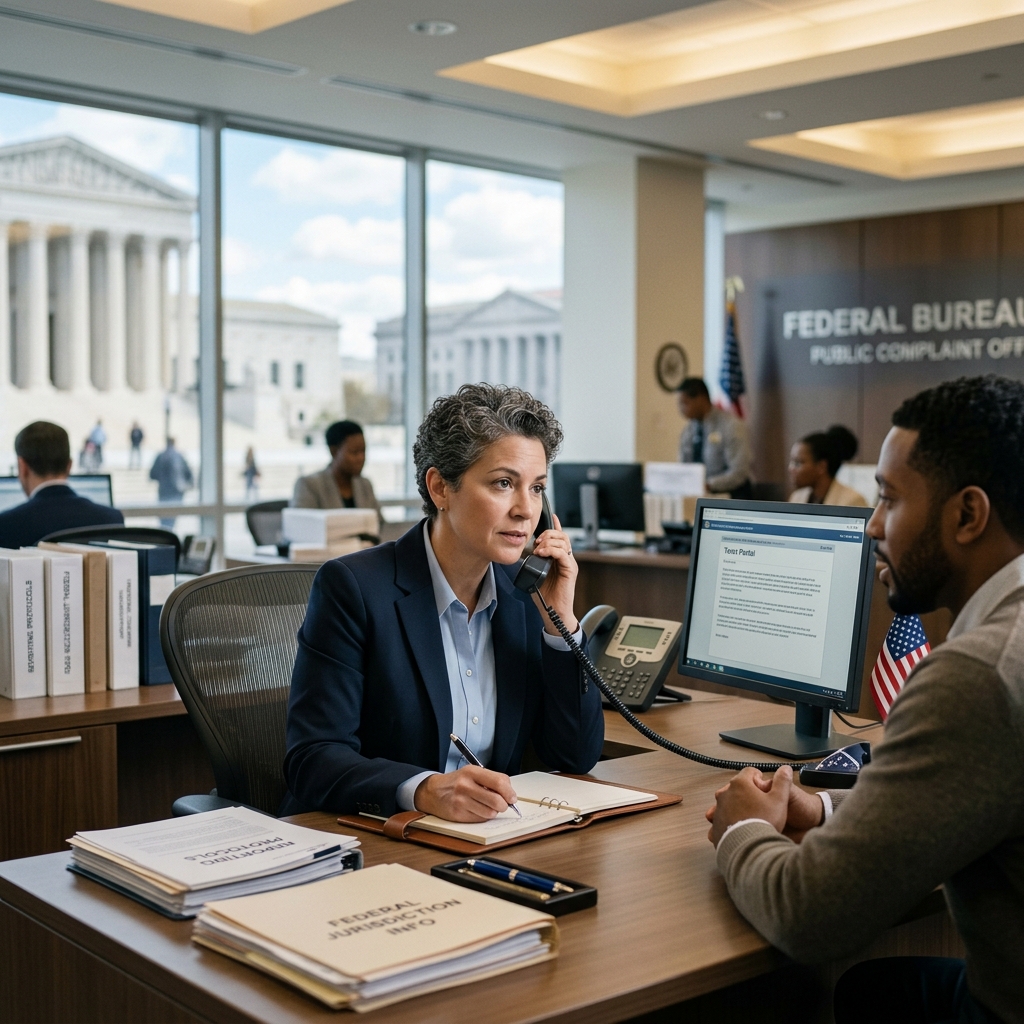
Reporting a suspected federal crime is a critical way the public helps law enforcement protect communities, uphold civil rights, and enforce federal law. Many people are unsure where to start, which agency to contact, or what information they should provide. This guide explains how federal crime reporting works in the United States, how to prepare a clear complaint, and how to submit it to the appropriate federal authority.
This article is designed for victims, witnesses, advocates, and anyone who believes a federal law may have been violated. It highlights the role of the U.S. Attorney’s Offices, the Department of Justice (DOJ), the Federal Bureau of Investigation (FBI), and specialized complaint portals that handle different types of cases, including civil rights and cybercrime.
Understanding What Counts as a Federal Crime
Not every crime in the United States is handled by federal authorities. Most everyday offenses, such as burglary or local assault, are investigated by city or county police and prosecuted in state courts. Federal crimes typically involve conduct that:
- Violates specific federal statutes (laws passed by Congress).
- Crosses state or national borders, such as interstate fraud or trafficking.
- Targets the federal government, federal programs, or federal property.
- Impacts national security, civil rights, or major federal interests.
Common categories of federal crime include:
- Public corruption involving federal officials or programs.
- Large-scale fraud, such as health care fraud, securities fraud, or disaster fraud affecting federal funds.
- Civil rights violations, including hate crimes, unlawful discrimination, and official misconduct under color of law.
- Cybercrime and internet-enabled fraud affecting victims in multiple states or abroad.
- Terrorism and threats to national security.
If you are unsure whether an incident involves federal law, you can still report it through official federal channels. Federal agencies will determine whether they have jurisdiction and, if necessary, refer the matter to appropriate state or local authorities.
When to Call 911 Instead of Filing a Federal Complaint
Federal complaint processes are not designed for emergencies. If anyone is in immediate danger, or if a crime is actively occurring, you should contact local emergency services right away by dialing 911 or your local police non-emergency number.
Use 911 or local law enforcement when:
- There is a present threat to life, health, or safety.
- Violence, domestic abuse, or serious property damage is occurring right now.
- A child or vulnerable person is in immediate danger.
- There is an active fire, explosion risk, or other urgent physical hazard.
Once the immediate threat is controlled, you can later submit a federal tip or complaint if you believe federal law has been violated—for example, in a hate crime or a civil rights abuse by an official.
Key Federal Reporting Channels
The U.S. federal government provides multiple ways to report crimes and misconduct. Choosing the right channel helps ensure your complaint reaches the appropriate investigators quickly.
| Authority / Portal | Primary Purpose | Typical Use Cases |
|---|---|---|
| FBI Tip Form (tips.fbi.gov) | Collects tips on federal crimes and threats to national security. | Suspected terrorism, serious federal crimes, organized criminal activity, major fraud. |
| Internet Crime Complaint Center (IC3) | Central hub for reporting cyber-enabled crime and online fraud. | Phishing, online scams, business email compromise, ransomware, identity theft. |
| DOJ Civil Rights Reporting Portal | Receives complaints of civil rights violations. | Unlawful discrimination, hate crimes, police misconduct, violations under color of law. |
| U.S. Attorney’s Office Citizen Complaint Forms | Local intake for federal crime and civil rights complaints in each district. | Community tips on federal crimes, civil rights concerns, vulnerable community issues. |
| National Center for Disaster Fraud | Handles fraud related to disasters and emergency relief programs. | False claims for disaster assistance, fraud involving emergency funds. |
Reporting a Federal Crime to the FBI
The FBI is the primary federal agency for investigating many serious federal offenses, including terrorism, cybercrime, public corruption, and major fraud. The FBI offers several ways to submit information:
- Electronic Tip Form: The FBI’s online tip form allows you to report suspected federal crimes and terrorist activity from anywhere in the world.
- Local FBI Field Offices: Every state and many major cities have an FBI field office that can receive tips and complaints by phone or in person.
- Call 1‑800‑CALL‑FBI: This national hotline is used for select major cases and for reporting certain threats and suspicious activity.
When contacting the FBI, you should be prepared to provide:
- A clear description of what happened and why you believe it may be a federal crime.
- Dates, times, locations, and the names or descriptions of people or organizations involved.
- Any digital evidence, such as emails, screenshots, transaction records, or social media posts.
- Whether anyone is currently in danger or whether local police have already been notified.
The FBI uses submitted information for investigative and intelligence purposes, which can include opening new investigations, supporting ongoing cases, or identifying broader crime trends.
Reporting Cybercrime and Online Fraud
Cybercrime often crosses state and national borders, making it particularly suitable for federal investigation. The Internet Crime Complaint Center (IC3) is the primary intake point for cyber-enabled crime reports.
Use IC3 when you experience:
- Online scams such as fake investment offers or romance scams.
- Business email compromise, invoice fraud, or wire transfer fraud.
- Phishing attacks and malware or ransomware incidents.
- Unauthorized access to online accounts or theft of digital assets.
IC3 encourages victims to report incidents as quickly as possible because rapid reporting can sometimes help law enforcement work with financial institutions to recover lost funds and limit further damage.
Before filing an IC3 complaint, gather:
- Relevant email addresses, website URLs, and communication logs.
- Transaction details, including amounts, dates, and accounts involved.
- Copies of any contracts, invoices, or agreements.
- Technical details if available, such as IP addresses or system logs.
Reporting Civil Rights Violations and Hate Crimes
The Department of Justice enforces federal civil rights laws that protect individuals from discrimination, hate crimes, and abuses of authority under color of law. If you believe your civil rights have been violated, you can submit a complaint through the Civil Rights Reporting Portal or directly to a U.S. Attorney’s Office that has a civil rights section.
Examples of issues appropriate for civil rights reporting include:
- Violence or threats motivated by race, religion, national origin, sexual orientation, gender identity, or disability (hate crimes).
- Discriminatory treatment in housing, employment, education, or public accommodations under federal law.
- Police misconduct or excessive force, including violations of constitutional rights under color of law.
- Interference with voting rights or participation in elections.
You may also submit civil rights complaints to the U.S. Attorney’s Office in your federal district, using designated forms or contact information for its Civil Rights Section.
Using U.S. Attorney’s Office Citizen Complaint Procedures
Each federal judicial district has a United States Attorney’s Office, which serves as the local federal prosecutor for that area. Many offices provide citizen complaint procedures to allow the public to report suspected federal crimes, civil rights concerns, and issues affecting vulnerable communities.
Although details vary by district, typical features of these complaint procedures include:
- Downloadable complaint forms for general federal crime reports.
- Separate forms or contact points for civil rights complaints.
- Dedicated processes for vulnerable communities, such as those at increased risk of exploitation or abuse.
- Submission options by email, fax, or U.S. mail, often to a specific coordinator or section.
Before submitting a citizen complaint to a U.S. Attorney’s Office, review that office’s official website to identify:
- Which form matches your situation (general crime, civil rights, vulnerable communities, etc.).
- The correct email address, mailing address, or fax number for the complaint.
- Any instructions on supporting documentation and confidentiality.
- Whether an alternative phone line is available if you cannot access the form.
Preparing a Clear and Useful Complaint
A well-organized complaint makes it easier for federal authorities to understand your concerns and determine appropriate next steps. While each agency has its own forms, the following principles generally apply:
Information to Include
- Who: Identify individuals, businesses, or organizations involved. Include titles or roles if known.
- What: Describe the conduct in plain language. Explain what happened, what laws you think may have been violated, and why you believe the matter is serious.
- When: Provide dates, times, and how long the behavior has been occurring.
- Where: Specify locations, including cities, states, and online platforms or domains.
- How: Explain how the conduct harmed you or others, including financial loss, physical injury, or rights violations.
- Evidence: List and, when allowed, attach documents, screenshots, recordings, or other supporting materials.
Best Practices for Complaint Submission
- Use factual, specific language instead of general accusations.
- Avoid exaggeration; focus on what you know personally or can document.
- Do not send original documents; provide copies unless an agency instructs otherwise.
- Keep a copy of your submitted complaint and any reference numbers you receive.
- Be honest about uncertainties; if you are not sure about a detail, say so explicitly.
Protecting Yourself and Others When Reporting
Reporting a suspected federal crime can feel intimidating, especially if you worry about retaliation or privacy. Federal agencies take safety and confidentiality seriously, although the level of anonymity available may differ depending on the type of complaint and legal requirements.
Consider the following safeguards:
- If you fear physical retaliation, discuss safety concerns with local law enforcement and victim assistance programs.
- Ask the receiving agency how your information will be used and whether it may be shared with other authorities.
- Use secure communication methods for sensitive information, especially in cybercrime or organized crime cases.
- In online tip forms, note any particular vulnerabilities, such as disability or immigration concerns, that may affect your safety or needs.
Federal agencies often work with victim support services and community organizations to help protect those who come forward, especially in civil rights, trafficking, and vulnerable communities cases.
Frequently Asked Questions (FAQ)
Do I have to be certain something is a federal crime before I report it?
No. You do not need to be certain about legal classifications. If you believe conduct is serious, harmful, or may involve federal law, you can submit a complaint or tip. Federal agencies will decide whether they have jurisdiction and may refer matters to state or local authorities when appropriate.
Can I report anonymously?
Many federal reporting channels allow you to submit information without identifying yourself, particularly online tip forms and hotlines. However, providing contact information often helps investigators follow up and may improve the chances of effective action. Some civil rights complaints and formal case participation may require identifiable information.
Will I be informed of the outcome of my complaint?
Due to privacy laws, operational security, and ongoing investigations, federal agencies may not be able to share detailed outcomes of your report. In many cases, you may receive confirmation that your complaint was received, but you might not be notified of investigative steps or final decisions.
What if the incident also violates state law?
Many events violate both state and federal law. You can contact local police for immediate response and also submit a federal complaint when appropriate. Federal and state authorities frequently coordinate or refer cases to one another to ensure the most effective response.
Is evidence required for me to file a complaint?
You are not required to have complete evidence before reporting. Your firsthand account and any documents you can provide are typically enough to start the evaluation process. Investigators decide whether additional evidence is needed and how to obtain it lawfully.
References
- REPORT A FEDERAL CRIME — U.S. Attorney’s Office, Central District of California, U.S. Department of Justice. 2023-11-15. https://www.justice.gov/usao-cdca/report-a-federal-crime
- Report a Crime or Submit a Complaint — U.S. Department of Justice, Action Center. 2024-02-01. https://www.justice.gov/action-center/report-crime-or-submit-complaint
- The Cyber Threat — Federal Bureau of Investigation. 2024-03-10. https://www.fbi.gov/investigate/cyber
- Report a crime — USAGov, U.S. General Services Administration. 2023-08-30. https://www.usa.gov/report-crime
- Contact Us — Federal Bureau of Investigation. 2024-01-05. https://www.fbi.gov/contact-us
- Internet Crime Complaint Center (IC3) — Federal Bureau of Investigation. 2024-04-20. https://www.ic3.gov/
- Report Hate Crimes to the FBI — Federal Bureau of Investigation. 2024-09-30. https://www.fbi.gov/video-repository/report-hate-crimes-to-the-fbi/view
Similar Articles








Read full bio of Sneha Tete




