
How to Redevelop Historic Property Legally
A practical guide to approvals, incentives, and local rules for historic redevelopment.
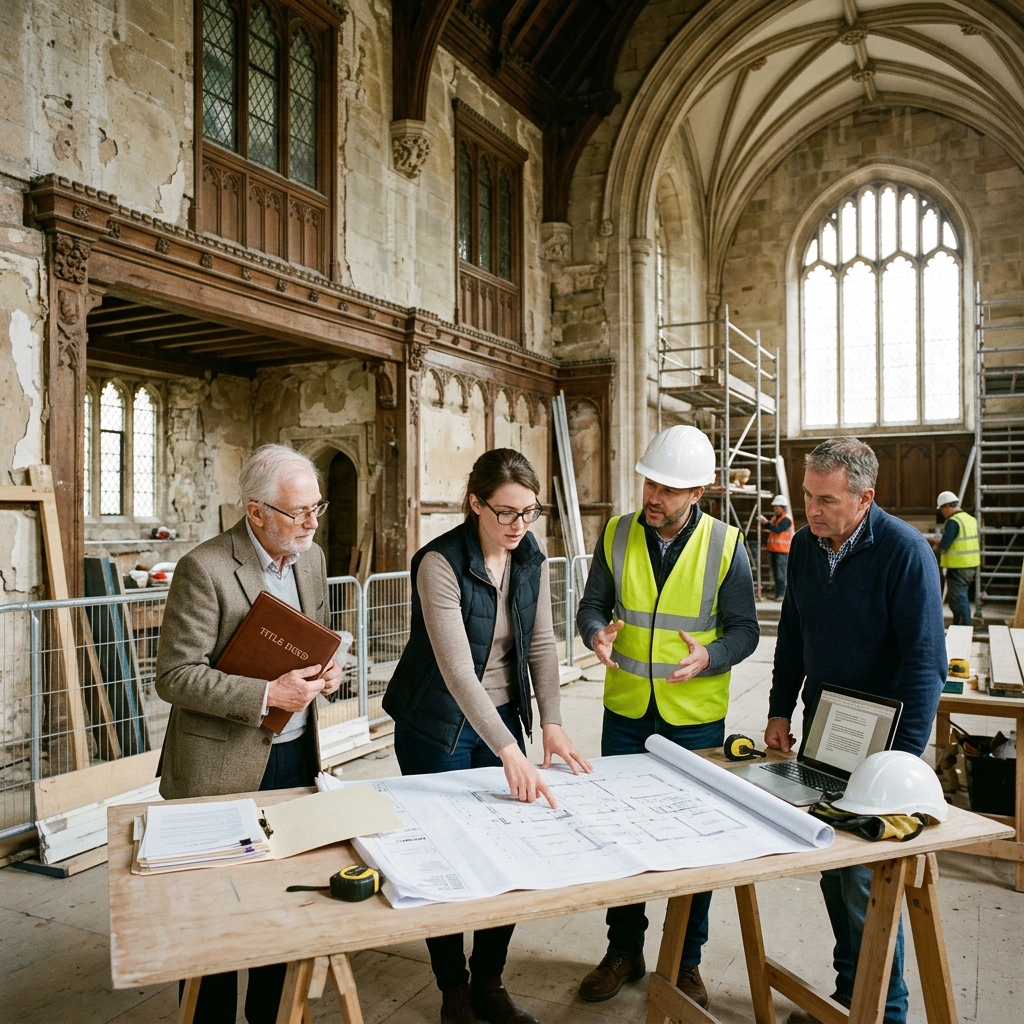
What Makes Historic Redevelopment Different
Redeveloping a historic building is not the same as renovating an ordinary property. A project can involve federal preservation rules, state incentives, and local design controls that shape what owners may change and how they must document the work. In Ohio, historic redevelopment is often encouraged through tax incentives, but those incentives usually come with review requirements and compliance obligations.
The key legal idea is that a property may be considered “historic” at one level of government but not at another. A building can be listed on a national register, recognized by a state program, or designated by a city or village under a local preservation ordinance. Each layer can affect the project differently, so the first step is understanding which rules actually apply.
Start by Identifying Every Preservation Overlay
Before sketching plans or applying for financing, an owner should determine whether the building is subject to federal, state, or local preservation controls. National recognition can make a project eligible for tax credits, but local designation is often the source of direct restrictions on design and demolition.
- Check whether the property is individually listed on the National Register of Historic Places.
- Confirm whether it contributes to a historic district, which may matter even if the building itself is not individually listed.
- Review city or county ordinances to see whether the parcel lies within a designated historic district or landmark area.
- Ask whether the property has recorded preservation easements, deed restrictions, or prior approval conditions.
That initial review matters because the legal consequences can differ sharply. A federally recognized historic property may be eligible for financial incentives, while a locally designated landmark may require design review before any exterior changes can begin.
Understand the Difference Between Incentives and Restrictions
Historic redevelopment law does two things at once. It can reward rehabilitation through credits or grants, and it can also limit demolition, reconstruction, or exterior alteration. The same project may therefore be both encouraged and regulated.
At the federal level, ownership alone does not usually strip a private owner of basic property rights. However, if a project uses federal funds, licenses, or approvals, preservation review may be triggered. That means public financing or permitting can bring additional scrutiny even when the owner is not voluntarily seeking a preservation benefit.
At the state level in Ohio, redevelopment is supported through tax credit programs that are designed to make rehabilitation financially feasible. Those programs are typically paired with a requirement that the building qualify as historic and that the proposed work meet preservation standards.
Why Local Ordinances Matter Most in Practice
Local historic preservation ordinances are often the most immediate source of legal control. Ohio communities may adopt these rules under home-rule authority to protect districts, buildings, or archaeological sites. In practice, a local ordinance can regulate exterior changes more closely than national listing alone.
Municipalities usually create a review body, often called a landmarks commission or design review board, to evaluate proposed work. That body may decide whether changes preserve the historic character of a structure or district. In many jurisdictions, the owner must obtain approval before making alterations, removing features, or starting new construction within the protected area.
Some local laws also require owners to maintain certain historic characteristics. If a decorative cornice, window type, facade material, or similar feature has deteriorated, the commission may require repair rather than replacement. Depending on the ordinance, the board may also impose penalties for unapproved work.
Know What Review Boards Can and Cannot Control
Historic review is usually focused on exterior appearance and architectural integrity. Local preservation rules generally do not override health and safety codes, building codes, or other mandatory legal requirements. That means a project may still need to comply with fire safety, accessibility, structural, and environmental laws even if the design is approved under preservation standards.
Design review boards typically concentrate on visible changes such as:
- Facade alterations
- Window and door replacements
- Roofline changes
- Demolition or partial demolition
- New additions
- Site changes that affect the historic setting
Interior work is often less regulated unless the local ordinance specifically extends to it or the interior contains protected elements. For most projects, though, the primary legal focus is on what the public can see from the street or within the district.
Plan for Approval Before Construction Begins
One of the most common mistakes in historic redevelopment is treating preservation review as an afterthought. In many cities, no permit will be issued until the owner obtains a certificate of appropriateness or a similar approval. That document can be just as important as a building permit itself.
Applications usually require detailed materials so the review body can assess the proposal properly. A strong submission often includes drawings, photos, site plans, material samples, and a clear explanation of the proposed work. If demolition is involved, the submission may also need condition reports, photographs of existing features, alternatives to demolition, and plans for what will replace the structure or element being removed.
Because the review process can take time, owners should align preservation review with financing, design, and permitting schedules. Waiting too long can delay closing, construction, or grant disbursement.
Use the Right Preservation Standards From the Start
Local boards and state programs often rely on established rehabilitation standards to evaluate whether proposed work is appropriate. Those standards are intended to preserve historic character while still allowing practical use of the building. They usually favor repair over replacement, compatible additions, and reversible interventions when possible.
From a legal and planning perspective, the best projects are those that balance old and new rather than forcing one to erase the other. Developers should think about scale, materials, rooflines, fenestration patterns, and the relationship between any new addition and the original structure. A project that appears modern but respectful is often more likely to receive approval than one that tries to imitate history too closely or overwhelm it.
Choose the Right Redevelopment Strategy
There is no single way to reuse a historic property. The best strategy depends on the building’s condition, location, market demand, and regulatory status. Adaptive reuse is often the most practical option because it gives an old structure a new purpose without discarding the architectural value that makes it worth preserving.
| Strategy | How it works | Why it is useful |
|---|---|---|
| Adaptive reuse | Converts an old building for a new use while retaining significant historic features. | Supports financial viability and conservation at the same time. |
| Phased rehabilitation | Completes the project in stages to manage cost and approvals. | Helps owners prioritize urgent stabilization before full restoration. |
| Context-sensitive infill | Adds new construction that complements the historic environment. | Allows expansion without undermining historic streetscapes. |
| Public-private partnership | Uses collaboration with local government or nonprofit partners. | Can improve funding access and reduce political friction. |
Check the Financial Tools Available in Ohio
Ohio offers incentives intended to stimulate private redevelopment of historic buildings. These incentives can be central to a project’s financial model because rehabilitation work is often more expensive than conventional renovation. Tax credits may help offset some of the cost, especially when original materials must be repaired or specialty craftsmen are required.
State and federal programs generally require the property to qualify under historic-preservation criteria and the work to meet rehabilitation standards. In many cases, the building must be income-producing or otherwise meet program-specific requirements. Applicants should also expect documentation rules, review deadlines, and proof that the work aligns with preservation goals.
Because these programs change over time, owners should confirm eligibility early and coordinate with tax and legal advisors before making commitments. A project can become financially unworkable if the owner assumes a credit will be available and later learns that the building or use does not qualify.
Build Community Support Early
Historic redevelopment projects often succeed when owners engage the surrounding community before the formal approval process becomes contentious. Neighbors, preservation advocates, and local officials may all influence whether a plan moves smoothly through review. Early outreach can reduce surprises and create space for design changes before positions harden.
Community engagement does not mean every concern must be accepted. It means that the owner or developer gathers feedback, explains the project’s goals, and shows how the redevelopment will preserve important features while improving usability. A clear story about preservation and reinvestment can make a major difference, especially in districts where public sentiment strongly favors historic character.
Prepare for Enforcement and Appeals
Historic ordinances are only effective if they include enforcement tools. Depending on the city, a violation may lead to fines, stop-work orders, civil remedies, or denial of future approvals. In some places, a commission may require the owner to reverse unapproved work or bring a project back into compliance.
Owners should also understand the appeals process before a dispute arises. If a design review board denies an application, the ordinance may allow an appeal to another municipal body or a court. The specific route depends on local law, which is why legal review of the ordinance itself is important before the project advances too far.
Common Mistakes That Slow Historic Projects
- Starting demolition or exterior work before securing preservation approval.
- Assuming national historic listing alone determines the rules.
- Ignoring local design standards until after plans are finalized.
- Replacing historic features when repair would have been acceptable.
- Overlooking compatibility issues between new additions and the original building.
- Failing to coordinate tax-credit deadlines with construction schedules.
A project team that anticipates these issues can save time and cost. Legal, architectural, and financial planning should move together rather than in isolation.
When to Involve Counsel
Attorneys are especially valuable when a project includes multiple layers of review, tax credits, public funding, or disputed design requirements. Legal counsel can interpret ordinances, identify approval sequences, and help structure contracts so that preservation obligations are clearly assigned among owners, contractors, and consultants.
Counsel can also help negotiate with local boards when a proposed change is essential to the project but may raise preservation concerns. In a redevelopment context, the goal is usually not to avoid rules but to design a compliant project that still makes economic sense.
Frequently Asked Questions
Do I need approval to make any change to a historic property?
Not always. The answer depends on the level of historic designation and the local ordinance. Many rules focus on exterior changes, while interior work may be less restricted unless specifically protected.
Can I demolish a historic building if I own it?
Ownership does not automatically guarantee demolition rights. Local ordinances may require review, documentation, and approval before demolition can occur, especially in a designated district or landmark area.
Are historic tax credits automatic?
No. They usually require the property to qualify and the rehabilitation to satisfy program standards. Documentation and approval are often required before credits can be claimed.
Does preservation law override safety codes?
No. Historic preservation rules generally do not replace health, life-safety, accessibility, or building code requirements. A project must satisfy both sets of obligations.
What is the safest first step in a historic redevelopment project?
The safest first step is to identify every applicable local, state, and federal rule before finalizing plans. Early legal and design review reduces the risk of delays and rework.
References
- How To Legally Redevelop a Historic Property — Super Lawyers. 2026-07-10. https://www.superlawyers.com/resources/real-estate/ohio/how-to-legally-redevelop-a-historic-property/
- Local Historic Preservation Ordinances — Ohio History Connection. 2026-07-10. https://www.ohiohistory.org/preserving-ohio/certified-local-governments/local-historic-preservation-ordinances/
- Ohio Historic Preservation Tax Credit Program — Ohio Department of Development. 2026-07-10. https://development.ohio.gov/community/redevelopment/ohio-historic-preservation-tax-credit-program
- Funding Available to Help Preserve, Restore Historic Buildings in Ohio — Ohio Department of Development. 2025-01-31. https://content.govdelivery.com/accounts/OHDOD/bulletins/3cf195a
- Historic Tax Credits — Heritage Ohio. 2026-07-10. https://heritageohio.org/historic-tax-credits/
Similar Articles








Read full bio of Sneha Tete


