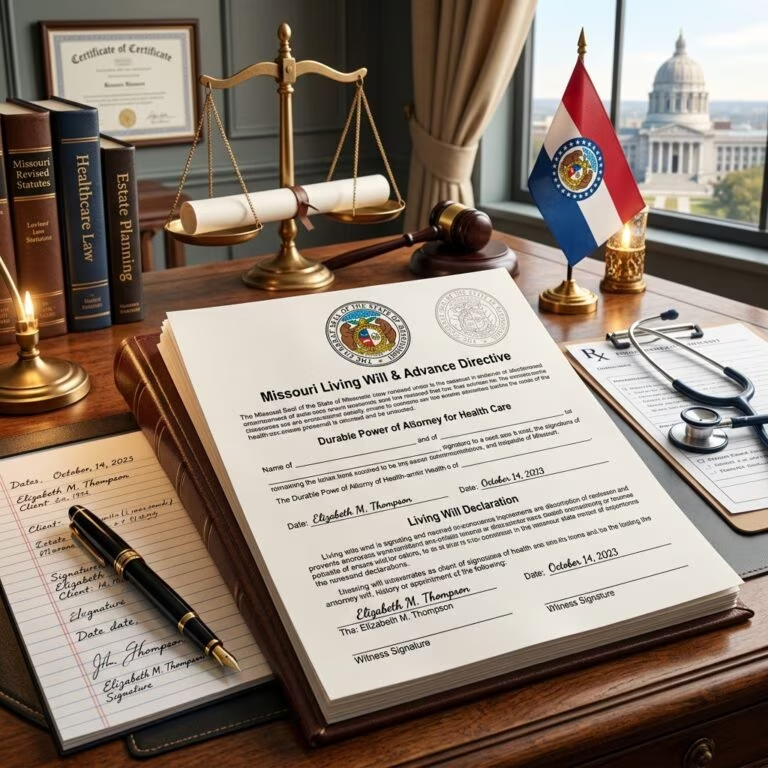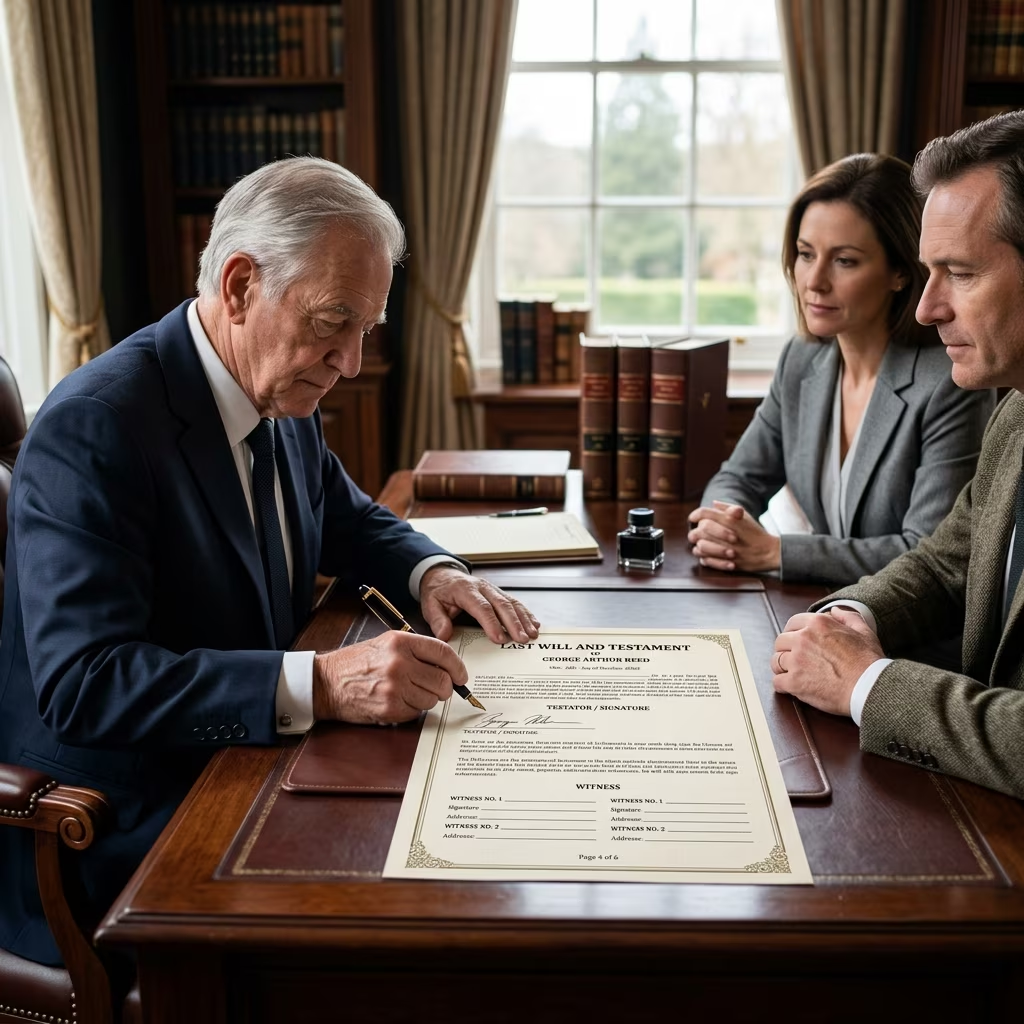
Signing and witnessing a will may seem like a simple formality, but it is one of the most critical steps in making your estate plan legally effective. A carefully drafted will can still fail if it is not signed and witnessed correctly, potentially leading to disputes, delays in probate, or an outcome that does not match your intentions.
This guide explains, in practical terms, how to sign and witness a will properly, who can act as witnesses, how rules differ by location, and what you can do to reduce the risk of your will being challenged.
Why Signing and Witnessing a Will Matters
A will is a formal legal document that directs how your property will be distributed when you die. The signing and witnessing requirements exist to:
- Confirm identity – that the person signing is really the person whose will it is.
- Demonstrate intent – that the signer understands they are executing a will and does so voluntarily.
- Show mental capacity – that the testator (will-maker) appears to be of sound mind.
- Prevent fraud or coercion – by having neutral witnesses available to testify if the will is contested.
Courts place significant weight on whether a will was executed according to the legal formalities of the relevant jurisdiction. If those formalities are not met, the will may be treated as invalid even if it clearly describes your wishes.
Core Legal Requirements for a Valid Will Signature
Although details vary by country or state, there are common baseline requirements that appear in many legal systems.
| Requirement | Typical Legal Standard | Purpose |
|---|---|---|
| Minimum age | Testator generally must be at least 18 years old. | Ensures legal capacity to make binding decisions. |
| Sound mind | Testator must understand the nature of the will, property involved, and potential heirs. | Shows testamentary capacity and protects against exploitation. |
| Voluntary act | Will must be made without undue influence, pressure, or duress. | Prevents coerced or fraudulent documents. |
| Written document | Most systems require the will to be in writing (paper or legally recognized electronic format). | Creates a clear, permanent record of testamentary intent. |
| Testator’s signature | Signed by the testator or by another person at the testator’s direction. | Shows approval of the contents and final intent. |
| Witness signatures | Typically two independent witnesses, signing in the testator’s presence. | Provides evidence of the signing event and reduces risk of forgery. |
These fundamentals are a starting point. You must also comply with any additional local rules such as required wording, page signing, or time limits for witness signatures.
Step-by-Step: How to Sign Your Will Correctly
Once your will is drafted, follow this structured process to execute it properly. While local law may impose specific variations, the following steps reflect widely used best practices.
1. Review the Final Version Carefully
- Read the entire document from beginning to end before signing.
- Verify that names, asset descriptions, and beneficiary designations are accurate.
- Confirm that your executor and any alternates are correctly identified.
- Make sure any earlier drafts or notes are not attached to the final document.
Signing a will that contains errors or outdated provisions can be as problematic as not having a will at all.
2. Arrange for Appropriate Witnesses
Most jurisdictions require at least two witnesses; in some places, one may be sufficient.
Good witness candidates typically meet all of the following:
- Are legal adults (often 18 or older; sometimes younger in certain jurisdictions).
- Have the mental capacity to understand they are witnessing a legal document.
- Are disinterested, meaning they are not beneficiaries and do not stand to gain from your estate under the will.
- Are likely to be reachable in the future if testimony is needed (healthy, stable residence, reliable contact information).
3. Gather Everyone in the Same Place
In many legal systems, the testator and witnesses must be present together. At a minimum, the witnesses must have a clear view of the testator signing or acknowledging the signature.
Best practices include:
- Use a quiet environment free from distractions.
- Ensure the testator is clearly identified to all witnesses.
- Have the testator state aloud that the document is their will and they intend to sign it.
4. The Testator Signs the Will
The core act of execution is the testator’s signature.
- The testator signs using their usual signature, in ink, on the designated signature line.
- If physically unable to sign, another person may sign at the testator’s direction, in the testator’s presence, following local legal rules.
- Witnesses should clearly see the act of signing or hear the testator acknowledge that the signature already on the document is theirs.
5. Witnesses Sign Immediately After
Once the testator has signed, each witness should sign the will. In many jurisdictions, witnesses must sign in the presence of the testator and, often, each other.
- Each witness signs their full legal name on the designated witness lines.
- Witnesses should print their address and possibly their occupation, if requested; this helps locate them if needed for probate.
- Witnesses typically sign soon after the testator, sometimes within a legally specified time frame (such as within 30 days in some places).
6. Add a Self-Proving Affidavit (Where Available)
Many jurisdictions offer an optional procedure called a self-proving affidavit, signed before a notary public, that confirms the will was properly executed.
Although requirements differ, the general process is:
- The testator and witnesses go to a notary public with the signed will.
- They sign an affidavit under oath, stating that the will was executed according to legal formalities.
- The notary completes the affidavit and applies the official seal.
A self-proving affidavit can allow the will to be admitted to probate without requiring witnesses to appear in person later, saving time and cost.
7. Store the Original Will Safely
After signing, proper storage is essential:
- Keep the original in a secure but accessible location (for example, a fire-resistant home safe or solicitor’s office).
- Tell your executor where the will is stored and how to access it.
- Avoid stapling or attaching other documents that could raise questions about alterations.
Who Can Witness a Will?
The law does not require witnesses to be legal experts, but it does impose basic standards to ensure reliability.
General Eligibility Rules
In many places, a person can act as a witness if they meet the following criteria:
- Age threshold – commonly at least 18 years old; sometimes a lower age such as 16 or 14 is acceptable, depending on the jurisdiction.
- Competence – able to understand that they are witnessing the signing of a will and capable of giving testimony later.
- Disinterest in the estate – not named as a beneficiary and having no direct financial interest in the will.
Using a beneficiary as a witness can have serious consequences. In some jurisdictions, the will remains valid but any gift to that witness is cancelled to avoid a conflict of interest.
Location-Based Differences
Witness requirements are set individually by each country or state, so details differ.
- England and Wales – Two independent witnesses aged 18 or over; they and the testator must all sign the same document, and witnesses cannot receive gifts under the will.
- Scotland – One independent adult witness (16+), who signs at the bottom of each page along with the testator.
- New York (USA) – Typically two attesting witnesses; they must sign and provide their addresses, and should be disinterested. There are specific statutory rules on timing and presence.
- Other U.S. states – Most require at least two witnesses, often 18+ and of sound mind, and many discourage or restrict witnesses who stand to inherit.
Because variations can be significant, you should always confirm the rules for your particular jurisdiction before executing the will.
Common Mistakes That Can Undermine a Will
Even well-intentioned signings can go wrong. Avoid these frequent errors:
- Using interested witnesses – Naming a beneficiary or their spouse as a witness can invalidate gifts to that person or complicate probate.
- Witnesses not present or able to see the signing – If the witnesses do not clearly see the testator sign or acknowledge the signature, the will may be vulnerable to challenge.
- Adding handwritten changes after execution – Altering the will after signing (even to fix a typo) without re-executing it can create uncertainty or partial invalidity.
- Missing signatures or incomplete witness details – Omitting a witness signature or failing to follow mandatory formalities can render the will invalid.
- Outdated or conflicting copies – Leaving multiple versions without clearly revoking older ones can spark disputes over which document controls.
Updating a Will: Signing Changes Properly
Life circumstances change, and your will should change with them. Any substantial modification must follow the same formalities as the original execution.
Options for Changing Your Will
- Make a new will – Often the cleanest approach. The new document typically states that it revokes all prior wills and codicils, then is signed and witnessed following current legal rules.
- Execute a codicil – A formal amendment that updates specific clauses in your existing will. A codicil must be signed and witnessed with the same level of formality as a will.
Informal changes, such as crossing out text or writing notes in the margins, generally do not meet legal standards and can create uncertainty or litigation.
Practical Tips for a Smooth Execution Process
Beyond meeting legal requirements, the way you organize the signing and witnessing can affect how easily your will moves through probate.
- Choose younger, reliable witnesses – They are more likely to be alive and reachable if testimony is needed years later.
- Document the signing event – Some people keep a short note of who attended, where and when the signing took place, and confirm that the testator appeared of sound mind.
- Consider professional assistance – Having a lawyer or notary present, where permitted, can help ensure all formalities are correctly followed.
- Avoid rushed or stressful situations – Signing under pressure can raise questions about voluntariness or capacity.
Frequently Asked Questions
Can a family member witness my will?
Legally, a family member who is not a beneficiary may be able to act as a witness, depending on your jurisdiction. However, to avoid any perception of bias or conflict of interest, many experts recommend using neutral witnesses such as friends, colleagues, or professionals instead.
Do witnesses need to read the entire will?
No. Witnesses must understand that they are witnessing the signing of a will and that the testator appears to be acting voluntarily and with capacity, but they do not need to know the will’s contents.
Is notarization required for a valid will?
In numerous jurisdictions, a will is valid if it meets signing and witnessing requirements even without notarization. A notary may be involved in a self-proving affidavit or in particular local procedures, but notarization itself is not usually a substitute for proper witnessing.
Can I sign my will electronically?
Rules on electronic wills are evolving and differ significantly by jurisdiction. Some places recognize certain electronic wills that follow specific statutory requirements, while others still require paper documents. You should check your local law or consult a qualified professional before relying on an electronic format.
What happens if one of my witnesses dies before I do?
The will does not automatically become invalid if a witness later dies. As long as the will was properly executed at the time of signing, it can still be admitted to probate. However, having a self-proving affidavit or detailed witness information can help if the witness is no longer available.
References
- Making a will: Make sure your will is legal — GOV.UK. 2023-02-14. https://www.gov.uk/make-will/make-sure-your-will-is-legal
- How to Sign and Update a Will — Willmaker. 2022-09-01. https://www.willmaker.com/learn/about-wills/how-to-sign-and-update-a-will.html
- How Do I Find Witnesses for a Will? — FindLaw. 2023-06-15. https://www.findlaw.com/forms/resources/estate-planning/last-will-and-testament/how-do-i-find-witnesses-for-a-will.html
- Who can witness and sign a will? — Legal & General. 2023-01-10. https://www.legalandgeneral.com/insurance/over-50-life-insurance/wills/who-can-witness-and-sign-a-will/
- Back To Basics: Witnesses and Your Will — Trust & Estates Law (New York). 2022-11-03. https://www.trustlaw.com/resources/blog/back-basics-witnesses-will/
- What Are the Witness Requirements for a New York Will? — BBLaw NY. 2024-02-20. https://www.bblawny.com/blog/2024/02/what-are-the-witness-requirements-for-a-new-york-will/
- What Are the Witness Requirements for a Valid Will? — Warren & Kazen Law. 2024-11-01. https://www.warrenkazen.com/blog/2024/11/what-are-the-witness-requirements-for-a-valid-will/