
Testifying In Court: 6 Essential Tips To Stay Calm, Accurate
Practical guidance for witnesses on staying calm, accurate, and ready in court.
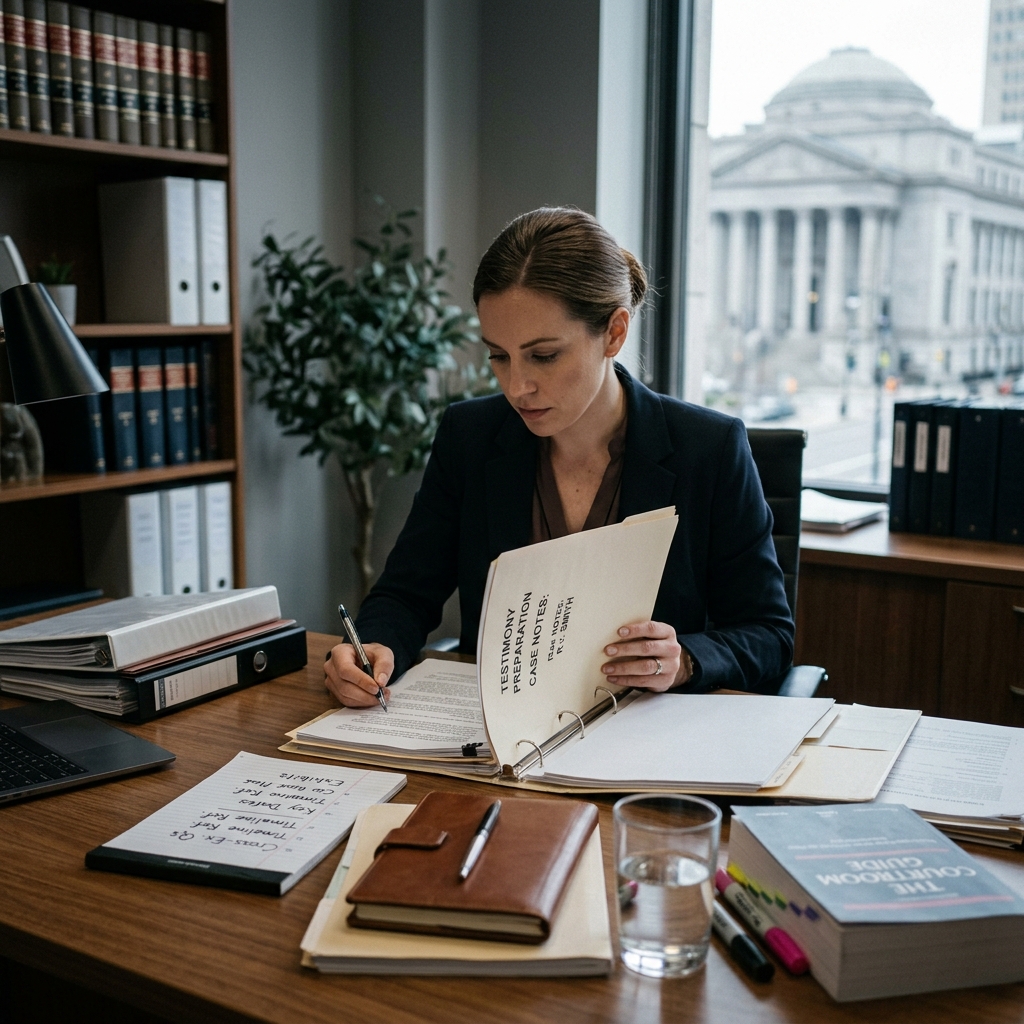
Getting Ready to Testify With Confidence
Testifying in court can feel intimidating, especially if you have never been inside a courtroom before. The process is formal, the questions may be stressful, and many people worry about forgetting details or saying the wrong thing. Good preparation can make a major difference. The goal is not to sound polished or rehearsed; the goal is to give honest, clear, and accurate testimony that helps the court understand what happened.
A strong witness is not someone who remembers every tiny detail perfectly. A strong witness is someone who tells the truth, listens carefully, answers only what is asked, and remains calm under pressure. Preparing in advance helps you do exactly that. It also reduces anxiety by giving you a better sense of what to expect before you step into the witness box.
Review the Facts Before You Arrive
One of the most useful ways to prepare is to refresh your memory about the event. Think back to the setting, the people involved, the sequence of events, and anything you saw, heard, or experienced directly. It often helps to consider the basic questions of who was there, what happened, where it happened, when it happened, and how it affected you.
If you previously gave a statement, reading it again may help you recall details more accurately. Some people also find it useful to write down a timeline or a few notes for their own review. The purpose of that review is not to memorize a speech. It is to make sure your memory is as clear as possible so you can answer naturally when questioned.
Try to avoid turning your preparation into a script. Memorized answers can sound unnatural and may create problems if the other side asks a question in a different order or from a new angle. Real courtroom testimony works best when it sounds like ordinary, truthful recollection.
Work Closely With the Lawyer Handling the Case
Before the hearing or trial, meet with the attorney who will present your testimony. That conversation is an important part of preparation because it allows you to understand the purpose of your testimony and the subjects you are likely to discuss. It also gives the attorney a chance to explain courtroom procedure in plain language.
During that discussion, be direct about what you remember clearly and what you do not remember well. If there are parts of the incident that feel confusing, say so. Honest uncertainty is better than guessing. Your lawyer can also help you understand what kinds of questions may come from the other side and how to keep your answers focused and accurate.
If there are documents, photos, messages, medical records, or other items that support your recollection, share them with the attorney as early as possible. Supporting evidence can help the court place your testimony in context and may reduce the need for repeated questioning.
Prepare Yourself Emotionally as Well as Practically
Testimony is not only a memory exercise; it can also be an emotional experience. Reliving a traumatic or upsetting event may bring back fear, anger, sadness, or confusion. That reaction is normal. Planning for those emotions ahead of time can help you stay grounded when you are on the stand.
Some witnesses benefit from speaking with a counselor, advocate, family member, or trusted friend before court. Others prefer quiet preparation, including breathing exercises, mindfulness techniques, or simple grounding strategies such as focusing on their feet on the floor or the feel of a glass of water in their hand. The point is to have a calming method ready if anxiety rises.
If you become emotional while testifying, pause if needed, breathe, and continue when you are ready. Courts understand that serious events can be difficult to discuss. What matters most is that you remain honest and continue to answer as clearly as you can.
Know What Happens in the Courtroom
Understanding the structure of a courtroom can make the experience less stressful. At some point, you will likely be asked to take an oath or affirmation promising to tell the truth. You may be directed to the witness stand, where you will answer questions from attorneys and possibly the judge.
Once you are on the stand, speak loudly enough to be heard clearly by everyone who needs to hear your answer. Court reporters, jurors, judges, and attorneys all depend on an accurate record. A simple nod or shrug is usually not enough because your answers must be recorded in words.
You may also be asked to identify people, places, or items related to the case. If you are unsure, say so. The courtroom is not the place to impress anyone with certainty you do not have. Accuracy is more valuable than confidence without a factual basis.
How to Answer Questions the Right Way
When you testify, your job is to answer the question asked and no more. Listen to each question carefully before speaking. If the question is unclear, ask for it to be repeated or rephrased. If you do not understand the words used, say so plainly. That is better than answering a question you misunderstood.
Keep your answers short, direct, and truthful. If the question can be answered with a simple yes or no, answer that way unless a brief explanation is necessary to avoid confusion. If you believe a yes-or-no answer would be incomplete or misleading, it is acceptable to explain carefully in your own words.
Never guess. If you do not know the answer, say you do not know. If you do not remember something, say that you do not remember. Guessing can create contradictions and weaken the trust that the court places in your testimony. Saying “I do not recall” is often far more helpful than forcing an uncertain answer.
| Helpful approach | Why it matters |
|---|---|
| Listen carefully before answering | Reduces misunderstandings and unnecessary corrections |
| Say when you do not know | Prevents speculation and protects credibility |
| Keep responses focused | Avoids confusion and extra follow-up questions |
| Use your own words | Makes testimony sound natural and truthful |
Stay Calm During Cross-Examination
Cross-examination is the part of testimony where the other side may ask questions that feel challenging, repetitive, or uncomfortable. The purpose is often to test how reliable your testimony is. That does not mean you are being attacked personally, even if it feels that way.
Stay polite and controlled. Listen to the full question before answering, and do not let frustration push you into arguing. If you feel tense, slow your pace and take a breath before responding. A measured answer is usually better than a fast answer driven by emotion.
If a question is confusing, misleading, or based on something you do not believe is true, do not fight about it. Simply state the facts as you know them. If you need the question repeated, ask. If you need a phrase explained, ask for that too. Calm, accurate answers make it harder for confusion to take over the record.
Behavior Matters as Much as Words
Courtroom communication includes more than the words you say. Your posture, tone, and pace all affect how your testimony is understood. Speak clearly. Avoid rushing. If you talk too quickly, the court reporter may miss details and listeners may struggle to follow your answer.
Try to look toward the questioner or the judge when speaking, but do not worry about performing. The main task is to communicate plainly. If looking at the defendant makes you uncomfortable, focus on a neutral point such as the attorney, the judge, or a spot in the room that helps you stay composed.
It is also important not to discuss the case while you are waiting to testify or after you have testified, especially if other witnesses are involved. Sharing details can create misunderstandings or suggestions that testimony was shaped by what others said. Keep conversations limited to the people assigned to help you with the case.
Common Mistakes to Avoid
- Do not memorize a speech and try to recite it word for word.
- Do not guess when you are uncertain.
- Do not volunteer extra information unless it is needed to make your answer accurate.
- Do not argue with an attorney or interrupt the judge.
- Do not answer before you fully understand the question.
- Do not discuss your testimony with other witnesses while the case is still pending.
A Simple Testimony Checklist
- Review your statement and any notes before court.
- Bring important documents or evidence to the attorney if requested.
- Plan a way to stay calm, such as breathing slowly or pausing before answering.
- Dress neatly and arrive on time so you are not rushed.
- Listen carefully and answer only what is asked.
- Say clearly when you do not remember something.
Frequently Asked Questions
Do I have to remember every detail? No. It is normal to forget some details, especially if the event was stressful. Tell the truth about what you remember and be honest about what you do not.
What if I get nervous on the stand? Nervousness is common. Take a breath, slow down, and focus on one question at a time. If needed, pause briefly before answering.
Should I explain everything I know in each answer? Usually no. Answer the question asked, then stop. Add a little explanation only if it is needed to make your answer accurate or clear.
Can I ask for a question to be repeated? Yes. If you do not understand a question or missed part of it, ask for it to be repeated or rephrased before you answer.
What if I realize I made a mistake after answering? If you notice the mistake while still on the stand, correct it as soon as possible. If you realize it later, tell the attorney or court contact handling the case.
Why Honest, Calm Testimony Is Most Effective
Many witnesses assume they need perfect memory, strong emotions, or polished delivery to be effective. In reality, the most persuasive testimony is usually the simplest: truthful, steady, and based on first-hand knowledge. Courts value witnesses who speak clearly, avoid speculation, and answer exactly what was asked.
Preparation gives you structure, but honesty gives your testimony credibility. If you remember something clearly, say so clearly. If you do not remember, say that. If a question feels confusing, ask for help in understanding it. These habits protect the accuracy of the record and make your testimony more reliable.
Being a witness is an important responsibility, but it is manageable with the right preparation. By reviewing the facts, working with the attorney, staying composed, and answering carefully, you can contribute to the process in a clear and trustworthy way.
References
- Preparing to Testify — U.S. Department of Justice, United States Attorney’s Office for the Northern District of North Dakota. n.d. https://www.justice.gov/usao-nd/victim-witness-assistance/brochures/preparing-testify
- A Guide for Crime Victims and Witnesses — Wisconsin Department of Justice. n.d. https://www.wisdoj.gov/Crime%20Victims%20Services/A_Guide_for_Crime_Victims_and_Witnesses.pdf
- A Guide for Victims of Crime Preparing for Trial — Asian Women’s Justice Alliance. 2024-10-25. https://awjai.org/2024/10/25/a-guide-for-victims-of-crime-preparing-for-trial/
- Witness Preparation and Hearing Guide — NASUCA. n.d. https://www.nasuca.org/wp-content/uploads/2023/01/Witness-Prep-Guide-for-NASUCA.pdf
- Tips for Testifying — Rocky Mountain Victim Law Center. n.d. https://www.rmvictimlaw.org/news/tips-testifying
Similar Articles








Read full bio of medha deb




