
How to Prepare for an Estate Planning Meeting
A practical guide to organizing your documents, priorities, and questions before meeting an estate planning lawyer.
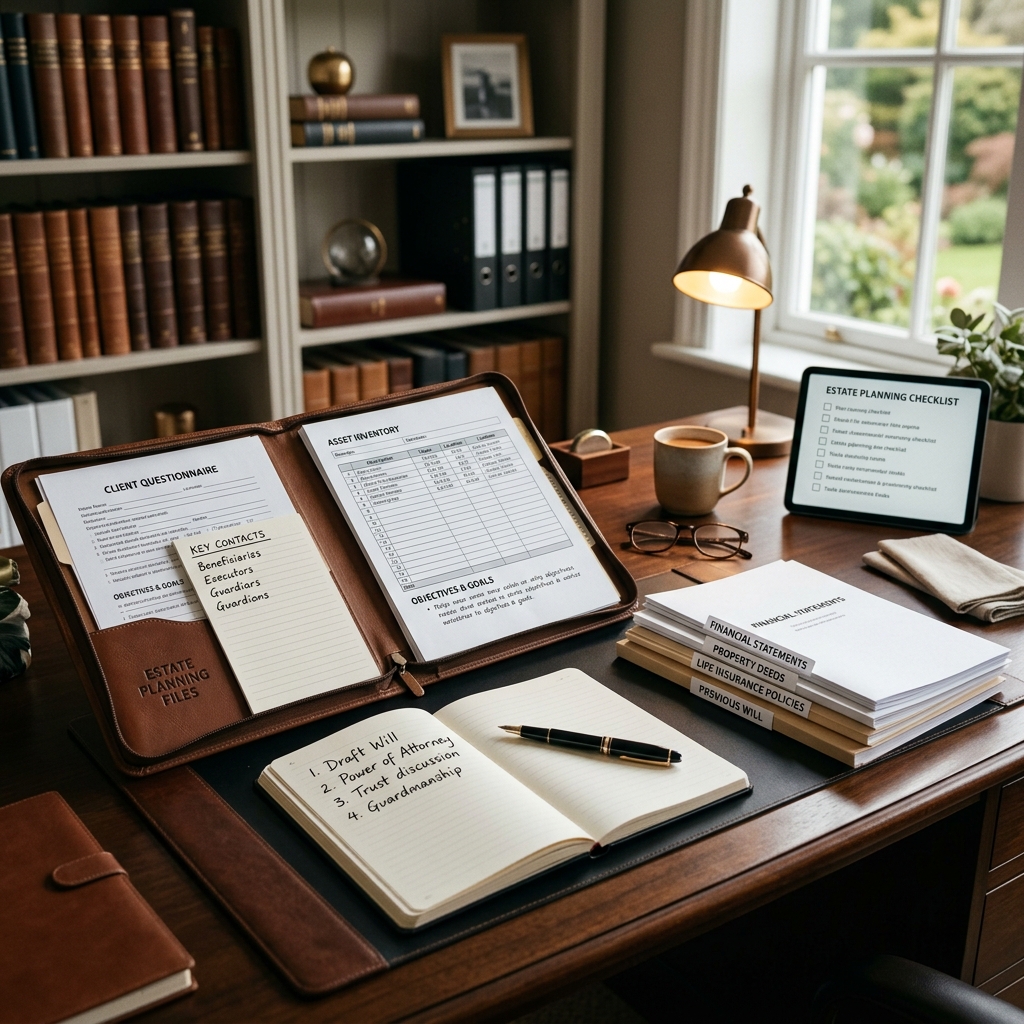
Meeting with an estate planning lawyer is easier, more productive, and often less expensive when you arrive prepared. The purpose of the first consultation is not to have every detail finalized; it is to help the lawyer understand your family, your finances, and the goals you want your plan to accomplish. When you organize your information in advance, the attorney can spend more time advising you and less time sorting through missing facts.
A strong first meeting also helps you make better decisions. Estate planning is about more than writing a will. It can involve trusts, powers of attorney, health care directives, beneficiary designations, tax concerns, and plans for minor children or dependent adults. The more clearly you can describe your situation, the easier it becomes for the lawyer to recommend documents and strategies that fit your life.
Start by clarifying what you want your plan to accomplish
Before gathering papers, take a few minutes to think about your priorities. Some people want to keep the process simple and make sure property passes to a spouse or children smoothly. Others need a plan that addresses second marriages, business ownership, charitable gifts, tax planning, or long-term care concerns. Your goals shape the kind of advice you receive.
It helps to write down the outcomes that matter most to you. For example, you may want to protect a minor child, avoid conflict among heirs, keep a family home in the family, or make sure a relative with special needs is cared for without disrupting benefits. If you can explain what matters most, the lawyer can focus on the right legal tools instead of offering a generic plan.
Gather the core financial and family information
Estate planners need a clear picture of what you own, what you owe, and who is involved in your life. The goal is not perfection; it is a practical summary that gives your lawyer enough information to begin drafting or revising documents.
| Information to collect | Why it matters |
|---|---|
| Assets such as bank accounts, retirement accounts, investments, real estate, business interests, and valuable personal property | Helps the lawyer understand the size and makeup of your estate |
| Debts such as mortgages, personal loans, and credit card balances | Shows your net financial picture and may affect planning choices |
| Family details, including spouse, children, stepchildren, grandchildren, and any dependents | Identifies possible beneficiaries, guardians, and decision-makers |
| Existing estate planning documents | Allows the lawyer to update or replace prior plans where needed |
| Beneficiary designations and transfer-on-death or payable-on-death instructions | These can override or complement a will, depending on the asset |
If you are unsure how an asset is titled, note that uncertainty too. Ownership form matters because it can determine whether property passes through a will, a trust, or directly to a named beneficiary. For example, jointly owned property may move differently from individually owned property, and retirement accounts often follow their own beneficiary rules.
Use a document checklist to stay organized
A basic estate planning file usually includes copies of important account statements and legal records. You do not need every supporting document in perfect order, but bringing the essentials saves time and prevents follow-up delays.
- Recent statements for checking, savings, brokerage, retirement, and other financial accounts
- Deeds or other records for real estate, including vacation property
- Insurance policies, especially life insurance
- Vehicle titles for cars, boats, or other titled property
- Business formation records, partnership agreements, or ownership documents
- Copies of wills, trusts, powers of attorney, and health care directives you already have
- Marriage, divorce, adoption, or guardianship paperwork if relevant to your family situation
- Any beneficiary forms or account paperwork showing transfer instructions
Even if some of these documents are old, bring them anyway. A prior will, trust, or power of attorney can still be useful because it shows what was previously signed and whether an update, amendment, or complete revision is the better path.
Think carefully about the people you may want to name
Estate planning often requires choosing trusted individuals for important roles. These roles are different from beneficiaries. A beneficiary receives property, while an agent, executor, or trustee manages decisions and carries out the plan.
Before your meeting, consider whom you trust to serve in the following roles:
- Executor or personal representative to handle your estate after death
- Trustee to manage assets placed in a trust
- Agent under a power of attorney to handle financial matters if you become unable to do so
- Health care agent to make medical decisions if you cannot speak for yourself
- Guardian for minor children, if needed
When choosing these people, think about reliability, availability, maturity, and the ability to work with family members. The most obvious choice is not always the best choice. In some families, it makes sense to name a backup decision-maker in case the first choice is unwilling or unable to serve.
Review how property is owned and how it will pass
Not every asset passes through a will. Some assets may transfer automatically or by contract. That is why estate planning lawyers often ask not only what you own, but also how each asset is titled and whether a beneficiary is already named. This information can change the entire plan.
For example, a retirement account with a current beneficiary designation may pass directly to that beneficiary even if your will says something different. Life insurance proceeds may also go directly to the named recipient. Jointly owned property may transfer by survivorship rather than through probate. A lawyer can review these details and help make sure the plan reflects your actual intentions.
Prepare for family conversations in advance
Estate planning is not only a legal task; it is also a family communication task. Many disputes begin when family members are surprised by a plan or do not understand why certain choices were made. You do not have to disclose every detail to everyone, but it can help to discuss major decisions with the people most affected.
For instance, if one child will serve as caregiver, executor, or trustee, that child may need to know what the job involves. If one beneficiary is receiving property in a different way than another, explaining the reason in a calm setting can sometimes reduce future conflict. Families with blended relationships, unequal gifts, or special circumstances often benefit most from careful communication.
Bring a list of questions that reflect your situation
The first consultation is your chance to evaluate the lawyer as much as the lawyer is evaluating your situation. A prepared list of questions keeps the meeting focused and helps you compare attorneys if you speak with more than one.
- Which documents do I actually need based on my family and financial situation?
- Should I use a will, a trust, or both?
- How do beneficiary designations affect the rest of my plan?
- What happens if I become incapacitated before my estate plan is complete?
- How often should my estate plan be reviewed or updated?
- What information do you need from me after this meeting?
- How are fees structured for drafting and future updates?
Depending on your circumstances, you may also want to ask about tax issues, planning for a child with special needs, business succession, or strategies for avoiding unnecessary court involvement. The best questions are the ones tied directly to your own concerns.
Make a plan for storing and sharing your documents
Creating documents is only part of the job. Someone may need to find them later, and that means storage matters. Keep signed originals in a secure place that is both safe and accessible. A fireproof home safe, a safe deposit box, or a lawyer’s storage system may be appropriate depending on the document and your preferences.
It is also smart to keep digital copies of important papers. Scanned files can be helpful if originals are lost or if a family member, executor, or agent needs quick access. Just remember that some documents must be kept in original form for legal effectiveness, so digital files should supplement, not replace, the signed originals.
Consider whether your situation needs extra planning
Some estates are simple, but many are not. Certain life events or assets often call for more detailed planning. If any of the following apply to you, mention them early in the meeting:
- You are married again or have children from different relationships
- You own a business or hold interests in an LLC or partnership
- You own property in more than one state
- You have a family member with a disability or special needs
- You expect a large inheritance or own substantial retirement assets
- You want to leave gifts to charity
- You are concerned about long-term care or incapacity
These situations often require more than a basic will. A lawyer may suggest a revocable trust, updated beneficiary forms, a business succession plan, or a specialized support structure for family members who need ongoing financial protection.
What to expect during the first consultation
An estate planning consultation typically begins with a conversation about your family, assets, and goals. The lawyer may ask about how your property is titled, who depends on you, whether you already have documents in place, and what concerns you want the plan to address. The meeting may also include a discussion of costs and the likely next steps.
You do not need to have every answer ready. In fact, one of the main purposes of the meeting is to help you identify what still needs attention. The more organized you are at the start, the more quickly the attorney can determine whether you need a simple update, a full plan, or additional legal tools.
Frequently asked questions
Do I need an estate planning lawyer if I already have a will?
Yes. A will may be only one part of a larger plan, and it may need updates after marriage, divorce, births, deaths, new property, or changes in law.
Should I bring original documents or copies?
Copies are usually enough for the first meeting, but if you have original signed estate planning documents, bring them or be ready to tell the lawyer where they are stored.
What if I do not know how my assets are titled?
Bring the account statements or records you have, and note anything you are unsure about. The lawyer can help identify the ownership form and explain its effect.
How often should I update my estate plan?
Many people review their plan after major life changes or every few years, but your lawyer can recommend a schedule based on your situation.
Can I ask my lawyer to help with medical or financial incapacity planning?
Yes. Many estate plans include powers of attorney and health care directives so someone can act for you if you cannot.
Leave the meeting with a clear next step
The best estate planning meeting ends with direction. By the time you leave, you should understand what documents are recommended, what information is still missing, and what the lawyer needs before drafting begins. If you arrive with organized records, clear goals, and thoughtful questions, you give yourself the best chance at a plan that actually works when it matters most.
References
- What Does an Estate Planning Attorney Do? — MetLife. 2024-01-01. https://www.metlife.com/stories/legal/steps-to-prepare-for-meeting-estate-planning-attorney/
- Preparing for Your Initial Estate Planning Meeting — ACTEC. 2024-01-01. https://www.actec.org/resource-center/video/preparing-for-your-initial-estate-planning-meeting/
- All About Hiring an Estate Planning Attorney — SmartAsset. 2024-01-01. https://smartasset.com/estate-planning/estate-planning-attorney
- Estate Planning Law — South Texas College of Law Houston. 2024-01-01. https://www.stcl.edu/academics/pathways-to-practice/estate-planning-law/
Similar Articles








Read full bio of medha deb


