When a federal court orders you to pay a criminal fine, restitution, or a civil monetary judgment, that obligation becomes a legal debt owed to the United States. Understanding how, when, and by whom these amounts may be paid is essential to avoid additional penalties, collection actions, or violations of court orders.
This guide explains the most common methods for paying criminal and civil debts in federal cases, how online systems such as Pay.gov work, who is allowed to make payments on your behalf, and what information you should always include to ensure your payment is properly credited.
What Counts as Criminal and Civil Debt in Federal Cases?
In the federal system, financial obligations may arise in both criminal and civil proceedings. Although the source of the debt differs, both are enforceable through the courts and the U.S. Department of Justice.
Common Types of Criminal Financial Obligations
Criminal cases can result in various monetary obligations that must be paid as part of the sentence imposed by the court.
- Fines – Punitive amounts imposed by the court as part of a criminal sentence.
- Special assessments – Mandatory fees set by statute that apply to each count of conviction.
- Restitution – Compensation ordered to repay victims for financial losses caused by the offense.
- Costs and fees – Additional court‑related charges, such as administrative fees or surcharges.
These obligations are typically due immediately, though a judge may permit payment over time or as a condition of probation or supervised release.
Civil Monetary Debts
Civil cases can also produce monetary judgments that function as legally enforceable debts.
- Civil penalties imposed for violations of federal statutes or regulations.
- Damages awarded to the United States or other parties in civil litigation.
- Cost awards and fees associated with civil enforcement actions.
Although the enforcement mechanisms may differ, civil debts owed to the United States are often collected using similar payment channels as criminal debts and may be managed or overseen by the U.S. Attorney’s Office.
Approved Methods of Payment
Federal courts offer multiple ways to pay criminal and civil debts, but the specific options can vary by district. Official court and government payment systems provide secure channels that meet federal standards for handling public funds.
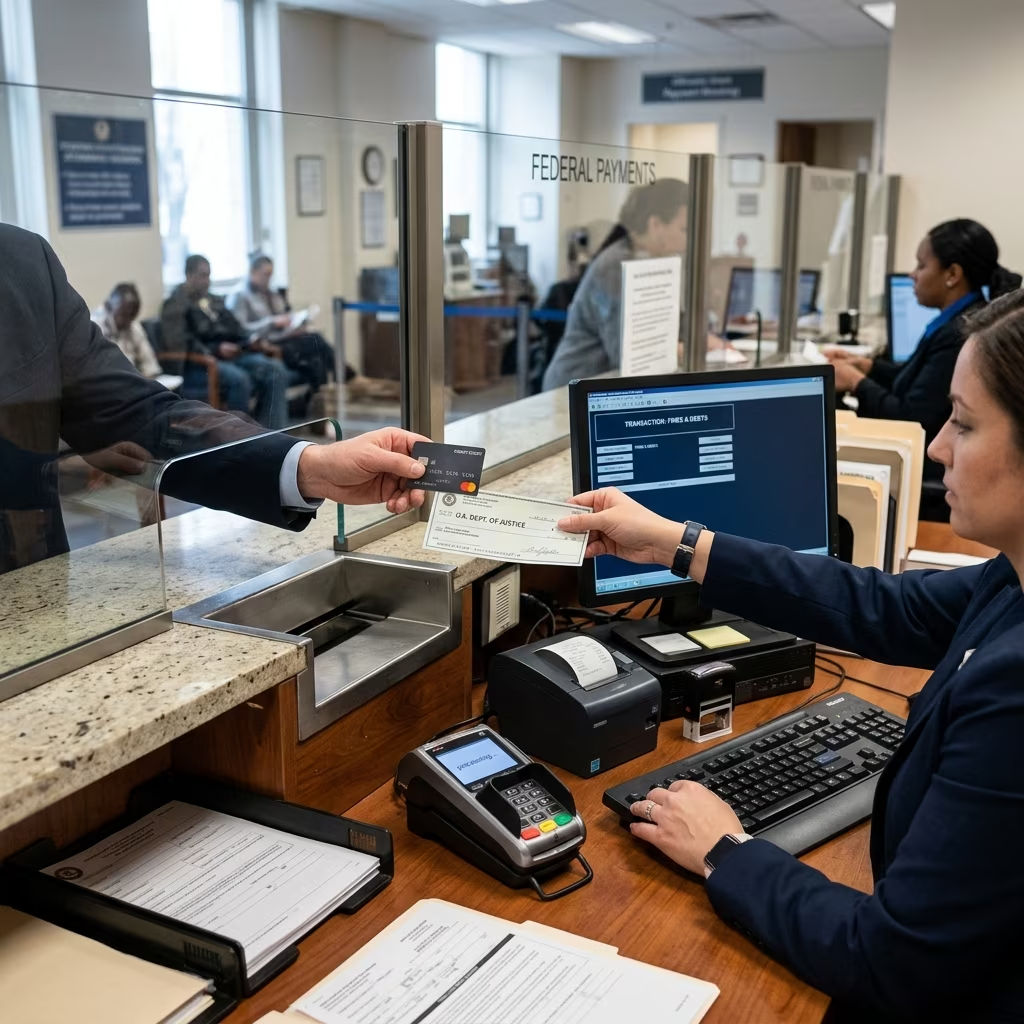
In‑Person Payments at the Clerk’s Office
Most federal district courts accept in‑person payments at the Clerk’s Office. This remains the primary channel for those who prefer to pay in cash or need assistance from staff.
- Location: Typically at the main courthouse in the district, often on the first floor near public counters.
- Typical office hours: Weekdays during business hours, for example, 9:00 a.m. to 4:00 p.m., excluding federal holidays.
- Common acceptable forms:
- Cash (in person only)
- Certified or cashier’s checks
- Money orders
- Debit cards and, in some districts, credit cards
You must generally provide your full name, case number, and, in criminal matters, confirm whether the payment applies to fines, restitution, special assessments, or another specific obligation.
Payment by Mail
If you cannot appear in person, many courts allow payment by mail. However, not all forms of payment are acceptable through the mail, and timing and accuracy are critical.
- Payments are usually made by certified check, cashier’s check, or money order. Personal checks may be restricted or refused by some courts.
- Checks and money orders should be payable to the Clerk, U.S. District Court or another specified payee, such as “Clerk of Superior Court” in state systems.
- Include identifying details on the payment or in a cover letter:
- Defendant or debtor’s name
- Case number or docket number
- Type of payment (fine, restitution, civil judgment)
- Use the official mailing address provided by the court, often with an “Attention: Finance” or similar designation to ensure routing to the correct department.
Courts routinely advise against sending cash by mail due to the risk of loss and the difficulty of tracking such payments.
Online Payment Through Pay.gov and Court Portals
The federal government increasingly uses secure online platforms for court‑related payments. For federal criminal and civil debts, one of the primary tools is Pay.gov, operated by the U.S. Department of the Treasury.
- Pay.gov allows payment of federal debts using:
- Bank account transfers (ACH)
- Credit cards
- Debit cards
- Prepaid cards, subject to system rules
- Users are typically required to self‑enroll and create a profile before submitting payments.
- Online payment forms will usually ask for key identifiers:
- Defendant or debtor’s full legal name
- Case or account number
- Type of obligation (fine, restitution, civil penalty)
Some federal and state courts also provide dedicated online portals for fines and fees, allowing defendants to pay criminal fines, surcharges, and other court costs by credit or debit card.
Phone Payments and Automated Systems
While less common in federal practice, several court systems permit payments over the phone using secure interactive voice response (IVR) systems, particularly for fines and certain fees.
- Payments are usually made with credit or debit cards.
- Some systems allow payment even without a case number, using other identifiers.
- Availability is often 24/7, but customer assistance may be limited to business hours.
Federal districts that use Pay.gov may provide specific phone or email contacts within the finance department to assist with online payment issues or case number lookups.
Who Can Pay: Defendants and Third‑Party Payers
A critical question in criminal and civil collections is whether someone other than the defendant or debtor may lawfully make payments on the obligation.
Payments by the Defendant or Debtor
The primary responsibility to pay rests with the person named in the judgment. Defendants and civil judgment debtors are always permitted to satisfy their obligations through approved payment methods.
- They may pay in full immediately.
- They may use authorized installment or payment plans if approved by the court or collection office.
- They are responsible for ensuring payments are timely and correctly applied to their case.
Payments by Family Members, Friends, or Other Third Parties
In many situations, third parties are allowed to help a defendant or debtor pay criminal or civil debt, especially restitution or fines. However, the court will still treat the obligation as belonging to the person named in the judgment.
Third‑party payments are generally allowed as long as:
- The payment is voluntary and not part of an unlawful agreement.
- The payor clearly identifies the defendant and case number.
- The payment complies with any court‑ordered conditions, such as payment schedule or priority between fines and restitution.
Courts and clerk’s offices may refuse or question third‑party payments if they appear to circumvent sentencing conditions, conceal the source of funds, or violate fundraising bans or other legal restrictions. When in doubt, third‑party payors should contact the finance or clerk’s office before submitting large payments.
Information You Must Include with Any Payment
Accurate and complete information is essential to ensure your payment is properly credited. Missing or incorrect details can delay posting or lead to misapplied funds.
Core Identifiers
Whether paying online, in person, by mail, or over the phone, you should be ready to provide:
- Defendant or debtor’s full legal name exactly as it appears in court records.
- Case number or docket number, available from judgments, orders, or recent court notices.
- Type of obligation being paid (fine, restitution, special assessment, civil penalty).
- Any payment plan reference if you are on an approved installment schedule.
Preferred Formats for Checks and Money Orders
When paying by check or money order, use the format and payee name specified by the court.
| Payment Type | Typical Payee Name | Key Notes |
|---|---|---|
| Federal criminal or civil debt | Clerk, U.S. District Court | Include defendant name and case number; do not send cash by mail. |
| State court fines and costs | Clerk of [Court Name]/[County] | Certified checks or money orders often required; personal checks may be rejected. |
| Appellate or probate payments (example from DC Courts) | Clerk of the Court or Register of Wills | Different divisions may require different payees. |
Deadlines, Partial Payments, and Consequences of Non‑Payment
Payment timing and structure are governed by the court’s judgment, local rules, and applicable statutes. Failure to pay on time can trigger additional fees or enforcement measures.
When Payments Are Due
Many criminal and infraction‑related monetary obligations are legally due at the time of conviction or judgment, even if the court allows payment over time.
- For some cases, the court may set a deferred due date or schedule of payments.
- Probationary sentences often allow payment any time during the probation period, provided the total amount is satisfied by the deadline.
If you are uncertain about your due date, obtain a copy of the judgment or contact the clerk’s office or probation officer.
Partial Payments and Payment Plans
Whether you can make partial payments depends on the specific court and the kind of obligation.
- Some online systems require full payment of the amount due and do not permit partial payments.
- In many jurisdictions, partial payments are allowed in person or through payment plans, often approved by the court or the clerk’s office.
- Payment plans may charge administrative fees to cover the costs of processing multiple payments over time.
Federal districts may have their own policies on partial payments, especially for restitution, which is often prioritized and subject to statutory requirements.
Additional Fees and Collection Consequences
Courts may impose additional fees when payments are late or when obligations are not satisfied in full by the initial due date.
- Some systems add a one‑time fee when a defendant fails to pay all monetary obligations at the time of conviction.
- If payment is not complete within a specified period (such as 40 days), further additional charges may be assessed.
- Unpaid debts may be referred to collection agencies, reported to credit bureaus, or enforced through wage garnishment or asset seizure.
In certain jurisdictions, criminal justice debt can be converted to civil judgments, making it publicly recorded and enforceable like other civil debts.
Practical Tips for Making Reliable Payments
To minimize errors and ensure compliance with court orders, keep these practical tips in mind whenever you pay criminal or civil debt.
- Confirm your balance before paying, using recent court notices or official online portals.
- Use official channels such as the court’s website, Pay.gov, or addresses published on government websites; avoid third‑party services that are not endorsed by the court.
- Keep copies of receipts, confirmation numbers, and correspondence for your records.
- Update contact information with the court so you receive notices about due dates, payment issues, or changes in requirements.
- Contact the finance or clerk’s office if you have questions about how a payment was applied or if you believe a balance is incorrect.
Frequently Asked Questions (FAQs)
Can I pay my federal criminal fine online with a credit card?
Many federal districts allow online payment of criminal fines and other debts through Pay.gov, which accepts credit, debit, and prepaid cards as well as bank account transfers. Availability may vary by district, so check your court’s website or contact the clerk’s office.
Do I need my case number to make a payment?
In most situations, you must provide your case or docket number for the payment to be credited correctly. Some phone systems allow payment without a case number by using other identifiers, but the safest approach is to have your case number available.
Can a family member pay my restitution for me?
Generally, yes. Family members or other third parties may pay restitution, fines, or other debts on your behalf, as long as they use approved payment methods and clearly identify your case. The court will still treat the obligation as yours, and you remain responsible for ensuring that payments are completed according to the judgment.
Is it safe to send cash through the mail?
No. Courts and justice agencies strongly advise against sending cash through the mail. Payments by mail should be made by certified or cashier’s check or money order, addressed to the proper court payee.
What happens if I miss the deadline to pay my fine?
Missing a payment deadline can result in added fees, interest, or collection actions. Some jurisdictions impose additional charges if full payment is not made within a certain number of days after conviction or the court‑set date. Persistent non‑payment can lead to civil collection measures and, in criminal cases, possible violations of probation or supervised release.
How do I know which payment options my court accepts?
Review the payment information on your district’s official court website or contact the clerk’s office. Federal and state courts publish payment instructions specifying whether they accept online payments, phone payments, in‑person payments, and what forms of tender are allowed.
References
- Payment Information — U.S. District Court for the District of Columbia. 2024-01-01. https://www.dcd.uscourts.gov/payment-information
- Court Costs — North Carolina Judicial Branch. 2023-05-15. https://www.nccourts.gov/help-topics/fees-and-payments/court-costs
- Make an ePayment in the Delaware State Courts — Delaware Courts. 2023-03-10. https://courts.delaware.gov/epayment.aspx
- Pay a Fine or Court Debt — Iowa Judicial Branch. 2022-11-01. https://www.iowacourts.gov/for-the-public/pay-a-fine
- Make a Payment — District of Columbia Courts. 2023-07-20. https://www.dccourts.gov/court-services/make-a-payment
- NYS UCS Payment Services — New York State Unified Court System. 2023-06-30. https://payments.nycourts.gov/
- Assessing Fines and Fees in the Criminal Justice System — National Conference of State Legislatures. 2017-04-01. https://www.ncsl.org/civil-and-criminal-justice/assessing-fines-and-fees-in-the-criminal-justice-system