
Legal Requirements For Destination Weddings: Essential Checklist
A practical guide to the paperwork, rules, and planning needed to ensure your destination marriage is legally valid.
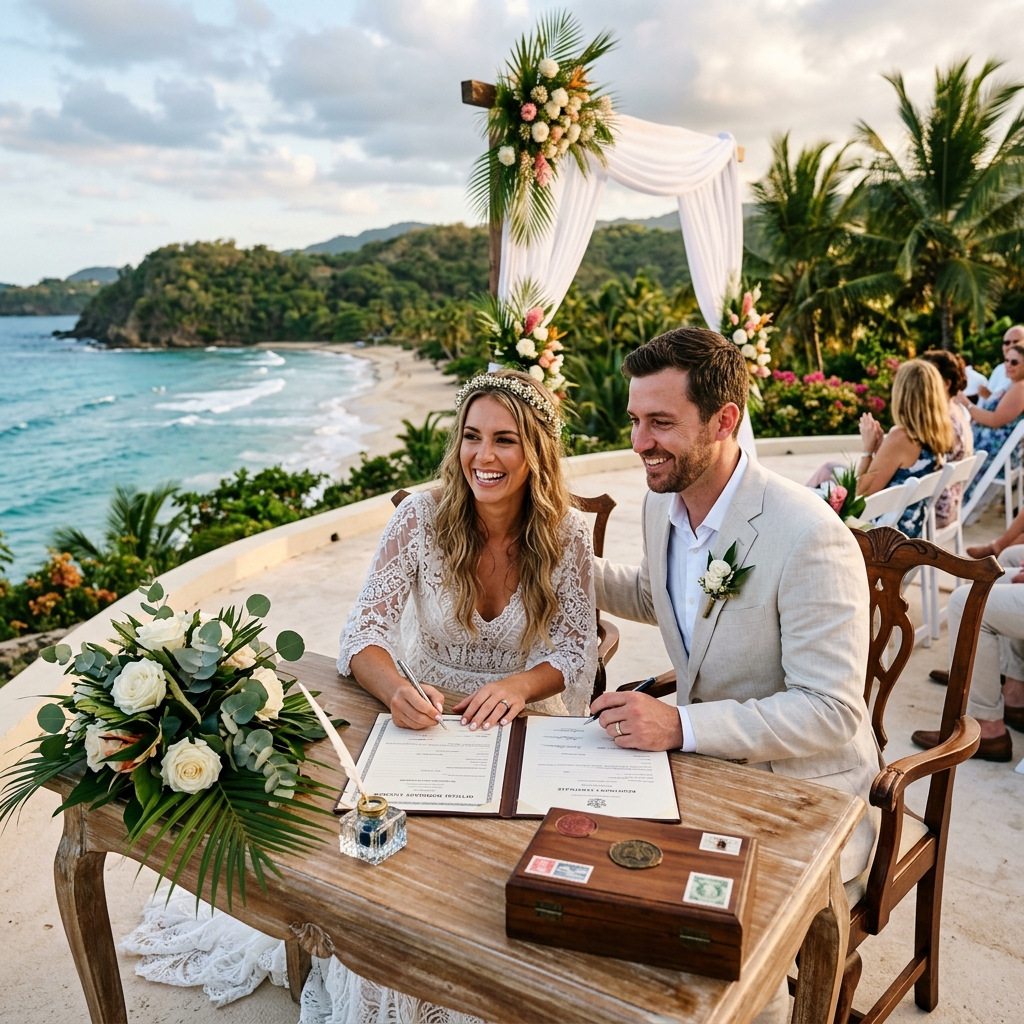
Destination weddings are popular because they combine travel, celebration, and a memorable setting. But romance alone does not make a marriage legally valid. The rules that control whether your wedding is recognized usually depend on where the ceremony takes place, what documents you bring, and whether your home jurisdiction accepts the marriage afterward.
If you are planning a wedding away from home, the safest approach is to treat the legal side as seriously as the venue, flowers, and guest list. Some couples complete a full legal marriage abroad. Others choose a symbolic ceremony at the destination and handle the legal marriage at home. Both options can work, but they require different preparation.
Start with the law of the place where you plan to marry
The first question is simple: What does the destination require for a valid marriage? Every country—and sometimes every region within a country—sets its own conditions. Those rules can include waiting periods, residency requirements, blood tests, proof of single status, translations, or special forms.
Official travel guidance from the U.S. Department of State advises couples to check the requirements of the country where the marriage will occur before traveling, because local rules control whether the ceremony is legally effective there. The same advice is echoed by legal and travel sources that emphasize consulting the destination’s civil authorities rather than relying on assumptions or outdated internet posts.
- Ask whether the marriage must be performed by a civil official, religious official, or authorized celebrant.
- Confirm whether both partners must appear in person before the ceremony.
- Find out whether the country requires residency, a waiting period, or advance filing.
- Check whether documents must be translated, notarized, or apostilled.
Decide whether you want a legal ceremony or a symbolic one
Some destination weddings are fully legal ceremonies. Others are symbolic events, which are designed for celebration only and do not create a marriage by themselves. This distinction matters because the paperwork is very different.
A symbolic ceremony is often easier to plan. Couples usually do not need to meet local marriage requirements for that event, but they still need to make sure they are legally married somewhere else if they want the relationship recognized as a marriage. In contrast, a legal ceremony abroad may require a marriage license from the destination, proof that each person is free to marry, and compliance with the local marriage registrar’s process.
| Type of ceremony | Legal effect | Typical paperwork burden |
|---|---|---|
| Legal destination wedding | Creates a marriage if local law is followed | Higher |
| Symbolic ceremony | No legal effect by itself | Lower |
| Legal marriage at home, celebration abroad | Marriage is valid under home law | Moderate |
Gather your documents early
Documentation is one of the most common reasons destination marriages get delayed. Depending on the country, you may need a passport, birth certificate, marriage license application, divorce decree, death certificate for a former spouse, proof of residence, or an affidavit showing you are legally free to marry.
For couples who have been married before, proof that the earlier marriage ended is especially important. Some locations also require recent copies of those documents, certified translations, or both. If a destination requests medical certificates or blood tests, schedule those well in advance because they can take time to arrange.
- Use the exact name on your passport and other official records consistently.
- Order certified copies rather than unofficial printouts when possible.
- Check whether documents need to be translated into the local language.
- Keep extra copies in both paper and digital form.
Pay attention to residency and waiting rules
Many couples are surprised to learn that some destinations do not allow immediate wedding ceremonies after arrival. Residency requirements can range from a short stay to several weeks, and some places require several business days before the ceremony can happen.
These rules are not limited to foreign countries. Even within the United States, states may have their own license application requirements, waiting periods, or rules about who can officiate. If you plan to marry outside your home state, you still need to confirm that the marriage meets the law where the ceremony occurs and where you will later live.
Because these timelines can affect travel plans, couples should build flexibility into their itinerary. Arriving a few days early is often smart even when the rules appear straightforward.
Check whether a marriage license from home is enough
Some couples prefer to handle the legal part in their home jurisdiction before traveling. That approach can simplify the destination wedding itself, especially when the foreign location has complicated paperwork or restrictive residency rules. In that setup, the couple obtains a marriage license at home and completes the lawful ceremony in their state or local jurisdiction before leaving for the celebration.
This option is often attractive when couples want to avoid translation requirements, medical tests, or long processing times. It also reduces the risk that a ceremony abroad will later be challenged because a local rule was missed. Once the legal marriage is complete at home, the destination event can focus entirely on the celebration.
- Good option for couples who want certainty before traveling.
- Useful when the destination has strict or unfamiliar legal requirements.
- Can be paired with a symbolic ceremony abroad.
Do not assume your marriage will be recognized everywhere
A marriage that is valid where it was performed is often recognized in the United States, but recognition is not automatic in every situation. The U.S. Department of State notes that couples who marry abroad may need to confirm whether their marriage will be recognized at home and may need to ask their state authorities what documentation is required.
That matters for a variety of legal and practical reasons. Recognition can affect name changes, tax filing status, insurance coverage, immigration issues, inheritance rights, and future divorce proceedings. If there is any doubt, couples should verify recognition with the relevant state office or legal authority before relying on the marriage for later paperwork.
Special care for religious destination weddings
Religious ceremonies may have both civil and religious requirements. For example, a church wedding can sometimes require proof that the couple is already eligible for marriage under civil law. In some traditions, the ceremony may be valid only if the civil paperwork has already been completed or if specific church documents have been approved in advance.
Because religious rules vary widely, couples should speak not only with the venue or planner but also with the religious institution itself. Do not assume that a church, temple, mosque, or other place of worship can replace the legal requirements set by the destination government.
How to reduce the risk of last-minute problems
The best way to avoid surprises is to begin early. Legal planning should start as soon as you choose a destination, not the week before travel. Official sources and experienced planners consistently recommend checking requirements directly with the destination’s civil registry, local authorities, embassy, or consulate.
A practical planning checklist can make the process easier:
- Confirm the legal requirements in writing whenever possible.
- Mark application deadlines and waiting periods on a calendar.
- Ask whether witnesses are required and who may serve in that role.
- Verify whether the officiant must be registered locally.
- Carry extra copies of all key documents in your hand luggage.
What to do after the ceremony
After a legal destination wedding, the final task is usually to obtain proof of the marriage and make sure it is properly recorded. Depending on the location, you may need a certified marriage certificate, a civil registration filing, or both. If the country requires the marriage to be registered back home, follow those instructions promptly so the marriage is reflected in your home records.
It is also wise to keep several certified copies of the certificate. You may need them later for a name change, employer benefits, immigration filing, or proof of marital status. If the certificate is not in English, arrange an official translation before you need it.
Common mistakes couples make
Many destination-wedding problems are preventable. The most common mistakes involve timing, paperwork, and assumptions about what one country will accept from another.
| Mistake | Why it causes trouble | Better approach |
|---|---|---|
| Waiting too long to check local laws | Deadlines and residency rules can be missed | Research requirements as soon as the destination is chosen |
| Bringing incomplete documents | The ceremony may be postponed or invalid | Use an official checklist from the destination authority |
| Assuming a symbolic event is legally binding | No valid marriage may exist | Separate the legal ceremony from the celebration if needed |
| Ignoring home-country recognition rules | Later paperwork may be delayed or rejected | Verify recognition with the relevant home authority |
Frequently asked questions
Can I legally get married in another country?
Yes, in many places you can, but the marriage must satisfy the destination’s own requirements. Local rules determine who may marry, what paperwork is needed, and whether a waiting period or residency rule applies.
Do I need a marriage license for a destination wedding?
Often yes, if you want the ceremony to be legally valid. Some couples instead complete the legal marriage at home and hold a symbolic ceremony at the destination.
What documents are most commonly required?
Common documents include passports, birth certificates, proof of legal capacity to marry, and evidence that any prior marriage ended. Some destinations also require translations, medical records, or certified copies.
Will my destination marriage be valid when I return home?
Usually a marriage that is valid where performed will be recognized, but you should confirm with your home state or other relevant authority because recordkeeping and proof requirements can vary.
Is a symbolic wedding the same as a legal marriage?
No. A symbolic wedding is a celebration and does not itself create a legal marriage unless the legal steps have already been completed elsewhere.
Planning the legal side with confidence
Destination weddings can be romantic and manageable at the same time, but only if the legal process is treated as part of the wedding plan from the beginning. The safest strategy is to confirm the destination’s rules, decide whether you want a legal or symbolic ceremony, gather documents early, and make sure the marriage will be recognized after the trip.
When couples approach the process with patience and preparation, the legal side becomes much less stressful. That leaves more time to focus on the actual purpose of the trip: celebrating the marriage with the people who matter most.
References
- Marriage — U.S. Department of State. 2026-07-09. https://travel.state.gov/en/international-travel/living-abroad/marriage.html
- Top three legal tips for destination weddings — Johns Flaherty & Associates. 2024-01-01. https://www.johnsflaherty.com/blog/top-three-legal-tips-for-destination-weddings
- Comprehensive Guide to Country-Specific Destination Marriage Laws — Wed-icity. 2024-01-01. https://www.wed-icity.com/post/comprehensive-guide-to-destination-marriage-laws
- Getting Married Abroad: What You Need to Know — Allianz Travel. 2024-01-01. https://www.allianztravelinsurance.com/travel/wedding/getting-married-abroad.htm
- Making Your Destination Wedding Legal Without the Hassle — Destination Wedding Details. 2024-01-01. https://destinationweddingdetails.com/making-destination-wedding-legal/
Similar Articles








Read full bio of Sneha Tete


