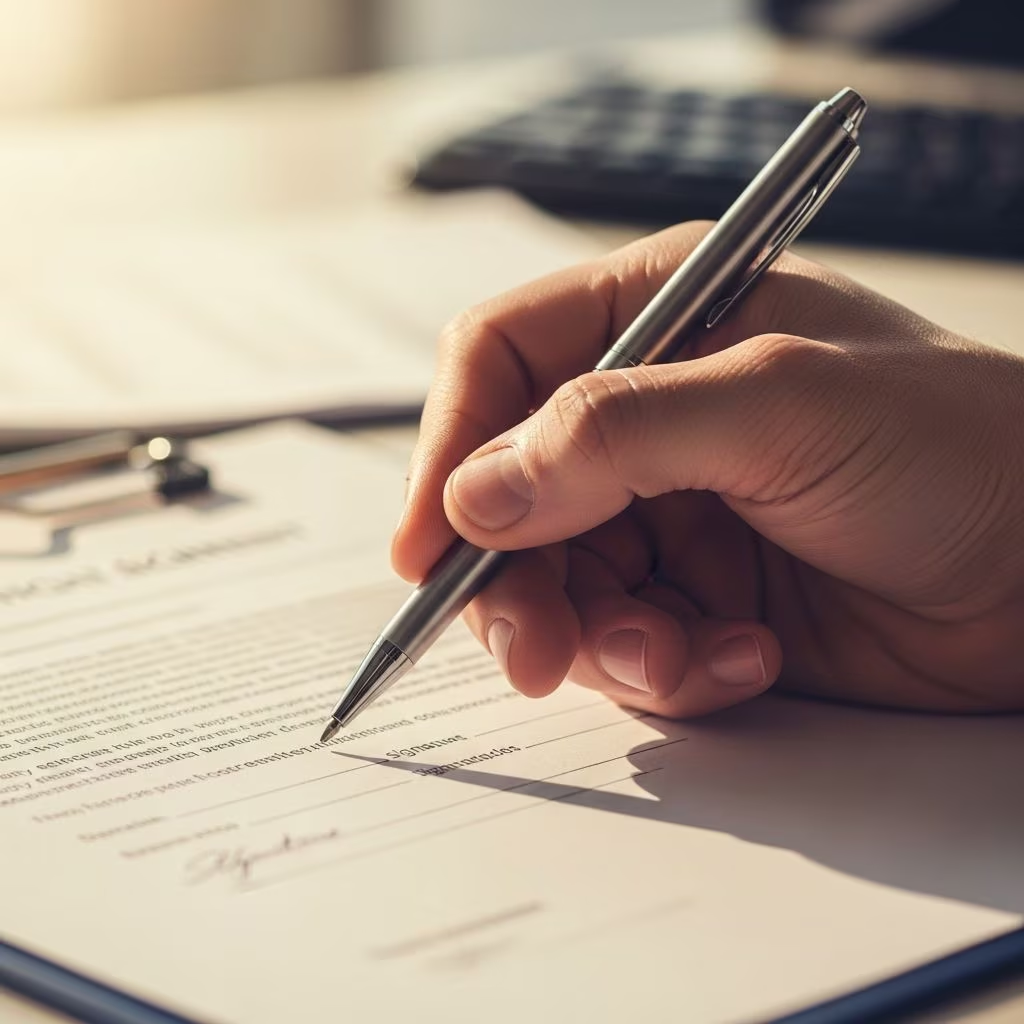
Understanding the Reality of Car Purchase Agreements
Buying a car is one of the most significant financial decisions many people make. Unlike returning a pair of shoes or canceling a subscription, walking away from a signed car purchase agreement is rarely straightforward. Once the paperwork is complete and the keys are handed over, the transaction is generally considered final. However, there are specific situations where a buyer may have legal grounds to cancel or unwind the deal.
It’s important to recognize that there is no universal ‘cooling-off’ period for car purchases in the United States. The Federal Trade Commission’s Cooling-Off Rule, which allows consumers to cancel certain sales made at home or in non-traditional settings, does not apply to vehicle transactions at dealerships. This means that simply changing your mind after a few hours or days is usually not enough to void the contract.
When You Might Be Able to Cancel the Deal
While buyer’s remorse alone won’t get you out of a car purchase, there are several legitimate legal and contractual avenues that may allow you to cancel or return the vehicle. These fall into three broad categories: contract contingencies, dealer misconduct, and state-specific protections.
Financing Falls Through
One of the most common scenarios where a buyer can walk away from a deal is when financing is not secured. Many car purchase agreements are written as contingent on financing, meaning the sale only becomes binding if the buyer can obtain a loan under agreed-upon terms.
- If the contract explicitly states that the sale is contingent on financing, and the lender declines the application or offers terms that differ significantly from what was promised, the buyer may be able to cancel.
- In such cases, the buyer should notify the dealership in writing and return the vehicle promptly.
- It’s crucial to review the financing contingency language carefully. Some contracts allow the dealer to substitute a different lender or adjust terms, while others give the buyer the right to walk away if the original financing terms aren’t met.
Dealer Fails to Deliver as Promised
A contract is a two-way agreement. If the dealership fails to fulfill its obligations, the buyer may have the right to cancel. Common examples include:
- The dealer does not deliver the exact vehicle described in the contract (wrong make, model, trim, or color).
- Agreed-upon features, options, or accessories are missing or not installed.
- The dealer refuses to honor a written warranty, protection plan, or other promised benefits.
- The vehicle is not delivered by the agreed-upon date, and the delay is unreasonable.
In these situations, the buyer should document the discrepancy, notify the dealer in writing, and request cancellation. If the dealer refuses, legal action or a complaint to a consumer protection agency may be necessary.
Dealer Misrepresentation or Fraud
If the dealership provided false or misleading information that influenced the purchase decision, the contract may be voidable. This includes:
- Falsely stating the vehicle’s condition (e.g., claiming it is accident-free when it has a salvage history).
- Concealing known mechanical problems or title issues.
- Providing inaccurate information about mileage, service history, or prior ownership.
- Overstating the value of a trade-in or misrepresenting financing terms.
Proving fraud or misrepresentation typically requires evidence such as written communications, vehicle history reports, or mechanic inspections. If successful, the buyer may be entitled to cancel the contract and receive a full refund, including down payment, trade-in, and any fees paid.
Violation of Consumer Protection Laws
Many states have strong consumer protection statutes that prohibit deceptive, unfair, or unconscionable practices in car sales. If a dealer violates these laws, the buyer may have a legal basis to cancel the contract. Examples include:
- Charging undisclosed or illegal fees.
- Using high-pressure or coercive sales tactics that amount to undue influence.
- Engaging in bait-and-switch advertising (e.g., advertising one price but charging significantly more).
- Refusing to provide required disclosures, such as odometer readings or lemon law notices.
State attorneys general and consumer protection agencies often investigate such complaints and may assist buyers in canceling contracts or obtaining refunds.
State-Specific Protections and Exceptions
Consumer rights in car purchases vary significantly by state. Some states offer more robust protections than others, and a few have limited cooling-off periods or special rules for certain types of transactions.
Spot Delivery and the 10-Day Rule
In some states, including California, dealers are allowed to cancel a financed contract within a short window (often 10 days) if they cannot assign the loan to a lender. This is known as a ‘spot delivery’ or ‘yo-yo’ financing arrangement.
- If the dealer cancels within this period, they must return all money and trade-in vehicles to the buyer.
- The buyer is not required to sign a new contract with different terms.
- After the cancellation window expires, the sale is generally final, and the dealer cannot unilaterally cancel.
Buyers should carefully review the back of the retail installment sales contract for any ‘seller’s right to cancel’ clause and understand the time limits involved.
Limited Cooling-Off Periods
While most car purchases do not have a cooling-off period, a small number of states or local jurisdictions may have limited exceptions. For example:
- Some states require a cooling-off period for certain high-pressure sales, such as door-to-door or off-site sales.
- A few states may have specific rules for extended warranties or service contracts, allowing cancellation within a set number of days.
- Online or phone-based car sales may, in rare cases, fall under broader consumer protection rules that include cancellation rights.
These exceptions are narrow and do not typically apply to standard in-dealership purchases. Buyers should consult their state’s consumer protection office or a local attorney to determine if any such rules apply to their situation.
Lemon Law and Persistent Defects
If a vehicle has serious, recurring mechanical problems that cannot be repaired after a reasonable number of attempts, it may qualify as a ‘lemon’ under state lemon laws. While lemon laws do not allow immediate cancellation of the purchase, they can lead to:
- A full or partial refund of the purchase price.
- A replacement vehicle.
- Compensation for related expenses (e.g., rental cars, towing).
Lemon law claims are complex and time-sensitive. Buyers must usually follow specific procedures, including notifying the manufacturer and allowing a certain number of repair attempts, before seeking a buyback or cancellation.
Practical Steps to Try to Cancel a Car Purchase
If you believe you have grounds to cancel a car purchase, taking the right steps quickly can improve your chances of success.
Review the Contract Thoroughly
Start by reading every page of the purchase agreement, including the fine print on the back. Look for:
- Financing contingency clauses.
- Dealer cancellation rights (e.g., 10-day rule).
- Warranty and return policies.
- Any written promises or disclosures that differ from what was verbally stated.
Document Everything
Keep copies of all documents, including the contract, invoice, advertisements, emails, and text messages. If possible, obtain:
- A vehicle history report.
- A written inspection report from an independent mechanic.
- Photos or videos of the vehicle and any discrepancies.
Contact the Dealer in Writing
Send a clear, dated letter or email explaining why you believe the contract should be canceled. Include:
- The vehicle identification number (VIN) and contract number.
- A description of the problem (e.g., financing not secured, misrepresentation, failure to deliver).
- A request to cancel the contract and return all money and trade-in.
- A deadline for a response (e.g., 10–14 days).
Escalate if Necessary
If the dealer refuses to cooperate, consider the following options:
- File a complaint with your state’s attorney general or consumer protection agency.
- Contact the Better Business Bureau (BBB) or relevant state auto dealer board.
- Consult a consumer rights attorney to explore legal action or demand letters.
- Report suspected fraud to law enforcement or federal agencies if appropriate.
What to Expect If You Return the Vehicle
If the dealer agrees to cancel the contract, the process should be straightforward, but there are a few practical considerations:
Returning the Car
- Return the vehicle in the same condition it was received, with all keys, manuals, and accessories.
- Remove any personal items and clean the interior.
- Be prepared to provide proof of insurance and registration if those were issued.
Getting Your Money and Trade-In Back
- The dealer should refund all down payments, trade-in value, and any fees paid.
- They may deduct for reasonable wear and tear or mileage, depending on state law and the reason for cancellation.
- Any checks or electronic payments should be canceled or reversed promptly.
Impact on Credit and Future Financing
- If the contract is properly canceled and the loan is terminated, it should not negatively affect your credit.
- However, if the dealer reports the cancellation as a default or repossession, dispute the entry with the credit bureaus.
- Future lenders may ask about the canceled deal, so be prepared to explain the circumstances honestly.
When You’re Likely Stuck With the Car
Unfortunately, there are many situations where a buyer has no legal right to cancel, even if they regret the purchase. These include:
- Changing your mind after a few days with no valid legal or contractual reason.
- Realizing the car is more expensive than expected, but the price was clearly disclosed in the contract.
- Disliking the car’s performance, comfort, or features, even if they were accurately described.
- Having second thoughts after a spot delivery period has expired and the dealer has already assigned the loan.
In these cases, the best options are usually to keep the vehicle, sell it privately, or trade it in (though a trade-in may result in negative equity).
FAQs: Common Questions About Canceling a Car Purchase
Can I cancel a car purchase just because I changed my mind?
No, there is no general cooling-off period for car purchases. Once you sign the contract and take delivery, you are typically bound by the agreement unless there is a specific contingency (like financing) or a legal violation.
What if my loan falls through after I sign?
If the contract is contingent on financing and the lender declines or offers unacceptable terms, you may be able to cancel. If there is no contingency, the dealer may still assign the loan to another lender, and you would be obligated to proceed.
Can a dealer cancel my contract after I drive the car home?
In some states, dealers can cancel a financed contract within a short window (e.g., 10 days) if they cannot assign the loan. After that period, the sale is usually final, and the dealer cannot cancel unilaterally.
What if the dealer lied about the car?
If the dealer made false statements about the vehicle’s condition, history, or value, you may have grounds to cancel the contract based on fraud or misrepresentation. Document the evidence and consider contacting a consumer attorney.
Can I return a car if it has major problems?
You generally cannot return it immediately, but if the problems are serious and persistent, the vehicle may qualify under your state’s lemon law. This can lead to a refund or replacement, but it requires following specific legal procedures.
What should I do if the dealer refuses to cancel?
Review the contract, gather evidence, and send a written demand. If that fails, file a complaint with your state’s consumer protection office or consult a consumer rights attorney to explore your options.
References
- Buying a Car: Your Rights and Responsibilities — Federal Trade Commission. 2023. https://consumer.ftc.gov/articles/buying-car-your-rights-responsibilities
- California Car Buyer Protection: Spot Delivery and Yo-Yo Financing — California Department of Motor Vehicles. 2023. https://www.dmv.ca.gov/portal/consumer-information/car-buyer-protection/
- Lemon Law Rights in Your State — National Association of Attorneys General. 2023. https://www.naag.org/issues/consumer-protection/lemon-laws/