
How to Handle a Police Stop on the Street
Practical guidance to stay safe, assert your rights, and respond calmly and legally when police stop you in public.
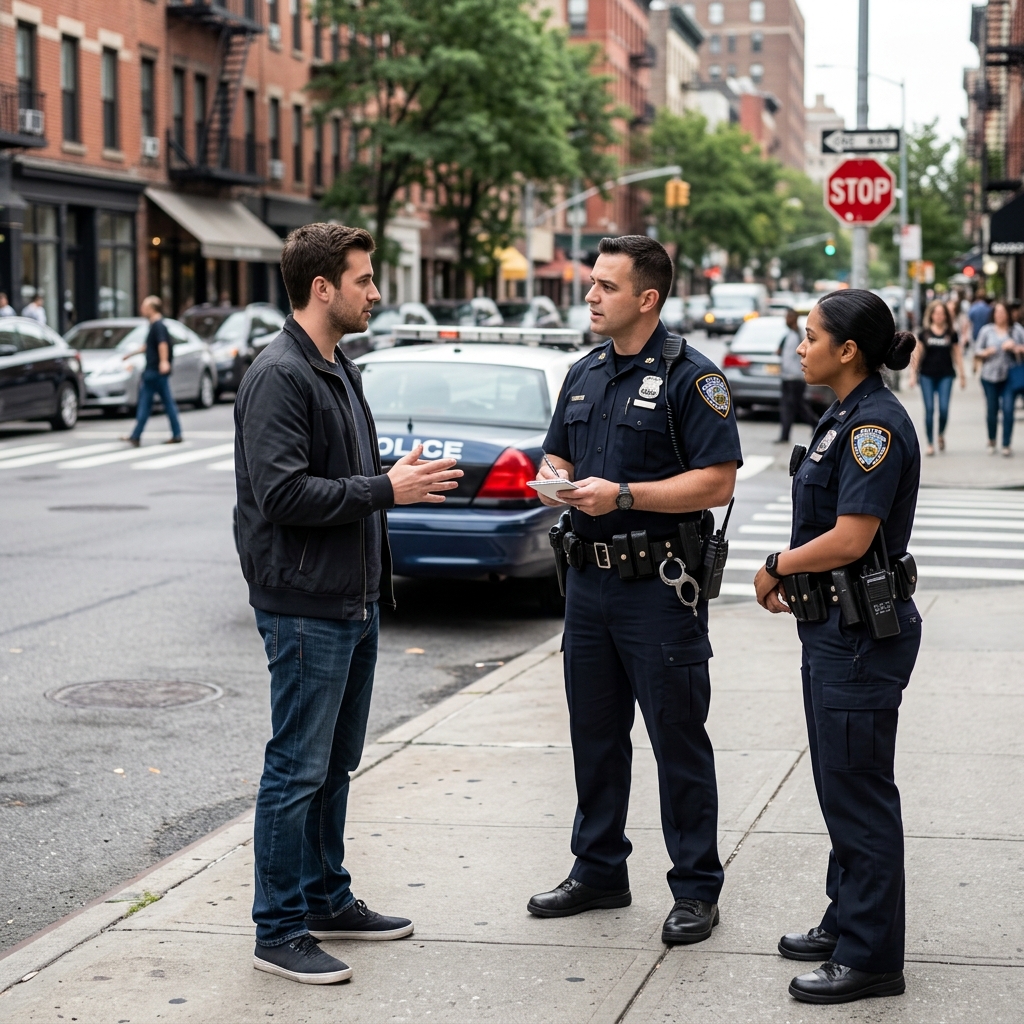
Being approached or stopped by police in public can be stressful and confusing. Knowing ahead of time how to respond, what rights you have, and what the law generally allows officers to do can help you stay safer and avoid making the situation worse.
This guide explains, in plain language, how to handle a street encounter with police. It is based on widely recognized constitutional principles and practical “know your rights” guidance from legal organizations and law enforcement agencies. It is not legal advice for your specific case; laws and procedures can differ by country, state, and even city.
Types of Police Encounters on the Street
Not every interaction with police is the same. Understanding the basic types of encounters helps you decide what you should (and do not have to) do.
| Type of encounter | What it means | Your main rights |
|---|---|---|
| Casual contact | Officer starts a conversation, but you are free to walk away. | Right to leave, right to remain silent, no obligation to answer questions. |
| Investigatory stop (detention) | Officer has reasonable suspicion you may be involved in a crime and briefly detains you. | Right to ask if you are free to go, right to remain silent, limited pat-down in some cases. |
| Arrest | Officer has probable cause to believe you committed a crime and takes you into custody. | Right to remain silent, right to a lawyer, protections against unreasonable searches. |
In practice, it may not be clear which type of encounter you are in. A simple, respectful question can help: “Am I free to leave?” or “Am I being detained?”
Immediate Steps When Police Approach You
Regardless of why officers approach you, these basic steps help protect your safety and reduce the risk of escalation.
- Stay still and keep your hands visible. Avoid sudden movements or reaching into pockets or bags unless you have been clearly told to do so.
- Remain calm and control your voice. Speak slowly and clearly. Strong emotions are understandable, but anger or yelling can make the situation more tense.
- Do not run or attempt to flee. Running can be interpreted as an attempt to escape or may increase suspicion, and it can also lead to physical danger.
- Do not touch the officer. Even minor physical contact can be seen as resistance.
- Follow basic lawful instructions. For example, if told to step to the side, sit down, or show your hands, comply unless you are physically unable to do so.
These actions do not give up your rights. They simply reduce the chance of harm while you assert those rights appropriately.
What to Say (and Not Say)
What you say during a street stop matters. Words can either help clarify the situation or create additional problems.
Key phrases that can help you
- “Am I free to leave?” Use this to find out if the interaction is voluntary or if you are being detained.
- “I do not consent to any search.” If an officer asks to look through your bag, pockets, or other belongings, you may calmly refuse consent. Do not physically resist.
- “I want to remain silent.” Clearly stating this invokes your right not to answer questions about alleged criminal activity.
- “I want to talk to a lawyer.” If you are under arrest or being questioned about a crime, ask for an attorney and then stop answering questions.
Phrases and behavior to avoid
- Aggressive insults or threats. Verbal abuse can escalate the situation and may lead to charges in some jurisdictions.
- Arguments about legality on the street. If you disagree with the stop, document it and later raise it in court or through a complaint process rather than arguing on the spot.
- Admissions or detailed explanations. Trying to “talk your way out” by giving complex stories, excuses, or guesses about what happened can create statements that may be used against you later.
Remember: in many legal systems, anything you say can be used against you in court. Silence, when clearly asserted, is often legally safer than conversation.
Your Core Legal Rights During a Street Stop
While details vary by jurisdiction, several core rights are commonly recognized in democratic legal systems and have been reinforced by organizations like the ACLU and public defenders.
Right to know if you can leave
You generally have the right to ask if you are being detained and whether you are free to go. If the officer says you are free to leave and you prefer not to continue the conversation, you may calmly walk away.
Right to remain silent
In many countries, you do not have to answer questions about alleged criminal activity, where you have been, or what you were doing, beyond providing basic identifying information if required by law. You can say, “I want to remain silent,” and then stop talking.
Right to be free from unreasonable searches
Officers generally need either your consent, a warrant, or a legally recognized justification (such as probable cause or a limited pat-down based on reasonable suspicion) to search you or your belongings. You may clearly state that you do not consent to a search, while still physically cooperating.
Right to a lawyer after arrest
If you are arrested or taken into custody, you have the right to consult with an attorney before answering questions about a crime. Many legal aid organizations advise that you should ask for a lawyer immediately once you realize you are under arrest.
Understanding Stop-and-Frisk and Pat-Downs
In some jurisdictions, police may perform a limited pat-down of your outer clothing, often called a stop-and-frisk or a frisk, if they have a specific, articulable suspicion that you might be armed and dangerous.
- Scope is limited. A pat-down is usually restricted to checking for weapons, not conducting a full search of personal items.
- Based on reasonable suspicion. Officers must have more than a vague hunch; they need a factual basis for suspecting you may be armed.
- You can object verbally. You may say, “I don’t consent to this search,” but you should not physically resist.
If a frisk leads to discovering something that creates probable cause (such as illegal contraband), the encounter may escalate into an arrest and a more complete search.
If You Are Arrested on the Street
An arrest generally requires probable cause, meaning a strong, factual reason to believe you committed a crime. Once you realize you are under arrest, your priorities change.
- Stop answering questions. Immediately invoke your right to remain silent and to speak with a lawyer.
- Do not resist physically. Even if you believe the arrest is illegal, physical resistance can lead to additional charges and safety risks.
- Ask for medical help if needed. If you are injured during the encounter, request medical attention.
- Pay attention to details. Try to notice officer names, badge numbers, vehicle numbers, and the location of the arrest.
After arrest, you will typically have opportunities to challenge the legality of the stop and any evidence obtained during court proceedings with the help of your attorney.
Documenting and Responding to Possible Misconduct
If you believe your rights were violated during a street stop, it is important to act only once you are safe and away from the immediate encounter.
Steps to take once you are safe
- Write down everything you remember. Do this as soon as possible: what was said, what happened, any use of force, time, place, and the sequence of events.
- Record identifying information. Note badge numbers, patrol car numbers, officer names if known, and any witnesses’ names and contact details.
- Document injuries or property damage. Seek medical care if needed and take photographs of injuries or damaged items as soon as possible, then periodically as they heal.
- Consult a lawyer promptly. Contact a criminal defense lawyer or a legal aid organization to review what happened and discuss your options.
Filing a formal complaint
Many jurisdictions have internal affairs divisions or civilian review boards that review complaints against police.
- File with the appropriate agency. Complaints usually go to the police department’s internal affairs unit or a designated oversight body.
- Act promptly. Reporting soon after the incident makes it easier to preserve evidence and witness memories.
- Provide as many details as possible. Include dates, times, locations, and a chronological description of what happened.
In addition to complaints, civil lawsuits or other legal remedies may be available, but they typically require consultation with a qualified attorney.
Special Considerations for Vulnerable Groups
Some people face particular risks or complications when stopped by police, including racial minorities, young people, and noncitizens. Many legal guides emphasize extra planning for these groups.
- Racial profiling concerns. If you believe you were stopped because of your race or ethnicity rather than specific behavior, document the encounter and consult a lawyer or rights organization.
- Youth and minors. Young people are often advised to inform parents or guardians about any police encounter and to get legal advice quickly.
- Noncitizens and immigration risks. Interactions with police can have immigration consequences, so noncitizens are usually urged not to sign documents or make admissions without legal counsel familiar with immigration law.
Practical Checklist: Before, During, and After a Street Stop
While you cannot control when you are stopped, you can prepare mentally and know your next steps.
Before an encounter
- Learn the basic rights and obligations in your local jurisdiction.
- Memorize key phrases: “Am I free to leave?”, “I want to remain silent,” “I don’t consent to a search,” “I want a lawyer.”
- Know the contact information for a local legal aid organization or attorney.
During the stop
- Keep your hands visible and avoid sudden movements.
- Stay calm, listen carefully, and respond respectfully.
- Ask if you are free to leave; if yes and you wish to end the interaction, walk away calmly.
- Clearly state if you choose to remain silent or decline a search.
After the stop
- Write down your recollection as soon as possible.
- Seek medical attention and document injuries if any occurred.
- Contact a lawyer to review what happened and consider next steps.
- File a complaint if you believe misconduct occurred.
Frequently Asked Questions (FAQ)
1. Do I have to answer police questions on the street?
In many jurisdictions, you may be required to provide basic identifying information if lawfully detained, but you generally do not have to answer questions about where you have been, what you were doing, or involvement in a crime. You can state that you want to remain silent.
2. Can I refuse a search of my bag or pockets?
Often, yes. You may calmly say, “I do not consent to a search.” However, officers might still conduct certain limited searches based on reasonable suspicion or probable cause, or under specific local laws.
3. What should I do if I think the stop is illegal?
Do not resist physically or argue on the street. Comply with basic instructions, then document the encounter and speak with a lawyer as soon as possible. You can later challenge the stop in court or through formal complaints.
4. Can I record the police during a street stop?
Many places allow recording police in public as long as you do not interfere with their work or break other laws, but rules vary. Check local law and be careful not to obstruct the encounter while recording.
5. How soon should I contact a lawyer after an arrest or problematic stop?
Guides from civil liberties groups and public defenders recommend contacting an attorney as soon as possible after any arrest or if you believe your rights were violated. Early legal advice can help protect your rights and preserve evidence.
References
- What To Do If You’re Stopped by Police in New Jersey — American Civil Liberties Union of New Jersey. 2023-01-01. http://www.aclu-nj.org/know-your-rights/what-do-if-youre-stopped-police-new-jersey/
- When Stopped by an Officer — ACLU of Southern California. 2022-06-01. https://www.aclusocal.org/know-your-rights/when-stopped-officer/
- Police Stops on the Street & Your Legal Rights — Justia Criminal Law Center. 2021-05-01. https://www.justia.com/criminal/procedure/police-stops-on-the-street/
- KNOW YOUR RIGHTS: What To Do If You’re Stopped By The Police — Federal Public Defender, Virginia. 2012-06-12. https://vaw.fd.org/sites/vaw/files/know-your-rights/Racial_Profiling_Know_Your_Rights_Supplement_6-12-12.pdf
- What To Do When Stopped by Law Enforcement — South Miami Police Department. 2020-01-01. https://www.southmiamifl.gov/247/What-to-Do-When-Stopped-by-Law-Enforceme
Similar Articles








Read full bio of medha deb




