
State ID Card: 5-Step DMV Guide To Get Your REAL ID Fast Today
A practical, step‑by‑step guide to applying for, renewing, and replacing a state ID card so you can confidently navigate DMV requirements.
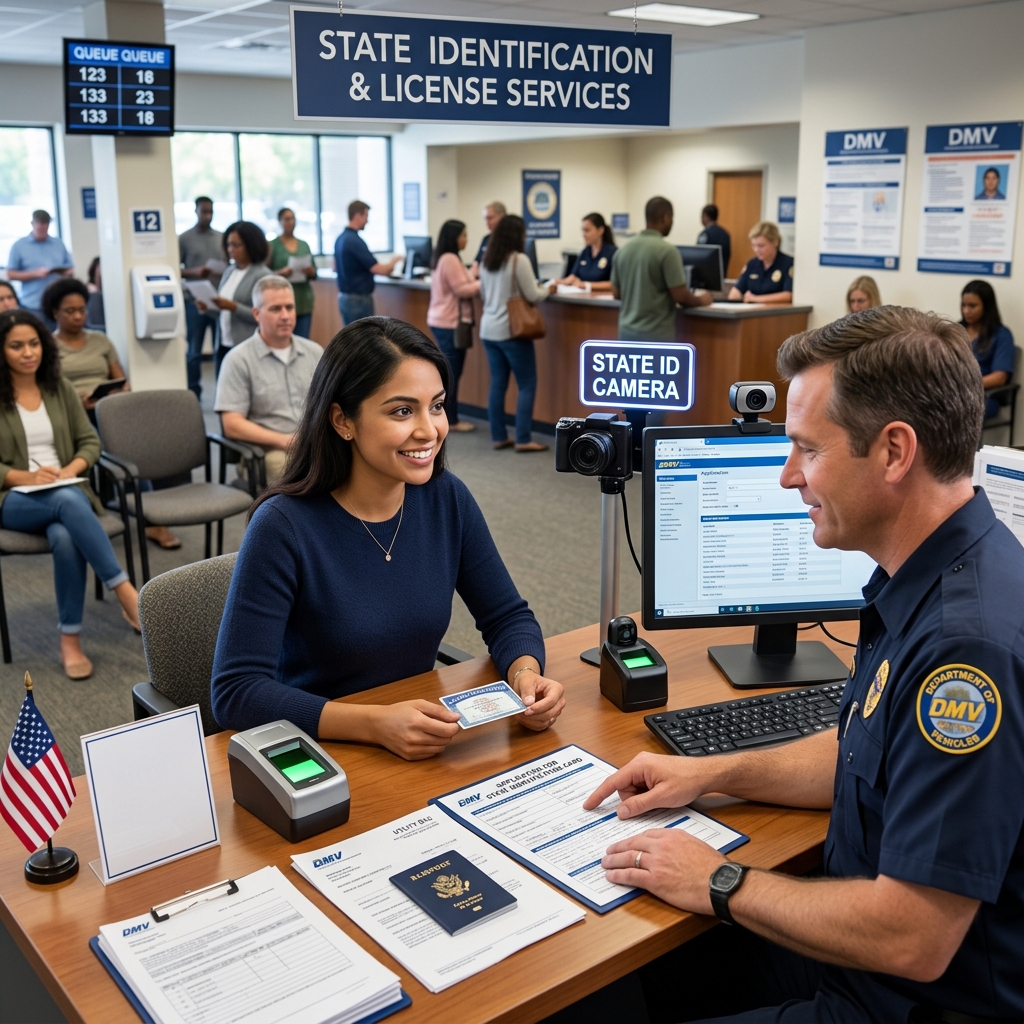
A state identification card (often called a “state ID”) is an official, government-issued card that proves who you are and where you live. It looks similar to a driver’s license but does not grant driving privileges. State IDs are commonly required to open bank accounts, pick up prescriptions, enter certain buildings, or board domestic flights under federal REAL ID rules.
This guide explains, in clear terms, how to get a state ID card from your local Department of Motor Vehicles (DMV) or equivalent agency, what documents you will need, how REAL ID works, and what to expect during and after your visit.
Why a State ID Card Matters
Even if you never plan to drive, having a state ID card is often essential. Many organizations rely on it as your primary identity document because it is issued by a state agency and typically includes your photo, date of birth, address, and a unique identification number.
- Proof of identity for banking, employment verification, and government services.
- Emergency identification if you do not have a driver’s license.
- Travel readiness when combined with REAL ID compliance for domestic air travel.
- Access to local services such as libraries, schools, and health providers that require photo ID.
Because of how frequently photo ID is requested, many states allow children, seniors, and people with disabilities or driving restrictions to obtain ID cards easily and sometimes at reduced or no cost.
Understanding Different Types of State ID Cards
Although terminology varies, most states offer more than one type of identification card. Knowing the difference helps you choose the right card for your situation.
| Type of ID Card | Main Purpose | Typical Eligibility |
|---|---|---|
| Standard State ID | Basic photo identification for everyday use. | Residents who do not need driving privileges or want a non‑driver ID. |
| REAL ID Compliant State ID | Meets federal security standards for certain uses, including boarding domestic flights and entering some federal facilities. | Residents who present additional documents to prove identity, Social Security number, and residency. |
| Child or Minor ID Card | Photo identification for children and teenagers who are not driving yet. | Younger applicants, often under a specific age (e.g., under 15 in Virginia). |
| Special ID (e.g., hearing‑impaired ID) | Identifies a particular condition to assist law enforcement or service providers. | Applicants meeting defined medical or legal criteria. |
Basic Eligibility to Apply for a State ID
Most states allow residents to apply for a state ID card at a relatively young age, sometimes as early as six years old. To qualify, you generally must:
- Be physically present in the state and intend to live there (establish residency).
- Be able to prove your identity and date of birth using official documents.
- Demonstrate lawful presence in the United States if required by state law.
- Provide your Social Security number or acceptable alternative documentation.
States may offer special processes or fee waivers for people experiencing homelessness, those with certain disabilities, or individuals whose driver’s licenses have been suspended or revoked.
Step-by-Step: How to Apply for a New State ID Card
While each state has its own forms and names, the application process follows a similar structure nationwide. Here is a general roadmap that applies in most jurisdictions.
1. Complete the Required Application Form
Every DMV or licensing agency uses an official application form for identification cards. Sometimes the same form covers both driver’s licenses and ID cards.
- Locate the correct form on your state DMV website (often labeled “Driver’s License/ID Card Application” or similar).
- Fill in your legal name, date of birth, address, and contact information.
- Indicate whether you are applying for a standard ID or a REAL ID compliant card.
- If you are under 18, ensure any required parent or guardian signatures are included.
Some states allow you to start the application online and then complete the process in person, which can speed up your visit.
2. Gather the Documents You Must Bring
States use multiple documents to verify your identity, lawful presence, Social Security number, and residency. Requirements vary, but the following categories are common.
- Proof of identity and age
- Original or certified birth certificate.
- Unexpired U.S. passport or passport card.
- Certificate of Naturalization or Certificate of Citizenship.
- Proof of lawful presence (often combined with identity)
- U.S. passport.
- Consular report of birth abroad.
- Immigration documents issued by the U.S. government, such as I‑94 or other status records.
- Proof of Social Security number
- Social Security card.
- SSA printouts or benefits statements showing your full SSN.
- Tax forms (such as SSA‑1099 or other official documents) that include your complete number.
- Proof of residency
- Utility bills, lease agreements, or mortgage documents showing your name and address.
- Government correspondence, such as tax notices or benefits letters.
- School enrollment letters or other official institutional records with your address.
- Proof of legal name changes
- Marriage certificates.
- Divorce decrees.
- Court orders documenting any change in name.
Most REAL ID applications require two separate proofs of residency and may have more exact formatting rules for acceptable documents.
3. Schedule or Plan Your DMV Visit
In many places you must visit a physical office so staff can review your documents and take your photo.
- Use the DMV’s online locator to choose an office near your home or workplace.
- Check whether appointments are required or recommended; some agencies still serve walk‑in customers but may have limited capacity.
- Review any special check‑in instructions, such as mobile check‑in and text alerts when it is your turn.
For individuals who are homebound due to age or chronic illness, some states offer homebound services where DMV staff or authorized agents come to you or arrange an alternative process. This can be crucial for people who cannot safely travel to DMV locations.
4. What Happens During the Office Visit
Once you arrive at the DMV, expect a series of standardized steps.
- Check in and present your application: Staff will review your form and confirm the type of ID card you are requesting.
- Document verification: Your identity, lawful presence, Social Security number, and residency are verified using the documents you brought.
- Biometric collection: Many DMVs scan your thumbprint and capture a digital photograph to include on the ID card.
- Payment of fees: You pay the application fee, if one applies; certain applicants may qualify for reduced or no‑fee cards.
- Final confirmation: Staff will confirm your mailing address and inform you when to expect your card.[10]
Unlike driver’s licenses, ID card applicants generally do not need to take written or road tests, because no driving privileges are being issued.
5. Receiving Your ID Card
Some states issue a temporary paper ID at the office while your permanent card is produced and mailed to you.[10] Others simply mail the card without a temporary document.
- Typical mailing times range from about 3–4 weeks to 20 business days, depending on the state.
- Cards are sent to the mailing address you provided on your application, so make sure this information is correct.
- If you applied following the surrender of a suspended or revoked driver’s license, some states will automatically send you a free ID card without a separate application.
REAL ID vs. Standard ID: What’s the Difference?
The REAL ID Act is a federal law that sets security standards for state-issued identification documents. States mark REAL ID compliant cards with a specific symbol (often a star) in the corner.
- Standard State ID
- Useful for most day‑to‑day transactions that require photo ID.
- May not be sufficient for boarding domestic flights or entering certain secure federal facilities once REAL ID enforcement is fully in place.
- REAL ID State ID
- Requires more documentation to verify identity, Social Security number, and residency.
- Designed to meet federal identification standards for transportation and security purposes.
You do not have to obtain a REAL ID if you prefer to use another federally accepted document, such as a passport, for travel and federal building access. However, many people choose REAL ID cards for convenience.
Renewing an Expired State ID Card
State ID cards are not permanent; they expire after a set number of years. The renewal process can be simpler than the initial application, but rules differ by state.
- Check your expiration date printed on the front of the card.
- Review renewal options: some states allow online or mail renewals if your information has not changed.
- Prepare documents: if your ID has been expired for a long period (for example, nine months or more in South Carolina), you may need to present all required documents again.
- Confirm fees: renewal fees can be lower than initial application fees, and some categories of applicants may qualify for free renewals.
When renewing, consider whether you want to upgrade to a REAL ID compliant card. That decision may affect which documents you must bring.
Replacing a Lost, Stolen, or Damaged State ID
If your ID card is lost, stolen, or damaged, most DMVs offer a replacement process. Replacement fees are typically modest, such as $10 in some states.
- Contact your DMV or visit its website to learn the required steps for replacement.
- Expect to verify your identity, often using the same types of documents as your original application.
- Report theft to law enforcement where appropriate, particularly if you suspect your ID might be misused.
Replacement cards usually carry the same expiration date and identification number as the original, unless your state issues a new card format.
Special Situations and Fee Waivers
Some applicants encounter circumstances that call for special rules or benefits. Examples include:
- Homebound residents: In North Carolina, applicants who cannot travel to an office due to age or chronic illness may request homebound services, allowing them to obtain state IDs without leaving home.
- Homeless individuals: Certain states waive fees or offer alternative residency documentation, such as letters from shelters or community organizations.
- Suspended or revoked drivers: North Carolina issues free ID cards to people whose driver’s licenses are surrendered or seized due to suspension or revocation.
- Minors and students: Schools and universities often help students gather residency documentation, and some guidance materials recommend state IDs for international students who do not plan to drive.
Because these special rules are highly state-specific, the best practice is to review your DMV’s official website or contact the agency directly for current policies.
Practical Tips to Avoid Problems at the DMV
Preparation can significantly reduce stress and waiting time. Consider the following practical suggestions:
- Bring original documents: Many DMVs do not accept photocopies of critical documents like birth certificates.
- Check document consistency: Ensure your name and date of birth match across your records and Social Security documents.
- Confirm residency proof: Review your state’s list of acceptable proofs and bring more than the minimum if possible.
- Arrive early or book appointments: Offices can reach capacity quickly, so early arrival or pre‑scheduled appointments help avoid delays.
- Keep copies for your records: While some originals are required at the DMV, maintain photocopies or digital scans for your own files in case of future renewals or replacement requests.
Frequently Asked Questions (FAQs)
Do I need a driver’s license to get a state ID?
No. State ID cards are specifically designed for people who do not have or do not want a driver’s license. In fact, some states issue ID cards automatically when a driver’s license is surrendered or revoked.
Can children get state ID cards?
Yes. Many states issue ID cards to minors, sometimes with separate application forms for children under a specified age. For example, Virginia uses a different form for applicants under age 15. Parents or guardians typically participate in the application process.
Is a Social Security number always required?
Most states ask for a Social Security number or proof of ineligibility, but the rules differ. Some allow alternative documentation if the applicant is not eligible for a Social Security number or is an international student.
How long does it take to receive my ID card?
Processing times vary, but common ranges are three to four weeks in California and up to 20 business days in North Carolina, with cards mailed to the address provided on your application.
Is a REAL ID compulsory?
No. REAL ID is one option for complying with federal security standards, particularly for air travel and access to certain facilities. You may continue to use other acceptable documents, such as a passport, instead of a REAL ID card, but many people find REAL ID convenient.
What if my ID has been expired for a long time?
If your card has been expired for an extended period, some states treat your visit like a new application and require full documentation to be presented again. South Carolina, for example, requires all core documents if the ID has been expired for nine months or more.
Can the DMV waive my ID card fee?
Yes, in some cases. States may waive ID fees for people experiencing homelessness, those with certain disabilities, or individuals whose driver’s licenses have been suspended or revoked. Check your state’s eligibility criteria.
References
- ID Cards — California Department of Motor Vehicles. 2024-03-01. https://www.dmv.ca.gov/portal/driver-licenses-identification-cards/identification-id-cards/
- Get a Georgia State ID Card — Georgia Department of Driver Services. 2023-08-10. https://dds.georgia.gov/georgia-licenseid/new-licenseid/how-do-i-id-card
- Get an Identification Card — Virginia Department of Motor Vehicles. 2024-02-15. https://www.dmv.virginia.gov/licenses-ids/id-cards/get-id
- Identification Cards — South Carolina Department of Motor Vehicles. 2023-11-20. https://dmv.sc.gov/driver-services/identification-cards
- State IDs — North Carolina Division of Motor Vehicles (NCDOT). 2026-04-24. https://www.ncdot.gov/dmv/license-id/identification/Pages/default.aspx
- Identification Cards — Mississippi Department of Public Safety, Driver Service Bureau. 2023-05-01. https://www.driverservicebureau.dps.ms.gov/Drivers/Identification_Cards
- N.C. DMV to issue free ID for holders of suspended or revoked licenses — Mountain Xpress. 2023-10-15. https://mountainx.com/blogwire/n-c-dmv-to-issue-free-id-for-holders-of-suspended-or-revoked-licenses/
Similar Articles








Read full bio of medha deb


