
Get A Copy Of A Divorce Decree: Complete Guide In 2025 Online
Learn where divorce decrees are kept, what details you need, and how to request one.
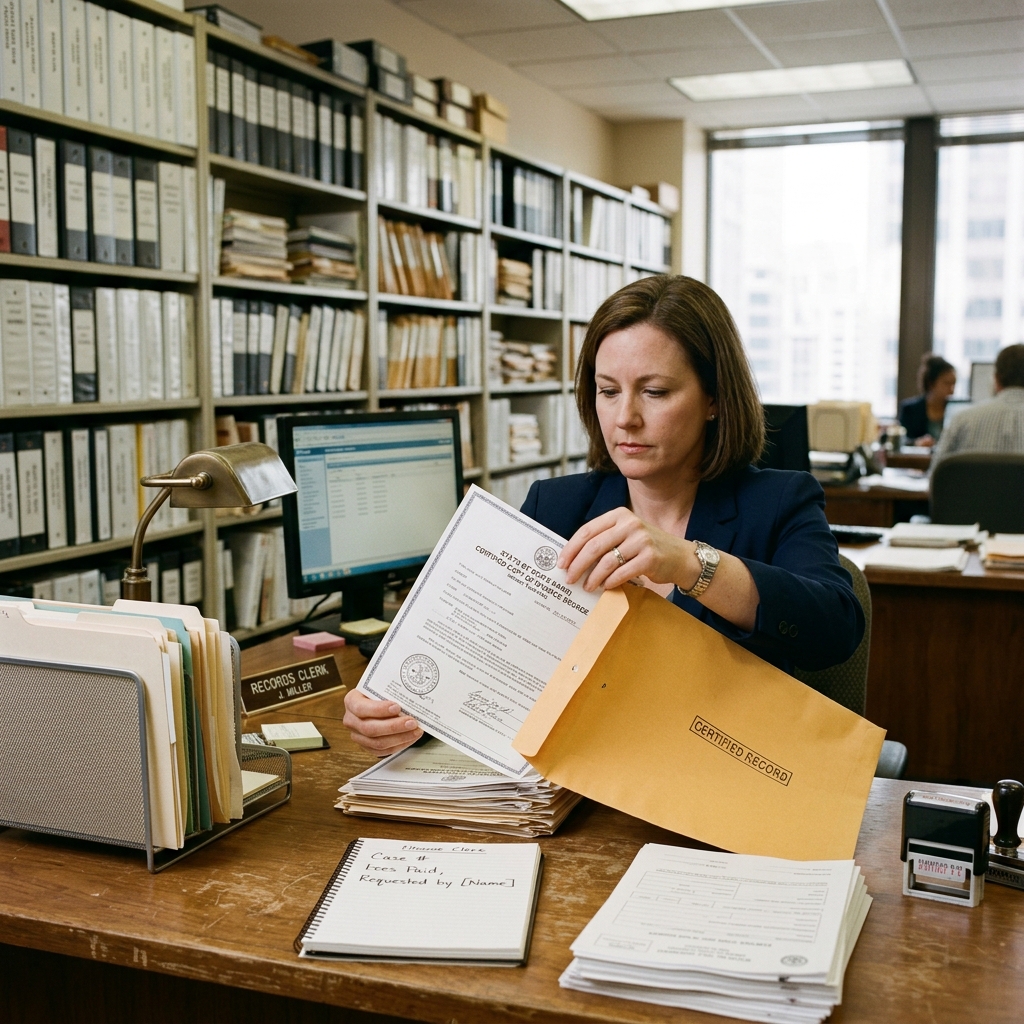
A divorce decree is the official court order that ends a marriage and records the final terms of the case. If you need a copy, the right place to ask is usually the court that handled the divorce, although some states also route requests through vital records or archive offices.
The exact process depends on the state, the county, and how old the case is. In many places, you can request the document in person, by mail, or through an approved records system, but you will usually need enough identifying information for staff to locate the case.
What a divorce decree actually is
A divorce decree is more than a simple proof that a marriage ended. It is a court-issued order that can include the judge’s final ruling and the key terms that govern the end of the marriage.
- It identifies the parties in the case.
- It records the date the marriage was legally dissolved.
- It may include property division, custody, support, and other obligations.
Because the decree is part of the court file, it is often different from a divorce certificate. A divorce certificate is usually a shorter record issued by a vital records office and may contain only basic information, while the decree can contain the court’s full order and details of the settlement or judgment.
Why people need a copy
People request a divorce decree for many legal and practical reasons. Courts and records offices commonly provide copies for remarriage, name changes, and other matters that require proof of divorce.
- To prove the divorce was finalized before remarrying.
- To update a name on identification, banking records, or benefits.
- To review child custody, support, or property terms.
- To submit documentation for immigration, insurance, or financial records.
Start with the court that issued the decree
In most states, the best first step is to contact the court clerk in the county where the divorce was granted. New York, for example, keeps divorce records in the county clerk’s office where the proceeding occurred, and Massachusetts directs people to the Probate and Family Court that handled the case.
Some states maintain older records in archives, especially when files have been transferred away from the trial court. Maryland’s records service, for instance, notes that copies are available only for county circuit court files that have been transferred to the archives.
Information you should gather before you request a copy
Courts can usually search more efficiently if you provide exact identifying details. Pennsylvania’s Philadelphia Family Court instructions list a case number as the preferred search key and, if the number is unknown, the spouses’ names and an approximate filing year.
Massachusetts likewise says court staff may ask for the type of case, the parties’ names, and the city or town where the divorce was filed.
| Information to collect | Why it helps |
|---|---|
| Case or docket number | Lets staff locate the record quickly |
| Full names of both spouses | Helps identify the correct file when the number is unknown |
| Approximate year of filing or final decree | Narrows the search window |
| County or court location | Confirms which office holds the record |
How to find the case number if you do not have it
If you do not know the case number, some jurisdictions provide online search tools or registry services. Massachusetts says you may search for the case online, call the Probate and Family Court, or visit a virtual registry to obtain the docket number.
Other courts may search by name if you know the parties and the county. This is especially useful when the divorce happened years ago and the exact file number is no longer available to the requesting party.
Ways to request the decree
The available request methods vary by court, but the most common options are in person and by mail. Philadelphia’s instructions state that certified copies may be obtained in person at the Clerk of Family Court or through a written mail request.
Massachusetts also allows requests by mail or in person using the proper form and payment.
- In person: Often the fastest option if the file is active and the office can locate it right away.
- By mail: Useful if you live far from the courthouse or cannot visit during business hours.
- Through archives or record services: Sometimes required for older cases that have been transferred from the court.
Fees and payment methods
Courts charge different fees depending on the state, the type of record, and whether you want a certified copy. In Philadelphia, the fee listed for a certified copy of a divorce decree is $41.58 per copy. Massachusetts lists a $20 fee for a certificate of divorce absolute and for a certified copy of a judgment of divorce nisi.
Accepted payment methods also vary. Philadelphia accepts certified checks, money orders, and, in person, credit card payments with identification. Massachusetts accepts attorney’s checks, money orders, bank certified checks, or bank cashier’s checks made payable to the Commonwealth of Massachusetts.
Before sending payment, confirm the exact amount with the court or records office because fees can change and may differ for search costs, certified copies, or additional pages.
What to include in a mail request
If you are requesting the decree by mail, the court may require a written request, payment, and a self-addressed stamped envelope. Philadelphia’s instructions specifically ask for the request to be sent to the Clerk of Family Court and to include a self-addressed stamped envelope along with payment by certified check or money order.
Courts may also require a form supplied by the court system. Massachusetts instructs requesters to complete a Request for Copies form and send or bring it to the appropriate courthouse.
- A written request naming the parties.
- The case number, if known.
- The filing year or divorce date, if available.
- Payment in the correct form.
- A self-addressed stamped envelope for return mailing.
When an archived file may be involved
Older divorce files are often moved out of the trial court and into an archive or records repository. That means the request process can take longer, especially if staff must retrieve a paper file from storage.
New York explains that divorce records dating back to July 1, 1847 are filed in the county clerk’s office where the proceeding occurred, while earlier records may be found at the state archives or a county clerk office depending on location. Maryland likewise limits access to files that have been transferred to the archives.
If a divorce happened many years ago, it is smart to call first and ask whether the court still holds the file or whether another agency manages the record.
Certified copy or plain copy: which one do you need?
A certified copy is an official copy that bears the court’s certification seal or statement and is commonly required when you must prove the divorce to another institution. Plain copies may be suitable for personal reference, but they are not always accepted for legal or administrative purposes.
| Type of copy | Typical use |
|---|---|
| Certified copy | Remarriage, name change, immigration, government or financial filings |
| Plain copy | Personal records or reviewing case terms |
If you are unsure which one to request, ask the receiving agency what it requires before paying for the copy.
How divorce decrees differ from divorce certificates
Many people use the terms interchangeably, but they are not always the same document. A decree comes from the court and can include detailed rulings, while a certificate is a shorter vital-records document that usually confirms the fact and date of the divorce.
Some states issue both documents; others issue only one. Vital records offices may provide certificates, while courts provide decrees. That means the office you contact depends on the document you need and the state rules that apply.
Common problems and how to avoid delays
Most delays happen because the request does not contain enough identifying information or because the file is stored in an archive. Courts note that exact names, a docket number, and a filing year can make a major difference in turnaround time.
- Check the county before submitting the request.
- Use the full legal names of both spouses.
- Include the best estimate of the divorce year.
- Match the payment method and amount to the court’s instructions.
- Call ahead if the case is old or the court has transferred records to another office.
Helpful questions to ask the clerk
Speaking to the clerk’s office can save time and prevent rejected requests. Massachusetts says court staff can help search for a case when you know the type of case, the parties’ names, and the city or town where it was filed.
- Do you still hold the original divorce file?
- Is a certified copy available?
- What forms of payment do you accept?
- Can you search by name if I do not know the docket number?
- How long does the request usually take?
Frequently asked questions
Can I get a copy if I was not the spouse in the case? Access rules vary by state, but divorce records are commonly available to the parties, their attorneys, or authorized requesters. New York notes that matrimonial records are available only to the parties or their attorneys until one hundred years after the final decree.
Can I order a divorce decree online? Some jurisdictions or authorized records vendors offer online ordering for certain records, while others require mail or in-person requests. Availability depends on the state and whether the file has been digitized.
How long does it take? Processing time depends on the court’s workload, whether the file is archived, and whether the request is complete. Massachusetts advises contacting the local Probate and Family Court to learn how long the process will take.
What if I only need proof that the divorce happened? A divorce certificate may be enough in some situations, but many agencies ask for a certified court copy of the decree. Check the requestor’s requirements before you apply.
References
- Instructions to Obtain Certified Copies of Divorce Decrees — First Judicial District of Pennsylvania. 2024-03-18. https://www.courts.phila.gov/pdf/manuals/ojr/INSTRUCTIONS-TO-OBTAIN-CERTIFIED-COPY-DIVORCE-DECREES.pdf
- Get a copy of your divorce record — Mass.gov. 2026-07-09. https://www.mass.gov/how-to/get-a-copy-of-your-divorce-record
- Divorce Decree vs. Divorce Certificate: Comparison — MetLife. 2026-07-09. https://www.metlife.com/stories/legal/divorce-decree/
- Where do I get a copy of a divorce decree? — New York State Archives. 2026-07-09. https://www.archives.nysed.gov/content/where-do-i-get-copy-divorce-decree
- Divorce Certificates and Divorce Decrees — NH Law Library. 2026-07-09. https://courts-state-nh-us.libguides.com/divorcecertificatesdecrees
- Divorce Decree Order Form — Maryland State Archives / Maryland.gov. 2026-07-09. https://shop.msa.maryland.gov/orders/OrderForms/DivorceDecree.aspx?type=online
- Order Divorce Records Online — VitalChek. 2026-07-09. https://www.vitalchek.com/v/divorce-records?lang=en
Similar Articles








Read full bio of medha deb


