Filing for divorce in Texas follows a clear sequence, but the process still depends on where you live, whether your spouse agrees, and what issues must be resolved before the case can end. Texas allows both contested and uncontested divorces, and the basic filing rules apply even when the marriage is ending on cooperative terms.
This guide explains the main steps in plain language: checking whether you can file in Texas, starting the case, notifying your spouse, waiting out the required period, and completing the paperwork that makes the divorce final.
What Texas Requires Before You File
Before you submit anything to the court, Texas law requires that at least one spouse meet the state and county residency rules. In general, either spouse must have lived in Texas for at least six months and in the county where the divorce is filed for at least 90 days.
If you are in the military or temporarily outside Texas for government service, those residency rules can still be satisfied in some situations if Texas remains the home state for you or your spouse.
Residency at a Glance
| Requirement | Rule in Texas |
|---|---|
| Texas residency | At least 6 months |
| County residency | At least 90 days |
| Military or government service abroad | May still qualify if Texas remains the home state |
Choosing the Correct County
The divorce is usually filed in the district court of the county where either spouse has lived for the past 90 days, as long as the six-month Texas residency requirement is also met. If the filing spouse lives outside Texas but the other spouse still lives in the state, the case may be filed in the county where the Texas-resident spouse lives.
Choosing the wrong county can delay the case, so it is worth confirming the correct venue before preparing forms. Texas court resources and local clerk offices can help confirm where the petition should be filed.
Starting the Divorce Case
A Texas divorce begins when one spouse, called the petitioner, files the initial divorce petition with the district clerk. Texas Law Help notes that there is a single official divorce form in Texas, but the exact packet of forms depends on the family situation, such as whether the spouses have minor children.
The petition tells the court basic information about the marriage and asks for a divorce. In an uncontested case, the petition may also show that both spouses agree on the main issues or that the filing spouse expects the case to be resolved without a dispute.
Many counties allow electronic filing, while others accept in-person filing at the clerk’s office. If you file by hand, you usually need copies of the petition and any starting forms for the clerk to file-stamp.
What Forms Commonly Come with the Petition
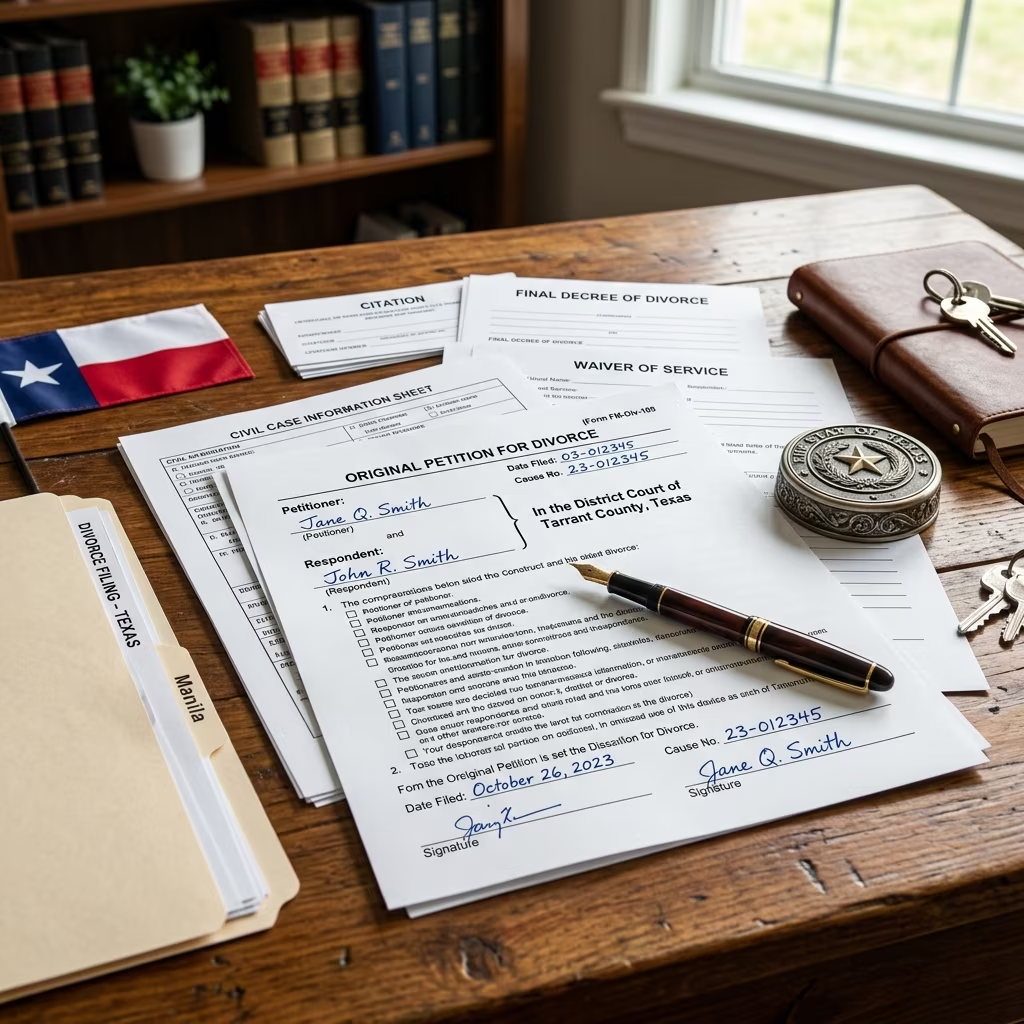
The exact forms depend on the case, but a simple Texas divorce often includes an original petition, a waiver of service if the other spouse agrees, and later the final decree. Texas Law Help also notes that people who cannot afford court fees may file an affidavit of inability to pay court costs.
When children are involved, additional forms are usually required. Even in an uncomplicated divorce, the court expects complete paperwork before it will approve the final order.
- Original Petition for Divorce
- Waiver of Service or answer form, if applicable
- Financial fee waiver request, if needed
- Final Decree of Divorce
- Additional family-relationship forms, when required
Serving or Notifying Your Spouse
After filing, the other spouse must be told that the case has started. This notice is known as service of process, but in many uncontested cases the spouse can sign a waiver of service instead of being formally served by a constable, sheriff, or private process server.
A waiver does not erase the need for the spouse to receive the case information; it simply simplifies the notice process when the parties are cooperating. If there is no agreement, the petitioner may need formal service and the case may take longer.
The Mandatory Waiting Period
Texas generally requires a 60-day waiting period between the date the petition is filed and the date the divorce may be granted. This waiting period applies even in a straightforward, uncontested divorce. It gives the parties time to finish negotiations, review settlement terms, and make sure the filing is the right choice.
Most divorces take longer than 60 days because of scheduling, document preparation, and any unresolved issues. Texas courts can also issue temporary orders while the case is pending if support, custody, or use of property must be addressed before the divorce is final.
Uncontested and Contested Divorces
The filing process is similar at the beginning whether the divorce is contested or uncontested, but the path after service can look very different. In an uncontested divorce, the spouses agree on the major issues and typically sign the final papers without a lengthy court fight.
In a contested divorce, the spouses disagree about one or more issues such as property division, support, or parenting terms. In that situation, the case may involve motions, hearings, and additional negotiation before the judge signs a final decree.
| Type of Divorce | Typical Process |
|---|---|
| Uncontested | Fewer hearings, signed agreement, faster completion |
| Contested | More filings, possible hearings, and longer timeline |
Preparing the Final Decree
The Final Decree of Divorce is the document that ends the marriage. It spells out the division of property and debt, any child-related orders, support obligations, and other terms the court is being asked to approve.
In an uncontested divorce, both spouses usually review the decree carefully before signing it. If the case was settled earlier, the decree should match the agreement exactly; if it does not, the court may refuse to sign it.
This stage matters because the decree becomes the controlling court order after the divorce is granted. That means the language should be clear, specific, and complete.
The Final Court Appearance
Many Texas uncontested divorces end with a short final hearing, sometimes called a prove-up. The hearing is often brief because the judge mainly confirms that the legal requirements have been met and that the decree is ready to sign.
At the hearing, the judge may ask simple questions about residency, the date the case was filed, and whether the terms in the decree are fair and agreed upon. If everything is in order, the judge signs the final divorce decree and the marriage is dissolved.
After the Divorce Is Final
Finalizing the divorce is not always the last step. Texas Law Help notes that parties may need to file additional family-relationship forms and send file-stamped copies of the final decree to the other spouse.
Common post-divorce tasks include updating beneficiary designations, changing account titles, revising estate planning documents, and carrying out any property transfers ordered by the court. If the judge approved a name change, that order can also be used to restore a former name.
- Update insurance and retirement beneficiary forms
- Transfer property or titles required by the decree
- Change identification documents if your name changed
- Comply with child support or spousal support orders
- Keep certified copies of the final decree in a safe place
What If You Cannot Afford Filing Fees?
Texas provides a way for people with limited income to ask the court to waive filing costs. Texas Law Help explains that a person may file an affidavit of inability to pay court costs if paying the fees would be a hardship. The clerk or judge can then review the request according to the court’s procedures.
Fee waivers do not eliminate the need to complete the forms properly, but they can make the process more accessible when finances are tight. In some cases, temporary support orders may also be available while the divorce is pending.
Common Mistakes to Avoid
Many filing problems happen before the court ever reviews the merits of the divorce. A missed residency requirement, a filing in the wrong county, an incomplete petition, or a missing waiver can slow everything down.
Another common mistake is assuming that an uncontested divorce means no paperwork. Even when both spouses agree, Texas courts still require proper filing, notice, waiting periods, and a final decree that accurately reflects the agreement.
Frequently Asked Questions
Do both spouses have to agree to get divorced in Texas?
No. Texas is a no-fault divorce state, so a divorce may be granted even if one spouse does not want the marriage to end. Agreement can make the process faster, but it is not required to start the case.
How long does a Texas divorce take?
At a minimum, Texas usually requires a 60-day waiting period after filing. Many cases take longer because of negotiations, court schedules, and unresolved issues.
Can I file if I live outside Texas?
In some situations, yes. If your spouse lives in Texas and the residency rules are met, you may be able to file in the county where your spouse lives.
What happens if we have children?
Divorces involving children require additional information and court orders, including matters related to conservatorship, support, and possession schedules. Texas court form packets are different when minor children are involved.
Do I need a lawyer to file for divorce in Texas?
No lawyer is required to file, but legal help can be useful if property division is complex, if there are children, or if the spouses disagree about any major issue. Court self-help resources are available for simpler cases.
A Practical Filing Checklist
- Confirm Texas and county residency
- Choose the correct county for filing
- Prepare the petition and any required starting forms
- File with the district clerk, online or in person
- Serve the other spouse or obtain a waiver of service
- Wait at least 60 days
- Prepare the final decree and any required attachments
- Attend the final hearing or prove-up
- Complete post-divorce updates and transfers
References
- Step-by-Step Timeline: Filing an Uncontested Divorce in Texas — Texas Advocates. 2026-01-01. https://www.texasadvocates.com/blog/2026/january/step-by-step-timeline-filing-an-uncontested-divo/
- I need a divorce. We do not have minor children. — Texas Law Help. 2026-01-01. https://texaslawhelp.org/guide/i-need-a-divorce-we-do-not-have-minor-children
- Texas Divorce — WomensLaw.org. 2026-01-01. https://www.womenslaw.org/laws/tx/divorce
- Divorce in Texas — Texas Law Help. 2026-01-01. https://texaslawhelp.org/article/divorce-in-texas
- Filing for Divorce — Texas State Law Library. 2026-01-01. https://guides.sll.texas.gov/divorce/filing-for-divorce
- Legal Forms – Divorce — Texas State Law Library. 2026-01-01. https://guides.sll.texas.gov/divorce/legal-forms