
Alaska Divorce: A Step-By-Step Guide To Filing Correctly Now
A practical guide to Alaska divorce rules, filing steps, fees, service, and final hearings.
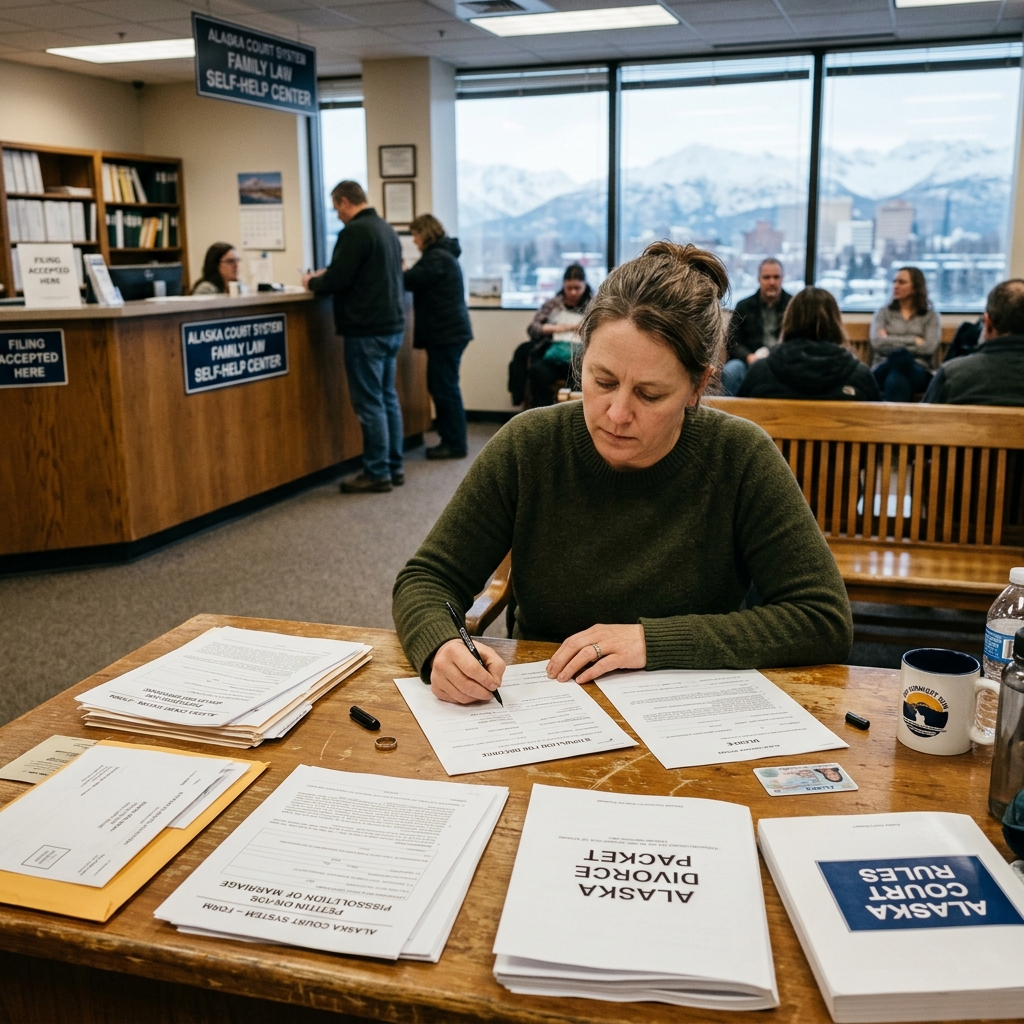
Ending a marriage in Alaska involves a straightforward court process, but the details matter. Before a judge can sign the final decree, you need to confirm that Alaska is the right place to file, choose the correct divorce path, complete the required paperwork, and notify your spouse properly. The process is manageable for people handling an uncontested case on their own, but it still requires careful attention to court rules and deadlines.
This guide explains the main steps in plain language, from residency and grounds to filing fees, service of process, and the final hearing. It is designed to help you understand the structure of an Alaska divorce case and the points where mistakes commonly slow things down.
Who Can File in Alaska?
Alaska does not require a long residency period before filing for divorce. Instead, either spouse must be an Alaska resident when the case begins. Courts generally look for physical presence in the state and an intent to remain there, rather than a fixed number of days lived in Alaska.
For some military families, a continuous stationing at a military base in Alaska for at least 30 days can satisfy residency for filing purposes. That makes Alaska somewhat different from many other states, where a longer waiting period before filing is often required.
- Either spouse may start the case.
- At least one spouse must be a resident of Alaska.
- There is no general day-count residency rule.
- Military stationing in Alaska may also qualify in certain situations.
No-Fault and Fault-Based Divorce
Alaska recognizes both no-fault and fault-based divorce. In a no-fault case, the spouse asking for divorce states that the marriage is incompatible. This is the simplest approach when both spouses want the marriage to end and do not need a court fight over blame.
A fault-based divorce asks the court to end the marriage because one spouse engaged in misconduct. If a party chooses that route, the claim must be supported by facts that fit one of the legally recognized grounds. While fault may matter in some cases, many people use the no-fault option because it is less complicated and better suited to an uncontested process.
| Type of divorce | Basic idea | Typical use |
|---|---|---|
| No-fault | The marriage is incompatible | When spouses want a simpler path |
| Fault-based | One spouse alleges legal misconduct | When the facts support a fault ground |
Start With the Right Forms
The first practical step is choosing and completing the correct court forms. Alaska uses different packets depending on whether the spouses have children, whether they agree on key issues, and whether the case is uncontested. Filing the wrong packet can slow the process or force you to amend your paperwork later.
At a minimum, you will usually need a complaint or petition, plus supporting documents required by the Alaska court system. The forms may ask for information about the marriage, the parties, children, property, debts, and requested relief. If the paperwork is being filed without a lawyer, accuracy is especially important because the court relies on those documents to open the case and issue the summons.
- Choose the packet that matches your situation.
- Complete every required field before filing.
- Sign and notarize any form that requires it.
- Make copies for yourself and for service on the other spouse.
Where to File the Case
After the forms are ready, file them with the Superior Court Clerk in the proper district. Alaska generally allows filing where the reason for the divorce happened, which is often the place where the spouses lived together, or where the other spouse currently lives. This venue rule helps determine which court should hear the case.
Some people choose to mail the paperwork to the court rather than filing in person. If you use the mail, you usually need to include the completed forms, the filing fee or a fee-waiver request, and a self-addressed stamped envelope so the court can send back the issued summons and related orders.
- File in the proper Superior Court district.
- Confirm the location based on the case facts.
- Mailing may be allowed if you follow the court’s instructions.
- Keep copies of everything you submit.
Filing Fees and Fee Waivers
Alaska courts charge a filing fee for divorce cases. The fee has been listed at $250, though court fees can change over time, so it is wise to confirm the current amount with the clerk before filing. Additional costs can arise if you need certified copies, service by a third party, or extra documents later in the case.
If paying the fee would create a financial hardship, you may be able to ask for a waiver. Alaska provides a request for exemption from payment of fees, which is filed with the rest of the case materials. The court then decides whether the filing fee can be reduced or waived based on the information provided.
| Possible cost | What it covers |
|---|---|
| Filing fee | Opening the court case |
| Service costs | Delivering papers to the other spouse |
| Copying and mailing | Making and sending required documents |
Serving the Other Spouse
After the case is filed, the next major step is service. This means delivering the divorce papers to the other spouse in the manner required by court rules. Proper service is essential because it gives the other party official notice and starts the timeline for a response.
In Alaska, you will typically need proof that service happened. That proof is usually filed with the court through the required affidavit or similar form. If service is not completed within the required time, the court can dismiss the case unless you show a satisfactory reason for the delay.
- Serve copies of all filed papers.
- Use the method required by Alaska rules.
- File proof of service with the court.
- Do not miss the service deadline.
What Happens After Service?
Once the other spouse receives the papers, that person has the chance to respond. If there is no disagreement, the case may proceed as an uncontested divorce or dissolution. If the other spouse disagrees with the request, a response can raise objections, challenge the requested terms, or ask the judge to decide contested issues differently.
When a divorce becomes contested, the process usually takes longer. The court may schedule additional hearings to address the disputed matters. Those issues may include property division, debts, custody, visitation, and child support if children are involved. The more issues the spouses disagree about, the more court involvement is usually required.
Waiting Period Before the Final Decree
Even in a smooth case, Alaska generally requires a waiting period before the judge can sign the final divorce decree. The earliest final order is usually available at least 30 days after filing. That means a newly filed case cannot be finalized immediately, even if both spouses already agree on the outcome.
This waiting period gives the case time to move through service and response deadlines and allows the court to confirm that the papers are complete. In practice, the final timeline may be longer if service takes time, documents are missing, or the court calendar is busy.
The Final Hearing
Many Alaska divorces still require a hearing before the judge signs the final decree, even when the case is uncontested. At that hearing, the judge reviews the paperwork and confirms that the legal requirements have been met. If the spouses have already resolved the issues, the hearing may be brief.
In some cases, a party may ask to attend by phone. That request usually needs a valid reason, and the court must approve it. If one spouse is represented and the other is not, or if the papers are incomplete, the judge may ask questions before entering the final order.
Divorce When Children Are Involved
Cases involving minor children usually require extra forms and additional planning. Parents must address custody, visitation, and support, and the court expects the parenting arrangements to be specific enough to work in real life. The filing packet for a case with children is different from the packet used when there are no children.
Because children add legal and practical issues, parents should review the instructions carefully before filing. Mistakes in parenting documents can cause delays or create avoidable disputes later. The court’s forms are designed to help parents cover the main topics, but the details still need to reflect the family’s actual circumstances.
Simple Cases Versus Contested Cases
An uncontested divorce is usually faster and less expensive because the spouses agree on the major issues. A contested case, by contrast, can involve hearings, discovery, and judicial decisions on disputed points. The difference often comes down to whether the parties can cooperate long enough to complete the paperwork and resolve the major terms.
People sometimes begin the process hoping it will stay uncontested, but disagreement can arise after filing. That is why it helps to organize financial records, property information, and parenting details early. The more prepared each spouse is, the easier it may be to reach a workable agreement.
Practical Steps to Keep the Case Moving
Several simple habits can reduce delays in an Alaska divorce case. First, read the court instructions before filling anything out. Second, make copies of every document before filing. Third, confirm the correct filing district and check the current fee. Fourth, follow service rules exactly and save proof that service was completed.
It also helps to keep a calendar of deadlines. Missing a deadline can lead to dismissal, delay, or the need to refile. A careful, organized approach is especially important for people representing themselves, because the court generally expects the forms and deadlines to be handled correctly from the start.
Frequently Asked Questions
Do I have to live in Alaska for a certain number of days before filing?
No fixed number of days is generally required. What matters is that either you or your spouse is a resident of Alaska when the case is filed.
Can I file for divorce if my spouse lives somewhere else?
Yes, as long as the residency requirement is met. The spouse filing the case does not need both spouses to live in Alaska.
How long does it take to get divorced in Alaska?
The earliest final decree is generally available after a 30-day waiting period from filing, but the total time can be longer depending on service, responses, and court scheduling.
What if my spouse does not respond?
If your spouse does not respond within the time allowed, the case may continue without that person actively participating, but you still must prove the case is ready for final judgment.
Can I ask the court to waive the filing fee?
Yes. Alaska allows a request for exemption from payment of fees if you cannot afford the filing cost.
Final Thoughts on the Alaska Divorce Process
Alaska’s divorce system is relatively accessible because it does not impose a long residency requirement before filing. Still, every case must satisfy the basic steps: confirm residency, choose the correct grounds, file the right forms, serve the other spouse, and wait for the court’s final order.
For many people, the biggest challenge is not the law itself but staying organized. Correct forms, proper service, and careful attention to deadlines can make the difference between a smooth uncontested case and a drawn-out court process.
References
- Alaska Divorce — WomensLaw.org. 2026-07-09. https://www.womenslaw.org/laws/ak/divorce/all
- Filing for Dissolution or Divorce – Ending Your Marriage — Alaska Court System. 2026-07-09. https://courts.alaska.gov/shc/family/shcstart.htm
- Family Law Forms — Alaska Court System. 2026-07-09. https://courts.alaska.gov/shc/family/forms.htm
- Divorce and Dissolution Information — Alaska Bar Association Youth Law Guide. 2026-07-09. https://alaskabar.org/youth/family-life/marriage-and-divorce/divorce-and-dissolution/divorce-and-dissolution-information/
Similar Articles








Read full bio of medha deb


