
Filing a Small Claims Lawsuit: A Practical Step-by-Step Guide
Learn how to prepare, file, and present a small claims case so you can pursue a money dispute without hiring a lawyer.
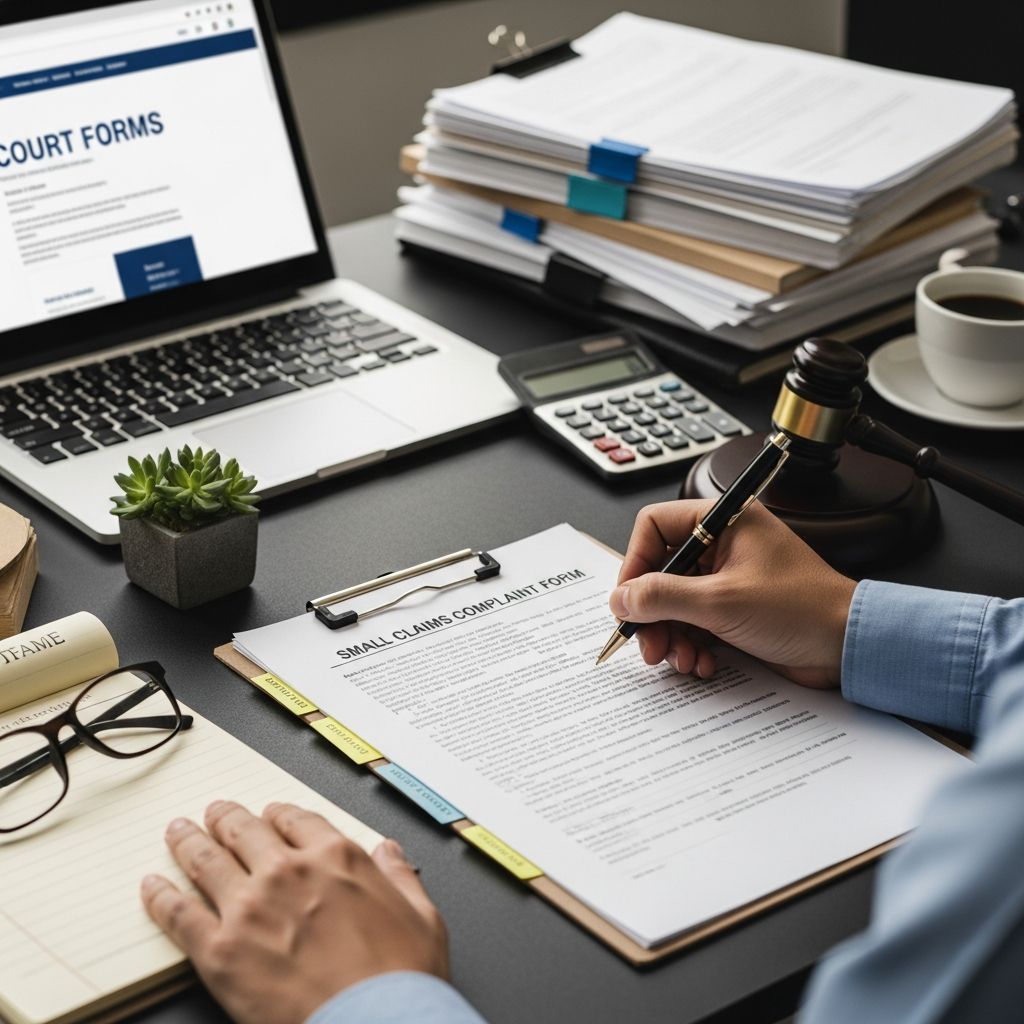
Small claims court is designed for everyday people to resolve money disputes quickly and with minimal cost, often without hiring an attorney. It is usually available for cases under a specific dollar limit and follows simpler procedures than regular civil court. This guide walks you through the practical steps to decide whether to sue, file your case, present it in court, and collect if you win.
Understanding What Small Claims Court Can (and Cannot) Do
Before you file, you need to be sure that small claims court is the right place for your dispute. Each state sets its own rules on who can sue, the types of cases allowed, and the maximum amount you can request (the “jurisdictional limit”).
Typical Features of Small Claims Courts
- Limited dollar amount: Common limits range from about $5,000 to $10,000, though some states are higher or lower.
- Money only: Most small claims courts can award money judgments but cannot order someone to do or stop doing something (no injunctions or divorce orders, for example).
- Simplified procedures: Rules of evidence and procedure are relaxed so non-lawyers can participate more easily.
- Faster resolutions: Hearings are typically scheduled much sooner than in regular civil court.
- Limited appeals: In some states, only the losing defendant may appeal; in others, both sides can, but deadlines are short.
Common Types of Small Claims Cases
- Unpaid loans between friends, family, or acquaintances
- Security deposit disputes between landlords and tenants
- Property damage from minor car accidents
- Unpaid bills for services, repairs, or construction
- Consumer problems, such as defective work or failure to deliver paid-for goods
If your case involves a large amount of money, complex legal issues, or non-monetary relief, you may need to file in a higher court or consult an attorney.
Step 1: Evaluate Your Claim and Gather Basic Information
Start by clearly identifying what happened, who is responsible, and how much money you are legitimately owed.
Clarify the Parties
- Who are you suing? Get the correct legal name of the person, business, landlord, or company responsible. For businesses, verify whether they are a corporation, LLC, or sole proprietor by checking state business records (typically maintained by the Secretary of State).
- Can you be a plaintiff? Most adults and many businesses can sue in small claims court. Some states allow minors or entities like associations to sue with restrictions.
Calculate the Exact Amount of Your Claim
- Add up out-of-pocket losses (for example, unpaid rent, repair invoices, or refunds owed).
- Include interest or late fees only if you have a legal basis, such as a contract provision or a state statute.
- Gather documents that show how you arrived at this number (receipts, estimates, invoices, or written agreements).
| Category | Examples | Evidence to Collect |
|---|---|---|
| Property damage | Vehicle repairs, damaged phone, broken appliance | Repair estimates, receipts, photos of damage |
| Unpaid money | Loan not repaid, unpaid wages, unpaid services | Written loan agreement, pay stubs, invoices |
| Security deposit | Deposit not returned after move-out | Lease, move-out inspection, correspondence |
| Consumer disputes | Poor workmanship, work not completed | Contract, texts/emails, photos, expert estimates |
Step 2: Try to Resolve the Dispute Informally
Most courts either encourage or require you to attempt to settle the dispute before filing a lawsuit. Doing so can save time, money, and stress, and judges often look favorably on parties who made good-faith efforts to work things out.
Send a Clear Written Demand
Consider sending a short, calm demand letter that:
- States what happened in simple terms
- Identifies the amount you believe is owed and why
- Gives a specific deadline for payment (for example, 10–30 days)
- Explains that you may file in small claims court if the issue is not resolved
Send the letter by certified mail or another trackable method and keep copies for your records. Some jurisdictions require proof that you made this demand before you can file in small claims court.
Step 3: Determine the Right Court and Verify the Limit
You must file your case in a court that has both the authority over the subject of the case and a connection to the people or events involved. This is known as jurisdiction and venue.
Choosing the Proper Location
In many states, you typically file in the small claims division of the county or municipal court where one of the following is true:
- The defendant lives or has a business
- The contract was signed or was supposed to be performed
- The event causing the dispute occurred (for example, where the accident or property damage happened)
To be sure, check your state court system’s official self-help website or call the clerk of court. Many courts publish online guides and local rules that explain:
- The small claims dollar limit
- Any types of cases that are prohibited
- Special filing rules for your county or city
Step 4: Prepare the Required Court Forms
Filing begins when you complete and submit the correct forms. The exact names vary by state, but the core document is usually a Small Claims Complaint or Statement of Claim.
Common Forms You May Need
- Small Claims Complaint / Statement of Claim: Identifies you and the defendant, states the amount of your claim, and briefly explains what happened and why the defendant owes you money.
- Summons or Notice of Small Claim: Notifies the defendant of the lawsuit and the hearing date. In some courts, the clerk prepares this document after you file.
- Civil cover sheet or information sheet: Some courts require a separate form that provides basic case details and contact information.
- Fee waiver or indigency application: If you cannot afford the filing fee, you may request to proceed without paying it, subject to court approval.
Tips for Completing the Complaint
- Use full legal names and correct addresses for all parties.
- State your claim in a few clear sentences, focusing on facts: dates, amounts, and key promises or events.
- Attach supporting documents only if your local rules specifically require or allow it.
- Check spelling and numbers carefully; errors can delay service or cause confusion at the hearing.
Step 5: File Your Case with the Court Clerk
Once your forms are complete, you file them with the clerk of the appropriate court and pay a filing fee. Filing fees vary by state and county but are typically modest compared with regular civil cases.
How to File
- In person: Visit the courthouse, go to the clerk’s office, and submit the original forms plus any required copies.
- By mail: Some courts accept mailed filings; call or check the court’s website to confirm instructions.
- Online (e-filing): Many jurisdictions now allow or require electronic filing through an online portal.
Bring or include:
- The signed complaint and any other required forms
- Copies for each defendant and for your own records
- The filing fee or completed fee-waiver application
After your case is filed, the clerk will typically:
- Assign a case number
- Set a hearing date, if the court schedules one at filing
- Issue a summons or notice to the defendant
Step 6: Ensure the Defendant Is Properly Served
The court cannot decide your case until the defendant has been properly notified. This process is called service of process. Rules for service are strict and differ by state.
Common Methods of Service
- Sheriff or constable: Many courts allow service by a law-enforcement officer for an additional fee.
- Certified mail: Some jurisdictions permit the clerk to send the complaint by certified mail with return receipt requested.
- Process server: A private, licensed individual may deliver the documents if your state permits.
Ask the clerk which options are available and who is responsible for arranging service. Once service is completed, proof must usually be filed with the court so the judge knows the defendant received notice.
Step 7: Prepare Thoroughly for the Hearing
Even though small claims court is informal, you still need to be organized and ready to present your case clearly and briefly. Many courts publish small claims guides for self-represented litigants with detailed preparation tips.
Organize Your Evidence
- Documents: Contracts, receipts, canceled checks, estimates, emails, text messages, photos, and written repair evaluations.
- Witnesses: People who saw what happened or who can testify about the quality or cost of services or repairs.
- Timeline: A simple list of dates and key events can help you and the judge follow the story.
Make at least two copies of all documents: one for you and one for the defendant. The court may also need its own set, so check your local rules.
Plan What You Will Say
At the hearing, you may have only a few minutes to speak. Practice a short opening that covers:
- Who you are and what you are asking the court to award
- What happened, in order, highlighting key facts
- Why the defendant is legally responsible
- What your evidence will show
On the Day of the Hearing
- Arrive early to allow time for parking, security, and locating the courtroom.
- Dress neatly and bring all your documents and notes in a folder or binder.
- Address the judge respectfully and wait your turn to speak.
- Stay calm, focus on facts, and avoid personal attacks.
Step 8: After the Judge’s Decision
At the end of the hearing, the judge may rule immediately or issue a written decision later. If you win, you receive a money judgment stating how much the defendant must pay. If you lose, you may have limited options to appeal, depending on your state’s law.
If You Win Your Case
Courts generally do not collect the money for you. If the defendant does not voluntarily pay, you may need to use legal tools to enforce the judgment, such as:
- Payment plans: Informal agreements, sometimes approved by the court, allowing the defendant to pay in installments.
- Wage garnishment: With a court order, a portion of the defendant’s wages may be withheld by the employer to pay the judgment.
- Bank account garnishment: In some states, funds in a bank account can be seized after proper procedures are followed.
- Liens: Recording the judgment as a lien on the defendant’s real property so it must be paid before the property can be sold or refinanced.
Each enforcement tool has strict legal requirements and exemptions that protect certain income and assets. Many state court or legal-aid websites offer step-by-step instructions for judgment collection.
If You Lose or Disagree with the Decision
- Ask the clerk whether either party may appeal and, if so, the deadline and required forms.
- Review the judgment carefully to understand the reasons, if they are provided.
- Consider speaking with a legal aid office or private attorney if the amount at stake is significant.
Practical Tips for Success in Small Claims Court
Although every case is different, several practical principles apply widely:
- Be realistic about your claim: Suing for more than the court is likely to award can undermine your credibility.
- Stay organized: Judges appreciate litigants who can quickly locate documents and answer specific questions.
- Follow all instructions: Local rules, filing deadlines, and service requirements are strictly enforced, even in small claims.
- Consider settlement anytime: You can often resolve the dispute even on the day of the hearing if both sides reach an agreement.
Frequently Asked Questions (FAQs)
Q: Do I need a lawyer to file in small claims court?
A: In many states, parties appear without lawyers in small claims court, and some jurisdictions even prohibit attorney representation at the initial hearing. However, you may consult a lawyer beforehand for advice if you wish.
Q: How long do I have to file a small claims lawsuit?
A: Time limits for filing, called statutes of limitations, vary by type of claim and by state. Contact your state court’s self-help center or consult a local attorney to determine the deadline that applies to your situation.
Q: What happens if the defendant does not show up?
A: If the defendant was properly served and fails to appear, the court may enter a default judgment in your favor. You will still need to prove your claim and the amount you are owed to the judge’s satisfaction.
Q: Can I sue multiple people or a business in the same case?
A: Yes, you can name multiple defendants if each is legally responsible for your loss. Be sure to list the correct legal names and addresses and explain in your complaint why each party should be held liable.
Q: What if my claim is more than the small claims limit?
A: You may have to file in a higher court, or you can sometimes choose to sue in small claims court for only part of what you are owed, giving up the rest. This trade-off between speed and full recovery is a strategic decision you should consider carefully.
References
- Filing Your Small Claims Case — Civil Law Self-Help Center (Las Vegas Justice Court). 2023-06-01. https://www.civillawselfhelpcenter.org/self-help/small-claims/suing-someone-in-small-claims/107-filing-your-small-claims-case
- File a Claim in Small Claims Court — Hamilton County Clerk of Courts (Ohio). 2022-09-15. https://www.courtclerk.org/self-help-resources/file-a-claim-in-small-claims-court/
- How to File in Small Claims Court — Ohio Legal Help. 2023-05-10. https://www.ohiolegalhelp.org/topic/small-claims
- Small Claims Court — Alabama Legal Help. 2021-08-01. https://www.alabamalegalhelp.org/resource/small-claims-court
- A Guide to Small Claims Court — Legal Aid of North Carolina. 2023-01-01. https://legalaidnc.org/wp-content/uploads/2023/01/A-GUIDE-TO-SMALL-CLAIMS-COURT-2023.pdf
- Small Claims: A Citizen’s Guide — Akron Municipal Court (Ohio). 2019-04-01. https://akronmunicipalcourt.org/media/1085/small-claims-court-a-citizens-guide.pdf
- The Small Claims Process — California Courts Self-Help Guide. 2022-11-30. https://selfhelp.courts.ca.gov/small-claims
Similar Articles








Read full bio of Sneha Tete


