
Can You Expunge A DUI Without A Lawyer? 5-Step Filing Checklist
A practical guide to handling DUI expungement on your own and avoiding costly filing mistakes.
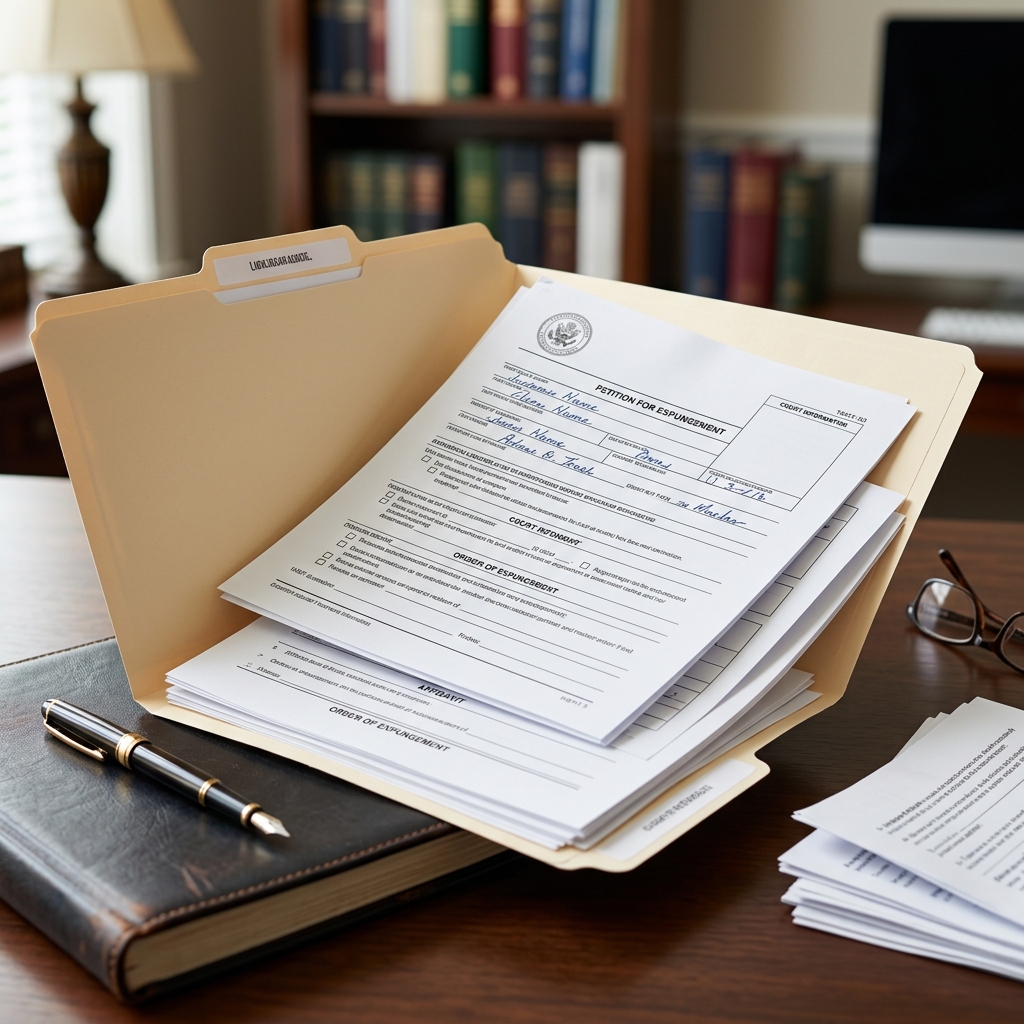
Can You Expunge a DUI Without Hiring a Lawyer?
In many places, it is possible to request DUI expungement or another form of record relief without hiring an attorney. The process is usually driven by court forms, eligibility rules, deadlines, and notice requirements rather than courtroom argument alone, which means a careful self-represented filer can sometimes handle it successfully. At the same time, DUI record-clearing procedures are highly state-specific, and some states do not use the term expungement at all or limit what can be removed from a criminal history.
The most important first step is to determine whether your case is actually eligible. In some jurisdictions, only dismissed charges, acquittals, or certain probationary dispositions can be sealed or expunged right away, while convictions may require a waiting period, completed probation, and a clean record for a set number of years. If the law in your state allows self-filing, the process is usually manageable if you stay organized and follow each instruction exactly.
Start by Checking Whether Your Case Qualifies
Before you fill out a single form, you need to confirm that your DUI falls into a category the court can clear. Eligibility rules vary widely, but they often depend on the outcome of the case, the type of offense, and whether you have completed all sentencing terms.
- Cases that ended in dismissal, acquittal, or nolle prosequi may be eligible for immediate relief in some states.
- Convictions often require a waiting period after sentencing or after completion of probation.
- Some states bar relief if you have a new conviction or an open criminal matter.
- Repeat offenses, felony-level DUI cases, or aggravated DUIs may face stricter limits.
If your DUI was part of a broader case with several charges, the presence of any non-eligible charge can affect timing. Some courts require every count in the case to qualify before the entire record can be cleared. That makes it essential to review the final judgment and not rely on memory alone.
Know the Difference Between Expungement and Other Record Relief
People often use the word expungement to describe any kind of record clearing, but the legal remedy may be called sealing, setting aside, vacatur, or another state-specific process. California, for example, explains that true expungement does not exist in the same way it does in some other states, and instead offers other paths to clean a record. Maryland, by contrast, provides formal expungement procedures for eligible adult cases and separate forms depending on the disposition.
This distinction matters because the wrong request can lead to rejection or delay. A petition must match the legal remedy available in your jurisdiction, and the court usually expects the applicant to use the correct form, filing location, and notice process.
Gather the Records Before You File
A successful self-filed request depends on documentation. You will usually need enough paperwork to prove the case number, the disposition, completion of sentence terms, and any other facts that show you qualify.
- Court docket or judgment showing the final result of the case
- Arrest information or police report, if required by the court
- Proof of completed probation, classes, treatment, fines, or community service
- Identification and contact information for every agency that must receive notice
- Fingerprint cards or background documents, if the state requires them
Do not assume the court will track down missing information for you. If the file is incomplete, the clerk may reject your packet or the judge may deny relief because the court cannot verify your eligibility.
Build a Filing Checklist for Your State
Although the names of the forms differ, most expungement processes follow the same broad pattern: confirm eligibility, complete the application or petition, pay the fee if required, notify the prosecuting agencies, and attend any hearing that the court schedules. Creating a checklist before you begin can save time and reduce mistakes.
| Step | What You Usually Need | Why It Matters |
|---|---|---|
| Eligibility review | Case outcome, sentence status, waiting period | Confirms that the court can consider your request |
| Document gathering | Judgment, probation proof, fingerprints, IDs | Supports the petition and prevents delays |
| Form completion | State petition or application form | Starts the legal request |
| Service and notice | Copies to prosecutor and other agencies | Gives the government a chance to respond |
| Hearing preparation | Timeline, receipts, and supporting facts | Helps the judge decide the request |
File the Correct Petition or Application
Most states require a formal filing with the court that handled the original case or with the court assigned by statute. That filing may be called a petition, motion, or application, but it is the document that opens the expungement case. In some states, the filing must also be notarized, accompanied by a waiver, or submitted with a separate fingerprint card.
Pay close attention to the details on the form. The wrong case number, an incorrect offense description, or a missed signature can slow the process or create grounds for denial. If your state charges a filing fee, make sure you know whether it is refundable, whether it applies per case or per charge, and whether fee waivers are available.
Give Proper Notice to the Required Agencies
Many self-filed petitions fail because the filer completes the paperwork but forgets service. Courts often require notice to the prosecutor, the attorney general, the arresting agency, the state police, or other agencies that maintain criminal records. These offices may have a right to object, and the judge will usually not proceed until proof of notice is in the record.
Keep copies of everything you mail or deliver. Use certified mail or another trackable method if your state rules allow it, and store the receipts with your filing packet. If an agency has a deadline to answer, note that date on your calendar so you know when the court may act.
Understand Waiting Periods and Timing Rules
Timing is one of the most common reasons people think they qualify when they actually do not. Some states require a minimum waiting period after conviction or sentence completion, while others count from the end of probation or from the date the case closed. In Michigan, for example, the waiting period can range from three to seven years depending on the offense type, and a new conviction during that period can reset eligibility.
Other states impose different timelines. Maryland describes waiting periods that may range from immediate eligibility for certain dispositions to longer periods for guilty outcomes, depending on the type of case. If your DUI resulted in probation, you may need to finish every condition before the clock starts or before you can apply.
Prepare for a Hearing if the Court Schedules One
Not every expungement request requires a hearing, but many do. If a hearing is set, be ready to explain why you qualify and why the relief is appropriate under the law. In some jurisdictions, the government must object or present evidence if it wants to block the request; in others, the petitioner must be prepared to answer the judge’s questions directly.
- Bring copies of your petition and all supporting documents
- Organize proof that you completed probation and paid all required amounts
- Prepare a short explanation of why the record is affecting your life
- Arrive early and dress professionally
- Answer the judge’s questions honestly and directly
You do not need to make the case dramatic. Judges usually want clear evidence that the law’s requirements were met and that the request fits the purpose of record relief.
What Happens After the Judge Rules
If the court grants the petition, the order usually has to be sent to the agencies that maintain the record so they can process the relief. Maryland, for example, notes that once the judge signs an order, additional compliance steps may follow with the relevant agencies. Michigan’s process also contemplates a post-hearing order distribution to the state police, prosecutor, and attorney general.
If the request is denied, that does not always mean the case can never be cleared. The reason for denial may involve timing, missing documents, or an unfulfilled condition that can later be corrected. In that situation, review the denial carefully and determine whether refiling is possible under your state’s rules.
Common Mistakes People Make When Filing Alone
Handling the process without a lawyer is possible, but it is easy to make avoidable mistakes. The most common errors are usually procedural rather than legal, which means they can often be prevented with careful preparation.
- Applying before probation or sentence conditions are complete
- Using the wrong form for the correct type of relief
- Forgetting to notify the prosecutor or other required agencies
- Failing to include proof of fees paid, classes completed, or treatment finished
- Ignoring a new arrest or pending case that affects eligibility
- Missing a deadline or mailing requirement
If your DUI was a felony, if you have multiple alcohol-related convictions, or if your state has complicated eligibility limits, the odds of a smooth self-filing process are lower. Those cases often require a more detailed review of prior records and sentencing history.
When It Makes Sense to Get Legal Help
You may be able to file on your own, but that does not mean hiring help is unnecessary in every case. Legal assistance can be especially useful if your record includes multiple offenses, a felony DUI, unresolved probation issues, or questions about whether the offense can be reduced before expungement. A lawyer can also help if your state uses different forms for different outcomes or if the court has strict local procedures.
That said, many straightforward cases are manageable for a self-represented petitioner. If your case ended in dismissal or another clearly eligible outcome and you have the required paperwork, the process may be largely administrative rather than adversarial.
Frequently Asked Questions
Can I expunge a DUI if I finished probation?
Often yes, but finishing probation is only one part of the analysis. You still have to meet your state’s eligibility rules, including any waiting period, payment obligations, and notice requirements.
Does expungement erase the DUI completely?
Not always. In many states, expungement or similar relief limits public access to the record, but law enforcement and courts may still be able to see it. The exact effect depends on local law.
What if my DUI was a felony?
Felony DUI cases are often harder to clear and may involve longer waiting periods or additional requirements. Some states restrict relief far more tightly for felony-level offenses.
Can I file without an attorney if my case was dismissed?
Yes, dismissed cases are among the most likely to qualify for self-filed relief in many jurisdictions, but you still need the correct forms and proof of the final disposition.
How long does the process take?
Processing time varies by state and by case type. Some systems move in weeks, while others may take several months depending on whether a hearing is required and whether the prosecutor objects.
If you decide to handle the process yourself, approach it like a checklist-driven legal project: verify eligibility, gather proof, file the right form, serve the right agencies, and track every deadline. A careful filing can make the difference between a clean result and a rejected petition.
References
- 8 Steps to Expunge a DUI Conviction from Your Record — Saller Law. 2024. https://www.sallerlaw.com/eight-steps-to-expunge-dui-conviction/
- How to Clear Your Record of a DUI – DUI Expungement — Alcohol.org. 2024. https://alcohol.org/dui/clear-your-record/
- How to expunge my duis? — Avvo. 2024. https://www.avvo.com/legal-answers/how-to-expunge-my-duis–5020480.html
- Expungement and Changing Your Criminal Record — Maryland Legal Aid / People’s Law. 2024. https://www.peoples-law.org/expungement-and-changing-your-criminal-record
- Attorney General: Expungement Assistance — State of Michigan. 2025. https://www.michigan.gov/ag/initiatives/expungement-assistance
- Expungement (Adult) — Maryland Courts. 2025. http://www.mdcourts.gov/legalhelp/expungement
- Clean your record — California Courts Self Help Guide. 2025. https://selfhelp.courts.ca.gov/clean-your-record
- Criminal Record Resources — Maryland Volunteer Lawyers Service. 2025. https://mvlslaw.org/volunteer/criminal-record-resources/
- DUI Expungement Lawyer in Baltimore, Maryland — Scheuerman Law. 2024. https://www.scheuermanlaw.com/baltimore-dui-lawyer/dui-expungement-lawyer/
Similar Articles








Read full bio of medha deb




