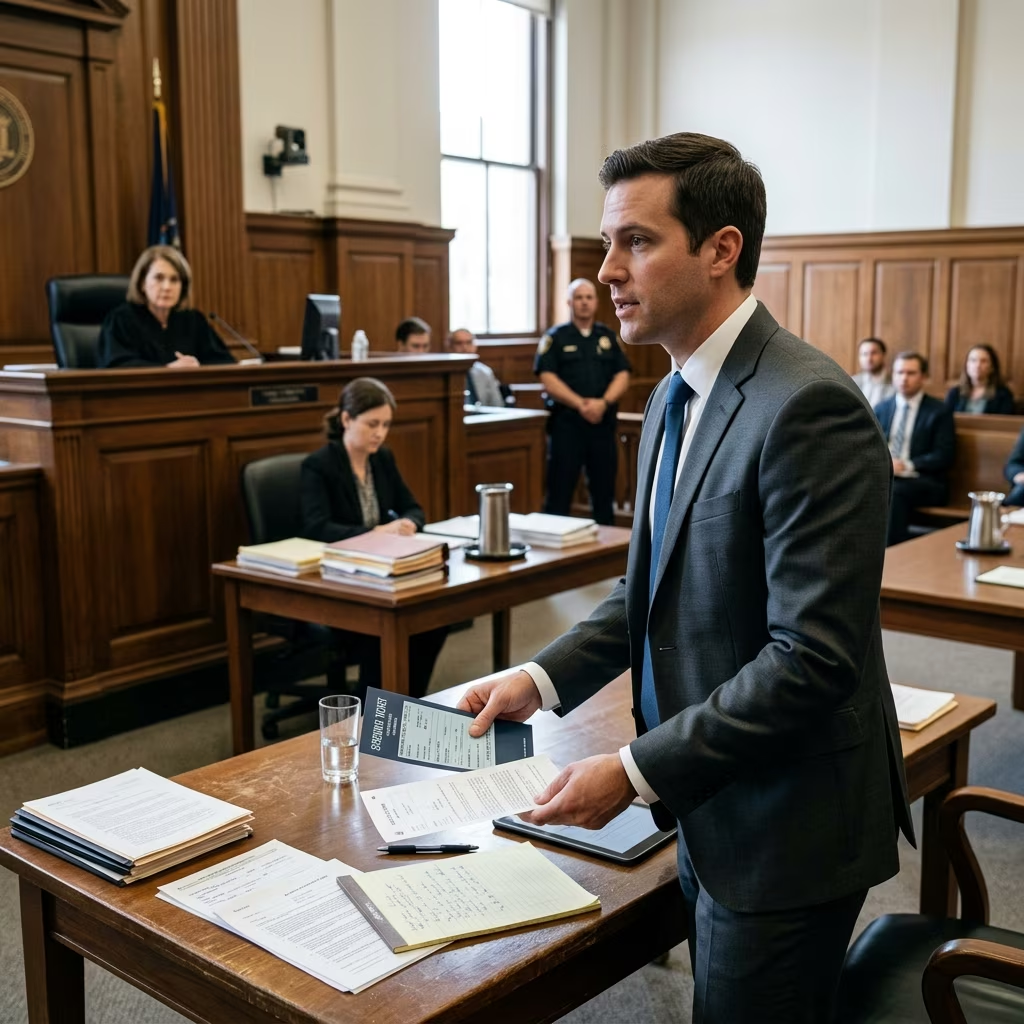
A speeding ticket is not always the end of the road. In many cases, drivers can contest the citation by questioning the officer’s observations, the accuracy of the speed-measuring method, or the circumstances surrounding the stop. The strongest approach usually depends on the ticket itself, the local court rules, and the quality of the evidence you can present.
If you decide to fight a speeding ticket, timing matters. Missing a response deadline can lead to extra penalties, license consequences, or an automatic conviction in some jurisdictions. Before choosing whether to pay, negotiate, or contest the citation, it helps to understand the main defenses and the practical steps involved.
What Makes a Speeding Ticket Worth Contesting?
Not every ticket deserves the same response. Some are worth challenging because the driver has a realistic chance of dismissal or reduction, while others may be better resolved through negotiation or payment. The decision often depends on whether the alleged violation can be disputed with facts rather than frustration.
- The officer may not have had a clear view of the vehicle.
- The speed limit sign may have been obscured, missing, or unclear.
- The speed measurement device may have been used incorrectly or may not have been properly calibrated.
- The traffic conditions may have created an emergency or justified action.
- The citation may be eligible for a reduced charge or plea option in some courts.
In many places, a contested ticket also gives you the opportunity to limit the long-term effects of a conviction, including points, insurance increases, and possible license consequences. Even when dismissal is unlikely, a reduction may still be valuable.
Start With the Citation and the Deadline
The first document to review is the ticket itself. It usually identifies the alleged offense, the code section, the date, the location, and the instructions for responding. That information tells you what you are accused of and how much time you have to act.
Do not wait until the last day if you plan to fight the ticket. Courts often require a formal not-guilty plea, a written response, or a request for a hearing before the deadline printed on the citation. If you miss that date, the court may treat the ticket as unpaid or uncontested.
| Decision | Possible Effect | Typical Use |
|---|---|---|
| Pay the ticket | Ends the case, but may add points or insurance consequences | Used when the driver does not want to contest the charge |
| Request a hearing | Opens the door to dismissal or reduction | Used when the driver wants to challenge the facts or procedure |
| Negotiate if allowed | May lower the charge or fine | Used in jurisdictions that permit plea discussions |
Common Defenses Against a Speeding Charge
Successful defenses usually focus on proof, not excuses. A judge is more likely to consider evidence that undermines the citation than statements based only on regret or disagreement. The most effective arguments often fall into a few broad categories.
The officer’s view may have been limited
One line of defense is that the officer could not accurately observe the vehicle. Distance, traffic, weather, curves in the road, other cars, and roadside obstructions can all affect what an officer sees. If the view was poor, the estimate of speed may be less reliable.
The measuring device may be vulnerable to challenge
If radar, lidar, or another speed-detection method was used, the accuracy of that device may be questioned. Possible issues include calibration problems, operator error, or improper use. In some cases, the officer’s training and the maintenance history of the equipment may become important.
The posted speed limit may not have been clear
Drivers sometimes receive tickets in areas where the sign was blocked by foliage, damaged, poorly placed, or missing altogether. If the speed limit could not reasonably be seen, that fact may help explain why the citation should be dismissed or reduced.
Your driving may have been legally justified
Some situations involve a justification rather than a denial. For example, a driver may have taken a brief action to avoid a collision, respond to a hazardous road condition, or protect someone from immediate harm. These defenses are narrow, so they generally require specific facts and supporting proof.
There may have been a factual mistake
Sometimes the issue is simply that the ticket was issued to the wrong vehicle or based on mistaken observation. A witness, dashcam recording, or location evidence may show that the officer identified the wrong car or misread the situation.
Evidence Can Matter More Than Argument
If you plan to contest a speeding ticket, start gathering evidence immediately. The more objective support you have, the more credible your position becomes. Judges often rely heavily on documents, recordings, maps, and witness testimony when deciding whether to believe the officer’s version or yours.
- Dashcam footage may show your speed, road conditions, traffic flow, and the officer’s location.
- GPS data from a phone or vehicle system may support your account of how fast you were traveling.
- Photographs can show missing or hidden speed limit signs, poor lighting, or visual obstructions.
- Witness statements from passengers or nearby drivers may confirm what happened.
- Diagrams or maps can help explain where vehicles were positioned and why the officer may have had a limited view.
- Maintenance or calibration records may be relevant if the speed device is challenged.
It is also smart to write down your own recollection soon after the stop. Record the time, weather, traffic pattern, road design, and anything unusual about the encounter while the details are fresh.
How to Prepare for Court
Court preparation is usually more important than courtroom style. You do not need a dramatic speech; you need a clear, organized explanation backed by facts. Review the instructions on the ticket, check the court’s procedures, and learn whether the jurisdiction allows a pretrial conference or negotiation with the prosecutor.
If you are representing yourself, keep the presentation simple. Bring copies of all relevant documents, arrange them in order, and be ready to explain your evidence in a logical way. The goal is to make the judge understand why the citation should not stand as written.
- Read the ticket and confirm the violation code.
- Mark the response deadline on your calendar.
- Collect photos, recordings, and witness information.
- Research the local court’s traffic rules and procedures.
- Prepare short, direct answers to likely questions.
- Arrive early and bring organized copies of everything.
Negotiation May Be an Option
In some courts, especially where plea discussions are allowed, the case may be resolved without a full trial. A prosecutor may agree to reduce the offense, lower the fine, or convert the matter into a less serious violation. The exact availability of these options depends on the jurisdiction.
Negotiation does not mean the charge disappears automatically. You may still need to pay a reduced fine or accept some consequence. But if the goal is to reduce points or preserve your driving record, a negotiated outcome can be better than an uncontested conviction.
| Approach | Potential Benefit | Possible Drawback |
|---|---|---|
| Contest the ticket fully | Chance of dismissal | Takes time and preparation |
| Negotiate a reduction | May limit points or fine | Not available everywhere |
| Pay the citation | Fast and simple | Usually accepts the consequences |
What Usually Does Not Help
Some arguments rarely succeed because they do not address whether the violation occurred. Courts generally expect drivers to know the rules of the road, so a claim of ignorance is usually weak. Minor mistakes on the ticket, such as a misspelled name, may also be too small to matter unless they create a real identification problem.
Likewise, a bare assertion that the stop was unfair usually carries little weight without proof. The strongest objections are the ones tied to evidence, procedure, or a legally recognized justification.
- Simply saying you did not know the speed limit.
- Arguing that the citation contains a harmless typo.
- Making an emergency claim without supporting documentation.
- Insisting the officer must be wrong without presenting contrary proof.
Frequently Asked Questions
Can I fight a speeding ticket without a lawyer?
Yes. Many drivers represent themselves in traffic court. Whether that is a good idea depends on the complexity of the case, the available evidence, and the potential consequences of a conviction.
What if the officer does not appear in court?
In some jurisdictions, the case may be dismissed if the officer fails to attend or cannot proceed. That result is not guaranteed, and some courts may continue the hearing instead.
Will fighting the ticket always remove the fine?
No. A challenge can lead to dismissal, reduction, or conviction. The outcome depends on the evidence, the applicable law, and the court’s procedures.
Is it worth contesting a ticket for a small amount over the limit?
Sometimes yes, especially if the citation could affect your record, insurance, or license status. Even a modest speeding allegation can have consequences beyond the initial fine.
Should I talk a lot when the officer stops me?
It is usually best to remain polite and keep the conversation brief. What you say during the stop may later be used in court, so it is wise to avoid unnecessary explanations.
Building the Best Possible Record
If you want the best chance of success, act early and document everything. Save the ticket, take photographs of the location, preserve any electronic data, and keep notes about what happened. If witnesses are available, ask them while the event is still fresh in their memory.
A speeding ticket case is often decided by details. A missed deadline, a blurry photo, a visible sign obstruction, or a reliable video can change the result. Even if you do not ultimately win, being prepared gives you the best opportunity to reduce the impact of the citation.
References
- Fight a Traffic Ticket: 5 Strategies That Work — FindLaw. 2025-02-11. https://www.findlaw.com/traffic/traffic-tickets/how-to-fight-traffic-tickets-five-strategies-that-work.html
- How to Fight a Speeding Ticket — NerdWallet. 2025-01-30. https://www.nerdwallet.com/insurance/auto/learn/how-to-fight-a-speeding-ticket
- Traffic Tickets and Driver Responsibility — New York State Department of Motor Vehicles. 2026-01-15. https://dmv.ny.gov/
- Speeding — National Highway Traffic Safety Administration. 2025-12-01. https://www.nhtsa.gov/risky-driving/speeding