
Disaster Scams: 5 Common Patterns To Watch Safely After Storms
Practical ways to recognize and avoid fraud after storms, fires, and other emergencies.
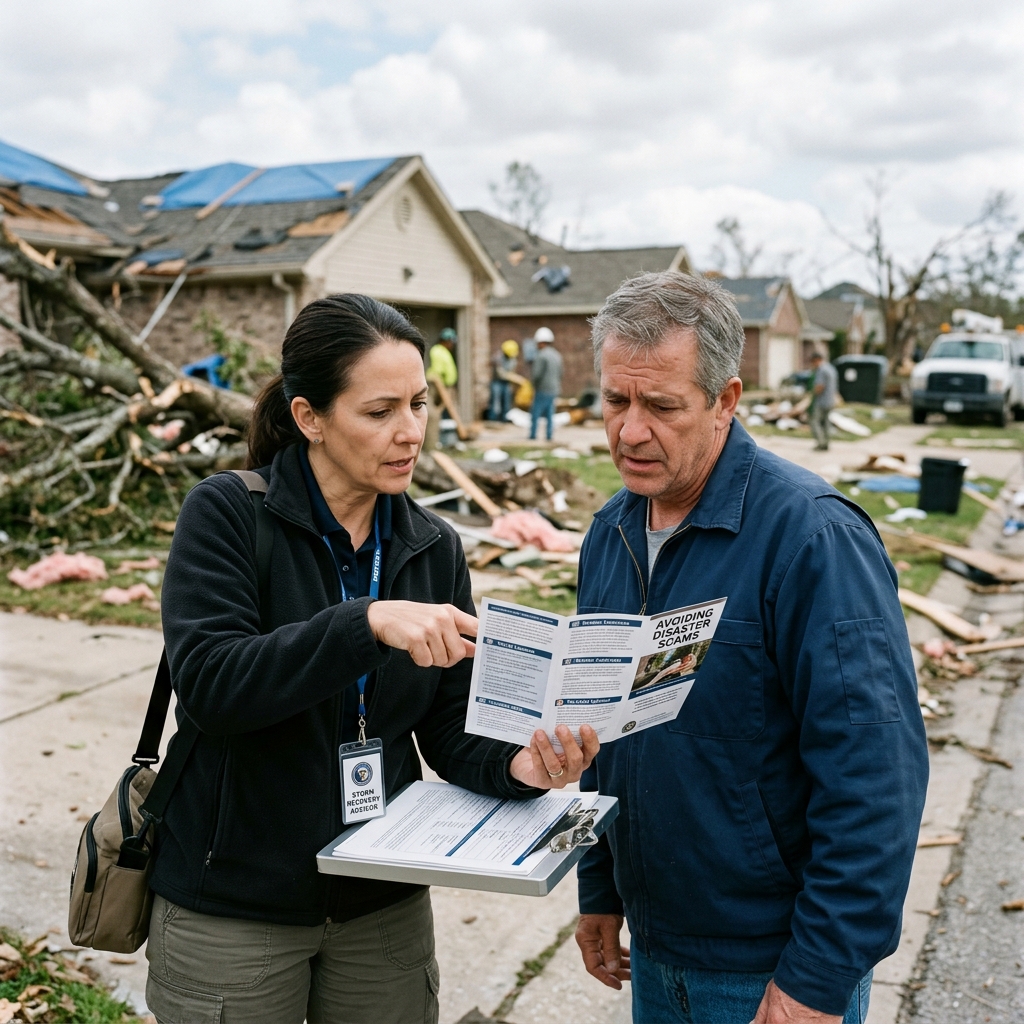
After a weather emergency or natural disaster, people often need fast help with repairs, shelter, insurance, food, and cleanup. That urgency creates opportunities for scammers, who may pretend to be contractors, government workers, insurance representatives, or charity volunteers. The safest approach is to slow down, verify every request, and never pay or share personal information until you know exactly who you are dealing with.
Why disasters attract fraud
Disaster survivors are often under pressure to make decisions quickly. They may be dealing with damaged homes, lost documents, power outages, or insurance claims while also trying to find temporary housing and basic supplies. Scammers take advantage of that stress by offering quick fixes, claiming to be official, or pressuring people to act immediately. Consumer protection agencies warn that fraud after storms commonly involves fake contractors, impostors, suspicious donation requests, and people who ask for money in unusual ways.
The best defense is a simple rule: if someone contacts you first, demands immediate action, or asks for payment before work is clearly explained, treat it as a warning sign. Real organizations usually give you time to verify details, and legitimate government workers do not need cash, gift cards, or wire transfers.
Common scam patterns to watch for
Disaster-related fraud often appears in a few predictable forms. Learning the patterns helps you spot danger faster.
- Fake contractors: A person may offer roof repair, tree removal, debris cleanup, or rebuilding services, then demand full payment up front or ask you to sign over an insurance check.
- Government impersonators: Someone may claim to be from FEMA or another agency and ask for money, your registration number, or bank information.
- Utility impostors: A caller or visitor may pretend to represent a power, water, or gas company and demand immediate payment.
- Insurance pressure tactics: A person may say they work for your insurer and push you to share claim details before you confirm the call independently.
- Fake charities: Fraudsters may create urgent-sounding appeals for disaster relief donations through email, social media, text messages, or crowdfunding pages.
How to check whether a contractor is real
Home repair scams are especially common after storms because damaged roofs, flooded basements, and fallen trees create immediate work. Before hiring anyone, verify their business identity, licensing, insurance, and written contract. A legitimate contractor should be willing to provide documentation without pressure or evasiveness.
Look for these warning signs:
- They say they are not licensed when your state requires licensing.
- They offer a special discount only if you sign immediately.
- They ask you to pay everything up front.
- They tell you to hand over your insurance check.
- They insist on payment by gift card, wire transfer, cash, cryptocurrency, or a payment app.
- They refuse to give a written contract or will not identify what materials and labor are included.
Before work begins, contact your insurance company directly to confirm what your policy covers. Do not rely on a contractor’s interpretation of your coverage, and never let a repair company control your claim without your insurer’s confirmation.
How to recognize government impostors
Scammers often use the names of well-known agencies because people trust them. Real federal workers do not collect fees at the door, and they do not need to ask you for money to inspect damage or help you apply for assistance.
Keep these points in mind:
- No federal agency should charge disaster victims for an inspection or for help applying for aid.
- If you have a FEMA registration number, legitimate FEMA staff should already have access to it.
- Do not give bank details to someone who shows up unexpectedly.
- Do not rely on uniforms alone; verify photo identification and official contact information.
If someone claims to be a government representative, independently call the agency using a verified phone number from its official website or a recent statement you already have. Never use a phone number given by the caller or visitor.
Protect yourself from insurance and payment scams
Insurance fraud can happen when a dishonest repair person pressures you to sign over claim money or share private policy details. A reputable company will not need access to information beyond what is necessary for the job, and it will not ask you to hand over control of your claim payment as a condition of repair.
| Situation | Safer response |
|---|---|
| Someone asks for full payment before work starts | Refuse and request a written estimate and contract first. |
| Someone asks you to sign over your insurance check | Contact your insurer directly before agreeing to anything. |
| A caller says they are from your insurer | Hang up and call your insurer using a number you already trust. |
| Payment is requested by gift card, wire transfer, or crypto | Consider it a major fraud warning and stop the transaction. |
Be careful with calls, texts, and emails
After a disaster, scammers often use robocalls, phishing emails, and fake text messages to create panic. They may claim there is urgent aid available, that your application is incomplete, or that your account needs immediate verification. These messages are designed to push you into clicking links or sharing information before you think clearly.
Safer habits include:
- Do not click unexpected links in emails or texts.
- Do not open attachments from unfamiliar senders.
- Do not reply to requests for personal or financial information unless you first confirm the sender independently.
- Do not call back numbers from suspicious messages; use official contact details instead.
Fraudsters sometimes try to sound helpful, but the goal is usually the same: to steal money, account access, or identity information. Slowing down is often enough to expose the scam.
Donating safely after a disaster
Many people want to help after floods, hurricanes, wildfires, or severe storms, and most legitimate charities welcome support. The problem is that disaster relief attracts fake charities and misleading fundraising campaigns. Before giving, verify the organization through trusted channels and make sure the donation request matches the group’s official name and contact information.
Use extra caution when a donation request comes through social media, text messaging, or a crowdfunding page. Those platforms can host real appeals, but they may not vet every fundraiser. If a charity pressures you to donate immediately, refuses to explain how funds will be used, or directs you to an unusual payment method, do more checking before giving.
Practical steps to stay safer during recovery
Good fraud prevention is mostly about habits. The more structured your response, the less likely you are to be rushed into a bad decision.
- Keep a copy of key documents, account numbers, and insurance records in a secure place.
- Use contact information you already know for your bank, insurer, utility company, and government agencies.
- Ask for written estimates, written contracts, and clear timelines before hiring anyone.
- Trust your instincts if someone pressures you to skip normal steps.
- Tell family members and neighbors about common scams so they can avoid them too.
If a friend or neighbor says they received a suspicious visit or phone call, share official reporting options with them right away. Fraud spreads quickly during emergencies, and community awareness can prevent repeat victimization.
What to do if you think you were targeted
If you suspect a scam, act quickly. Save messages, photos, receipts, business cards, estimates, and any names or phone numbers connected to the incident. That information can help investigators and consumer protection agencies understand what happened.
Disaster fraud complaints may be reported through federal and state channels, including FEMA-related reporting resources and consumer protection offices. If your personal or financial information may have been exposed, you should also secure your accounts, change passwords, and monitor activity for unfamiliar charges or new accounts opened in your name.
Frequently asked questions
Does FEMA ever charge disaster victims a fee?
No. Official guidance says federal agencies do not charge disaster victims for inspections, aid applications, or aid delivery.
Should I trust a contractor who shows up right after a storm?
Not automatically. Verify licensing, insurance, references, and a written contract before agreeing to any work.
What payment methods are biggest red flags?
Requests for gift cards, wire transfers, cryptocurrency, cash, or payment apps are major warning signs when used for disaster repairs or aid-related services.
How can I verify a charity?
Check the charity’s official website, confirm the donation page and phone number, and be cautious with social media or crowdfunding appeals that you have not independently verified.
What should I do if I already paid a scammer?
Contact your bank or payment provider immediately, preserve all records, and report the incident to the appropriate consumer and disaster-fraud authorities.
References
- Preparing For Extreme Weather? Don’t Forget Fraud Awareness — Synovus. 2025. https://www.synovus.com/personal/resource-center/fraud-prevention-and-security-hub/fraud-hub-education-and-prevention/latest-fraud-trends/fraud-awareness-during-storm-disasters/
- How To Avoid Scams After Weather Emergencies and Natural Disasters — Local First Bank. 2025. https://localfirstbank.com/article/how-to-avoid-scams-after-weather-emergencies-and-natural-disasters/
- Consumer Protection Tips to Avoid Disaster-Related Scams — New Jersey Division of Consumer Affairs. 2024. https://www.njconsumeraffairs.gov/News/Brochures/Consumer-Protection-Tips-to-Avoid-Disaster-Related-Scams.pdf
- After Storms, Watch Out for Scams — Federal Communications Commission. 2024. https://www.fcc.gov/consumers/guides/after-storms-watch-out-scams
- Preparing for Weather Emergencies: How to Better Protect Yourself — ID Watchdog. 2025. https://www.idwatchdog.com/education/-/article/how-to-avoid-natural-disaster-related-scams
- Dealing with Weather Emergencies — Federal Trade Commission. 2024. https://consumer.ftc.gov/features/dealing-weather-emergencies
- Steer Clear of Scams After Natural Disasters — American Bankers Association. 2024. https://www.aba.com/advocacy/community-programs/consumer-resources/protect-your-money/disaster-scams
Similar Articles








Read full bio of medha deb




