
Undefined Divorce In Canada: How To File, Forms & Timeline 2025
A clear guide to the divorce process, filing rules, forms, and what to expect.
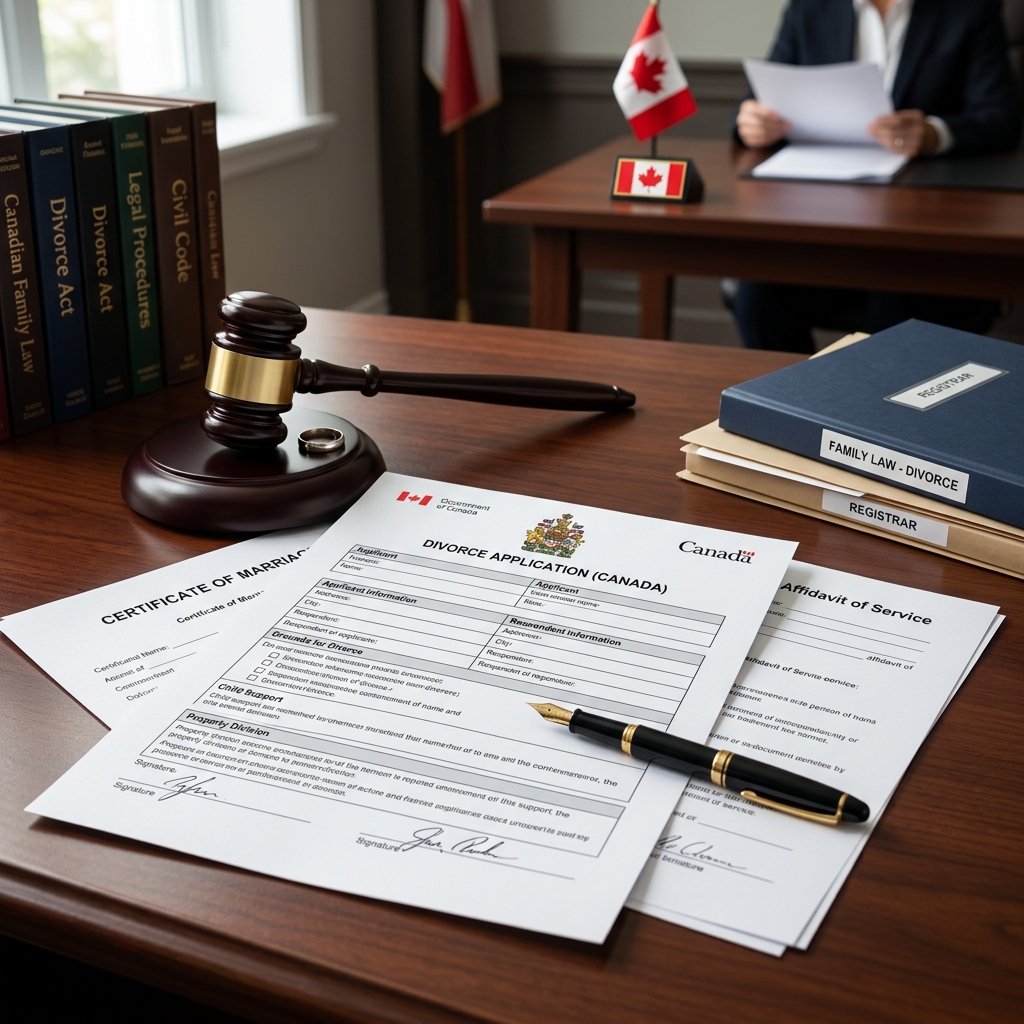
Applying for a divorce in Canada is a court process that follows federal rules but is carried out through provincial or territorial courts. In practical terms, that means you must meet the legal requirements for divorce, complete the correct paperwork for your location, and file the documents with the right court. The process can look different depending on where you live, but the basic legal framework is the same across the country.
Understanding the basic legal requirements
Before starting a divorce application, it is important to confirm that you are eligible. Under Canadian law, a divorce is available only if the marriage has broken down and the court has jurisdiction to hear the case. In most situations, this means at least one spouse must have lived in the province or territory where the application is filed for at least one year immediately before filing.
You also need a legally recognized marriage. That can be a marriage performed under Canadian law or one legally performed elsewhere and recognized in Canada. If neither spouse lives in Canada, a divorce under the federal Divorce Act is generally not available.
What counts as marriage breakdown
Canadian divorce law treats “marriage breakdown” as the only legal ground for divorce under the federal statute. The law recognizes breakdown in three main situations: the spouses have lived separate and apart for at least one year, one spouse has committed adultery, or one spouse has treated the other with physical or mental cruelty that makes continued cohabitation intolerable.
In many applications, separation for one year is the most common route because it does not require proving fault. A couple can be separated even if they remain in the same home, as long as they are no longer living together as spouses in a marital relationship. This is especially relevant when finances, housing, or parenting arrangements make moving out immediately impractical.
Choosing the right type of divorce process
Not every divorce follows the same path. Some applications are straightforward because both spouses agree on the divorce and on related issues such as parenting, child support, or division of property. Others are contested, meaning one spouse disputes the claims or the terms sought in the application.
An uncontested divorce is usually simpler and faster because the court does not need to resolve major disagreements. A contested case may require additional documents, negotiations, case conferences, motions, or even a trial. The more unresolved issues there are, the more time and legal work the process usually requires.
| Type of process | Typical situation | General complexity |
|---|---|---|
| Uncontested divorce | Both spouses agree, or the other spouse does not oppose the claim | Lower |
| Contested divorce | One spouse disagrees about the divorce or related family law issues | Higher |
Finding the proper court and forms
Divorce applications are filed in court, but the exact forms and filing steps depend on the province or territory. Each jurisdiction has its own court rules and filing requirements, so the paperwork used in British Columbia is not the same as the paperwork used in Ontario or New Brunswick.
This is one reason many people begin by checking official court guidance or family law resources in their province. If you use the wrong forms or file in the wrong court, the process may be delayed or rejected. In some cases, a lawyer can prepare and file the documents on your behalf.
Preparing the application package
The application package usually contains a formal request for divorce and supporting documents. In a simple case, the package may focus on the divorce itself. If children are involved, the application often needs to address parenting arrangements and support issues as well.
Common information required in divorce paperwork includes the date of marriage, the date of separation, details about the spouses, and information about any children of the relationship. Some courts also require financial forms or sworn statements, especially where support or property issues are being considered.
- Marriage details and proof of marriage
- Date of separation
- Names and birth dates of children, if any
- Requested parenting or support terms
- Financial disclosure, where required
Filing the documents with the court
After the forms are completed, they must be filed with the correct court registry or courthouse. Filing starts the official court file and brings the matter into the legal system. Depending on the province, the court may charge a filing fee.
Some jurisdictions allow self-represented people to file in person, while others offer online filing options for certain steps. Even where online filing is available, the process may still require additional paper forms, signatures, or notarized statements. The court will not process the divorce until the filing requirements are satisfied.
Serving the other spouse
Once the application is filed, the other spouse generally must be formally served with the divorce documents. Service gives the other party notice and an opportunity to respond. The rules for service are important because the court needs proof that the documents were delivered properly.
In many cases, you cannot personally hand the papers to your spouse. Instead, service must be done by a third party, such as a process server or another adult who is allowed to serve court documents under the local rules. After service, proof of service is usually filed with the court.
What happens after service
After being served, the responding spouse has a limited time to file an answer or response. The time limit depends on the jurisdiction and where the spouse was served. If the spouse does not respond, the divorce may continue as an uncontested matter. If the spouse responds and disputes the claim, the case may move into a contested process.
When there is no response, the applicant may be able to ask the court to move forward based on the filed materials. In that situation, the court still reviews the paperwork carefully before granting any order. A divorce is never automatic simply because the papers were filed.
How the court finalizes the divorce
Even in a straightforward case, the court must be satisfied that the legal requirements have been met before granting the divorce. If the judge approves the application, the court will issue a divorce order. In most provinces and territories, the divorce becomes final only after a waiting period following the order.
Once the divorce is final, the court can issue a certificate or proof of divorce. That document is important because it confirms the marriage has legally ended and may be needed if either party wants to remarry.
Special issues when children are involved
If the spouses have children, the court may expect the application to address parenting time, decision-making responsibility, and child support. These issues can be resolved by agreement or decided by the court if the parties disagree. Even where the divorce itself is uncontested, child-related matters still need to comply with the applicable law and guidelines.
Courts generally want to know that the children’s needs are being addressed in a clear and lawful way. That means parents should be ready to provide accurate information and, when possible, a workable parenting plan.
Do you need a lawyer?
You are not required to hire a lawyer to apply for divorce, but legal help can be useful if the paperwork is complicated or the spouses disagree on important issues. Lawyers can prepare the forms, explain local court rules, and help avoid mistakes that delay the case. For people with simple, uncontested divorces, some court and legal aid resources are designed to help them file on their own.
Representation can be especially helpful if there are children, property disputes, prior court orders, or questions about service and deadlines. In those situations, legal advice can reduce the risk of errors that affect the result.
Practical steps to organize your case
A careful approach makes the process easier to manage. It helps to collect all key records before you begin, confirm the correct court, and review the forms for your province or territory. That preparation can prevent unnecessary delays and reduce the chance that the court will return your paperwork for correction.
- Confirm that you meet the residency rule
- Decide whether the divorce is contested or uncontested
- Gather marriage and separation documents
- Check whether children or support issues must be addressed
- Review filing fees and service rules in your jurisdiction
How long the process may take
The time needed for a divorce varies widely. A simple uncontested case may move more quickly, while a contested case can take many months or longer. Court workload, service problems, incomplete forms, and disagreements over parenting or support can all add time.
Because every province and territory has its own procedures, it is hard to give one universal timeline. The most reliable estimate usually comes from the local court or an official family law resource in your province.
Frequently asked questions
Can I apply for divorce if I still live in the same house?
Yes. Separation does not always require living in different homes. What matters is whether the spouses are living separate and apart in a marital sense, which can happen under the same roof if the relationship has ended.
Do both spouses have to agree to the divorce?
No. One spouse can apply for divorce even if the other does not agree. If the other spouse does not respond, the application may continue as uncontested. If the spouse disputes the application, the case may become contested.
Is there a waiting period before the divorce is granted?
In a separation-based divorce, the spouses generally must have lived apart for at least one year before the divorce can be granted. After the court issues the divorce order, there is also usually a further period before the divorce becomes final.
Can I file in Canada if my spouse lives elsewhere?
Often yes, but the court must have jurisdiction based on residence rules and the facts of the case. If neither spouse lives in Canada, a divorce under Canada’s Divorce Act is generally unavailable.
What if I make a mistake on the forms?
The court may return the documents, ask for corrections, or delay the process. That is why many applicants carefully review the forms or ask a lawyer or family law clinic for help before filing.
References
- How to Apply for a Divorce — Department of Justice Canada. 2026-07-09. https://www.justice.gc.ca/eng/fl-df/divorce/app.html
- What is the Divorce Process in Canada? — Hillside Law Inc. 2026-07-09. https://www.hillsidelaw.ca/divorce-process-in-canada/
- Simple divorce — Legal Aid Ontario. 2026-07-09. https://www.legalaid.on.ca/faq/simple-divorce/
- Fact Sheet – Divorce — Department of Justice Canada. 2026-07-09. https://www.justice.gc.ca/eng/fl-df/fact4-fiches4.html
- Divorce — Ending the Marriage — Legal Aid BC. 2026-07-09. https://info.legalaid.bc.ca/guide/guide-living-together-or-living-apart/divorce-ending-marriage
- Do your own uncontested divorce — Family Law in BC. 2026-07-09. https://www.familylawinbc.ca/separation-divorce/getting-a-divorce/do-your-own-uncontested-divorce
Similar Articles








Read full bio of medha deb


